On This Page
Description
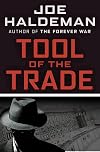
By the author of The Forever War: Caught between the USSR and the United States, a professor fights to create a better world Nicholas Foley survived the horrific siege of Leningrad. Since World War II ended, he has risen through the ranks of American academia to his current post as a respected university professor with a loving wife. His one secret: He works for the KGB. Foley acts as a sleeper agent for the Russians, pointing out potential talent for recruitment. This precarious position show more takes a turn for the deadly when Foley creates an invention that will change the world: a device that makes people obey orders, no matter what. The fate of the world is balanced on a razor's edge. As both superpowers pursue Foley, doing whatever they can to get their hands on his miraculous superweapon, he realizes he must choose a side. Nebula and Hugo Award winner Joe Haldeman is one of America's finest creators of science fiction, and Tool of the Trade is a masterful adventure. This ebook features an illustrated biography of Joe Haldeman including rare images from the author's personal collection. show lessTags
Recommendations




























Member Reviews
Like Haldeman’s 1974 story, “To Howard Hughes: A Modest Proposal”, this is a story offering a solution to the threat of nuclear weapons. However, that earlier story was more morally credible and technologically feasible. But I’ll get to that issue in the spoiler section.
As you would expect from Haldeman when setting out to do an espionage thriller, the book is taut at 242 pages with a story somewhat experimentally structured with three first-person narrators and some third-person sections that pull the reader quickly along.
We open with Nicholas Foley on the run from the KGB and other unnamed parties. He goes to one of his haunts, a bar in Cambridge, Massachusetts, and an odd scene results. He strikes up a conversation with a show more patron who obligingly tells Foley he’s a hitman and drug dealer and hands his gun over to Foley when asked. And he follows Foley into the restroom and obligingly gives himself a lethal dose of heroin as requested, and Foley asks one of the bar’s customers to drive him to Maine. Which he does.
Foley is a man of secrets and the least of them is that he’s a sleeper agent for the KGB. Born Nikola Ulinov in Leningrad in 1935 to German Jewish parents, he’s a man of several talents: a professor of psychology at MIT, a crack shot, and fluent in several languages. His parents, unknown to him for many years, were killed by the NKVD, and Foley was adopted by another family and lived through the Siege of Leningrad. His intelligence and linguistic ability brought him to the KGB’s attention who recruited as an agent. He even knows American English with a Bronx accent from his foster parents’ time in the US.
Foley was smuggled into America in 1953 with a false identity. He joined the American Army. When he got out, the KGB contacted him after two years. Perhaps with their assistance, perhaps on his own merit, Foley eventually ended up at MIT and specialized in the semiotics of language acquisition and talent spotting for the KGB. Along the way, he met his wife, the 44 year-old Valerie, another of the book’s narrators, who was a student of his.
He came to the attention of the CIA in 1978 after a KGB officer defected. CIA analyst John Jacob Bailey, the last of our narrators, tries to recurit Foley, but the latter is not impressed. Jacob could be a KGB officer testing his loyalty. And, no, he’s not angry at the KGB who he eventually learned killed his parents. The KGB and the USSR have changed since the days of Stalin. And, really, what can he be charged with except immigration fraud? So, he gets deported back to the USSR. Big deal. He knows Valerie would go with him. He even tells her of this meeting with Jacob right away.
Foley is sort of loyal to his own country of the USSR, but he holds out hope that America post-Vietnam has been tempered for the better. Rather like Haldeman himself seems to be, Foley has a distrust of politics and wants to be left alone in his good American life.
But Foley has a hobby: hypnotism, and it eventually led him to discovering an ultrasonic frequency that renders the brain susceptible to written or spoken suggestions. He ran some tests, with varying degrees of success, on some unsuspecting students and an unsuspecting Valerie. Eventually, he minaturized the ultrasonic transmitter into a wristwatch. And, just to test it out, manipulated several local criminals and undesireables into offing themselves.
There are limitations to the device. It has a limited range, and Foley has to be very cautious in using it in environments under surveillance since it has no effect on those watching or listening to a recording. Alibis have to be provided for the sometimes strange behavior he induces in his targets.
Using it on Jacob, whom he kind of likes, he induces the CIA man to accompany him to Paris.
But there Foley runs into a KGB team who wants to know why he’s with a CIA agent and if he’s turned traitor, and he uses the watch to manipulate the two to shoot each other in a remote location, but one survives and tells the KGB of the odd event. Eventually, both the CIA and KGB will come to suspect Foley has developed some kind of mind control. The KGB sends a team to kidnap Valerie and get the secret out of Foley. One of the team is Razor, a “former” sadist castrated by the KGB to control his tendencies. But he still gets an intellectual thrill of torturing people and turns his sights on Valerie.
Foley is going to have to go on the run, get Valerie, and try to rebuild their lives if he can.
And this story works – until the concluding section which ends on a morally and psychologically improbable note.
Foley does get Valerie back, but his watch is damaged. The two head to Florida to build another model, and Valerie hatches a very ambitious plan to use it. They will go to an arms control conference in Leningrad and manipulate the US President and USSR Premier into coming up with a new arms control regime.
And they pull it off.
Valerie and Foley then go to Rwanda to do Peace Corp-type work and, unexpectedly, Valerie gets pregnant. The couple plan on passing the watch to their son, and the family sees themselves as the only ones moral enough to use it appropriately — if not them, who, is the rationale. But Foley has shown himself to be a vigilante and manipulator, a man who won’t commit himself to a cultural or national allegiance but fancies himself a savior of humanity. This portrayal of Foley and the trustworthiness of his wife and kid is not convincing nor is the idea one can be a friend of all mankind but not possess a deeper loyalty to groups you belong to.
And, of course, mind control is less plausible than blackmail via dispersed vans packed with nukes. show less
As you would expect from Haldeman when setting out to do an espionage thriller, the book is taut at 242 pages with a story somewhat experimentally structured with three first-person narrators and some third-person sections that pull the reader quickly along.
We open with Nicholas Foley on the run from the KGB and other unnamed parties. He goes to one of his haunts, a bar in Cambridge, Massachusetts, and an odd scene results. He strikes up a conversation with a show more patron who obligingly tells Foley he’s a hitman and drug dealer and hands his gun over to Foley when asked. And he follows Foley into the restroom and obligingly gives himself a lethal dose of heroin as requested, and Foley asks one of the bar’s customers to drive him to Maine. Which he does.
Foley is a man of secrets and the least of them is that he’s a sleeper agent for the KGB. Born Nikola Ulinov in Leningrad in 1935 to German Jewish parents, he’s a man of several talents: a professor of psychology at MIT, a crack shot, and fluent in several languages. His parents, unknown to him for many years, were killed by the NKVD, and Foley was adopted by another family and lived through the Siege of Leningrad. His intelligence and linguistic ability brought him to the KGB’s attention who recruited as an agent. He even knows American English with a Bronx accent from his foster parents’ time in the US.
Foley was smuggled into America in 1953 with a false identity. He joined the American Army. When he got out, the KGB contacted him after two years. Perhaps with their assistance, perhaps on his own merit, Foley eventually ended up at MIT and specialized in the semiotics of language acquisition and talent spotting for the KGB. Along the way, he met his wife, the 44 year-old Valerie, another of the book’s narrators, who was a student of his.
He came to the attention of the CIA in 1978 after a KGB officer defected. CIA analyst John Jacob Bailey, the last of our narrators, tries to recurit Foley, but the latter is not impressed. Jacob could be a KGB officer testing his loyalty. And, no, he’s not angry at the KGB who he eventually learned killed his parents. The KGB and the USSR have changed since the days of Stalin. And, really, what can he be charged with except immigration fraud? So, he gets deported back to the USSR. Big deal. He knows Valerie would go with him. He even tells her of this meeting with Jacob right away.
Foley is sort of loyal to his own country of the USSR, but he holds out hope that America post-Vietnam has been tempered for the better. Rather like Haldeman himself seems to be, Foley has a distrust of politics and wants to be left alone in his good American life.
But Foley has a hobby: hypnotism, and it eventually led him to discovering an ultrasonic frequency that renders the brain susceptible to written or spoken suggestions. He ran some tests, with varying degrees of success, on some unsuspecting students and an unsuspecting Valerie. Eventually, he minaturized the ultrasonic transmitter into a wristwatch. And, just to test it out, manipulated several local criminals and undesireables into offing themselves.
There are limitations to the device. It has a limited range, and Foley has to be very cautious in using it in environments under surveillance since it has no effect on those watching or listening to a recording. Alibis have to be provided for the sometimes strange behavior he induces in his targets.
Using it on Jacob, whom he kind of likes, he induces the CIA man to accompany him to Paris.
But there Foley runs into a KGB team who wants to know why he’s with a CIA agent and if he’s turned traitor, and he uses the watch to manipulate the two to shoot each other in a remote location, but one survives and tells the KGB of the odd event. Eventually, both the CIA and KGB will come to suspect Foley has developed some kind of mind control. The KGB sends a team to kidnap Valerie and get the secret out of Foley. One of the team is Razor, a “former” sadist castrated by the KGB to control his tendencies. But he still gets an intellectual thrill of torturing people and turns his sights on Valerie.
Foley is going to have to go on the run, get Valerie, and try to rebuild their lives if he can.
And this story works – until the concluding section which ends on a morally and psychologically improbable note.
And they pull it off.
Valerie and Foley then go to Rwanda to do Peace Corp-type work and, unexpectedly, Valerie gets pregnant. The couple plan on passing the watch to their son, and the family sees themselves as the only ones moral enough to use it appropriately — if not them, who, is the rationale. But Foley has shown himself to be a vigilante and manipulator, a man who won’t commit himself to a cultural or national allegiance but fancies himself a savior of humanity. This portrayal of Foley and the trustworthiness of his wife and kid is not convincing nor is the idea one can be a friend of all mankind but not possess a deeper loyalty to groups you belong to.
And, of course, mind control is less plausible than blackmail via dispersed vans packed with nukes.
An entertaining SF-flavored spy novel. Fast-paced, told from several points of view. A KGB sleeper accidentally creates a device that lets him make people do whatever he says, even to the point of suicide. The mole is the central character of the novel, morally dubious but by no means an out-and-out villain. The gadget is a bit more central than it would be if this were written by a spy novelist rather than an SF author. The ending is OK but feels anticlimactic despite the major event that occurs.
Recommended as a fun read. Warning: some scenes and reference to sadistic torture.
Recommended as a fun read. Warning: some scenes and reference to sadistic torture.
Nick Foley is a psychology professor, a linguist, a US citizen and, incidentally, a KGB agent and spy who was born in Russia. Add to this an ability to make suggestions to another person that cannot be disregarded and persons who want that knowledge. Joe Haldeman has blended all these together in Tool of the trade to make a good spy novel blended with science fiction. Although written over thirty years ago, it has aged well. A good read!
Haldeman writes a goods story. The constant flow of awards proves that. And, in this book, another good story. No, it isn’t great as Forever War and others are great. But it’s a good read, a fun read, an interesting read, the kind of read almost anyone enjoys having. This is an interesting blend of genres. The science fiction element is expected of Haldeman, but it is not the driver. Instead, this is more spy story than science fiction. And any spy story, with it’s reliance on gadgets and gizmos, can have a small science fiction element. But the gimmick here (the design of an object that makes the listener do anything our hero requests) is prevalent enough that you have to consider this a blending. And Haldeman does a good job of show more taking a potentially Pollyanna ending (let’s get rid of all the nuclear weapons and live happily ever after) and not completing accepting that solution. Yes, it probably is a little contrived, and it probably wouldn’t work out that way in the real world, but the reader is willing to accept it in the context of the story. show less
Ratings
Members
- Recently Added By
Author Information

191+ Works 30,908 Members
Joe Haldeman has uniquely blended a strong interest in astronomy and with his love for writing to publish numerous novels, anthologies and short stories over three decades. He holds a B.S. in astronomy from the University of Maryland (1967), and an M.F.A. in English from the Iowa Writers Workshop (1975). An adjunct professor at Massachusetts show more Institute of Technology, Haldeman has also taught at Michigan State, Larion West Seattle, SUNY Buffalo, Princeton, University of North Dakota, Kent State and the University of North Florida Haldeman's works include War Year (1972), The Forever War (1975), Worlds (1981), Worlds Apart (1983), Tools of the Trade (1987), and The Hemingway Hoax (1990). He has also co-authored and edited numerous works of science fiction. Born in Oklahoma on June 9, 1943, Haldeman grew up in Puerto Rico, New Orleans, Washington D.C., and Alaska. He was drafted into the military in 1967, fighting in the Central Highlands of Vietnam as a combat engineer with the 4th Division (1/22nd Airmobile Battalion), for which he received the Purple Heart, among other medals. (Bowker Author Biography) show less
Some Editions
Series

Common Knowledge
- Original publication date
- 1987
- People/Characters
- Nicholas Foley
- Blurbers
- King, Stephen
Classifications
Statistics
- Members
- 421
- Popularity
- 73,837
- Reviews
- 5
- Rating
- (3.62)
- Languages
- English, French
- Media
- Paper, Ebook
- ISBNs
- 8
- ASINs
- 3