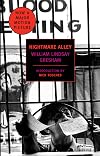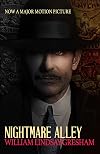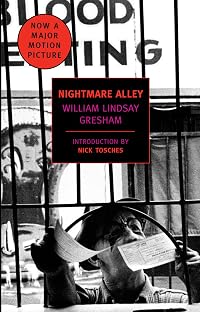
Nightmare Alley
by William Lindsay Gresham
On This Page
Description
Nightmare Alley begins with an extraordinary description of a carnival-show geek--alcoholic and abject and the object of the voyeuristic crowd's gleeful disgust and derision--going about his work at a county fair. Young Stan Carlisle is working as a carny, and he wonders how a man could fall so low. There's no way in hell, he vows, that anything like that will ever happen to him. And since Stan is clever and ambitious and not without a useful streak of ruthlessness, soon enough he's going show more places. Onstage he plays the mentalist with a cute assistant (before long his harried wife), then he graduates to full-blown spiritualist, catering to the needs of the rich and gullible in their well-upholstered homes. It looks like the world is Stan's for the taking. At least for now. show lessTags
Recommendations







Member Recommendations


agmlll Gresham's only other novel
Member Reviews
Nightmare Alley is less a noir thriller and more a spiritual autopsy of the American hustle. It follows Stanton Carlisle, a carnival mentalist-turned-celebrity spiritualist, as he rises through manipulation and illusion—only to find himself unable to escape the very grift he perfected.
This is not a crime novel in the traditional sense. It’s a gospel of despair. Gresham builds a world where the line between performance and belief disintegrates, and where redemption is a grift no better than any other. The novel is obsessed with control: over perception, over fear, over others—and ultimately, over the self.
What stood out:
Gresham’s depiction of carny life is unflinching and granular. He writes it not as a setting, but a show more worldview.
Stan is a character who is easy to watch and hard to like
The prose is brutal and sharp. It has that pulpy post-war grit but it knows what it's doing.
The use of Tarot structure is clever, almost subliminal, echoing the idea that fate might be real even if you’re the one stacking the deck.
What didn’t quite land:
The ending felt too long. Unlike the 1947 film, which delivers a devastating final moment that stabs, the novel lingers.
Some of the psychology, especially around women (especially Lilith), felt more reflective of Gresham’s time than of a timeless human truth. She's electric as a character, but ultimately unresolved.
The novel doesn’t ask you to root for Stan—it dares you to admit you might understand him.
Final word:
Nightmare Alley is a classic of spiritual horror—not about ghosts, but about the soul slowly starving inside a man who can read every room except his own. show less
This is not a crime novel in the traditional sense. It’s a gospel of despair. Gresham builds a world where the line between performance and belief disintegrates, and where redemption is a grift no better than any other. The novel is obsessed with control: over perception, over fear, over others—and ultimately, over the self.
What stood out:
Gresham’s depiction of carny life is unflinching and granular. He writes it not as a setting, but a show more worldview.
Stan is a character who is easy to watch and hard to like
The prose is brutal and sharp. It has that pulpy post-war grit but it knows what it's doing.
The use of Tarot structure is clever, almost subliminal, echoing the idea that fate might be real even if you’re the one stacking the deck.
What didn’t quite land:
The ending felt too long. Unlike the 1947 film, which delivers a devastating final moment that stabs, the novel lingers.
Some of the psychology, especially around women (especially Lilith), felt more reflective of Gresham’s time than of a timeless human truth. She's electric as a character, but ultimately unresolved.
The novel doesn’t ask you to root for Stan—it dares you to admit you might understand him.
Final word:
Nightmare Alley is a classic of spiritual horror—not about ghosts, but about the soul slowly starving inside a man who can read every room except his own. show less
“... we come like a breath of wind over the fields of morning.
We go like a lamp flame caught by a blast from a darkened window.
In between we journey from table to table, from bottle to bottle, from bed to bed.
We suck, we chew, we swallow, we lick, we try to mash life into us like an am-am-amoeba …” (page 242-3)
Nightmare Alley (1946) is set in a carny where Stan Carlisle works.
The book is structured in twenty-two chapters, the same number of the Major Arcana: they are the Tarot cards used by the fortune-teller. Each chapter is named from the name of the cards. Gresham does not follow the order of the Major Arcana, but shuffles the deck, following an order bonded to Stan’s life.
In the first pages Stan is staring at a geek, a show more ‘wild man’ in a carny who bites the heads off live chickens.
The young Stan wants to leave behind himself, in every way, this way of life symbolically shown by the geek.
Stan is a pride man as well described in the following passage: “How helpless they all looked in the ugliness of sleep. A third of life spent unconscious and corpselike. And some, the great majority, stumbled through their waking hours scarcely more awake, helpless in the face of destiny. They stumbled down a dark alley toward their deaths.” (page 59)
Stan begins his social climbing by seducing the fortuneteller Zeena. His objective is to learn Zeena’s secrets of a mind-reading system. When Stan becomes master of the mind-reading, he leaves Zeena and escapes with Molly, another girl of the carny.
Stan’s pride helps him to become The Great Stanton: admired as the sun (the Tarot’s card: “The Sun: On a white horse the sun child, with flame for hair, carries the banner of life.” (page 115)
Stan’s performances introduce him in the high society, where, with the help of another woman, a psychologist, Stan tries to fool an industrialist ‘resurrecting’ his girlfriend.
But as always the sun burns if you are too close to it: Stan’s nightmare, every day the same, becomes reality: “To the left was an alley, dark, but with a light at the other end of it. … And behind him the heavy splat of shoes on cobbles. He raced toward the light at the end of the alley, but there was nothing to be afraid of. He had always been here, running down the alley and it didn’t matter; this was all there was any time, anywhere, just an alley and a light and the footsteps spanging on the cobbles but they never catch you, they never catch you, they never catch you …” (page 259)
Stan becomes aware of the impossibility to change his destiny: the geek, the nightmare, are always at the end of the alley, waiting for him.
The web surrounding Stan is built with feel of guilt, pride, and uncontrollable desire to repeat, endless, the same nightmare in the same alley. show less
This deservedly-lauded noir novel was a pioneer in the use of tarot trumps to designate its chapter sequence. The tarot relates to the carnival fortunetelling that is an eventual talent of the central character--Stan Carlisle, a man who becomes less and less sympathetic with the turn of every page.
At the start of the book, Stan is a rookie magician in a traveling carnival. The story follows his career through a graduation to a high-class entertainment mentalist act, and then into the "spook racket" of Spiritualist religion, in which he fleeces a rich widow and establishes a church. It is as "the Reverend Carlisle" that Stan meets his match as a deceiving manipulator, the psychologist Lillith Ritter. His secret collaboration with Ritter show more is the acme of Stan's career, but also the start of his descent into paranoid misery punctuated by dipsomania. The book brings him full circle to be crushed under the wheel of fortune he had ridden to its top. The final chapter is "The Hanged Man."
The prose of this novel--Gresham's first--is lively and full of vivid idiomatic language from mid-twentieth-century America, and it clearly reflects the author's deep interest in and familiarity with carny culture and religious fraud. (In later years, Gresham would spend a short while as a Scientologist!) It is written in a third-person narrative voice that swings between clinically external observations and stream-of-consciousness interiority, requiring the reader in either case to infer the motives or the circumstances involved. Nightmare Alley offers a perceptive and unflinching observation of the extremes of human power and weakness. show less
At the start of the book, Stan is a rookie magician in a traveling carnival. The story follows his career through a graduation to a high-class entertainment mentalist act, and then into the "spook racket" of Spiritualist religion, in which he fleeces a rich widow and establishes a church. It is as "the Reverend Carlisle" that Stan meets his match as a deceiving manipulator, the psychologist Lillith Ritter. His secret collaboration with Ritter show more is the acme of Stan's career, but also the start of his descent into paranoid misery punctuated by dipsomania. The book brings him full circle to be crushed under the wheel of fortune he had ridden to its top. The final chapter is "The Hanged Man."
The prose of this novel--Gresham's first--is lively and full of vivid idiomatic language from mid-twentieth-century America, and it clearly reflects the author's deep interest in and familiarity with carny culture and religious fraud. (In later years, Gresham would spend a short while as a Scientologist!) It is written in a third-person narrative voice that swings between clinically external observations and stream-of-consciousness interiority, requiring the reader in either case to infer the motives or the circumstances involved. Nightmare Alley offers a perceptive and unflinching observation of the extremes of human power and weakness. show less
One of a Kind Noir Tale
There isn’t much that is truly unique, especially within genre fiction, and usually that’s the way readers like it, since they approach these books with certain expectations. William Lindsay Gresham’s Nightmare Alley most assuredly fulfills those expectations by creating a dark world and populating with people who live in the shadows. Then Gresham goes beyond what you expect, deep into carney life, deeper into spiritualism, and deeper still into the scarred human psyche. His novel teems with double crosses, murder, sex (even touching the edges of SM), and the willful and cruelest twisting of people’s beliefs and grief for personal profit.
Stan is a haunted young man when readers first meet him in a show more traveling Ten-in-One (a sideshow usually with ten acts in a row, some involving “freaks,” for one admission). He has plenty of ghosts in his past, all issuing from psychologically trying childhood. Imagine the worst things a boy can see and you’ll have foresight into Stan’s motivations. He learns much about carney life, including what a geek is, an alcoholic who will do anything for a bottle, even bite the heads off live chickens to amuse the yokels. He also meets Zeena, a mentalist, from whom he learns the tricks of the trade and with whom he carries on an affair. Her husband, while not a geek, is an alcoholic who comes to what most assume an accidental end. Stan steps into the act, and why not, as he’s already been in the man’s bed.
At the Ten-in-One, he meets sweet, young Molly, the electric girl. He carries on with her while perfecting his skills as a mentalist and also delving into the world of spiritualism (basically, the belief that the soul exists after death, with the added feature that the dead wish and try to communicate with the living). Stan harbors and cultivates the vision of hooking a big fish and taking him or her for a bundle. He even goes so far as to gain ordination in the spiritualist church. Stan’s quite the smart fellow, well versed in mentalism, electricity and devices, religion, and most important of all, the human desire to believe. It’s this entire span of the novel, the Act 2, if you will, that really elevates it and sets it apart from the general run of American noir. Tossed into this is psychology, particularly after Stan, haunted even more by his past, visits psychologist Lilith Ritter. If Stan defines blackguard then Lilith is the scoundrel who sets off his petard. It is she who supplies him the mark he’s hungered for. And it nearly all works out for Stan, if only he had been able to surmount his nightmares.
Everything, then, devolves in the last act, wherein Stan finds himself older, sicker, addicted, and sliding into his past, to where he began, only now as the freak. Really, though, will you be able to muster even a dollop of sympathy for him?
Noir writers of the period tended to live hard lives and few were unfamiliar with the bottle. Gresham, who committed suicide at 53, partially blind and suffering with cancer, led a particularly eventful life that included folk singing in Greenwich Village cafes, jobs in journalism and advertising, more than a year as a medic with the Abraham Lincoln Brigade. Later his first wife, Joy Davidman, and he became enamored of C.S. Lewis and said’s return to and advocacy of christianity. Joy Davidman, after her marriage to Gresham dissolved, married Lewis. Gresham went on to explore other spiritual interests, among them occultism and L. Ron Hubbard’s Dianetics. In other words, a most interesting fellow. show less
There isn’t much that is truly unique, especially within genre fiction, and usually that’s the way readers like it, since they approach these books with certain expectations. William Lindsay Gresham’s Nightmare Alley most assuredly fulfills those expectations by creating a dark world and populating with people who live in the shadows. Then Gresham goes beyond what you expect, deep into carney life, deeper into spiritualism, and deeper still into the scarred human psyche. His novel teems with double crosses, murder, sex (even touching the edges of SM), and the willful and cruelest twisting of people’s beliefs and grief for personal profit.
Stan is a haunted young man when readers first meet him in a show more traveling Ten-in-One (a sideshow usually with ten acts in a row, some involving “freaks,” for one admission). He has plenty of ghosts in his past, all issuing from psychologically trying childhood. Imagine the worst things a boy can see and you’ll have foresight into Stan’s motivations. He learns much about carney life, including what a geek is, an alcoholic who will do anything for a bottle, even bite the heads off live chickens to amuse the yokels. He also meets Zeena, a mentalist, from whom he learns the tricks of the trade and with whom he carries on an affair. Her husband, while not a geek, is an alcoholic who comes to what most assume an accidental end. Stan steps into the act, and why not, as he’s already been in the man’s bed.
At the Ten-in-One, he meets sweet, young Molly, the electric girl. He carries on with her while perfecting his skills as a mentalist and also delving into the world of spiritualism (basically, the belief that the soul exists after death, with the added feature that the dead wish and try to communicate with the living). Stan harbors and cultivates the vision of hooking a big fish and taking him or her for a bundle. He even goes so far as to gain ordination in the spiritualist church. Stan’s quite the smart fellow, well versed in mentalism, electricity and devices, religion, and most important of all, the human desire to believe. It’s this entire span of the novel, the Act 2, if you will, that really elevates it and sets it apart from the general run of American noir. Tossed into this is psychology, particularly after Stan, haunted even more by his past, visits psychologist Lilith Ritter. If Stan defines blackguard then Lilith is the scoundrel who sets off his petard. It is she who supplies him the mark he’s hungered for. And it nearly all works out for Stan, if only he had been able to surmount his nightmares.
Everything, then, devolves in the last act, wherein Stan finds himself older, sicker, addicted, and sliding into his past, to where he began, only now as the freak. Really, though, will you be able to muster even a dollop of sympathy for him?
Noir writers of the period tended to live hard lives and few were unfamiliar with the bottle. Gresham, who committed suicide at 53, partially blind and suffering with cancer, led a particularly eventful life that included folk singing in Greenwich Village cafes, jobs in journalism and advertising, more than a year as a medic with the Abraham Lincoln Brigade. Later his first wife, Joy Davidman, and he became enamored of C.S. Lewis and said’s return to and advocacy of christianity. Joy Davidman, after her marriage to Gresham dissolved, married Lewis. Gresham went on to explore other spiritual interests, among them occultism and L. Ron Hubbard’s Dianetics. In other words, a most interesting fellow. show less
One of a Kind Noir Tale
There isn’t much that is truly unique, especially within genre fiction, and usually that’s the way readers like it, since they approach these books with certain expectations. William Lindsay Gresham’s Nightmare Alley most assuredly fulfills those expectations by creating a dark world and populating with people who live in the shadows. Then Gresham goes beyond what you expect, deep into carney life, deeper into spiritualism, and deeper still into the scarred human psyche. His novel teems with double crosses, murder, sex (even touching the edges of SM), and the willful and cruelest twisting of people’s beliefs and grief for personal profit.
Stan is a haunted young man when readers first meet him in a show more traveling Ten-in-One (a sideshow usually with ten acts in a row, some involving “freaks,” for one admission). He has plenty of ghosts in his past, all issuing from psychologically trying childhood. Imagine the worst things a boy can see and you’ll have foresight into Stan’s motivations. He learns much about carney life, including what a geek is, an alcoholic who will do anything for a bottle, even bite the heads off live chickens to amuse the yokels. He also meets Zeena, a mentalist, from whom he learns the tricks of the trade and with whom he carries on an affair. Her husband, while not a geek, is an alcoholic who comes to what most assume an accidental end. Stan steps into the act, and why not, as he’s already been in the man’s bed.
At the Ten-in-One, he meets sweet, young Molly, the electric girl. He carries on with her while perfecting his skills as a mentalist and also delving into the world of spiritualism (basically, the belief that the soul exists after death, with the added feature that the dead wish and try to communicate with the living). Stan harbors and cultivates the vision of hooking a big fish and taking him or her for a bundle. He even goes so far as to gain ordination in the spiritualist church. Stan’s quite the smart fellow, well versed in mentalism, electricity and devices, religion, and most important of all, the human desire to believe. It’s this entire span of the novel, the Act 2, if you will, that really elevates it and sets it apart from the general run of American noir. Tossed into this is psychology, particularly after Stan, haunted even more by his past, visits psychologist Lilith Ritter. If Stan defines blackguard then Lilith is the scoundrel who sets off his petard. It is she who supplies him the mark he’s hungered for. And it nearly all works out for Stan, if only he had been able to surmount his nightmares.
Everything, then, devolves in the last act, wherein Stan finds himself older, sicker, addicted, and sliding into his past, to where he began, only now as the freak. Really, though, will you be able to muster even a dollop of sympathy for him?
Noir writers of the period tended to live hard lives and few were unfamiliar with the bottle. Gresham, who committed suicide at 53, partially blind and suffering with cancer, led a particularly eventful life that included folk singing in Greenwich Village cafes, jobs in journalism and advertising, more than a year as a medic with the Abraham Lincoln Brigade. Later his first wife, Joy Davidman, and he became enamored of C.S. Lewis and said’s return to and advocacy of christianity. Joy Davidman, after her marriage to Gresham dissolved, married Lewis. Gresham went on to explore other spiritual interests, among them occultism and L. Ron Hubbard’s Dianetics. In other words, a most interesting fellow. show less
There isn’t much that is truly unique, especially within genre fiction, and usually that’s the way readers like it, since they approach these books with certain expectations. William Lindsay Gresham’s Nightmare Alley most assuredly fulfills those expectations by creating a dark world and populating with people who live in the shadows. Then Gresham goes beyond what you expect, deep into carney life, deeper into spiritualism, and deeper still into the scarred human psyche. His novel teems with double crosses, murder, sex (even touching the edges of SM), and the willful and cruelest twisting of people’s beliefs and grief for personal profit.
Stan is a haunted young man when readers first meet him in a show more traveling Ten-in-One (a sideshow usually with ten acts in a row, some involving “freaks,” for one admission). He has plenty of ghosts in his past, all issuing from psychologically trying childhood. Imagine the worst things a boy can see and you’ll have foresight into Stan’s motivations. He learns much about carney life, including what a geek is, an alcoholic who will do anything for a bottle, even bite the heads off live chickens to amuse the yokels. He also meets Zeena, a mentalist, from whom he learns the tricks of the trade and with whom he carries on an affair. Her husband, while not a geek, is an alcoholic who comes to what most assume an accidental end. Stan steps into the act, and why not, as he’s already been in the man’s bed.
At the Ten-in-One, he meets sweet, young Molly, the electric girl. He carries on with her while perfecting his skills as a mentalist and also delving into the world of spiritualism (basically, the belief that the soul exists after death, with the added feature that the dead wish and try to communicate with the living). Stan harbors and cultivates the vision of hooking a big fish and taking him or her for a bundle. He even goes so far as to gain ordination in the spiritualist church. Stan’s quite the smart fellow, well versed in mentalism, electricity and devices, religion, and most important of all, the human desire to believe. It’s this entire span of the novel, the Act 2, if you will, that really elevates it and sets it apart from the general run of American noir. Tossed into this is psychology, particularly after Stan, haunted even more by his past, visits psychologist Lilith Ritter. If Stan defines blackguard then Lilith is the scoundrel who sets off his petard. It is she who supplies him the mark he’s hungered for. And it nearly all works out for Stan, if only he had been able to surmount his nightmares.
Everything, then, devolves in the last act, wherein Stan finds himself older, sicker, addicted, and sliding into his past, to where he began, only now as the freak. Really, though, will you be able to muster even a dollop of sympathy for him?
Noir writers of the period tended to live hard lives and few were unfamiliar with the bottle. Gresham, who committed suicide at 53, partially blind and suffering with cancer, led a particularly eventful life that included folk singing in Greenwich Village cafes, jobs in journalism and advertising, more than a year as a medic with the Abraham Lincoln Brigade. Later his first wife, Joy Davidman, and he became enamored of C.S. Lewis and said’s return to and advocacy of christianity. Joy Davidman, after her marriage to Gresham dissolved, married Lewis. Gresham went on to explore other spiritual interests, among them occultism and L. Ron Hubbard’s Dianetics. In other words, a most interesting fellow. show less
The novel’s afterlife is just as colorful, spawning two films (with Guillermo del Toro’s lushly imagined but ultimately disappointing version from last year), inspiring at least one person’s career path (Anton Szandor LaVey of the Church of Satan), introducing the word “geek” to American popular culture (even the Nat “King” Cole Trio came out with a tune), and using the phrase “cold reading” in print for the first time. (Gresham's own journey from Freud, Marx, and yoga to the Tarot, Ouspensky, and Christianity (via C.S. Lewis, for whom his wife, the poet Joy Davidman, eventually left him) is fascinating in and of itself.)
It’s not noir in the typical sense, at least in the way I typically conceive it. Nightmare Alley show more isn't a lean and cutting piece of work like The Grifters or The Postman Always Rings Twice. It feels more expansive and lived-in, where the reader is immersed in different worlds, following Stanton Carlisle's transformation from traveling circus magician to "the Great Stanton" to Reverend Carlisle, Pastor of the Church of the Heavenly Message. The setup is long, and so is the con.
Nightmare Alley situates the characters in a grander, wider milieu than del Toro’s movie could portray--in particular, amidst pre-World War II preoccupations with spiritualism and hypnotism. These mediums and mentalists are depicted as part of the same spectrum as the fake carnival attractions that fill the first half of the book. And so is psychoanalysis, which in Nightmare Alley is portrayed as the most malevolent grift of all. show less
It’s not noir in the typical sense, at least in the way I typically conceive it. Nightmare Alley show more isn't a lean and cutting piece of work like The Grifters or The Postman Always Rings Twice. It feels more expansive and lived-in, where the reader is immersed in different worlds, following Stanton Carlisle's transformation from traveling circus magician to "the Great Stanton" to Reverend Carlisle, Pastor of the Church of the Heavenly Message. The setup is long, and so is the con.
Nightmare Alley situates the characters in a grander, wider milieu than del Toro’s movie could portray--in particular, amidst pre-World War II preoccupations with spiritualism and hypnotism. These mediums and mentalists are depicted as part of the same spectrum as the fake carnival attractions that fill the first half of the book. And so is psychoanalysis, which in Nightmare Alley is portrayed as the most malevolent grift of all. show less
Nightmare Alley shows us the bleak desperation clinging to the underbelly of American ambition. The lingo and folklore of carnies, conmen, and spirit conjurers provide the noirish backdrop for a kind of lurid morality tale that still packs a punch, sixty odd years after Gresham's desolate vision was put to the page. The atmospherics are somewhere between art and (quality) trash: the characters are too cynical for tragedy, too psychologically tangled for pulp. For those who like their fiction stark and sordid, this is a choice slice of Americana.
Members
- Recently Added By
Lists

Noirvember: The Best Noir
113 works; 56 members

Cheesy pleasures and odd lots!
119 works; 7 members

Movies/Shows
617 works; 7 members

Noirvember: Potential Reads
23 works; 1 member

Franklit
95 works; 1 member

Tarotiform Fiction
10 works; 1 member
Author Information

Awards and Honors
Distinctions
Series
Belongs to Publisher Series
Work Relationships
Is contained in
Has the adaptation
Common Knowledge
- Canonical title
- Nightmare Alley
- Original publication date
- 1946
- People/Characters
- Stan Carlisle; Lillith Ritter
- Related movies
- Nightmare Alley (1947 | IMDb); Nightmare Alley (2021 | IMDb)
- Dedication
- To Joy Davidman
- First words
- Stan Carlisle stood well back from the entrance of the canvas enclosure, under the blaze of a naked light bulb, and watched the geek.
- Quotations
- Through waves of laughter the world seeped in, coming in slices, as if the laughter split at the seems and showed a little raw and bloody reality before it closed up again.
- Last words
- (Click to show. Warning: May contain spoilers.)Of course, it's only temporary - just until we get a real geek.
- Original language
- English
- Disambiguation notice
- This is the novel. Do not combine with the films or graphic novel.
Classifications
- Genres
- Fiction and Literature, General Fiction, Mystery, Horror, Graphic Novels & Comics
- DDC/MDS
- 813.52 — Literature & rhetoric American literature in English American fiction in English 1900-1999 1900-1945
- LCC
- PS3513 .R625 .N54 — Language and Literature American literature American literature Individual authors 1900-1960
- BISAC
Statistics
- Members
- 866
- Popularity
- 31,358
- Reviews
- 32
- Rating
- (3.90)
- Languages
- 7 — English, French, German, Italian, Portuguese (Portugal), Russian, Spanish
- Media
- Paper, Audiobook, Ebook
- ISBNs
- 35
- ASINs
- 12