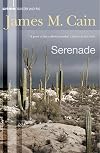
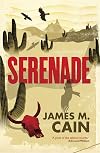
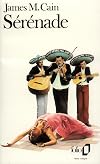
Serenade
by James M. Cain
On This Page
Description
'Cain has established a formidable reputation of furious pace, harsh and masterful realism, tough, raw speech right out of the mouths of the people' SATURDAY REVIEW Serenade is the story of the eternal triangle - with a difference. John Howard Sharp is an American opera singer down on his luck, having just bombed in Rigoletto in Mexico City when he first encounters the beautiful Mexican-Indian prostitute called Juana. Miraculously, she offers him the chance to rebuild his career in Hollywood show more and New York but then Winston Hawes, the young, rich and well-connected conductor who had first launched Sharp, comes back into his life with terrible consequences. show lessTags
Recommendations
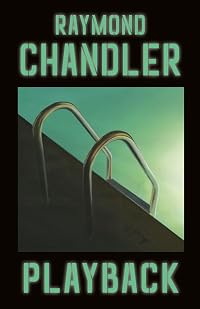
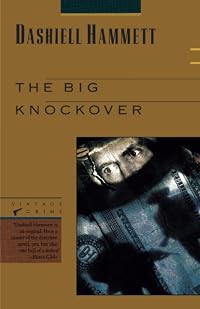
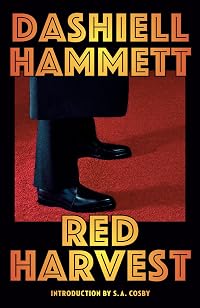
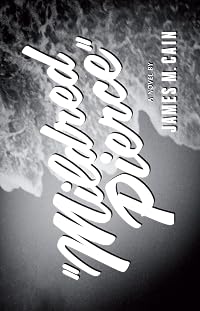


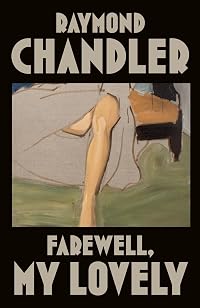


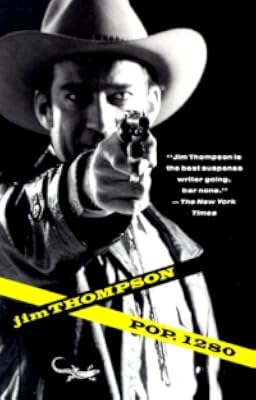
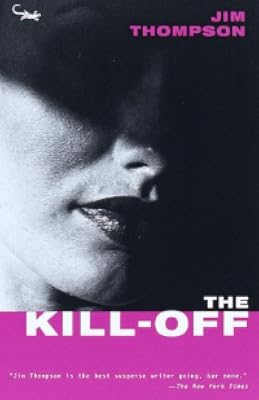
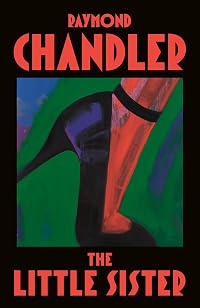












Member Recommendations
Member Reviews
The style is sharp, confident, and atmospheric in a way only Cain seems to manage — the kind of prose that pulls you along even when the story itself makes you tense in a way you didn’t expect.
And I’ll be honest:
I do want to know how this ends.
Cain knows how to hook a reader with structure alone.
But then there’s John Howard Sharp, the narrator — and that’s where the entire experience collapses for me.
I can handle flawed protagonists. I can handle moral rot, arrogance, cruelty, delusion — I read horror, noir, and the darker end of literary fiction. None of that is new or intimidating. But John Howard Sharp’s worldview is something else entirely. It’s not just dated; it’s suffocating. His opinions about women, desire, show more talent, and his own supposed brilliance are so self-satisfied and so casually dehumanizing that I couldn’t tolerate another page inside his head.
Cain’s skill is undeniable.
Sharp’s worldview is intolerable.
It’s a strange reading experience — admiring the writing while recoiling from the narrator. But for me, that’s the line. I can respect a book’s craft and still choose not to live in its consciousness.
So yes, I loved the style.
Yes, I was curious about the ending.
But no, I will not read another page of John Howard Sharp’s internal monologue.
This one simply isn’t for me. show less
And I’ll be honest:
I do want to know how this ends.
Cain knows how to hook a reader with structure alone.
But then there’s John Howard Sharp, the narrator — and that’s where the entire experience collapses for me.
I can handle flawed protagonists. I can handle moral rot, arrogance, cruelty, delusion — I read horror, noir, and the darker end of literary fiction. None of that is new or intimidating. But John Howard Sharp’s worldview is something else entirely. It’s not just dated; it’s suffocating. His opinions about women, desire, show more talent, and his own supposed brilliance are so self-satisfied and so casually dehumanizing that I couldn’t tolerate another page inside his head.
Cain’s skill is undeniable.
Sharp’s worldview is intolerable.
It’s a strange reading experience — admiring the writing while recoiling from the narrator. But for me, that’s the line. I can respect a book’s craft and still choose not to live in its consciousness.
So yes, I loved the style.
Yes, I was curious about the ending.
But no, I will not read another page of John Howard Sharp’s internal monologue.
This one simply isn’t for me. show less
I became a fan of James M. Cain after reading Mildred Pierce, Double Indemnity, and the Postman Always Rings Twice, which were made into absolutely incredible movies. Double Indemnity, in particular is noir at its best.
While reading Serenade, I couldn't help but think of how this book also, would have made a good movie as well, shortly after its 1937 publication. It is the story of what happens when Juana, the Mexican prostitute meets John Sharp, a singer who may or may not be hiding a big secret. In the typical fashion of this genre, you know when these two meet, the outcome will not be a good one, yet the story is a riveting one.
There is a reason why this author is considered one of the masters of the hardboiled genre.
While reading Serenade, I couldn't help but think of how this book also, would have made a good movie as well, shortly after its 1937 publication. It is the story of what happens when Juana, the Mexican prostitute meets John Sharp, a singer who may or may not be hiding a big secret. In the typical fashion of this genre, you know when these two meet, the outcome will not be a good one, yet the story is a riveting one.
There is a reason why this author is considered one of the masters of the hardboiled genre.
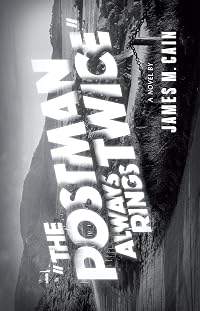
You can call this pulp if you want to, but I assure you, it's much more than that. Although I wouldn't call it great literature, it still has plenty of literary merit. After my first Cain novel, [b:The Postman Always Rings Twice|25807|The Postman Always Rings Twice|James M. Cain|https://i.gr-assets.com/images/S/compressed.photo.goodreads.com/books/1344265267l/25807._SY75_.jpg|808562] which I hated, I'm not sure why I picked up this one, but I'm glad I did. The characterization and believable dialogue, totally absent in "Postman", is superb here. Even though it slowed in the Operatic sections, it still held my interest because Cain's passion for the music transferred to me. The church scene was original and awesome. I'd read it again show more just for that. show less
I don't think there's ever been a man so moony that a little bit of chill didn't come over him as soon as a woman said yes, and plenty of things were going through my head when she took my arm and we headed for the door of that cafe.
Serenade is the tale of a world-class opera baritone, a first-rate conductor and "a three peso whore" from Mexico City. It is a pulp story, but before you get the wrong idea, let me tell you, there are no gangsters, no thugs and no racket. Just a man who has it all, and loses it, gets it back and then sees it all go to hell again. Cain's story is melancholy and sweet and it will remain in your head long after the last word is sung.
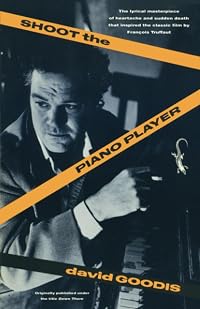
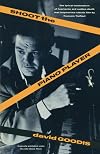
For other books like this, I recommend Shoot the Piano Player by David Goodis.
Serenade is the tale of a world-class opera baritone, a first-rate conductor and "a three peso whore" from Mexico City. It is a pulp story, but before you get the wrong idea, let me tell you, there are no gangsters, no thugs and no racket. Just a man who has it all, and loses it, gets it back and then sees it all go to hell again. Cain's story is melancholy and sweet and it will remain in your head long after the last word is sung.
For other books like this, I recommend Shoot the Piano Player by David Goodis.
My third book by Cain (Double Indemnity & The Postman Always Rings Twice being the others) and after reading and absolutely loving the others I was really looking forward to getting stuck into this novel.
We follow the tale of John Howard Sharp, an out of work but world class opera singer, he finds himself down to his last few pesos in Mexico when his life becomes entwined with a beautiful local prostitute. Together they carve their way back into the USA where Sharp once again establishes himself as a force within the industry. This all goes well until the man responsible for launching Sharp, the young conductor Winston Hawes, comes back into his life with disastrous consequences.
For it's time I would imagine the novel caused quite a show more stir and not a lot is held back. Gay relationships and prostitution appear in abundance, and Caine is definitely not someone who constrained by the attitudes of the time.
But, and here is the books downfall for me, I just didn't enjoy it. The other books I have read have always sped along at a really fast pace, and I admired him as an author that wasted no words. However this book for me was the exact opposite. Pages and pages were dedicated to prattling on about various forms of music and the arts. It was almost as if the author was just attempting to put all of his knowledge of Puccinni etc into this book. I have read that Cain's mother was an opera singer so this is obviously where this all stems from. I just couldn't get into the actual storyline itself, which when it did manage to deviate from the theme of 'Art' was actually quite good.
If this had been the first book I had picked by Cain then I am sure it would have been my last, and that really would have been a great shame. Looking at others reviews I can see that I am in the minority, but I can only give my own honest opinion and that is to try something else of his first. show less
We follow the tale of John Howard Sharp, an out of work but world class opera singer, he finds himself down to his last few pesos in Mexico when his life becomes entwined with a beautiful local prostitute. Together they carve their way back into the USA where Sharp once again establishes himself as a force within the industry. This all goes well until the man responsible for launching Sharp, the young conductor Winston Hawes, comes back into his life with disastrous consequences.
For it's time I would imagine the novel caused quite a show more stir and not a lot is held back. Gay relationships and prostitution appear in abundance, and Caine is definitely not someone who constrained by the attitudes of the time.
But, and here is the books downfall for me, I just didn't enjoy it. The other books I have read have always sped along at a really fast pace, and I admired him as an author that wasted no words. However this book for me was the exact opposite. Pages and pages were dedicated to prattling on about various forms of music and the arts. It was almost as if the author was just attempting to put all of his knowledge of Puccinni etc into this book. I have read that Cain's mother was an opera singer so this is obviously where this all stems from. I just couldn't get into the actual storyline itself, which when it did manage to deviate from the theme of 'Art' was actually quite good.
If this had been the first book I had picked by Cain then I am sure it would have been my last, and that really would have been a great shame. Looking at others reviews I can see that I am in the minority, but I can only give my own honest opinion and that is to try something else of his first. show less
I am sure I do not know what is great writing but this is nevertheless a relentless , enthralling read
Slight spoiler but the phrase from another author that springs to mind is
" I have no mouth, yet I must scream"
I think you will understand if you read the book.
Will have to read some more Cain, based on this and "The postman always rings twice"
Big ship
18 September 2014
Slight spoiler but the phrase from another author that springs to mind is
" I have no mouth, yet I must scream"
I think you will understand if you read the book.
Will have to read some more Cain, based on this and "The postman always rings twice"
Big ship
18 September 2014
Un roman noir, très noir, très très noir que la quatrième raconte en détail et jusqu'au dénouement.
La Méridienne se présente comme une collection qui "ne propose que des chefs d'oeuvre et des livres que vous voudrez relire."
J'hésite.
La Méridienne se présente comme une collection qui "ne propose que des chefs d'oeuvre et des livres que vous voudrez relire."
J'hésite.
Jun 12, 2025French
Members
- Recently Added By
Lists

Lost Gay Novels
51 works; 1 member
Author Information

86+ Works 11,282 Members
Mystery writer James Mallahan Cain was born in Annapolis, Maryland, in 1892. He received his B.A. and M.A. from Washington College, and served in the military as editor-in-chief of the official newspaper of the 79th Division, American Expeditionary Forces. Cain worked as a staff reporter for the Baltimore Sun; he became a professor of journalism show more in the 1920s; he worked as a Hollywood screenwriter in the 1930s and 40s. Many of his stories, including Double Indemnity (1943), have been made into successful films. Joan Crawford won an Academy Award in 1945 for her portrayal of Cain's Mildred Pierce (1941). Cain's first novel, The Postman Always Rings Twice (1934), was said to have inspired Albert Camus' The Stranger, but offended sensibilities in the U.S. and was even tried for obscenity in Boston. The novel was eventually made into a movie in 1946, starring Lana Turner and again in 1981, with Jack Nicholson and Jessica Lange. In all, Cain authored eighteen books. (Bowker Author Biography) show less
Some Editions
Series
Belongs to Publisher Series
Work Relationships
Common Knowledge
- Canonical title
- Serenade
- Original title
- Serenade
- Original publication date
- 1937
- Related movies
- Serenade (1956 | IMDb)
- First words
- I was in Tupinamba, having a bizcocho and coffee, when this girl came in.
- Last words
- (Click to show. Warning: May contain spoilers.)As they lowered her down, an iguana jumped out of it and went running over the rocks.
- Original language
- English
Classifications
Statistics
- Members
- 371
- Popularity
- 84,395
- Reviews
- 7
- Rating
- (3.57)
- Languages
- 11 — Catalan, Dutch, English, French, German, Italian, Norwegian, Portuguese, Russian, Spanish, Swedish
- Media
- Paper, Ebook
- ISBNs
- 21
- ASINs
- 18