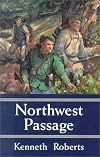
Northwest Passage
by Kenneth Roberts
On This Page
Description
An exciting and fast paced adventure story based in colonial America. Written from the viewpoint of a fictional friend of the Historic Robert Rodgers, famed in America as the leader of 'Rodgers' Rangers' a guerrilla squadron harassing the English forces throughout the American War of Independence. Many of the earliest books, particularly those dating back to the 1900s and before, are now extremely scarce and increasingly expensive. We are republishing these classic works in affordable, high show more quality, modern editions, using the original text and artwork. show lessTags
Recommendations


















Member Reviews
Sometimes I'm just in the mood for a good, long, old fashioned historical novel, and Northwest Passage certainly filled this bill for me. Young Langdon Towne just growing into adulthood in 1750s Maine, wants to be an artist. He wants to go west and paint Indians. This ambition runs him afoul of his straight-laced father and, especially, of his beloved Elizabeth's father, a hell and brimstone, status seeking minister. When Towne further gains the enmity of the town's petty tyrant, he hightails it out of town with a friend with an aim to join the army, thinking it fairly safe, as the major battles of the English and their American colonists against the French and their Indian allies (i.e., the French and Indian War) seem to be mostly show more over. Running into the charismatic figure of Sergeant McNott in a nearby pub, however, Towne and his friend soon find themselves joining the famed Rogers Rangers, led by the larger than life Major Robert Rogers. Adventure ensues, you'll not be surprised to learn, 709 pages of adventure, to be precise, along with romance and political intrigue. Towne's superior abilities as an artist stand him in good stead throughout. This novel is a lot of fun, and even, in some places thought-provoking. The descriptions of the hardships endured by the Rangers, and the countryside they travel through, are vivid (descriptions of nature and weather are a strength throughout), as is the violence of the massacre they perpetrate an Indian village, a retaliation, we are told, for the outrages these Indians themselves have perpetrated on nearby English homesteaders. Our hero at first tells us of his opinions that Indians are, when push comes to shove, basically "savages." But as the book moves along and Towne matures, and he learns more about the Indians and about the villainy that Europeans perpetrate on the natives, so do his perspectives and his sympathies. Which is not to say this is an even-handed treatment, narratively. The book is a product of its time, for sure. Jews don't come off too well, either. That said, the plotting and characterizations in this novel turned out to be more nuanced and complex that I was expecting. Heroes turn out to be flawed, sometimes gravely so, expectations regarding stereotypical romantic historical fiction plotting are often subverted, as well. So while there are parts of this long novel that move along less briskly than we would wish, overall I found this to be a very entertaining reading experience. show less
A good novel, but with a major break in the middle, as Robert Rogers passed from being a simple guerilla war leader to the upper levels of colonial policy. The first half is a description of Rogers' famous raid to the Quebec Huron settlement of St. Francis, and the hardships of the return trip. The last half of the book is a study of Rogers' further career, highlighting his bad treatment by Jeffery Amherst and Thomas Gage and his failure to discover a land route to the Pacific. We get a limited view of Rogers' attempt to alter the British treatment of the North American natives, and the difficuties it raised. Rogers' later career ended badly, and we are treated to the narrator's conventional love story and its resolution. So the whole show more book is uneven, but well worth the read. show less
This book is set in North America and England, beginning during the time of the French and Indian War and ending shortly after 1776. It is written from the perspective of Langdon Towne, a young man whose aptitude for painting and love of a social-climbing young lady gets him into trouble. As Langdon's story progresses, Robert Rogers becomes a hero to him. Unfortunately, the success that comes from these many heroic acts affects Rogers in unexpected ways, and as the story progresses Rogers becomes focused on a goal that becomes increasingly out of reach. He makes increasingly poor decisions and finds many ways to avoid the actions that would actually help him. This is a construct that remains relevant to modern readers and is one reason show more why this book remains worthwhile. Like Rogers, we also can be tempted to remember past victories and avoid whatever current action is needed, and some methods we might use for this are personally as destructive as Rogers' actions were.
This was not a quick read, but several scenes are memorable. The short and horrific battle scenes maintained a tone that refrained from glamorizing war. The starvation sequence was the most suspenseful part of the book and felt realistic; it was easy to care about the characters and to be emotionally invested in their success. The story of Langdon's life was generally interesting, though there were some less appealing minor characters. Overall this was a worthwhile book. show less
This was not a quick read, but several scenes are memorable. The short and horrific battle scenes maintained a tone that refrained from glamorizing war. The starvation sequence was the most suspenseful part of the book and felt realistic; it was easy to care about the characters and to be emotionally invested in their success. The story of Langdon's life was generally interesting, though there were some less appealing minor characters. Overall this was a worthwhile book. show less
During the French and Indian War, a New Englander desires to paint Indians and is met with derision. He stumbles upon Major Robert Rogers (of Rogers' Rangers) and inadvertently gives him the idea to discover the Northwest Passage. Accounts the historical deeds of the Major, through his glory and shame. I do believe I am falling in love with Kenneth Roberts.
A historical fiction, set in the time of the French and Indian wars in the northeastern American colonies. This is about Robert Rogers, the famed commander of Roger's Rangers, the inspiration for the Army Rangers of today. A fictional character, Langdon Towne, follows Rogers through his exciting and chaotic career. Towne is a painter who wishes to paint Indians in their own environment. I wish he were real, or based on someone real, because I liked his character and would love to see the paintings described in this book.
I was afraid the book would be dull, but that was not the case. Roberts writes a lively story and keeps things moving. His descriptions of the land and people are far from boring and they are brief. The historical show more facts, as far as I could tell from light research, are fairly accurate, at least in as much as they concern Robert Rogers. In this man's life we can see the heights man is capable of and the depths to which he may fall. show less
I was afraid the book would be dull, but that was not the case. Roberts writes a lively story and keeps things moving. His descriptions of the land and people are far from boring and they are brief. The historical show more facts, as far as I could tell from light research, are fairly accurate, at least in as much as they concern Robert Rogers. In this man's life we can see the heights man is capable of and the depths to which he may fall. show less
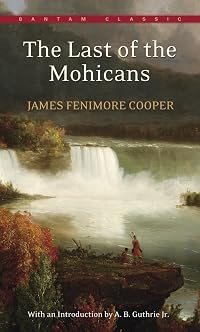
Historic fictional account of 'Rogers Rangers' raid on an Indian village during the French-Indian wars of the 18th century. Adapted to a 1950s movie of the same name starring Spencer Tracy. Very well written, unforgettable scenes, highly visual and nearly non-stop action. The novel is composed of two books of about 350 pages each, I did not read the second book as it has less stellar reviews and is essentially a long postscript to the first book. Book 1 is Roberts most well known work and a classic of American historical fiction. It also covers similar territory as "Last of the Mohican's" (which was an American knock-off of Ivanho and is generally considered Americas first historical novel).
When I finished this book I said to myself: Kids' book. I've had enough of Kenneth Roberts. I should have read him 15 years ago, when I was 12 years old.
Members
- Recently Added By
Lists

Publisher's Weekly Bestsellers Part I - 1895-1939
399 works; 8 members

Art Bourgeau's Favorites [Mystery Lovers Companion, 1986]
124 works; 2 members
Author Information

23+ Works 3,357 Members
Awards and Honors
Awards
Distinctions
Series
Belongs to Publisher Series
I libri del pavone [Mondadori] (40-41)
Work Relationships
Common Knowledge
- Canonical title*
- Pasaje al Noroeste
- Original title
- Northwest passage
- Epigraph
- "I have no special regard for Satan; but I can at least claim that I have no prejudice against him. It may even be that I lean a little his way, on account of his not having a fair show. All religions issue bibles against h... (show all)im, and say the most injurious things about him, but we never hear his side. We have none but the evidence for the prosecution, and yet we have rendered the verdict. To my mind, this is irregular. It is un-English;it is un-American; it is French. . . .Of course Satan has some kind of a case, it goes without saying. It may be a poor one, but that is nothing; that can be said about any of us." Mark Twain, from In Defense of Harriet Shelly and Other Essays
- First words
- This book has not been written to prove a case.
- Original language
- English US
*Some information comes from Common Knowledge in other languages. Click "Edit" for more information.
Classifications
- Genres
- Fiction and Literature, General Fiction, Historical Fiction
- DDC/MDS
- 813.52 — Literature & rhetoric American literature in English American fiction in English 1900-1999 1900-1945
- LCC
- PS3535 .O176 .N6 — Language and Literature American literature American literature Individual authors 1900-1960
- BISAC
Statistics
- Members
- 926
- Popularity
- 28,954
- Reviews
- 12
- Rating
- (3.91)
- Languages
- 10 — Czech, English, French, German, Hungarian, Italian, Norwegian, Slovak, Spanish, Swedish
- Media
- Paper, Ebook
- ISBNs
- 25
- UPCs
- 1
- ASINs
- 52