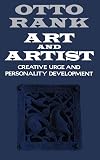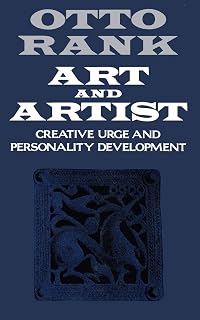
Art and Artist: Creative Urge and Personality Development
by Otto Rank
On This Page
Description
Along with Adler and Jung, Otto Rank was one of the intellectual giants in the inner circle around Sigmund Freud. Art and Artist, his major statement on the relationship of art to the individual and society, pursues in a broader cultural context Freud's ideas on art and neurosis and has had an important influence on many twentieth-century writers and thinkers, beginning with Henry Miller and Anais Nin.Art and Artist explores the human urge to create in all its complex aspects, in terms not show more only of individual works of art but of religion, mythology, and social institutions as well. Based firmly on Rank's knowledge of psychology and psychoanalysis, it ranges widely through anthropology and cultural history, reaching beyond psychology to a broad understanding of human nature. show lessTags
Recommendations





















Member Reviews
A very difficult book to get through but nonetheless an important one to read.
why people make things
Ratings
Members
- Recently Added By
Lists

Psicología - Clásicos
165 works; 2 members

Tom's Bookstore
346 works; 2 members
Author Information

51 Works 1,068 Members
Considered to be one of the most gifted psychotherapists of his time, Otto Rank investigated matters "beyond psychology" and became known for his energy, intellectual curiosity, and self-awareness. Born in Vienna, Rank had a very deprived childhood. Despite troubled feelings and suicidal thoughts during his adolescence, he read a great deal and show more became interested in the psychology of creativity. He first formulated his theories about art and neuroses in the series of remarkable daybooks (1903--1904). In 1912 he helped to found Imago, the first European journal of psychoanalysis. In the years of his association with Sigmund Freud from 1905 to 1925, he served as secretary to the psychoanalytic movement, and it was generally assumed that Freud regarded him as his successor. Rank, however, eventually came to see the roots of all psychoneuroses in the experience of birth. This theory he described in The Trauma of Birth (1924). Such differences caused his break with Freud in the middle 1920s, after which he lived in Paris and then New York. (Bowker Author Biography) show less
Common Knowledge
- Original publication date
- 1932
Classifications
Statistics
- Members
- 207
- Popularity
- 158,333
- Reviews
- 2
- Rating
- (4.38)
- Languages
- English, French, German
- Media
- Paper
- ISBNs
- 8
- ASINs
- 3