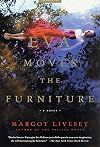
Eva Moves the Furniture
by Margot Livesey
On This Page
Description
From a highly acclaimed author-the enchanting, bittersweet story of a motherless young woman torn between real life and the otherwordly companions only she can see. On the morning of Eva McEwen's birth, six magpies congregate in the apple tree outside the window-a bad omen, according to Scottish legend. That night Eva's mother dies, leaving her to be raised by her aunt and heartsick father in the small town of Troon, Scotland. As a child, Eva is often visited by two companions: a woman and a show more girl. Invisible to everyone else, they seem benevolent at first, helping her to tidy her room and collect the hens' eggs. But, as she grows older, their intentions become increasingly unclear: Do they wish to protect or harm her? Is their meddling in her best interest or prompted by darker motivations? In the shadow of World War II, Eva studies nursing in Glasgow, tending to the wounded soldiers. But when she falls in love with a young plastic surgeon, the companions seem to have a very different idea as to her fate, and once again she finds herself unable to resist their pull. A magical novel about loneliness, love, and the profound connection between mother and daughter, Eva Moves the Furniture fuses the simplicity of a fairy tale with the complexity of adult passions. show lessTags
Recommendations





Member Recommendations
Member Reviews
First, this book is not a fantasy; the existence of ghosts in this story doesn’t necessarily place it into that genre. This is instead a smoothly written novel of a warmly told story where, upon completion, left me holding the book against my chest breathing in those final words and moments, allowing that feeling of familial love wash over me. Ahhh, satisfied.
Set in Scotland, our title character, Eva McEwan, was born in 1920 and sadly her mother passed shortly after her birth. She was lovingly raised by her father David and his sister, Aunt Lily. At the tender age of 4, Eva starts to notice there are 2 people around her who behave differently than others. Soon she realized she’s the only one who can see and hear them. In her lonely show more youth in the sparsely populated countryside of Ballintyre, Eva identified them as her companions, “girl” and “woman”. These companions stayed with Eva through her childhood, into her adult life, and finally through marriage and motherhood. At times, they seem to have their own agenda, one that may or may not be beneficial to Eva. On the other hand, they certainly don’t hesitate to protect and save Eva when she needed help. Along this journey, Eva questions their presence, and her questions are thoroughly answered by the end.
While I’m largely familiar with British lit, this Scottish lit offered a bit of twist. British English was referred to as “prim” and “proper”, which is then difficult to understand. Both WWI and WWII enter the story addressing women in the work force, rations for not just food but also to buy clothing and household items, and having sing-alongs during night raids to distract/entertain patients in hospitals (news to me!). Like I say, this is a gem of a simple book. The ending, book 4, was particularly well written and answered the reader’s questions thoroughly… - hmm, not gonna say anymore. 4 stars for the book, plus extra 0.5 star for the poignant ending.
One reading tip – don’t try to guess. It’s much more pleasurable to just let it absorb you.
Favorite Character: Eva McEwan – Eva was relatable to me. While having two ghosts as companions kept some potential friends away is unusual, it’s nonetheless common to have family aspects that we felt was best to keep at a safe, self-preservation distance from others. As an adult, she tried to do right for those who gave much for her, notably Aunt Lily, but she also balanced the need to live her own life too, which was also something I did.
Least Favorite Character: Samuel Rosenbaum – Full of angst against those who demean Jewish people, yet he reprimanded Eva for being childish when she told him about her companions. Doesn’t acceptance go in all directions?
Two Quotes:
On aging, growing up – from Eva on her father and aunt:
“…as I leaned out of the window to wave goodbye two strangers appeared before me. In place of my beloved ageless father and my aggravating aunt stood an elderly man, stiffer and stouter by the month, and a leaf-thin woman whom the merest breeze could blow away. My girlhood was gone, and its passing had brought David and Lily to the far side of middle age. How had I failed to notice?”
On mother-child connection:
“Fanning away the insects, I caught sight of my belly, strange yet familiar in its largeness. Beneath my palm the baby moved. Such a specific feeling, both part of me and apart. A foot or elbow jetted out, and it came to me that, just as my baby pressed again me, so had I once pressed against Barbara. She too had felt the drumming of my heels against the think skin of her belly, swimming towards daybreak. I used to think she had never known me. On the contrary, she had known me intimately.” show less
Set in Scotland, our title character, Eva McEwan, was born in 1920 and sadly her mother passed shortly after her birth. She was lovingly raised by her father David and his sister, Aunt Lily. At the tender age of 4, Eva starts to notice there are 2 people around her who behave differently than others. Soon she realized she’s the only one who can see and hear them. In her lonely show more youth in the sparsely populated countryside of Ballintyre, Eva identified them as her companions, “girl” and “woman”. These companions stayed with Eva through her childhood, into her adult life, and finally through marriage and motherhood. At times, they seem to have their own agenda, one that may or may not be beneficial to Eva. On the other hand, they certainly don’t hesitate to protect and save Eva when she needed help. Along this journey, Eva questions their presence, and her questions are thoroughly answered by the end.
While I’m largely familiar with British lit, this Scottish lit offered a bit of twist. British English was referred to as “prim” and “proper”, which is then difficult to understand. Both WWI and WWII enter the story addressing women in the work force, rations for not just food but also to buy clothing and household items, and having sing-alongs during night raids to distract/entertain patients in hospitals (news to me!). Like I say, this is a gem of a simple book. The ending, book 4, was particularly well written and answered the reader’s questions thoroughly… - hmm, not gonna say anymore. 4 stars for the book, plus extra 0.5 star for the poignant ending.
One reading tip – don’t try to guess. It’s much more pleasurable to just let it absorb you.
Favorite Character: Eva McEwan – Eva was relatable to me. While having two ghosts as companions kept some potential friends away is unusual, it’s nonetheless common to have family aspects that we felt was best to keep at a safe, self-preservation distance from others. As an adult, she tried to do right for those who gave much for her, notably Aunt Lily, but she also balanced the need to live her own life too, which was also something I did.
Least Favorite Character: Samuel Rosenbaum – Full of angst against those who demean Jewish people, yet he reprimanded Eva for being childish when she told him about her companions. Doesn’t acceptance go in all directions?
Two Quotes:
On aging, growing up – from Eva on her father and aunt:
“…as I leaned out of the window to wave goodbye two strangers appeared before me. In place of my beloved ageless father and my aggravating aunt stood an elderly man, stiffer and stouter by the month, and a leaf-thin woman whom the merest breeze could blow away. My girlhood was gone, and its passing had brought David and Lily to the far side of middle age. How had I failed to notice?”
On mother-child connection:
“Fanning away the insects, I caught sight of my belly, strange yet familiar in its largeness. Beneath my palm the baby moved. Such a specific feeling, both part of me and apart. A foot or elbow jetted out, and it came to me that, just as my baby pressed again me, so had I once pressed against Barbara. She too had felt the drumming of my heels against the think skin of her belly, swimming towards daybreak. I used to think she had never known me. On the contrary, she had known me intimately.” show less
I got this book the same day as The Missing World (same author), which I read first, though this is the one that was recommended to me specifically. I liked The Missing World but didn't love it, so Eva sat on the shelf for a year and a half before I started it. At first I thought it was a well-written but rather quiet book - the kind that often isn't published because it doesn't have "breakout" written all over it. But it drew me in, and the end made me cry. I think this is the only book that ever has.
"Were the facts I had taken for granted going to start shifting like the furniture? Yes, of course - the whole world was shifting..." (60)
"It was as if a small piece of the radiance I saw on all sides had bloomed within me." show more (110)
"...swimming towards daybreak." (185)
"And I have felt
A presence that disturbs me with the joy
Of elevated thoughts; a sense sublime
Of something far more deeply interfused,
Whose dwelling is the light of setting suns,
And the round ocean and the living air,
And the blue sky, and in the mind of man"
-William Wordsworth, "Tintern Abbey" show less
"Were the facts I had taken for granted going to start shifting like the furniture? Yes, of course - the whole world was shifting..." (60)
"It was as if a small piece of the radiance I saw on all sides had bloomed within me." show more (110)
"...swimming towards daybreak." (185)
"And I have felt
A presence that disturbs me with the joy
Of elevated thoughts; a sense sublime
Of something far more deeply interfused,
Whose dwelling is the light of setting suns,
And the round ocean and the living air,
And the blue sky, and in the mind of man"
-William Wordsworth, "Tintern Abbey" show less
Eva Moves the Furniture has an ending that brought me to tears. Of course, Mother's Day is on the doorstep -- never an easy holiday for me, though lately filled with more joy than tears-- which might explain the tears. But most of the credit for my tears must be given to Livesey -- it's been a while since an author so connected me with characters that I wept both at the loss of them and in celebration of them. LIvesey's style of storytelling, the voice of her novels, is one that reminds you that the soul of all good stories are the stuff of bedtimes and sitting round fires, the stuff of darkness mixed with mysteries and steady lights for warmth and illumination. Eva Moves the Furniture is a story of the joys and sorrows of Eva's life show more examined against the setting of a strong, yet mystical Scottish landscape, the kind of landscape where ghosts at every turn can seem like the most natural of occurances. The handling of the subplot of Eva's romance with a Jew in Glasgow during WWII and the lack of questioning that Eva does over the identity of the ghosts in her life were the weakest links in this otherwise thoroughly moving novel. I'm so happy this book has come to rest on my shelves. show less
I guess I expected something more paranormal from Eva Moves the Furniture – maybe that’s why I have a hard time writing a review about it.
When the back of the book mentions that the main character sees two companions that are invisible to everyone else…and asks “Do they wish to protect or harm her?” – my mind turns to ghosts; I assume that the story about the ghosts and that Eva is simply a vehicle for the ghosts.
But instead, the story is about Eva, her life, her feelings about the mother she never knew, her indecision regarding what she should do with her life… a novel, in other words.
Once I was able to change my mindset, I started to enjoy the book. The prose is matter-of-fact, painting a sturdy picture of life in a show more small town in Scotland – beginning in 1920 when Eva was born. The presence of her mother, Barbara, always hovers over her as she is raised by her father and her aunt.
Eva is very sheltered by these two; late to start school and finding it difficult to make friends once she is there. And then the companions appear, a woman and a girl, and suddenly her life is forever changed.
I liked the story, and liked Eva…but I didn’t really feel connected to her until she is grown and starts to think about marriage and a family. That may be me, projecting a bit, but it seems only at the point do her emotions seem strong enough to transfer to the reader.
“From that day in the churchyard, when the girl had kept her distance, I knew they would not come between us. As for the other things, the fluttering of the heart, the eagerness to touch and hold, I looked down at the ring and thought perhaps such feelings could be learned. Perhaps we could learn them together.”
And later, when the narration turns from Eva describing her day to day life to a letter to her child, the book becomes very poignant. Eva, who didn’t know her mother, is consumed by the life of her daughter in a very moving and beautiful way.
“Only the person upon whom I had turned my last thoughts was not present that day. You were with the first of many strangers. Anne had brought a bunch of violets on your behalf, and when the coffin was lowered into the grave, she stepped forward and placed the small purple flowers upon the shining wood. I have them still.”
This final section of Eva Moves the Furniture is where the book truly glows and becomes a ghost story in the emotional sense of the word – a mixture of past, present and future – where lives touch but do not intersect – where love lives on long after the body lets go. show less
When the back of the book mentions that the main character sees two companions that are invisible to everyone else…and asks “Do they wish to protect or harm her?” – my mind turns to ghosts; I assume that the story about the ghosts and that Eva is simply a vehicle for the ghosts.
But instead, the story is about Eva, her life, her feelings about the mother she never knew, her indecision regarding what she should do with her life… a novel, in other words.
Once I was able to change my mindset, I started to enjoy the book. The prose is matter-of-fact, painting a sturdy picture of life in a show more small town in Scotland – beginning in 1920 when Eva was born. The presence of her mother, Barbara, always hovers over her as she is raised by her father and her aunt.
Eva is very sheltered by these two; late to start school and finding it difficult to make friends once she is there. And then the companions appear, a woman and a girl, and suddenly her life is forever changed.
I liked the story, and liked Eva…but I didn’t really feel connected to her until she is grown and starts to think about marriage and a family. That may be me, projecting a bit, but it seems only at the point do her emotions seem strong enough to transfer to the reader.
“From that day in the churchyard, when the girl had kept her distance, I knew they would not come between us. As for the other things, the fluttering of the heart, the eagerness to touch and hold, I looked down at the ring and thought perhaps such feelings could be learned. Perhaps we could learn them together.”
And later, when the narration turns from Eva describing her day to day life to a letter to her child, the book becomes very poignant. Eva, who didn’t know her mother, is consumed by the life of her daughter in a very moving and beautiful way.
“Only the person upon whom I had turned my last thoughts was not present that day. You were with the first of many strangers. Anne had brought a bunch of violets on your behalf, and when the coffin was lowered into the grave, she stepped forward and placed the small purple flowers upon the shining wood. I have them still.”
This final section of Eva Moves the Furniture is where the book truly glows and becomes a ghost story in the emotional sense of the word – a mixture of past, present and future – where lives touch but do not intersect – where love lives on long after the body lets go. show less
I felt that this was very well written and fun to read throughout.
My major complaint was that the ending was sad - which isn't necessarily a bad thing; I mostly prefer to read books that don't end in tragedy, but several of my favourite books are sad in various ways. But in this case, I felt that nothing was gained from the sad ending. It wasn't set up in a way that made the story and its message more powerful or more beautiful and I felt that the characters all might as well have lived Happily Ever After.
My major complaint was that the ending was sad - which isn't necessarily a bad thing; I mostly prefer to read books that don't end in tragedy, but several of my favourite books are sad in various ways. But in this case, I felt that nothing was gained from the sad ending. It wasn't set up in a way that made the story and its message more powerful or more beautiful and I felt that the characters all might as well have lived Happily Ever After.
Well-written, interesting story. There is a Jewish character who is completely admirable except for his refusal to consider the possibility of ghosts.
There is a nice quote about a newborn baby: "You had the frowning, elderly expression of very young babies, as if you had recently arrived from another world and found this one sadly wanting."
There is a nice quote about a newborn baby: "You had the frowning, elderly expression of very young babies, as if you had recently arrived from another world and found this one sadly wanting."
This author's prose is sublime. As several (back cover) book reviews enthuse: " she limns her tale with beautiful evocations of the loneliness of childhood [also evoking a wonderful sense of place in Scotland!] the shimmery quality of ghostly spirits, and the fear & excitement of war time" (San Francisco Chronicle Book Review) ANd "what is extraordinary about this novel is the fretwork of feeling among its unorthodox cast of characters...Livesey has written a ghost story, of sorts...and, if it moves you, the end will send you back to the beginning" (The New Yorker). We live Eva McEwen's life, moving back & forth throughout her years, slowly learning to appreciate the" 'companions' -a woman and a girl- invisible to everyone else" as they show more assist her, provoke her, and always re-emerge, no matter what. But is also a very Scottish story, and a WWII story, and a story of the "profound connection between mother and daughter" (back cover). show less
Members
- Recently Added By
Author Information

14+ Works 3,854 Members
Margot Livesey is the award-winning author of a story collection, Learning by Heart, and the novels Homework, Criminals, and The Missing World. Born in Scotland, she currently lives and teaches in the Boston area. (Bowker Author Biography)
Awards and Honors
Awards
Common Knowledge
- Canonical title
- Eva Moves the Furniture
- Original publication date
- 2001
- People/Characters
- Eva McEwen
- Important places
- Glasgow, Scotland, UK; Ballintyre, Scotland, UK (fictional); Troon, South Ayrshire, Scotland, UK
- Important events
- World War II
- First words
- In 1551 the Italian surgeon Fiorovanti was travelling in Africa when he came upon two men fighting a duel.
- Last words
- (Click to show. Warning: May contain spoilers.)I have them still.
Classifications
Statistics
- Members
- 640
- Popularity
- 45,144
- Reviews
- 28
- Rating
- (3.62)
- Languages
- English, German
- Media
- Paper, Ebook
- ISBNs
- 9
- ASINs
- 3