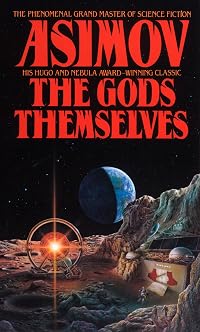
The Gods Themselves
by Isaac Asimov
On This Page
Description
Fiction. Science Fiction. Suspense. Thriller. HTML:In the twenty-second century Earth obtains limitless, free energy from a source science little understands: an exchange between Earth and a parallel universe, using a process devised by the aliens. But even free energy has a price. The transference process itself will eventually lead to the destruction of the Earth's Sun—and of Earth itself.Only a few know the terrifying truth—an outcast Earth scientist, a rebellious alien inhabitant of show more a dying planet, a lunar-born human intuitionist who senses the imminent annihilation of the Sun. They know the truth—but who will listen? They have foreseen the cost of abundant energy—but who will believe? These few beings, human and alien, hold the key to Earth's survival. show less
Tags
Recommendations
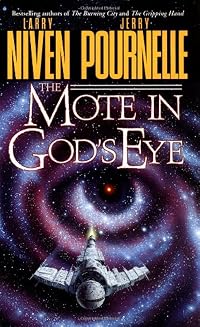
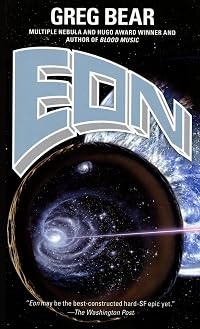
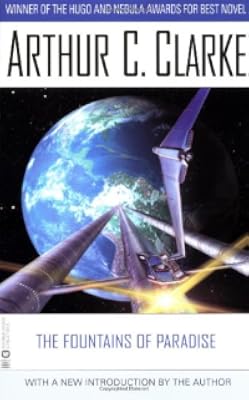
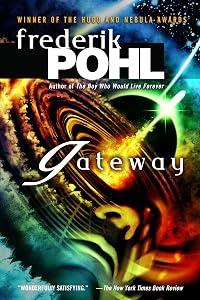










Member Recommendations
Member Reviews
Themes of sexuality and gender identity, sustainable power and the stupidity of Man.
In the first part Asimov satirises men, swaggering about with their PhDs and swinging their dicks around. Squatting a bit to make them look like they hang closer to the ground. He also points up some of the thinking mistakes we all fall into.
The second part is one of the most virtuoso displays I’ve ever read. He creates a universe with different physical laws and peoples it with aliens utterly different physiologically from us. He’s thought it all out from the psychological and sociological implications to literally the subatomic level. These aliens have three genders:
Rational (he/him)
Parental (he/him)
Emotional (she/her)
The Emotional in the triad we show more follow is transgender Rational and there’s a kind of gay three-way going on.
Back in the day I read in an interview or something Asimov saying the reason there weren’t many women in his books was because he didn’t know any. It was only years later reading his wikipedia page that I realised this was because they were avoiding him. He satirises women in this second section as empty-headed sunbathers. I think there’s a bit of a double standard here. The men may be idiots, but at least they have thoughts. Women, according to Asimov, have none at all. Also interesting that the Parental of the triad, though he/him, carries the babies and is an idiot. Only the Rational, the closest to our male is clever. The Emotional’s inner Rational seems to consist solely of being clever too.
Up to this point we’re on course for 5 stars. Consistently interesting and though-provoking, finely written and with a real sense of mystery. But then Asimov goes and screws it up. The third part features a middle-aged man bouncing around on the moon in the nude with a much younger woman. I have subjected this section to a number of scientific tests, including the Bechdel, and have failed to find any evidence that Asimov is satirising himself. I think he’s literally written down his sex fantasy. Toe-curling and just painful to read. The plot’s in place and is interesting but we need more of that and less bouncing and transparent blouses. show less
In the first part Asimov satirises men, swaggering about with their PhDs and swinging their dicks around. Squatting a bit to make them look like they hang closer to the ground. He also points up some of the thinking mistakes we all fall into.
The second part is one of the most virtuoso displays I’ve ever read. He creates a universe with different physical laws and peoples it with aliens utterly different physiologically from us. He’s thought it all out from the psychological and sociological implications to literally the subatomic level. These aliens have three genders:
Rational (he/him)
Parental (he/him)
Emotional (she/her)
The Emotional in the triad we show more follow is transgender Rational and there’s a kind of gay three-way going on.
Back in the day I read in an interview or something Asimov saying the reason there weren’t many women in his books was because he didn’t know any. It was only years later reading his wikipedia page that I realised this was because they were avoiding him. He satirises women in this second section as empty-headed sunbathers. I think there’s a bit of a double standard here. The men may be idiots, but at least they have thoughts. Women, according to Asimov, have none at all. Also interesting that the Parental of the triad, though he/him, carries the babies and is an idiot. Only the Rational, the closest to our male is clever. The Emotional’s inner Rational seems to consist solely of being clever too.
Up to this point we’re on course for 5 stars. Consistently interesting and though-provoking, finely written and with a real sense of mystery. But then Asimov goes and screws it up. The third part features a middle-aged man bouncing around on the moon in the nude with a much younger woman. I have subjected this section to a number of scientific tests, including the Bechdel, and have failed to find any evidence that Asimov is satirising himself. I think he’s literally written down his sex fantasy. Toe-curling and just painful to read. The plot’s in place and is interesting but we need more of that and less bouncing and transparent blouses. show less
"Against stupidity the gods themselves contend in vain." – Johann Christoph Friedrich von Schiller, The Maid of Orleans
The overarching storyline involves a method by which matter is exchanged between our universe and a parallel universe, resulting in what at first appears to be an unlimited supply of free energy to both. The process has been initiated by otherworldly beings, but Dr. Hallam, a scientist from earth, takes credit for it, to great acclaim. Later, a lone dissenter, Dr. Lamont, believes the exchange may cause our sun to explode, but faces tremendous opposition from Hallam and those who are enjoying the unlimited free energy and don’t want to give it up. They say there is no proof of an upcoming explosion and dismiss show more Lamont as a crackpot.
This is hard science fiction. In order to fully enjoy it, the reader will need to internalize the overall concept and follow the scientists’ trains of thought, and in order to do so, will need to have a certain level of interest in scientific detail. It does not require advanced knowledge of physics or chemistry, as the principles and processes are described in layman’s terms. For example, it references such topics as the Second Law of Thermodynamics, radioactive isotopes, electrons, protons, fusion, fission, electromagnetism, quarks, and the like. Here’s an example of what to expect:
“We are faced with a substance, plutonium-186, that cannot exist at all, let alone as an even momentarily stable substance, if the natural laws of the Universe have any validity at all. It follows, then, that since it does indubitably exist and did exist as a stable substance to begin with, it must have existed, at least to begin with, in a place or at a time or under circumstances where the natural laws of the Universe were other than they are. To put it bluntly, the substance we are studying did not originate in our Universe at all, but in another—an alternate Universe—a parallel Universe. Call it what you want.”
It is divided into three sections, which are related only by the overall story arc. Section 1 sets the stage, beginning in the year 2070. It shows how the universes interacted initially to establish the energy exchange, and how the rivalry between Hallam and Lamont developed.
Section 2 is my personal favorite. It describes the lives of the beings in the para-universe, comprised of “hard ones” and “soft ones,” who have differing levels of ability to move through each other. The “soft ones” live in triads: one rational, one parental, and one emotional, who bond together in a reproductive process called melting to produce offspring. A “hard one” is assigned to each triad as a mentor. Dua, an emotional “soft one” is the protagonist of this section. She is an atypical emotional, and anyone that has ever felt “otherness” will easily identify with her. She brings up the ethical questions of what the energy exchange is doing to the two universes.
Section 3 takes place on the moon, with one of Hallam’s discredited rivals, Dr. Dennison, doing research in conjunction with the Lunarites (humans born on the moon) to either prove or disprove Lamont’s hypothesis regarding whether or not the sun will explode. It provides an engaging picture of what life on the moon is like and how that proof is obtained.
As with all great science fiction, it not only tells a great story, it imparts plenty of observations about our own time. People with power are not easily persuaded to release it, even for the greater good. People live in denial and engage in short-term thinking, even when the results could be disastrous. I’m thinking specifically of the climate change debate. I find it amazing that it was published so long ago (1972) and yet the themes are still very relevant. show less
The overarching storyline involves a method by which matter is exchanged between our universe and a parallel universe, resulting in what at first appears to be an unlimited supply of free energy to both. The process has been initiated by otherworldly beings, but Dr. Hallam, a scientist from earth, takes credit for it, to great acclaim. Later, a lone dissenter, Dr. Lamont, believes the exchange may cause our sun to explode, but faces tremendous opposition from Hallam and those who are enjoying the unlimited free energy and don’t want to give it up. They say there is no proof of an upcoming explosion and dismiss show more Lamont as a crackpot.
This is hard science fiction. In order to fully enjoy it, the reader will need to internalize the overall concept and follow the scientists’ trains of thought, and in order to do so, will need to have a certain level of interest in scientific detail. It does not require advanced knowledge of physics or chemistry, as the principles and processes are described in layman’s terms. For example, it references such topics as the Second Law of Thermodynamics, radioactive isotopes, electrons, protons, fusion, fission, electromagnetism, quarks, and the like. Here’s an example of what to expect:
“We are faced with a substance, plutonium-186, that cannot exist at all, let alone as an even momentarily stable substance, if the natural laws of the Universe have any validity at all. It follows, then, that since it does indubitably exist and did exist as a stable substance to begin with, it must have existed, at least to begin with, in a place or at a time or under circumstances where the natural laws of the Universe were other than they are. To put it bluntly, the substance we are studying did not originate in our Universe at all, but in another—an alternate Universe—a parallel Universe. Call it what you want.”
It is divided into three sections, which are related only by the overall story arc. Section 1 sets the stage, beginning in the year 2070. It shows how the universes interacted initially to establish the energy exchange, and how the rivalry between Hallam and Lamont developed.
Section 2 is my personal favorite. It describes the lives of the beings in the para-universe, comprised of “hard ones” and “soft ones,” who have differing levels of ability to move through each other. The “soft ones” live in triads: one rational, one parental, and one emotional, who bond together in a reproductive process called melting to produce offspring. A “hard one” is assigned to each triad as a mentor. Dua, an emotional “soft one” is the protagonist of this section. She is an atypical emotional, and anyone that has ever felt “otherness” will easily identify with her. She brings up the ethical questions of what the energy exchange is doing to the two universes.
Section 3 takes place on the moon, with one of Hallam’s discredited rivals, Dr. Dennison, doing research in conjunction with the Lunarites (humans born on the moon) to either prove or disprove Lamont’s hypothesis regarding whether or not the sun will explode. It provides an engaging picture of what life on the moon is like and how that proof is obtained.
As with all great science fiction, it not only tells a great story, it imparts plenty of observations about our own time. People with power are not easily persuaded to release it, even for the greater good. People live in denial and engage in short-term thinking, even when the results could be disastrous. I’m thinking specifically of the climate change debate. I find it amazing that it was published so long ago (1972) and yet the themes are still very relevant. show less
Asimov es uno de esos autores cuyos libros me entretienen, me gustan o me fascinan. Jamás me topé con uno que no me gustara. Teniendo esto en cuenta, y sabiendo que "Los propios dioses" fue ganadora del premio Hugo y el premio Nébula, arranqué a leerlo como quien se encuentra con un paquete de papas fritas después de una noche entera fumando hierbas lícitas pero ilegales.
"Contra la estupidez, los propios dioses luchan en vano". Esta frase del poeta alemán Friedrich von Schiller deja claro el tema de la obra: La bomba de electrones, llevada a nuestro universo por seres interdimensionales, se transforma en un invento revolucionario descubierto por casualidad, revoluciona el planeta Tierra generando energía gratuita e infinita, lo show more que le reporta a su descubridor una fama mundial avasallante. Sin embargo, un admirador suyo comienza a encontrar evidencias de que la dichosa Bomba de Electrones podría cambiar las condiciones del universo aumentando tanto la actividad del Sol que lo haría estallar en pocos años.
En un relato que nos lleva al parauniverso y nos instruye durante varios capítulos irónicos y fascinantes acerca de la naturaleza del sexo alienígena, Asimov narra una gesta científica donde compiten egos, intereses económicos, atracción sexual y reputaciones destruídas por gritar al mundo el peligro al que se exponen.
Sin embargo, Asimov da un giro a la frase de Schiller. Un giro que deja en claro el tono de toda su obra. Ni la humanidad es estúpida y se encamina a su destrucción, como no se cansan de decir los autores distópicos, ni se puede alcanzar la verdad resignándose a la derrota.
Y es por eso que Isaac Asimov parafrasea el título de la tercera parte de este relato impecable con unos sutiles y determinantes signos de interrogación:
"Contra la estupidez, los propios dioses, ¿luchan en vano?" show less
"Contra la estupidez, los propios dioses luchan en vano". Esta frase del poeta alemán Friedrich von Schiller deja claro el tema de la obra: La bomba de electrones, llevada a nuestro universo por seres interdimensionales, se transforma en un invento revolucionario descubierto por casualidad, revoluciona el planeta Tierra generando energía gratuita e infinita, lo show more que le reporta a su descubridor una fama mundial avasallante. Sin embargo, un admirador suyo comienza a encontrar evidencias de que la dichosa Bomba de Electrones podría cambiar las condiciones del universo aumentando tanto la actividad del Sol que lo haría estallar en pocos años.
En un relato que nos lleva al parauniverso y nos instruye durante varios capítulos irónicos y fascinantes acerca de la naturaleza del sexo alienígena, Asimov narra una gesta científica donde compiten egos, intereses económicos, atracción sexual y reputaciones destruídas por gritar al mundo el peligro al que se exponen.
Sin embargo, Asimov da un giro a la frase de Schiller. Un giro que deja en claro el tono de toda su obra. Ni la humanidad es estúpida y se encamina a su destrucción, como no se cansan de decir los autores distópicos, ni se puede alcanzar la verdad resignándose a la derrota.
Y es por eso que Isaac Asimov parafrasea el título de la tercera parte de este relato impecable con unos sutiles y determinantes signos de interrogación:
"Contra la estupidez, los propios dioses, ¿luchan en vano?" show less
Everybody knows Isaac Asimov, author of Foundation and I, Robot and Nightfall and The Caves of Steel. What most people don't remember about him today is that all the great books I listed were written prior to 1955. For most of the 1960s, Asimov made his name as a pop historian and science writer. 1972's The Gods Themselves is a return to hard-SF form: three linked novellas around a single fascinating breakthrough.
The Electron Pump is the source of clean energy for a devastated and demoralized Earth. Discovered by accident, it involves an interdimensional exchange of Tungsten for Plutonium. The accidental discoverer of the Electron Pump, Dr. Hallam is a scientific thug, jealous of his power and privilege, and unwilling to see the exact show more mechanisms of the pump investigated, because that might reveal that he was a mere conduit for the aliens. Worse, long-term use of the pump would change the workings of the strong nuclear force, causing the sun to go nova in decades. Hallam, and the comfortable people of Earth, refuse to stop the pump, despite concerning messages from the intelligent para-Universal beings on the other side.
The second section of the book concerns those para-Universal beings, an imaginatively constructed three-sexed species. The Soft Ones are divided into Rationals, Emotionals, and Parentals, with each mated triplet needing one of each. Photosynthetic Soft Ones flow like smoke, and can meld and penetrate each other and physical objects. Hard Ones are enigmatic, long-lived, the true power on their dying world. With the sun dying, they have invented the Electron Pump, first to exchange energy with humans, and then to borrow energy from a sun gone nova.
The third section takes place on the moon, following Dennison, the disgraced co-discoverer of the Electron Pump as he adapts to lunar society with the help of the beautiful (and Intuitive, with a capital I) tour guide Selene. They enjoy lunar sports like the melee and slope gliding, and Dennison invents a counter to the Electron Pump, that draws from a universe with a weaker Strong Force, general energy while preserving the balance of forces around Earth.
There's a lot to like here. The depiction of a senior scientist not as a genius, but as a grasping and jealous politician, is one area where Asimov's life experience as a professor and science writer paid off. I wonder if Hallam was based on anyone specific. Maybe Edward Teller or James Watson, or just a particularly obstinate department head. The alien Soft Ones are a fascinating species that is, I think, just on the limits of reliability. The third section, with lunar life, is weaker and a retread of ideas better developed by Heinlein, but the overall themes of sustainability, the long-term safety of technologies our civilization depend on, is quite well-developed. Not the best Asimov, but a good book regardless. show less
The Electron Pump is the source of clean energy for a devastated and demoralized Earth. Discovered by accident, it involves an interdimensional exchange of Tungsten for Plutonium. The accidental discoverer of the Electron Pump, Dr. Hallam is a scientific thug, jealous of his power and privilege, and unwilling to see the exact show more mechanisms of the pump investigated, because that might reveal that he was a mere conduit for the aliens. Worse, long-term use of the pump would change the workings of the strong nuclear force, causing the sun to go nova in decades. Hallam, and the comfortable people of Earth, refuse to stop the pump, despite concerning messages from the intelligent para-Universal beings on the other side.
The second section of the book concerns those para-Universal beings, an imaginatively constructed three-sexed species. The Soft Ones are divided into Rationals, Emotionals, and Parentals, with each mated triplet needing one of each. Photosynthetic Soft Ones flow like smoke, and can meld and penetrate each other and physical objects. Hard Ones are enigmatic, long-lived, the true power on their dying world. With the sun dying, they have invented the Electron Pump, first to exchange energy with humans, and then to borrow energy from a sun gone nova.
The third section takes place on the moon, following Dennison, the disgraced co-discoverer of the Electron Pump as he adapts to lunar society with the help of the beautiful (and Intuitive, with a capital I) tour guide Selene. They enjoy lunar sports like the melee and slope gliding, and Dennison invents a counter to the Electron Pump, that draws from a universe with a weaker Strong Force, general energy while preserving the balance of forces around Earth.
There's a lot to like here. The depiction of a senior scientist not as a genius, but as a grasping and jealous politician, is one area where Asimov's life experience as a professor and science writer paid off. I wonder if Hallam was based on anyone specific. Maybe Edward Teller or James Watson, or just a particularly obstinate department head. The alien Soft Ones are a fascinating species that is, I think, just on the limits of reliability. The third section, with lunar life, is weaker and a retread of ideas better developed by Heinlein, but the overall themes of sustainability, the long-term safety of technologies our civilization depend on, is quite well-developed. Not the best Asimov, but a good book regardless. show less
I'm sure eventually I'm going to read an Asimov book and not be completely compelled, or not be inspired to think beyond the stars, of humanity's struggles, of future technology, of intergalactic colonization, of philosophy and science and environmental concerns. It may happen, but not after The Gods Themselves. The usual glee I felt reading a well-paced, extremely inventive and hopeful story of Asimov's was here. Extremely relevant to today's political and scientific climate with Covid-19 going on and Global Warming being a concern.
Fantastic book, the 2nd portion is really something. Extremely unique, though it took me longer to wrap my head around than I'd like (I was reminded of A Fire Upon the Deep in terms of understanding super show more different alien activity) but eventually settled in.
The only complaint I had is that it was too short! But that's a backhanded compliment in a way. Loved this book! show less
Fantastic book, the 2nd portion is really something. Extremely unique, though it took me longer to wrap my head around than I'd like (I was reminded of A Fire Upon the Deep in terms of understanding super show more different alien activity) but eventually settled in.
The only complaint I had is that it was too short! But that's a backhanded compliment in a way. Loved this book! show less
Isaac Asimov dedicates The Gods Themselves to mankind, and to the hope that the war against folly may someday be won after all. Asimov believed that mankind’s approach to environmental issues was skewed. In The Gods Themselves, we see, through the lens of science fiction, the holes in mankind’s approaches to dealing with the environment. This idea is summed up by the character Senator Burt (this is quoted on the first page of my copy of the book) when he says:
“It is a mistake, to suppose that the public wants the environment protected or their lives saved and that they will be grateful to any idealist who will fight for such ends. What the public wants is their own individual comfort.”
Thinking about the environment by reading a show more science fiction book was a new experience for me. I’m not planning on changing my lifestyle because I read this book, but I see the problem in a new way. I guess, as Senator Burt suggests, I just want my own individual comfort.
I decided to read this book because it is considered one of the classics of Science Fiction. It won the Nebula and Hugo awards for best novel. Many consider it one of Isaac Asimov’s best standalone novels. I was not disappointed. It was a book I couldn’t put down. Like all great sci-fi books you enter a world you could have never imagined before reading. I’m glad I visited.
You can watch a more detailed analysis of the book I did on YouTube - Link to YouTube Video show less
“It is a mistake, to suppose that the public wants the environment protected or their lives saved and that they will be grateful to any idealist who will fight for such ends. What the public wants is their own individual comfort.”
Thinking about the environment by reading a show more science fiction book was a new experience for me. I’m not planning on changing my lifestyle because I read this book, but I see the problem in a new way. I guess, as Senator Burt suggests, I just want my own individual comfort.
I decided to read this book because it is considered one of the classics of Science Fiction. It won the Nebula and Hugo awards for best novel. Many consider it one of Isaac Asimov’s best standalone novels. I was not disappointed. It was a book I couldn’t put down. Like all great sci-fi books you enter a world you could have never imagined before reading. I’m glad I visited.
You can watch a more detailed analysis of the book I did on YouTube - Link to YouTube Video show less
The Gods Themselves is a story of two worlds that are struggling for power and survival, although they have never met. One world, the human's world, is so consumed with the need for free energy they are unwilling to give up their source of power, even though it may destroy all life in their Universe. The other world needs the energy pulled from the Earth's Universe because their own Sun is about to die. The scientists struggle against an unseen time clock to save their world.
The story is an ingenious and prescient yarn that touches on the issue of our civilization’s insatiable need for cheap, plentiful energy and our inability to accept the environmental consequences of that dependence. It is told across multiple parallel universes show more and has a description of a para-race of beings that is staggering in its complexity; the novel is also a cautionary tale of scientific hubris and ego run amok and the cross-dimensional dissidents who try desperately to avert a crisis. With echoes of our own world’s current global energy crises and the environmental impact of our reliance on dirty energy sources, the book is an eerie reminder of the trade-offs we make in the name of progress and civilization.
Frederick Hallam, a scientist, discovers a substance, plutonium-186, that should not exist under the physical laws in the universe. It becomes more radioactive over time, shooting out positrons. This substance is transmitted to Earth from a para-universe in which physical laws are much different. This substance provides cheap, seemingly endless, and nonpolluting energy. Increasing amounts of it can be attracted by use of a device called the Inter-Universe Electron Pump. In exchange for plutonium-186, Earth provides tungsten; in the para-universe, tungsten emits electrons and thus provides energy.
The first section, “Against Stupidity,” details the Pump’s discovery from the point of view of Peter Lamont, who is writing a history of this scientific development. He decides that the Pump may transfer some of the physical laws of the para-universe to Earth’s universe (and vice versa), with the result that nuclear reactions in the Sun will grow stronger and the Sun will turn into a nova, wiping out all life on Earth. At the same time, suns in the para-universe will cool down.
Lamont warns about the possible dangers, but his warnings are paid little heed. He attempts to communicate with the para-universe aliens, aided by linguistic expert Myron Bronowski. Ultimately, they succeed, receiving a message that appears to warn that the Pump is dangerous but also appearing to suggest that authorities in the para-universe will not stop the process. It is up to humanity to do so.
The best part for this reader was the second section, “. . . The Gods Themselves,” where the locale shifts to the para-universe. The inhabitants include three types of alien children with different characteristics: Rationals, Parentals, and Emotionals. The Parentals give birth to the other two types, and one of each of the three types constitute a triad who occasionally melt together in a sexual process, experiencing pleasure but later not remembering all that took place during merger.
There are also Hard Ones, other aliens who do not melt. A Hard One is the adult form of a Rational-Parental-Emotional triad, constituting a permanent melding of the mature triad. A Hard One named Estwald began the energy interchange with Earth’s universe because of a winding down of the energy sources in theirs. The Hard Ones know that this may cause Earth’s sun to explode, but they still will not stop the process because that explosion would result in emission of a huge source of energy for them. An Emotional (Dua) is troubled by this and warns the people of Earth’s universe of the dangers of the Pump. It is then revealed that Dua is part of the triad that makes up Estwald.
In the third section, “. . . Contend in Vain?,” Benjamin Allan Denison, a scientist and past colleague of Hallam, becomes involved with a female Lunar tour guide named Selene. The Moons inhabitants have been unable to use the Pump there, but they wish to as a means of becoming more independent from Earth. Denison confirms that the Pump is a danger to the Sun’s stability but suggests that if there are two parallel universes, there must be more. The denouement of the story follows providing an adequate if not inspiring finish to this fine tale. Asimov's imaginative aliens and the suspense created by the scientists made this another classic from the prolific pen of Isaac Asimov. show less
The story is an ingenious and prescient yarn that touches on the issue of our civilization’s insatiable need for cheap, plentiful energy and our inability to accept the environmental consequences of that dependence. It is told across multiple parallel universes show more and has a description of a para-race of beings that is staggering in its complexity; the novel is also a cautionary tale of scientific hubris and ego run amok and the cross-dimensional dissidents who try desperately to avert a crisis. With echoes of our own world’s current global energy crises and the environmental impact of our reliance on dirty energy sources, the book is an eerie reminder of the trade-offs we make in the name of progress and civilization.
Frederick Hallam, a scientist, discovers a substance, plutonium-186, that should not exist under the physical laws in the universe. It becomes more radioactive over time, shooting out positrons. This substance is transmitted to Earth from a para-universe in which physical laws are much different. This substance provides cheap, seemingly endless, and nonpolluting energy. Increasing amounts of it can be attracted by use of a device called the Inter-Universe Electron Pump. In exchange for plutonium-186, Earth provides tungsten; in the para-universe, tungsten emits electrons and thus provides energy.
The first section, “Against Stupidity,” details the Pump’s discovery from the point of view of Peter Lamont, who is writing a history of this scientific development. He decides that the Pump may transfer some of the physical laws of the para-universe to Earth’s universe (and vice versa), with the result that nuclear reactions in the Sun will grow stronger and the Sun will turn into a nova, wiping out all life on Earth. At the same time, suns in the para-universe will cool down.
Lamont warns about the possible dangers, but his warnings are paid little heed. He attempts to communicate with the para-universe aliens, aided by linguistic expert Myron Bronowski. Ultimately, they succeed, receiving a message that appears to warn that the Pump is dangerous but also appearing to suggest that authorities in the para-universe will not stop the process. It is up to humanity to do so.
The best part for this reader was the second section, “. . . The Gods Themselves,” where the locale shifts to the para-universe. The inhabitants include three types of alien children with different characteristics: Rationals, Parentals, and Emotionals. The Parentals give birth to the other two types, and one of each of the three types constitute a triad who occasionally melt together in a sexual process, experiencing pleasure but later not remembering all that took place during merger.
There are also Hard Ones, other aliens who do not melt. A Hard One is the adult form of a Rational-Parental-Emotional triad, constituting a permanent melding of the mature triad. A Hard One named Estwald began the energy interchange with Earth’s universe because of a winding down of the energy sources in theirs. The Hard Ones know that this may cause Earth’s sun to explode, but they still will not stop the process because that explosion would result in emission of a huge source of energy for them. An Emotional (Dua) is troubled by this and warns the people of Earth’s universe of the dangers of the Pump. It is then revealed that Dua is part of the triad that makes up Estwald.
In the third section, “. . . Contend in Vain?,” Benjamin Allan Denison, a scientist and past colleague of Hallam, becomes involved with a female Lunar tour guide named Selene. The Moons inhabitants have been unable to use the Pump there, but they wish to as a means of becoming more independent from Earth. Denison confirms that the Pump is a danger to the Sun’s stability but suggests that if there are two parallel universes, there must be more. The denouement of the story follows providing an adequate if not inspiring finish to this fine tale. Asimov's imaginative aliens and the suspense created by the scientists made this another classic from the prolific pen of Isaac Asimov. show less
Members
- Recently Added By
Lists

Best Science Fiction Novels
816 works; 430 members

Hugo Award Winning Novels
63 works; 23 members
Survey of Classic Science Fiction
171 works; 48 members

Hugo Awards - Best Novel
69 works; 10 members

S.F. Masterworks (Complete)
229 works; 15 members

SF Masterworks
193 works; 8 members
Locus Award for Best Novel/SF Novel
53 works; 6 members

Nebula Award
111 works; 14 members

Truly alien aliens (SF)
42 works; 3 members

Speculative Fiction to Read
706 works; 32 members

Must read
30 works; 2 members
Best Books With Aliens
67 works; 10 members

Books Read in 2025
4,189 works; 98 members

Unread books
1,063 works; 87 members

Books Read in 2014
2,343 works; 89 members

Swinging Seventies
255 works; 18 members

My E-Book Collection - Opinions Welcome
92 works; 10 members

al.vick-wishlist-scifi-fant
181 works; 2 members
Author Information

2,398+ Works 293,586 Members
Isaac Asimov was born in Petrovichi, Russia, on January 2, 1920. His family emigrated to the United States in 1923 and settled in Brooklyn, New York, where they owned and operated a candy store. Asimov became a naturalized U.S. citizen at the age of eight. As a youngster he discovered his talent for writing, producing his first original fiction at show more the age of eleven. He went on to become one of the world's most prolific writers, publishing nearly 500 books in his lifetime. Asimov was not only a writer; he also was a biochemist and an educator. He studied chemistry at Columbia University, earning a B.S., M.A. and Ph.D. In 1951, Asimov accepted a position as an instructor of biochemistry at Boston University's School of Medicine even though he had no practical experience in the field. His exceptional intelligence enabled him to master new systems rapidly, and he soon became a successful and distinguished professor at Columbia and even co-authored a biochemistry textbook within a few years. Asimov won numerous awards and honors for his books and stories, and he is considered to be a leading writer of the Golden Age of science fiction. While he did not invent science fiction, he helped to legitimize it by adding the narrative structure that had been missing from the traditional science fiction books of the period. He also introduced several innovative concepts, including the thematic concern for technological progress and its impact on humanity. Asimov is probably best known for his Foundation series, which includes Foundation, Foundation and Empire, and Second Foundation. In 1966, this trilogy won the Hugo award for best all-time science fiction series. In 1983, Asimov wrote an additional Foundation novel, Foundation's Edge, which won the Hugo for best novel of that year. Asimov also wrote a series of robot books that included I, Robot, and eventually he tied the two series together. He won three additional Hugos, including one awarded posthumously for the best non-fiction book of 1995, I. Asimov. "Nightfall" was chosen the best science fiction story of all time by the Science Fiction Writers of America. In 1979, Asimov wrote his autobiography, In Memory Yet Green. He continued writing until just a few years before his death from heart and kidney failure on April 6, 1992. (Bowker Author Biography) show less
Some Editions
Awards and Honors
Awards
Distinctions
Series
Belongs to Publisher Series
Delta Pocket (2)
Libro amigo [Bruguera] (262)
Sündmuste horisont (41)
Gallimard, Folio SF (120)
SF Masterworks (New design)
Heyne Allgemeine Reihe (5126)
Présence du futur (173)
Science Fiction Book Club (2942)
Work Relationships
Is contained in
Common Knowledge
- Canonical title
- The Gods Themselves
- Original title
- The Gods Themselves; The Gods themselves
- Original publication date
- 1972-05
- People/Characters
- Frederick Hallam; Peter Lamont; Dua; Estwald; Benjamin Allan Denison; Selene Lindstrom (show all 11); Odeen; Tritt; Mike Bronowski; The Hard Ones; Barron Neville
- Important places
- The Moon; Earth; The para-Universe
- Important events
- The Great Crisis
- Epigraph*
- Mit der Dummheit kämpfen Götter selbst vergebens. [Schiller]
- Dedication
- Dedication
To Mankind
And the hope that the war against folly may someday be won, after all. - First words
- "No good!" said Lamont, sharply. "I didn't get anywhere."
- Quotations
- Against stupidity the gods themselves contend in vain.
- Last words
- (Click to show. Warning: May contain spoilers.)He stopped hesitating.
- Original language
- English US
- Canonical DDC/MDS
- 813.08762
- Disambiguation notice
- Contents: Part One. Against stupidity . . . -- Part Two. . . . the gods themselves . . . -- Part Three. . . . contend in vain?
*Some information comes from Common Knowledge in other languages. Click "Edit" for more information.
Classifications
- Genres
- Science Fiction, Fiction and Literature
- DDC/MDS
- 813.08762 — Literature & rhetoric American literature in English American fiction in English By type Genre fiction Adventure fiction Speculative fiction Science fiction
- LCC
- PZ3 .A8316 .G — Language and Literature Fiction and juvenile belles lettres Fiction and juvenile belles lettres Fiction in English
- BISAC
Statistics
- Members
- 6,689
- Popularity
- 1,800
- Reviews
- 118
- Rating
- (3.85)
- Languages
- 18 — Catalan, Czech, Danish, Dutch, English, Estonian, Finnish, French, German, Greek, Hungarian, Italian, Lithuanian, Polish, Romanian, Spanish, Swedish, Portuguese (Portugal)
- Media
- Paper, Audiobook, Ebook
- ISBNs
- 70
- ASINs
- 76