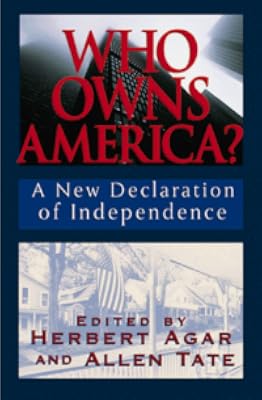
Who Owns America: A New Declaration of Independence
by Herbert Agar, Allen Tate
On This Page
Description
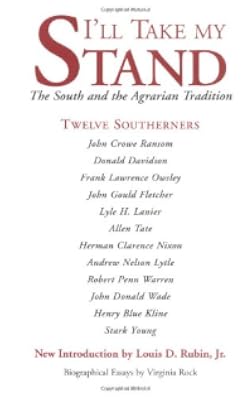
"Who Owns America? A New Declaration of Independence is the classic sequel to I'll Take My Stand, the famous defense of the South's agrarian traditions. But whereas I'll Take My Stand was theoretical and sectional, Who Owns America? sought to be concrete and national, and it succeeded. The book evokes and defends in realist terms an America characterized by small-property ownership, decentralized politics, and responsible stewardship of the nation's natural resources." "It was a radical show more statement in 1936 and remains one at the end of the twentieth century. How should a republic exercise power over its citizens? How may economic goods be justly distributed? What status should the small farm have in the life of a nation? By what means may family life be rendered stable? What is the economic role of women in a free society? These are just some of the issues raised, and answered in unique ways, in this book. Though written over sixty years ago, Who Owns America? still challenges many assumptions at play in the American public psyche and is also indispensable in understanding a crucial period of American history."--BOOK JACKET.Title Summary field provided by Blackwell North America, Inc. All Rights Reserved show lessTags
Recommendations



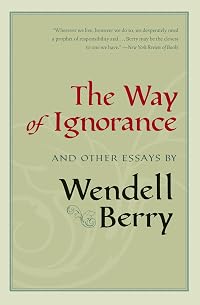
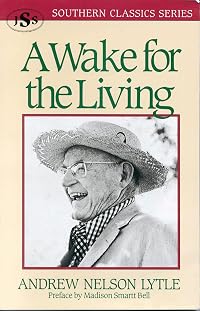

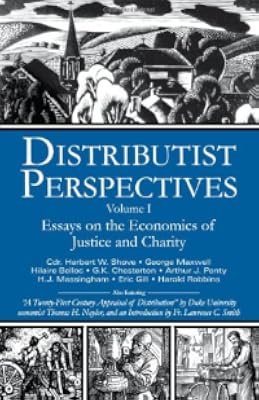
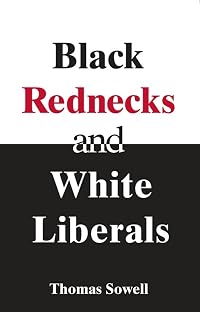

Members
- Recently Added By
Author Information
24+ Works 262 Members

55+ Works 913 Members
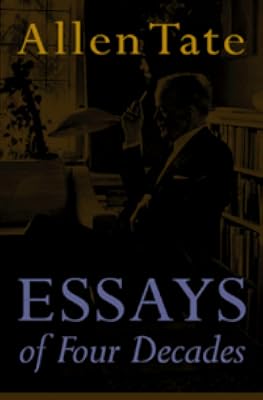
Tate---poet, essayist, novelist, biographer, and critic---began his literary career in 1922 as an editor of The Fugitive The Fugitive, a magazine of southern poets and critics, many of them associated with Vanderbilt University. As editor and in his own works, Tate advocated regionalism, explaining that "only a return to the provinces, to the show more small self-contained centers of life, will put the all-destroying abstraction America safely to rest." In 1943 he held the chair of poetry in the Library of Congress. From 1944 to 1947, he edited another important journal of literary criticism, Sewanee Review. Tate claimed to be "on record as a casual essayist of whom little consistency can be expected." Nevertheless, as editor of The Fugitive and the Sewanee Review, he had a dramatic impact on the availability and evaluation of poets and prose writers. He made significant contributions to modern poetry and modern literary criticism. His poetry, usually identified as "modern metaphysical," he described as "gradually circling round a subject, threatening it and using the ultimate violence upon it." As a critic, he is generally placed with the "new" or formalist critics, though he adds a strong strain of religious humanism, reflected by his conversion in 1950 to Roman Catholicism. Tate was elected to the National Institute of Arts and Letters in 1949 and won the Bollingen Prize in poetry in 1956. (Bowker Author Biography) show less
All Editions
Classifications
- Genres
- Nonfiction, Economics, General Nonfiction, History, Philosophy, Business
- DDC/MDS
- 330.973 — Society, government, & culture Economics Jobs & Careers Economic geography and history North America United States
- LCC
- HC106.3 .W475 — Social sciences Economic history and conditions Economic history and conditions By region or country
Statistics
- Members
- 47
- Popularity
- 639,240
- Languages
- English
- Media
- Paper
- ISBNs
- 3
- ASINs
- 1