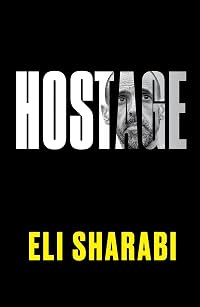
Hostage
by Eli Sharabi
On This Page
Description
In a raw and unflinching memoir, Eli Sharabi, a survivor of 491 days in Hamas captivity, recounts the harrowing ordeal of his abduction from Kibbutz Be'eri on October 7th, 2023, the loss of his wife and daughters, and his unyielding resolve to survive. Narrated by award winning actor, Geoffrey Cantor."I refuse to let myself drown in pain. I am surviving. I am a hostage. In the heart of Gaza. A stranger in a strange land. In the home of a Hamas-supporting family. And I'm getting out of here. show more I have to. I'm getting out of here. I'm coming home."—Eli Sharabi
On October 7, 2023, Hamas terrorists stormed Kibbutz Be'eri, shattering the peaceful life Eli Sharabi had built with his British wife, Lianne, and their teenage daughters, Noiya and Yahel. Dragged barefoot out his front door while his family watched in horror, Sharabi was plunged deep into the suffocating darkness of Gaza's tunnels. As war raged above him, he endured a grueling 491 days in captivity, all the while holding onto the hope that he would one day be reunited with his loved ones.
Eli Sharabi's story is one of hunger and heartache, of physical pain, longing, loneliness and a helplessness that threatens to destroy the soul. But it is also a story of strength, of resilience, and of the human spirit's refusal to surrender. It is about the camaraderie forged in captivity, the quiet power of faith, and one man's unrelenting decision to choose life, time and time again.
In the first memoir by a released Israeli hostage, and the fastest-selling book in Israel's history, Sharabi offers a searing firsthand account of survival under unimaginable conditions—starvation, isolation, physical beatings, and psychological abuse at the hands of his captors.
Narrated in haunting timbre by award winning actor Geoffrey Cantor, and compared to Elie Wiesel's Night and Laura Hillenbrand's Unbroken, Hostage is a profound witness to history, so it shall be neither forgotten nor erased.
. Biography & Autobiography. Nonfiction. Politics. Judaica. show less
Tags
Recommendations









































Member Reviews
Heartbreaking and painful to read, Eli Sharabi’s account of his life after being taken hostage from his home in Kibbutz Be’eri, Israel, is important documentation to what happened to himself and others who were kidnapped on 7 October, 2023, by Hamas and taken into Gaza. It reminded me of reading similar devastating works by Elie Wiesel and others about surviving the Holocaust. It made me realize once again just how brutal some people can be to others. Where is our collective humanity?
The only relief I felt in reading this book (which I asked my local library to order…and they did so) was knowing ahead of time that the author survived, although he lost his wife, two teenage daughters and his brother at the hands of Hamas show more terrorists.
Sharabi’s story is mesmerizing in a dreadful kind of way. It is a memoir that should be read by everyone if only to figure out what is wrong with this world so we can correct it — a concept called tikkun olam (repairing the world) in Judaism. There is no easy way to read it because it is grim. However, to read it is to support those who suffered innocently and survived as well as to offer blessing to those who did not survive. It is a brutal read, but the writing is beautiful and deeply moving. Most of all, I found Sharabi’s words and outlook on life itself deeply inspirational. show less
The only relief I felt in reading this book (which I asked my local library to order…and they did so) was knowing ahead of time that the author survived, although he lost his wife, two teenage daughters and his brother at the hands of Hamas show more terrorists.
Sharabi’s story is mesmerizing in a dreadful kind of way. It is a memoir that should be read by everyone if only to figure out what is wrong with this world so we can correct it — a concept called tikkun olam (repairing the world) in Judaism. There is no easy way to read it because it is grim. However, to read it is to support those who suffered innocently and survived as well as to offer blessing to those who did not survive. It is a brutal read, but the writing is beautiful and deeply moving. Most of all, I found Sharabi’s words and outlook on life itself deeply inspirational. show less
Eli Sharabi’s Hostage is a raw, searing memoir of captivity, loss, and survival that echoes Viktor Frankl’s Man’s Search for Meaning. It is both a personal testimony and a universal meditation on endurance in the face of unimaginable cruelty.
Companions in Captivity
Sharabi was abducted from Kibbutz Be’eri on October 7, 2023, and held for 491 days in Hamas tunnels beneath Gaza. He was not alone: fellow hostages became his lifeline. Together, they forged fragile bonds, sharing whispered encouragement and small acts of solidarity that helped stave off despair. These companions were not merely fellow sufferers but co-strategists in survival, inventing routines, prayers, and mental exercises to preserve dignity and hope.
The Psychology show more of Captives
Sharabi describes the oscillation between despair and determination. Hunger gnawed constantly, and humiliation was routine, yet he and others clung to fragments of meaning—memories of family, faith, and the promise of eventual freedom. Like Frankl, Sharabi shows how the human spirit can endure when anchored to purpose, even when stripped of autonomy.
The Psychology of Captors
The captors emerge as complex figures: cruel, mocking, and intimidating, yet also deeply fearful. Sharabi notes their terror of Israeli combat forces, which translated into erratic behavior—sometimes violent, sometimes oddly encouraging when Hamas propaganda suggested victory. Their psychological swings mirrored the war’s ebb and flow: moments of triumph brought taunts and harassment, while setbacks produced paranoia and harsher treatment.
Beyond this, Sharabi records their grandiose ideological dreams: visions of conquering the world so that Islam would reign supreme. These declarations were not abstract theology but daily reminders of the captors’ worldview, used to justify cruelty and to intimidate their prisoners with a sense of inevitable domination.
Cruelty, Harassment, and Intimidation
Sharabi catalogues the sensory assaults: beatings, iron shackles, constant hunger, and deliberate humiliation. Captors weaponized uncertainty, alternating between threats and false reassurances. The captives were denied basic human needs, their suffering amplified by psychological games designed to break their will.
Strategies of Survival
Against this, Sharabi and his companions developed micro-strategies of resilience:
- Sharing whispered words of encouragement
- Creating mental routines to mark time
- Reciting prayers or fragments of poetry
- Supporting one another through moments of collapse
These strategies transformed captivity into a collective struggle, where survival was not only individual but communal.
The Shock of Loss
Perhaps the most devastating moment came after Sharabi’s release in February 2025, when he learned that his wife Lianne, daughters Noiya and Yahel, and his brother Yossi had been murdered on October 7. The revelation reframed his ordeal: survival was not a return to family but a confrontation with irrevocable loss. His grief is palpable, yet his memoir insists on bearing witness, ensuring their lives are remembered.
A Testament of Triumph
Despite the nightmare, Hostage is ultimately a story of triumph over evil. Sharabi refuses to let cruelty define him. His narrative resonates with Frankl’s insight that meaning can be found even in suffering. By documenting both the horror and the resilience, Sharabi transforms personal tragedy into communal testimony, speaking for all victims of October 7 and beyond.
Hostage is not just a memoir of captivity—it is a meditation on human endurance, the fragility of hope, and the moral clarity that emerges when survival itself becomes an act of defiance. show less
Companions in Captivity
Sharabi was abducted from Kibbutz Be’eri on October 7, 2023, and held for 491 days in Hamas tunnels beneath Gaza. He was not alone: fellow hostages became his lifeline. Together, they forged fragile bonds, sharing whispered encouragement and small acts of solidarity that helped stave off despair. These companions were not merely fellow sufferers but co-strategists in survival, inventing routines, prayers, and mental exercises to preserve dignity and hope.
The Psychology show more of Captives
Sharabi describes the oscillation between despair and determination. Hunger gnawed constantly, and humiliation was routine, yet he and others clung to fragments of meaning—memories of family, faith, and the promise of eventual freedom. Like Frankl, Sharabi shows how the human spirit can endure when anchored to purpose, even when stripped of autonomy.
The Psychology of Captors
The captors emerge as complex figures: cruel, mocking, and intimidating, yet also deeply fearful. Sharabi notes their terror of Israeli combat forces, which translated into erratic behavior—sometimes violent, sometimes oddly encouraging when Hamas propaganda suggested victory. Their psychological swings mirrored the war’s ebb and flow: moments of triumph brought taunts and harassment, while setbacks produced paranoia and harsher treatment.
Beyond this, Sharabi records their grandiose ideological dreams: visions of conquering the world so that Islam would reign supreme. These declarations were not abstract theology but daily reminders of the captors’ worldview, used to justify cruelty and to intimidate their prisoners with a sense of inevitable domination.
Cruelty, Harassment, and Intimidation
Sharabi catalogues the sensory assaults: beatings, iron shackles, constant hunger, and deliberate humiliation. Captors weaponized uncertainty, alternating between threats and false reassurances. The captives were denied basic human needs, their suffering amplified by psychological games designed to break their will.
Strategies of Survival
Against this, Sharabi and his companions developed micro-strategies of resilience:
- Sharing whispered words of encouragement
- Creating mental routines to mark time
- Reciting prayers or fragments of poetry
- Supporting one another through moments of collapse
These strategies transformed captivity into a collective struggle, where survival was not only individual but communal.
The Shock of Loss
Perhaps the most devastating moment came after Sharabi’s release in February 2025, when he learned that his wife Lianne, daughters Noiya and Yahel, and his brother Yossi had been murdered on October 7. The revelation reframed his ordeal: survival was not a return to family but a confrontation with irrevocable loss. His grief is palpable, yet his memoir insists on bearing witness, ensuring their lives are remembered.
A Testament of Triumph
Despite the nightmare, Hostage is ultimately a story of triumph over evil. Sharabi refuses to let cruelty define him. His narrative resonates with Frankl’s insight that meaning can be found even in suffering. By documenting both the horror and the resilience, Sharabi transforms personal tragedy into communal testimony, speaking for all victims of October 7 and beyond.
Hostage is not just a memoir of captivity—it is a meditation on human endurance, the fragility of hope, and the moral clarity that emerges when survival itself becomes an act of defiance. show less
Simultaneously devastating and inspiring. Eli Sharabi along with others from Kibbutz Be-eri, from other kibbutzim and moshavim, as well as from the Nova Music Festival all near Gaza were abducted by hamas on October 7, 2023.
Eli is taken by his captors to homes, kept there for some time and then later moved to tunnels. He understands and speaks Arabic and is able to communicate with his captors. At first he is provided with sufficient food, and hygenic products but conditions for him and other hostages worsen as time passes.
Despite the personal humiliations and beatings he endures, he remains optimistic and hopeful they will be released. He constantly encourages and comforts the other hostages with him especially Alon.
He and others, show more not Alon, are finally released. But many hostages and remains are still in Gaza.
A compelling and moving read. show less
Eli is taken by his captors to homes, kept there for some time and then later moved to tunnels. He understands and speaks Arabic and is able to communicate with his captors. At first he is provided with sufficient food, and hygenic products but conditions for him and other hostages worsen as time passes.
Despite the personal humiliations and beatings he endures, he remains optimistic and hopeful they will be released. He constantly encourages and comforts the other hostages with him especially Alon.
He and others, show more not Alon, are finally released. But many hostages and remains are still in Gaza.
A compelling and moving read. show less
How does one review a book of this magnitude? I wish this never had to be written. I wish Eli Sharabi and the other hostages never had to endure what they did. I wish October 7th was just another day instead of a reminder of hatred and barbarity. Eli Sharabi shares the details of the attack on his kibbutz, Kibbutz Be'eri, on October 7, 2023 and his subsequent 491 days in Hamas captivity. He tells of the daily life he and his fellow hostages endured. He gives a detailed account of what they lived through, descriptions of his fellow hostages that make you feel as if you know all of them personally, and even very human descriptions of their captors. I'm normally a fairly quick reader but this book was so difficult to read that I had to show more parse the book out chapter by chapter, oftentimes too overcome with emotion to continue reading. I pray for all those who were held hostage ... for their healing both physically and mentally. I pray for their families and friends. I pray for the family and friends of all those who were held hostage but didn't come home, at least not alive ... one deceased young man is still held hostage at this time, January 22, 2026 ... 838 days later. It's unthinkable what these people have endured and continue to endure, the angst their family and friends endured and continue to endure. I pray for all those who lost loved ones in the actual day of the brutal massacre ... including the author. I have nothing to offer but prayers. Prayers for their grieving, prayers for their life ahead, prayers for peace. I even pray for those who perpetrated these heinous acts ... I pray for them to hear the voice of God and listen. To allow God to change them and heal them of the evil that has taken place at their hands
I pray that they are able to change from this moment forward. I pray for antisemitism to finally end. For Never Forget, Never Again to truly be Never. And I sincerely thank the author for sharing something so raw and personal. Eli, may each day of your life be blessed with peace. show less
I pray that they are able to change from this moment forward. I pray for antisemitism to finally end. For Never Forget, Never Again to truly be Never. And I sincerely thank the author for sharing something so raw and personal. Eli, may each day of your life be blessed with peace. show less
For more reviews and bookish posts visit: https://www.ManOfLaBook.com
Hostage by Eli Sharabi is a memoir of the 491 days he spent in Hamas captivity. Mr. Sharabi was kidnapped from Kibbutz Be’eri on October 7th, 2023.
Mr. Sharabi spent 14 months in Hamas’ underground tunnels. He had three other Israeli hostages with him but the threat of death was hanging over their head every minute, at the whims of their captures.
Hostage by Eli Sharabi is a very intimate survival memoir, there’s no politics, no discussion of solutions or conflicts. Yet, the book has a lot of optimism in between the horrors.
I have to commend Mr. Sharabi and his publisher for keeping the memoir plain and simple, without the high-brow of academia and intellectualism show more butting in. Nevertheless, his harrowing book is very readable, unflinching, quite touching and very eloquent.
Mr. Sharabi’s wife and two daughters were murdered on October 7, 2023 while he was taken hostage. He did not know it until he was released, but his longing for them while the reader already has the facts is heartbreaking.
One of the points that I felt the book makes is that much of the time we concentrate on things that don’t really matter. This is most likely the effects of social-media and disinformation, most of us though will never realize it. show less
Hostage by Eli Sharabi is a memoir of the 491 days he spent in Hamas captivity. Mr. Sharabi was kidnapped from Kibbutz Be’eri on October 7th, 2023.
Mr. Sharabi spent 14 months in Hamas’ underground tunnels. He had three other Israeli hostages with him but the threat of death was hanging over their head every minute, at the whims of their captures.
Hostage by Eli Sharabi is a very intimate survival memoir, there’s no politics, no discussion of solutions or conflicts. Yet, the book has a lot of optimism in between the horrors.
I have to commend Mr. Sharabi and his publisher for keeping the memoir plain and simple, without the high-brow of academia and intellectualism show more butting in. Nevertheless, his harrowing book is very readable, unflinching, quite touching and very eloquent.
Mr. Sharabi’s wife and two daughters were murdered on October 7, 2023 while he was taken hostage. He did not know it until he was released, but his longing for them while the reader already has the facts is heartbreaking.
One of the points that I felt the book makes is that much of the time we concentrate on things that don’t really matter. This is most likely the effects of social-media and disinformation, most of us though will never realize it. show less
Reason read: JBC read. This is a the true words of Eli Sharabi who was abducted during the Be'eri massacre as part of the October 7, 2023 surprise attack on Israel by Hamas militants. He was released on February 8, 2025 as part of the 2025 Hamas–Israel agreement, after 491 days in captivity. This must be part of the healing for the author who lost so much but was also like a father to other hostages. This book puts reality to a situation we only heard about on the television. Now I have a better understanding of the tunnel systems and their use.
Eli Sharabi was taken hostage from Kibbutz in the south of Israel. he was there for 8 months, not knowing anything about his family. how he endured the starvation and psychological torture. --:every night find four things that were good that day--seeing sunlight, getting an extra piece of pita, not being beaten..." positive attitude, he had to stay alive for his family AND FOR HIMSELF.
Members
- Recently Added By
Lists

Best Israeli Reading
55 works; 12 members
Author Information

3 Works 128 Members
Some Editions
Awards and Honors
Awards
Distinctions
Common Knowledge
- Original publication date
- 2025-10-07
- Important places
- Gaza, Palestine
- Quotations
- On hard days and long nights, I try, with broken words in two languages and pantomime gestures, to spark hope in him, to remind him that this is temporary, that it will pass.
I tell him about democracy, what it looks like when you can choose how you want to live.
“That's the choice I made,” I say quietly. I want to survive…”
For better or for worse, I have a role to play here. They need me to manage this situation. To take responsibility not just for myself, but for them. The others are also a part of my mission of survival. Each needs something ... (show all)different from me.
I want to live…To return…to my simple, regular, worry-free day-to-day.
So focus on what you can control. Channel your strength toward the things you can manage—and stay yourself.
I don't know if I feel God in those moments. But I feel power. I feel a connection. To my people. To our tradition. To my identity. It connects me to my family. To my childhood. To my roots. It reminds me why I must ... (show all)survive. Who I'm surviving for.
Hope is never something that comes easily. It's always something you've got to fight for, to work on…To search for something good. To stay optimistic. To win.
I can't think any parallel to the depth of the hatred and willingness to perform atrocities in the name of an ideology.
“ I want you to know you are safe now. This vehicle is armored. The windows are bulletproof. No one can get in. You are protected. Nothing will happen to you. “
And the moment she says that, I break down crying.
Through the window, I see the beautiful, green, wounded, beloved land of Israel stretching below me. Cities. Villages. Roads. Stretches of wilderness and blooming fields.
This here is rock bottom.
I've seen it. I've touched it.
Now, life.
Classifications
- Genres
- Biography & Memoir, General Nonfiction, Nonfiction, History
- DDC/MDS
- 956.9405 — History & geography History of Asia Middle East Asia: Turkey, Iraq, Syria, Lebanon, Israel, Jordan The Levant Israel and Palestine
- LCC
- DS119.77 .S5313 — History of Europe, Asia, Africa and Oceania Asia History of Asia Israel (Palestine). The Jews
- BISAC
Statistics
- Members
- 126
- Popularity
- 259,048
- Reviews
- 10
- Rating
- (4.73)
- Languages
- English, German, Italian
- Media
- Paper, Audiobook, Ebook
- ISBNs
- 13
- ASINs
- 4