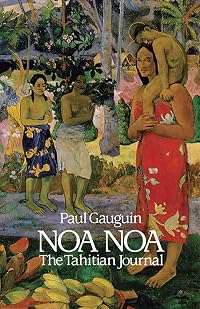
Noa Noa
by Paul Gauguin
On This Page
Description
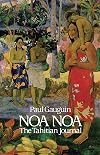
"Noa Noa is one of the best examples of a nineteenth-century artist's book. Part-travelogue, part-autobiography and rich in imagery, it sealed Gauguin's reputation as a painter of the tropics. This edition brings the original co-authored text of Noa Noa to the public, allowing a new interpretation of Gauguin to emerge. ... Noa Noa is followed by a first print edition of the Manuscrit tiré du Livres des métier de Vehbi-Zumbul Zadi, an artistic treatise, penned by Gauguin."--Back cover.Tags
Recommendations





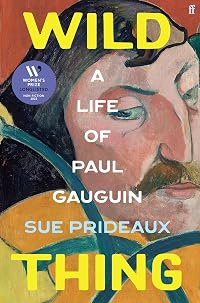












Member Recommendations

Member Reviews
Although based on his journals, Noa Noa is really a crafted memoir of Gauguin's time in Tahiti. At the outset, it seems as if it is going to be a tragic tale of the European seeking to escape alienation by immersing himself in a traditional culture of the colonial sphere, only to find that his condition is inescapable, and that he himself perpetuates it no matter where he goes. And that reading could be sustained--but it's not Gauguin's assertion. Instead, he claims to have succeeded in "going native" sufficiently to be spiritually rehabilitated and creatively inspired.
A considerable section toward the end of the book is given over to an attempt to describe indigenous Tahitian religion, with special attention to cosmogonic myths and show more the rituals involved with the secret society of Areois which is supposed to have ruled the island in the pre-colonial period. Most spectacularly, Gauguin relates his understanding of the Matumua ceremonies transacted with the enthronement of a new king. This rite allegedly culminated in a royal gang-bang: as Gauguin suggests (in more circumspect phrasing), it was a formalized opportunity for the people to screw the king before he'd screw them.
Gauguin's language emphasizes the sensuous throughout, although he refrains from being too explicit regarding the conspicuous erotic contents of his own experiences. His relationship to his eventual native bride offers the unselfconscious intimation that the way he exploits the island paradise may not be so far removed from the other agents of that prudish and dirty Christian civilization he professes to deplore. show less
A considerable section toward the end of the book is given over to an attempt to describe indigenous Tahitian religion, with special attention to cosmogonic myths and show more the rituals involved with the secret society of Areois which is supposed to have ruled the island in the pre-colonial period. Most spectacularly, Gauguin relates his understanding of the Matumua ceremonies transacted with the enthronement of a new king. This rite allegedly culminated in a royal gang-bang: as Gauguin suggests (in more circumspect phrasing), it was a formalized opportunity for the people to screw the king before he'd screw them.
Gauguin's language emphasizes the sensuous throughout, although he refrains from being too explicit regarding the conspicuous erotic contents of his own experiences. His relationship to his eventual native bride offers the unselfconscious intimation that the way he exploits the island paradise may not be so far removed from the other agents of that prudish and dirty Christian civilization he professes to deplore. show less
Gauguin was unable to publish this memoir of his two years in Tahiti as he wanted with his woodcuts and without censorship in 1900 because of the prudishness of the day. Today it seems rather mild. He was on a quest for a purity and escape that he never quite found. He documents his perception of the damage done by Europeans to the Tahitian culture and his understanding of their theology as conveyed to him by his young native bride. It's an interesting look at a vanished world the price imperialism imposed. His accompanying art is delightful.
Love the woodcuts, no need to go beyond the first 30 pages of text to get a feel for the misogyny and fetishism of Gauguin's worldview.
Interesting short account by Gauguin of his first stay in Tahiti. I like the descriptions of the people, brief as they are, but the stories of their myths didn't interest much.
Ratings
Members
- Recently Added By
Lists

Llibres que he llegit el 2025
81 works; 2 members
Author Information

130+ Works 1,187 Members
Paul Gauguin, together with Vincent Van Gogh and Paul Cezanne, was one of the great masters of postimpressionism. His life story, prototypical of the artist-rebel, was the subject of films and novels, such as The Moon and Sixpence by W. Somerset Maugham. Born in Paris, Gauguin spent his youth with his mother's family in Peru and went to sea as a show more 16-year-old. He then became a stockbroker in Paris, painting only in his spare time. His early paintings were in the impressionist style. In 1883 he broke with his bourgeois life and eventually separated from his family. In 1888 he visited Van Gogh in Arles---with disastrous results. In 1891 he went to Tahiti. Apart from a short return to Paris, he spent the rest of his life in the South Sea Islands, suffering from poverty, poor health, and recurring struggles with the colonial authorities. In his art, Gauguin sought to return to nature and truth. Inspired by the islanders, among whom he was living, he covered his canvases with stark forms, rhythmic patterns, and strong color, going far beyond naturalistic representation. Through this, his influence on modern art was powerful. His book Noa Noa (1894--1900) is a moving account of his thoughts and life. (Bowker Author Biography) show less
Some Editions
Series
Belongs to Publisher Series
Common Knowledge
- Original title
- Noa Noa
- Original publication date
- 1901
- People/Characters
- Paul Gauguin
- Important places
- Tahiti; Polynesia; Marquesas Islands
Classifications
Statistics
- Members
- 468
- Popularity
- 65,048
- Reviews
- 4
- Rating
- (3.71)
- Languages
- 14 — Catalan, Danish, Dutch, English, Estonian, French, German, Italian, Norwegian, Portuguese, Russian, Spanish, Swedish, Turkish
- Media
- Paper, Ebook
- ISBNs
- 58
- UPCs
- 3
- ASINs
- 18