
On This Page
Description
In Tibet, while guiding trekkers to a holy mountain, Ike Crockett discovers a bottomless cave. When his lover disappears, Ike pursues her into the depths of the In a leper colony bordering the Kalahari Desert, a nun named Ali von Schade unearths evidence of a proto-human species and a deity called Older-than-O In Bosnia, Major Elias Branch crash-lands his gunship near a mass grave and is swarmed by pale cannibals terrified of So begins mankind's realization that the underworld is a vast show more geological labyrinth riddling the continents and seabeds, one inhabited by brutish creatures who resemble the devils and gargoyles of legend. With all of Hell's precious resources and territories to be won, a global race ensues. Nations, armies, religions, and industries rush to colonize and exploit the subterranean frontier. Fathom by fathom, Ike guides an expedition -- and Ali -- deeper into the deadly wilderness. In the dark underground, as humanity falls away from them, the scientists and mercenaries find themselves prey not only to the savage creatures, but to their own treachery mutiny, and greed. Meanwhile, on the surface, a band of aged scholars scours for clues to Satan's existence. Is he lurking in wait for the expedition, or is he roaming the earth? One thing is certain: Miles inside the earth, evil is very much alive. show lessTags
Recommendations
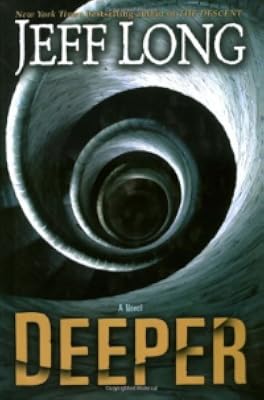
























Member Recommendations

Member Reviews
A lot of Science-fiction—even a lot of Golden Age science-fiction—lacks a genuine sense of exploration, and the awe that comes with it. The Descent does not have this problem. An odyssey into the bowels of the Earth that feels at time like a Michael Crichton horror novel, the bleak underground frontier of Jeff Long's infamously polarising story of religious mania, impossible ecosystems, and inner-Earth colonialism scratched an itch for discovery that I've only previously had scratched by Blindsight and Rendezvous With Rama.
I could feel the gentle warmth and reptile texture of the cave walls. I could hear the almost imperceptible ambient rumble of tectonic plates crushing into one-another, and the amniotic drip, drip, drip of ancient show more waters forming stalagmites. I could taste the hot mineral tang of moist cave air.
There is an erotic, suicidal allure to the thought of getting lost in the veins beneath—of losing yourself to the womb of Earth and becoming part of its slow, billion year long ecosystem of flowstone and chemical erosion. The Descent captures this allure with such beauty that it feels almost like it's breaking an ancient, unspoken taboo. show less
I could feel the gentle warmth and reptile texture of the cave walls. I could hear the almost imperceptible ambient rumble of tectonic plates crushing into one-another, and the amniotic drip, drip, drip of ancient show more waters forming stalagmites. I could taste the hot mineral tang of moist cave air.
There is an erotic, suicidal allure to the thought of getting lost in the veins beneath—of losing yourself to the womb of Earth and becoming part of its slow, billion year long ecosystem of flowstone and chemical erosion. The Descent captures this allure with such beauty that it feels almost like it's breaking an ancient, unspoken taboo. show less
It would be too obvious to say "Dantesque" or Inferno in the same breath as Jeff Long's dizzying The Descent, as so many of the latter's blurbers have, and it would be misleading, anyway. Yes, The Inferno and The Descent both deal with the powers of Perdition, in their varied, and equally horrific, descriptions of what happens down there. But Dante's Hell exists in a poet's vision of the relocation of unregenerate souls into eternal torment after their deaths; while Jeff Long torments his characters in the right-here, right-now, pitch darkness underground. Their agony is all too corporeal, whether they've sinned against God or not.
The Descent has far more in common with Jaws than epic medieval poetry. The Descent indeed, is a marriage show more of Jaws and Journey to the Center of the Earth. Heaven, in effect, stands up Hell at the altar in this wickedly divine Descent not to the center of the earth, but to the very core of humankinds most archetypal, universal fear: the dark, and the demons who swim in it.
There's no great white sharks striking terror from the murky depths in The Descent; no, there's worse, much worse: there's great albino "hadals" disembowelling you alive from the cavernous depths. Once they've disembowelled you alive, they just might make a rope out of your intestines, using your innards to tie you to a stake, so that you, a) won't escape; and, b) can sample your flesh while it's still fresh, like you were human-sushi!
Are you scared? You should be. Because The Descent is so scary it will scare the Hell in to you, not out. Read The Descent and Jaws will seem a guppy by comparison. After all, a great white shark can only bite and eat you, but a great albino hadal can not only bite and eat you, but since they're amphibious and bipedal, they can slyly hide beneath the surface of what appears at first blush a tranquil, phosphorecently lit underworld ocean; but as you wade into that primeval, peaceful ocean ... up thrusts a wooden spear so fast and so fiercely and aimed so precisely it enters your anus unscathed before it impales the back end of your butt hole and punctures your abdominal cavity's wall ramming up past your kidneys and straight for your heart, so that you die instantly, standing up, having become a veritable homo sapien shishkebob, held in the hateful hands of one hungry hadal.
"Hadal" comes from the Latin, "homo hadalis," a team of scientists postulate, an evolutionary offshoot or hybrid of homo erectus and homo sapien. But all you need to know is that hadals come from Hell, the Hell waiting for you inside that cave, that mineshaft, or that archaeological dig. So obey those signs please ... and KEEP OUT!
That Legion of demons that tormented Regan and those two Jesuit priests in The Exorcist, would get their collective, possessive asses kicked by a single hadal.
Just ask the 150 members of the Helios scientific expedition sent to explore the theorized passage underneath the Pacific Ocean's floor that's hoped will connect the Galapagos Islands with New Guinea. Think of the logistic and power-opportunities available for the first-taking should such a passage be found. But what if the tyrannical head of Helios has ulterior motives for the expedition? Well, then maybe the mercenaries and the military and the scientists and the nun (yes! a nun) hired on board, and kept in line by tyrant's son, Shoat, have a secret, underestimated defense weapon hidden up their sleeves themselves: A half-human/half-hadal evolutionary cross breed as their guide? Could it be? And what about Satan? Whole role does the Devil play in all of this? Don't tell me Satan is a sshhhh you be quiet, 'Frique! Don't spoil the surprise! But do insert the mad laughter here.
Will all, uh, Hell inevitably break loose in The Descent? Maybe not all of Hell, but maybe all of Hell-in-the-flesh: Homo hadalis!
Bats belong in caves, Intrepid Reader, not you. So stay out of them! You've been warned. And remember what Dante Alighieri said about Jeff Long's novel (and tremble): "Abandon all hope, ye who read The Descent." show less
The Descent has far more in common with Jaws than epic medieval poetry. The Descent indeed, is a marriage show more of Jaws and Journey to the Center of the Earth. Heaven, in effect, stands up Hell at the altar in this wickedly divine Descent not to the center of the earth, but to the very core of humankinds most archetypal, universal fear: the dark, and the demons who swim in it.
There's no great white sharks striking terror from the murky depths in The Descent; no, there's worse, much worse: there's great albino "hadals" disembowelling you alive from the cavernous depths. Once they've disembowelled you alive, they just might make a rope out of your intestines, using your innards to tie you to a stake, so that you, a) won't escape; and, b) can sample your flesh while it's still fresh, like you were human-sushi!
Are you scared? You should be. Because The Descent is so scary it will scare the Hell in to you, not out. Read The Descent and Jaws will seem a guppy by comparison. After all, a great white shark can only bite and eat you, but a great albino hadal can not only bite and eat you, but since they're amphibious and bipedal, they can slyly hide beneath the surface of what appears at first blush a tranquil, phosphorecently lit underworld ocean; but as you wade into that primeval, peaceful ocean ... up thrusts a wooden spear so fast and so fiercely and aimed so precisely it enters your anus unscathed before it impales the back end of your butt hole and punctures your abdominal cavity's wall ramming up past your kidneys and straight for your heart, so that you die instantly, standing up, having become a veritable homo sapien shishkebob, held in the hateful hands of one hungry hadal.
"Hadal" comes from the Latin, "homo hadalis," a team of scientists postulate, an evolutionary offshoot or hybrid of homo erectus and homo sapien. But all you need to know is that hadals come from Hell, the Hell waiting for you inside that cave, that mineshaft, or that archaeological dig. So obey those signs please ... and KEEP OUT!
That Legion of demons that tormented Regan and those two Jesuit priests in The Exorcist, would get their collective, possessive asses kicked by a single hadal.
Just ask the 150 members of the Helios scientific expedition sent to explore the theorized passage underneath the Pacific Ocean's floor that's hoped will connect the Galapagos Islands with New Guinea. Think of the logistic and power-opportunities available for the first-taking should such a passage be found. But what if the tyrannical head of Helios has ulterior motives for the expedition? Well, then maybe the mercenaries and the military and the scientists and the nun (yes! a nun) hired on board, and kept in line by tyrant's son, Shoat, have a secret, underestimated defense weapon hidden up their sleeves themselves: A half-human/half-hadal evolutionary cross breed as their guide? Could it be? And what about Satan? Whole role does the Devil play in all of this? Don't tell me Satan is a sshhhh you be quiet, 'Frique! Don't spoil the surprise! But do insert the mad laughter here.
Will all, uh, Hell inevitably break loose in The Descent? Maybe not all of Hell, but maybe all of Hell-in-the-flesh: Homo hadalis!
Bats belong in caves, Intrepid Reader, not you. So stay out of them! You've been warned. And remember what Dante Alighieri said about Jeff Long's novel (and tremble): "Abandon all hope, ye who read The Descent." show less
"Here it was at last– all their childhood legends of desperate fights waged against biblical mutants–before their eyes, unintended, where fate had given it. This was not a TV report that could be turned off. This was not a poet's inferno in a book that could be put back on the shelf. Here was the world they lived in now."
While we discuss and furiously debate over the possible existence of life on other worlds, an entire civilization has thrived under our feet, far below in the dark hollows of the Earth. There's legends and tales of the people and the one called Older-than-Old but after centuries - no, thousands of years - of living in the dark, they are reaching for the surface. And with them, so is hell.
Just... wow. It's been some show more time since I finished this book but I'm still very much blown away. As an archaeology student, one of the subfields I'm most interested in is specifically religion and mythology; as well as the similarities and links between different cultures and their myths. So, I'm probably a bit biased because this book more or less gave me exactly what I've been looking for. That said, it also did it so damn fucking well.
Long paints a rich and colourful world - the characters are not just complex but distinct and he uses his knowledge of history and military experience in a way that makes The Da Vinci Code pale in comparison (its real saving grace is Ian McKellen). It isn't your typical scifi horror as its quite slow at times, but that's also part of what truly engaged me; it is rich and truly takes the time to flesh out its characters and the world they inhabit. Long even manages to make the heavy military themes engaging and complex; something that science fiction books with military themes often struggle to do. If anything, it made me even more sure what aspects of archaeology and history I want to focus on. show less
While we discuss and furiously debate over the possible existence of life on other worlds, an entire civilization has thrived under our feet, far below in the dark hollows of the Earth. There's legends and tales of the people and the one called Older-than-Old but after centuries - no, thousands of years - of living in the dark, they are reaching for the surface. And with them, so is hell.
Just... wow. It's been some show more time since I finished this book but I'm still very much blown away. As an archaeology student, one of the subfields I'm most interested in is specifically religion and mythology; as well as the similarities and links between different cultures and their myths. So, I'm probably a bit biased because this book more or less gave me exactly what I've been looking for. That said, it also did it so damn fucking well.
Long paints a rich and colourful world - the characters are not just complex but distinct and he uses his knowledge of history and military experience in a way that makes The Da Vinci Code pale in comparison (its real saving grace is Ian McKellen). It isn't your typical scifi horror as its quite slow at times, but that's also part of what truly engaged me; it is rich and truly takes the time to flesh out its characters and the world they inhabit. Long even manages to make the heavy military themes engaging and complex; something that science fiction books with military themes often struggle to do. If anything, it made me even more sure what aspects of archaeology and history I want to focus on. show less
This book was an interesting surprise: a unique and entertaining (if appropriately dark) romp through an improbably congruent corporeal Hell, which manages to creatively retcon everything from the Shroud of Turin and Dante's Inferno to the origins of proto-language and human evolution.
I heard about it from a random comment on the internet, by someone who stumbled across this by mistake while seeking a novelization for the 2005 spelunking flick of the same name. As far as I can tell there is no explicit connection, although the two stories have enough overlap to make you wonder if there wasn't at least some uncredited/subconscious cross-pollination going on.
In any case, the novel was an lively cross between Jules Verne's "Journey to the show more Center of the Earth" and Clive Barker's "Cabal", with bits of Lincoln & Child's "Reliquary", Pérez-Reverte's "Club Dumas," and Salvatore's Underdark thrown in for color (infra/uv-only, natch).
Note that the comparison to Clive Barker is apropos -- Long's depictions of physical mutilation ("flensing," in Vernor Vinge vernacular) are frequent and explicit, and sensitive readers (one might say "sensible") will be justifiably repulsed by the rampant and seemingly gratuitous trespass of social taboos. Exploitative cheese this may well be; yet not, in the final analysis, pointless -- there is a rhyme and reason to the gradually revealed subterranean subtext, which ultimately lifts the novel above its basest peers. show less
I heard about it from a random comment on the internet, by someone who stumbled across this by mistake while seeking a novelization for the 2005 spelunking flick of the same name. As far as I can tell there is no explicit connection, although the two stories have enough overlap to make you wonder if there wasn't at least some uncredited/subconscious cross-pollination going on.
In any case, the novel was an lively cross between Jules Verne's "Journey to the show more Center of the Earth" and Clive Barker's "Cabal", with bits of Lincoln & Child's "Reliquary", Pérez-Reverte's "Club Dumas," and Salvatore's Underdark thrown in for color (infra/uv-only, natch).
Note that the comparison to Clive Barker is apropos -- Long's depictions of physical mutilation ("flensing," in Vernor Vinge vernacular) are frequent and explicit, and sensitive readers (one might say "sensible") will be justifiably repulsed by the rampant and seemingly gratuitous trespass of social taboos. Exploitative cheese this may well be; yet not, in the final analysis, pointless -- there is a rhyme and reason to the gradually revealed subterranean subtext, which ultimately lifts the novel above its basest peers. show less
The Descent holds a special place in my literary heart. When I first read it my response was 'meh.' But by the end of the week I was practically in love with it. Scenes and snippets of dialogue kept creeping back up on me at odd times, and I liked it more and more. Especially the tension between Ike's stoic personality and Ali van Schade's merciful one. There are a few exchanges between them that really gave me shivers. (I won't tell which so that I don't give anything away.) The comparison to Wells and Joules is not amiss. This is truly a subterranean epic. Granted, there are a few themes that could, if one was so inclined, be considered racist. There is no lack of 'dark other' in this book. Nor is there any lack of demonising of show more religion and mankind. But the themes are not so strong or intentional that they detract from the enjoyment of the story. show less
I don’t know about evil in the traditional Judeo/Christian sense. Definitely there is a life form here, a culture here that is vastly different from ours and is just as contradictory. The live in total darkness and yet still retain eyes with which to see. They have a social network yet have ‘devolved’ back down to prehistoric capabilities. They have a social hierarchy yet don’t worry about letting humans become powerful within their society. They protect breeder women, but brutalize everything and everyone at the same time.
I read this very quickly as it’s nearly a skimmer and movies along very fast. But at the end, I was left with more questions than answers. Why are the Hadals devolving? They are doing exactly the opposite of show more humans. Are we two sides of a whole? Does the evolution of one mean the devolution of another? Is it tit for tat? A tug-of-war? A scale that must remain in balance? When the Hadals were at the peak of their sophistication, we were barely upright. Now we have vast cities and networks, and the Hadals are reduced to living in the open without fire and they have lost the ability to read their own ancient texts. Weird. It needed a touch of Crichton's explanations.
I’m surprised there hasn’t been as sequel (maybe there has been and I missed it) because the ending leaves things wide open for one. show less
I read this very quickly as it’s nearly a skimmer and movies along very fast. But at the end, I was left with more questions than answers. Why are the Hadals devolving? They are doing exactly the opposite of show more humans. Are we two sides of a whole? Does the evolution of one mean the devolution of another? Is it tit for tat? A tug-of-war? A scale that must remain in balance? When the Hadals were at the peak of their sophistication, we were barely upright. Now we have vast cities and networks, and the Hadals are reduced to living in the open without fire and they have lost the ability to read their own ancient texts. Weird. It needed a touch of Crichton's explanations.
I’m surprised there hasn’t been as sequel (maybe there has been and I missed it) because the ending leaves things wide open for one. show less
I wasn't twenty pages in before I suspected I had a stinker on my hands: The dialogue, the characterizations, the plotline was of trainwreck dimensions. We open with too-stupid-to-live mountaineers in Tibet, led by Ike Crockett, following a gold coin trail to hell--literally. Next we turn to the Kalahari and from central casting, a "beautiful" nun working among lepers, leaving no B movie cliche unused. The book is reminiscent of Journey Into the Center of the Earth as it posits there's an underworld of continents and seas inhabited by creatures that inspired Gargoyles and demons led by Satan himself. Except, well, it's easier to believe that premise in 1864 than in 1999, the date of publication. I gave this about 100 pages, where he show more kicked off this ridiculous, unconvincing war between the modern military and the underworld, before giving this a pass. show less
Members
- Recently Added By
Lists

Read the book and saw the movie
1,170 works; 195 members

Top Five Books of 2013
1,562 works; 721 members

75 Books Challenge Halloween Read "Official" Selections
71 works; 7 members

Books Read in 2013
1,630 works; 51 members

Stories Featuring Passages, Gateways and Doors
39 works; 11 members

to get
244 works; 2 members

Novels Set Underground
28 works; 7 members

Devilish Books
15 works; 3 members

Books Read in 2008
335 works; 8 members

Books I Read Before The Invention Of The Internet.
144 works; 1 member

Horror: Creature Features
70 works; 9 members
Author Information

16+ Works 3,200 Members
Jeff Long is a veteran climber and traveler in The Himalayas. He has worked as a journalist, a historian, and an elections supervisor for Bosnia's first democratic election. He lives in Boulder, Colorado.
Some Editions
Series

Common Knowledge
- Original title
- The Descent
- Original publication date
- 1999
- People/Characters
- Ike Crockett; Ali Von Schade
- Important places
- Hell
- Related movies
- The film by Neil Marshall is not based on this book, see imdb for more info.
- Dedication
- For my Helenas
A chain unbroken - First words
- In the beginning was the word. Or words. Whatever these were.
- Last words
- (Click to show. Warning: May contain spoilers.)Not trusting his voice, he circled Ali with his arms.
- Blurbers
- Krakauer, Jon; Pellegrino, Charles; Carcaterra, Lorenzo; Rabb, Jonathan
Classifications
Statistics
- Members
- 1,353
- Popularity
- 17,676
- Reviews
- 33
- Rating
- (3.67)
- Languages
- 5 — English, Finnish, German, Italian, Spanish
- Media
- Paper, Audiobook, Ebook
- ISBNs
- 19
- UPCs
- 1
- ASINs
- 4