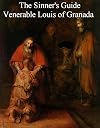
The Sinner's Guide
by Louis of Granada
On This Page
Description
The author of this book was the favorite writer of St. Teresa of Avila, St. John of the Cross, St. Vincent de Paul, etc. St. Teresa of Avila credited this book with having converted over a million people in her time. This is the most persuasive book we know to encourage people to abandon sin and embrace repentance and virtue. The logic is relentless and effective. For mastery of subject, command of Scripture and total impact on the reader, no book surpasses The Sinner's Guide! Impr. 395 pgs,Tags
Recommendations

































Member Reviews
I don't believe there is any follower of the Christian faith who wouldn't benefit from reading this classic of spiritual direction written by the Venerable Louis of Granada.
For the beginner and layman it provides a very useful overview of the Christian life rooted in the practice of virtue. For the proficient and the advanced, I think it serves as a good reminder of the basics of our faith and reminds them of the need for humility and simplicity.
The structure of the book is very systematic, and the prose I found easy to read. I'm not sure if the Aeterna Press version is a direct translation - if it is, it's amazing how easy this is to read for a 400 year old book. I really enjoyed reading this book.
Firstly, Ven. Louis lays out some show more motives which 'oblige' us to practice virtue and serve God. He then goes on to expound upon the privileges of virtue and the folly of those who continue in sin. Next, he takes the seven deadly sins and gives some advice as to remedies for each of these. Finally he talks about our threefold obligation to virtue - the obligation to God, to ourselves and to our neighbour.
As for the author, Jordan Aumann O.P. wrote that "Louis of Granada stands without a peer among Dominican ascetical writers, and throughout the seventeenth century his writings were a constant source of inspiration and education for Christians throughout the civilized world. He reached his maturity during the Council of Trent and at the high point of the Golden Age of Spain. He died in 1588, when the imperial supremacy of Spain was beginning to wane.
Both as a preacher and a writer, Fray Louis dedicated himself assiduously to the indoctrination and spiritual formation of the common people. A contemporary writer stated: "Water girls carried his books under their arms and the market women read them as they waited to sell their merchandise." But another contemporary said of him with disdain that he wrote for the "wives of carpenters," forgetting, perhaps, that the wife of a carpenter was the Mother of God and the Queen of angels and saints.
Long before St. Francis de Sales appeared on the scene, Louis of Granada was preaching the traditional, orthodox doctrine of the universal vocation of all Christians to the perfection of charity. He was a theologian for the laity, but in addition to the rank-and-file Christians, the books of Fray Louis were read with great profit by some of the great saints of the sixteenth and seventeenth centuries. We mention only the following: St. Teresa of Avila, St. John of the Cross, St. Charles Borromeo, St. Peter Alcántara, St. Rose of Lima, St. Francis de Sales and St. Louise de Marillac."
Says it all really. show less
For the beginner and layman it provides a very useful overview of the Christian life rooted in the practice of virtue. For the proficient and the advanced, I think it serves as a good reminder of the basics of our faith and reminds them of the need for humility and simplicity.
The structure of the book is very systematic, and the prose I found easy to read. I'm not sure if the Aeterna Press version is a direct translation - if it is, it's amazing how easy this is to read for a 400 year old book. I really enjoyed reading this book.
Firstly, Ven. Louis lays out some show more motives which 'oblige' us to practice virtue and serve God. He then goes on to expound upon the privileges of virtue and the folly of those who continue in sin. Next, he takes the seven deadly sins and gives some advice as to remedies for each of these. Finally he talks about our threefold obligation to virtue - the obligation to God, to ourselves and to our neighbour.
As for the author, Jordan Aumann O.P. wrote that "Louis of Granada stands without a peer among Dominican ascetical writers, and throughout the seventeenth century his writings were a constant source of inspiration and education for Christians throughout the civilized world. He reached his maturity during the Council of Trent and at the high point of the Golden Age of Spain. He died in 1588, when the imperial supremacy of Spain was beginning to wane.
Both as a preacher and a writer, Fray Louis dedicated himself assiduously to the indoctrination and spiritual formation of the common people. A contemporary writer stated: "Water girls carried his books under their arms and the market women read them as they waited to sell their merchandise." But another contemporary said of him with disdain that he wrote for the "wives of carpenters," forgetting, perhaps, that the wife of a carpenter was the Mother of God and the Queen of angels and saints.
Long before St. Francis de Sales appeared on the scene, Louis of Granada was preaching the traditional, orthodox doctrine of the universal vocation of all Christians to the perfection of charity. He was a theologian for the laity, but in addition to the rank-and-file Christians, the books of Fray Louis were read with great profit by some of the great saints of the sixteenth and seventeenth centuries. We mention only the following: St. Teresa of Avila, St. John of the Cross, St. Charles Borromeo, St. Peter Alcántara, St. Rose of Lima, St. Francis de Sales and St. Louise de Marillac."
Says it all really. show less
Narration: Was a good fit for the [academic/religious] text. Recommended Speed 1.25x
This is pretty much what you would expect in something written by a devout religious circa 1567. Ven. Louis presents a number of theological examinations that explore why we should (motive) practice virtue, and what benefits (privilege) we receive when we do so. As perhaps expected, these maxims are intended to guide for christian meditations more than an apologetic, so the "Pretty Prose" probably won't mean much to anyone looking for ration persuasion. It will however, provide points on which the faithful can think about in order to enrich an already existing (even if newly formed) faith. It should come as no surprise that the text has a more Catholic show more point of view given the time it was written and the affiliation of the author with the Dominican Order of Preachers (which was actually why I was interested in it). In that it does exactly what I expected it to do, it rates well, but not quite earn the top score ... still ... highly recommended for any who wish to explore their own christian faith.
Motives for Practicing Virtue.
• The Perfection of God
• Gratitude for Creation
• Gratitude for Providence
• Gratitude for Redemption
• Gratitude for Justification
• Gratitude for Election
• Thought of Death
• Thought of Judgment
• Thought of Heaven
• Thought of Hell
Privilege of Virtue
• Care of the Father
• Grace of the Holy Spirit
• Knowledge to Virtuous Souls
• Consolations of the Holy Spirit
• Peace of the Conscience
• Confidence of the Just
• Liberty of the Just
• Efficacy of Prayers
• Assistance with Afflictions
Follies
• Deferring Conversion
• Trusting in Mercy
• Taking the Easy Path
• Material Attachment
Remedies
• Resolution against all sin
• Against Pride
• Against Covetousness
• Against Lust
• Against Envy
• Against Gluttony
• Against Anger/Hatred
• Against Sloth
Duties
• Venial Sins
• Deadly Sins
• Fullness of Justice
• Duty to Neighbor
• Duty to God
• Obligations of State
I was given this free review copy (ARC) audiobook at my request and have voluntarily left this review.
#AudiobookBoom #TheSinnersGuide #GeorgeEllington show less
This is pretty much what you would expect in something written by a devout religious circa 1567. Ven. Louis presents a number of theological examinations that explore why we should (motive) practice virtue, and what benefits (privilege) we receive when we do so. As perhaps expected, these maxims are intended to guide for christian meditations more than an apologetic, so the "Pretty Prose" probably won't mean much to anyone looking for ration persuasion. It will however, provide points on which the faithful can think about in order to enrich an already existing (even if newly formed) faith. It should come as no surprise that the text has a more Catholic show more point of view given the time it was written and the affiliation of the author with the Dominican Order of Preachers (which was actually why I was interested in it). In that it does exactly what I expected it to do, it rates well, but not quite earn the top score ... still ... highly recommended for any who wish to explore their own christian faith.
Motives for Practicing Virtue.
• The Perfection of God
• Gratitude for Creation
• Gratitude for Providence
• Gratitude for Redemption
• Gratitude for Justification
• Gratitude for Election
• Thought of Death
• Thought of Judgment
• Thought of Heaven
• Thought of Hell
Privilege of Virtue
• Care of the Father
• Grace of the Holy Spirit
• Knowledge to Virtuous Souls
• Consolations of the Holy Spirit
• Peace of the Conscience
• Confidence of the Just
• Liberty of the Just
• Efficacy of Prayers
• Assistance with Afflictions
Follies
• Deferring Conversion
• Trusting in Mercy
• Taking the Easy Path
• Material Attachment
Remedies
• Resolution against all sin
• Against Pride
• Against Covetousness
• Against Lust
• Against Envy
• Against Gluttony
• Against Anger/Hatred
• Against Sloth
Duties
• Venial Sins
• Deadly Sins
• Fullness of Justice
• Duty to Neighbor
• Duty to God
• Obligations of State
I was given this free review copy (ARC) audiobook at my request and have voluntarily left this review.
#AudiobookBoom #TheSinnersGuide #GeorgeEllington show less
"The virtuous man is he who freely practices the good." This book aims to convince you why practicing the good is preferable to the fleeting pleasures of the world. Inherent in this argument is the incompatibility between everlasting happiness and worldly gratifications. Choosing one over the other is the difference between eternal wisdom and eternal damnation.
I urge you to acquire for yourself or at least read from an earlier edition if you can. The 1985 TAN edition is a mass-produced mockery of the reverence with which the earliest editions of The Sinner's Guide were paid. Selected passages from the 1985 TAN Book edition:
I. "Is it not evident that all that are for you are stronger than all that are against you? Is not God stronger show more than the devil? Is not grace superior to nature? Are not the good angels more powerful than the fallen legions of Satan? Are not the pure and ineffable joys of the soul far more delightful than the gross pleasures of sense and the vain amusements of the world?" (p. 253).
II.i. "It now remains for us to prove that true happiness can only be found in God. Were men convinced of this, they would cease to pursue the pleasures of this world. My intention is to prove this important truth less by the authorities and testimonies of faith than by arguments drawn from reason.
ii. It will readily be granted that no creature can enjoy perfect happiness until it has attained its last end--that is, the highest degree of perfection of which it is capable. Until it has reached this it cannot enjoy rest, and therefore it cannot be perfectly happy, for it feels the want of something necessary to its completeness. Now, what is man's last end, on the attainment of which depends his happiness? That it is God is undeniable; for since He is our first beginning, He must necessarily be our last end. As it is impossible for man to have two first beginnings, so it is impossible for him to have two last ends, for this would suppose the existence of two Gods.
iii. God, then, is man's last end, and consequently his beatitude. For since it is impossible for him to have more than one last end, it follows that in God alone can his happiness be found. As the glove is only made for the hand, and the scabbard only for the sword, so is the human heart created only for God, and in God only will it find rest. In Him alone will it know happiness. Without Him it will be poor and miserable. The reason of this is because as long as the understanding and the will, the noblest faculties of the soul and the principle seats of happiness, are unsatisfied, man cannot be at peace.
iv. Now, it is evident that these faculties can only be completely satisfied in God. For, according to St. Thomas, the understanding can never be so filled that it will not desire to grasp more while there remains more to be learned; and the will can never love and relish so much good that it will not desire to possess more, if more be possible. Consequently these two powers will never know rest until they have attained a universal object containing all good, which, once known and loved, leaves no other truth to be known, no other good to be desired. Hence no created thing, were it the whole universe, can satisfy man's heart. God alone, for whom he was created, can do this. Plutarch tells of a man who, having risen from the rank of a simple soldier to that of emperor, was accustomed to say that he has tried all conditions of life, and in none had he found happiness. How could it be otherwise, since in God alone, man's sole supreme end, can he find supreme rest?
v. Let us illustrate this by an example. Consider the needle of the compass. God has given it certain properties which cause it invariably to turn to the north. Change its direction and you will see how restless it becomes until it resumes its normal position. Man, in like manner, naturally turns to God as toward the pole of his existence, his first beginning and last end. Let his heart be directed to any other object, and he becomes a prey to trouble and disquiet. The possession and enjoyment of all the world's favors cannot give him rest. But when he returns to God, he immediately finds happiness and repose. Hence he alone will be happy who possesses God, and therefore he is nearest to happiness who is nearest to God. For this reason only the just, who ever draw near to God, and whose joy is unknown to the world, are truly happy.
vi. To understand this more fully, remember that true happiness does not consist in sensible or corporeal pleasures, as the disciples of Epicurus and Mahomet assume. In the same class we may place bad Christians whose lips deny the doctrines of these men, but whose lives are entirely in accordance with them. For do not the majority of the rich, who spend their lives in the mad pursuit of pleasure, tacitly acknowledge with Epicureans that pleasure is their last end, and with Mahometans that sensual delight is their paradise? O disciples worthy of such masters! Why do you not abhor the lives of those whose teachings you profess to condemn? If you will have the paradise of Mahomet, you must expect to lose that of Christ.
vii. True happiness is not to be found in the body nor in corporeal advantages, but in the spirit and in spiritual goods, as the greatest philosophers have asserted, and as Christianity confirms, though in a far more elevated sense. The possession of these blessings will afford you more peace and happiness than the kings of the earth know amidst their power and splendor. How many of them have testified to this truth by joyfully forsaking their crowns after tasting the sweetness of God's friendship! St. Gregory, who reluctantly left his monastery to ascend the papal throne, never ceased to sigh for his humble cell as ardently as a captive among infidels sighs for liberty and his native land.
viii. As St. Augustine says, it is not merely the possession of goods, but the gratification of his just desires and the attainment of his real wants, that make man happy. These are to be found only in God. Whatever else man possesses, he knows not the blessing of peace. Aman, the favorite of Assuerus, and powerful by his wealth and influence, was yet so disturbed because Mardochai did not salute him that he declared he found no comfort in all he possessed. See how small a thing can poison all the happiness which prosperity gives.
ix. Observe further how much more accessible man is to misery than to happiness in this life; for but one ungratified desire suffices to make him miserable, and so many things are required to make him happy. Is there, then, any prince or potentate sufficiently powerful to have everything according to his will and thus free himself from contradictions? Even could he bend men to his will, what would protect him from the infirmities of nature, bodily pains, and the anxieties and groundless fears to which the mind is often a prey? How can you expect to find immunity from suffering and contradiction, which the greatest monarchs, with all their power, have never attained? Only that which contains in itself all good can give you happiness. Why, then, will you seek it so far from God, who is the supreme Good?
x. If these reasons be insufficient to convince you, listen to Solomon, than whom no man had a greater share of worldly happiness. What are the words in which he tells us the result of his experience? "Vanity of vanities, vanity of vanities, and all is vanity." (Eccles. 1:2). Do not hesitate to accept his testimony, for he speaks from experience. Do not imagine that you can find what he could not discover. Consider how limited anyone's knowledge must be compared to his; for was there ever a wiser, a richer, a more prosperous, a more glorious monarch than this son of David? Who ever enjoyed a greater variety of amusements? All things contributed to his pleasure, yet he gives this result of his almost unlimited prosperity: "Vanity of vanities, and all is vanity."
xi. Can you, then, expect to realize what Solomon found impossible to attain? You live in the same world, and your resources for happiness are certainly not better than his. His pursuit of pleasure was constant, but in it he found no happiness, but rather, as St. Jerome supposes, the occasion of his fall. As men more readily accept the lessons of experience than those of reason, God may have permitted Solomon to drink so deeply at the fountain of pleasures to teach us how worthless they are, and to save others from a similar misfortune.
xii. How long, then, O sons of men, will you be dull of heart? Why will you love vanity and seek after lies? (Cf. Ps. 4:3). Wisely does the psalmist term them vanity and lies, for if there were nothing in worldly things but vanity, which signifies nothingness, their evil would be tolerable. But their most dangerous characteristic is the false assurance with which they persuade us to believe that they are what they claim to be. In this, the world manifests its excessive hypocrisy. Hypocrites endeavor to conceal the faults they have committed, and worldlings the miseries under which they groan. Some who are sinners would pass for saints. Others who are miserable would pass for the favorites of fortune. But draw near to them, study the pulsations of their restless hearts, and you will see what a difference there is between appearances and reality.
xiii. There are plants which at a distance appear very beautiful, but touch them and they give forth a disagreeable odor. So it is with the rich and powerful of this world. When you behold the dignity of their position, the splendor of their dwellings, and the luxury of their surroundings, you would suppose them the happiest of men; but draw near to them, search the secret recesses of their souls, the hidden corners of their homes, and you will find how false is much of the happiness they seem to enjoy.
xiv. O children of men, created to the image of God, redeemed by His Blood, destined to be the companions of angels, why do you love vanity and seek after a lie? Why do you seek in false blessings a peace which they cannot give? Why do you leave the table of angels to feed with beasts? Will not the calamities with which the world visits you determine you to break the chains of this cruel tyrant?
xv. Reason and experience clearly prove that the happiness we seek is to be found only in God. Is it not madness to seek it elsewhere? "Go where you will," says St. Augustine, "visit all lands, but you will not find happiness until you go to God."
xvi. As we have now arrived at the conclusion of our arguments in favor of virtue and in praise of its rewards, let us briefly resume what we have said. As there is no good which is not included in virtue, we must regard it as a universal good, comparable only to God Himself. God contains in His Being all perfections and all good. In a certain manner the same may be said of virtue. All creatures have each some characteristic perfection. Some are beautiful, others honest, others honorable, and others agreeable. Those among them that possess the greatest number of these perfections have most claims to our love. What, then, is more worthy of our love than virtue, in which all these perfections are combined?
xvii. If we seek honestly, what is more honest than virtue, the root of all honesty? If we look for honor, what is more honorable than virtue? If beauty attracts us, what is more beautiful than virtue, of which Plato said that were its beauty only seen the whole world would follow it? If we desire profit, what will we find more profitable than virtue, whose hopes are so exalted and whose reward is the Sovereign Good?
xviii. "Lengths of days is in her right hand, and in her left hand riches and glory." (Prov. 3:16). If we seek pleasure, what is comparable to the pure pleasures of a good conscience, of peace, of charity, of the liberty of the children of God, of the consolations of the Holy Spirit which always accompany virtue? Do we desire renown? "The memory of the just is with praises; and the name of the wicked shall rot." (Prov. 10:7). If we aspire to wisdom, the greatest of all wisdom is to know God and to understand how to direct our life to its last end. If we would have the esteem and affection of men, nothing will secure it more effectually than virtue; for, to use a comparison of Cicero, as the corporeal beauty we admire results from the regularity and symmetry in the members of the body, so from the order and regularity of a good life results a beauty which is pleasing not only to God and the angels, but even to the wicked and to our very enemies.
xix. Virtue is an absolute good; it admits of no alloy of evil. For this reason God sends to the just this short but glorious message: "Say to the just man that it is well." (Is. 3:10). In all things, even in pain and toil, he shall find good, and therefore happiness, because "to them that love God all things work together unto good." (Rom. 8:28). Though the elements war upon him, and though the heavens fall, he can hold up his head without fear, for the day of his redemption is at hand. He shall be delivered from supreme evil, which is the company of Satan, for God, the Supreme Good, will be his portion. God the Father will adopt him as His son; God the Son will receive him as His temple. Having sought first the kingdom of God and His justice, every blessing has been given to him. From all things he has drawn profit. Every creature has been an aid to him in serving God. Will you, then, be so cruel as to deprive yourself of a help so powerful and so profitable?
xx. As philosophers tell us, good is the object of our will, which is the seat of love. Consequently the better a thing is, the more deserving it is of our love. What, then, has so corrupted your will that it rejects this incomparable good? Why will you not imitate David, who, though he had the care of a kingdom, tells us that he had the law of the Lord in the midst of his heart? (Cf. Ps. 39:9). He put all other considerations aside, and gave to virtue the noblest place, the center of his heart. How different is the conduct of worldlings, who give vanity the first place in their hearts, and God's law the lowest!
xxi. Do you desire any other motive to persuade you to follow this wise example and embrace so great a good? If you consider obligation, can there be any greater than the obligation which binds us to serve God because of what He is in Himself? We have already shown you that all other obligations compared to this are as if they did not exist. If you can be moved by benefits, what benefits are comparable to those you have received from God? Besides the grand benefits of creation and redemption, have you any good of soul or body that is not from Him? If interest be your aim, what greater could you have than to avoid eternal misery and gain eternal joy? If you aspire to happiness in this life, what happiness equals that of the just? The least of the privileges of virtue which we have described affords more true happiness than the possession of all the treasures of the world. If you reject these evidences in favor of virtue, you do so in willful blindness, for you close your eyes to the light of truth."
(pp. 243-250)
III. What is this brightness--with which God fills the soul of the just--but that clear knowledge of all that is necessary for salvation? He shows them the beauty of virtue and the deformity of vice. He reveals to them the vanity of the world, the treasures of grace, the greatness of eternal glory, and the sweetness of the consolations of the Holy Spirit. He teaches them to apprehend the goodness of God, the malice of the evil one, the shortness of life, and the fatal error of those whose hopes are centered in this world alone. Hence the equanimity of the just. They are neither puffed up by prosperity nor cast down by adversity. "A holy man," says Solomon, "Continueth in wisdom as the sun, but a fool is changed as the moon." (Ecclus. 27:12). Unmoved by the winds of false doctrine, the just man continues steadfast in Christ, immovable in charity, unswerving in faith.
(p. 116) show less
I urge you to acquire for yourself or at least read from an earlier edition if you can. The 1985 TAN edition is a mass-produced mockery of the reverence with which the earliest editions of The Sinner's Guide were paid. Selected passages from the 1985 TAN Book edition:
I. "Is it not evident that all that are for you are stronger than all that are against you? Is not God stronger show more than the devil? Is not grace superior to nature? Are not the good angels more powerful than the fallen legions of Satan? Are not the pure and ineffable joys of the soul far more delightful than the gross pleasures of sense and the vain amusements of the world?" (p. 253).
II.i. "It now remains for us to prove that true happiness can only be found in God. Were men convinced of this, they would cease to pursue the pleasures of this world. My intention is to prove this important truth less by the authorities and testimonies of faith than by arguments drawn from reason.
ii. It will readily be granted that no creature can enjoy perfect happiness until it has attained its last end--that is, the highest degree of perfection of which it is capable. Until it has reached this it cannot enjoy rest, and therefore it cannot be perfectly happy, for it feels the want of something necessary to its completeness. Now, what is man's last end, on the attainment of which depends his happiness? That it is God is undeniable; for since He is our first beginning, He must necessarily be our last end. As it is impossible for man to have two first beginnings, so it is impossible for him to have two last ends, for this would suppose the existence of two Gods.
iii. God, then, is man's last end, and consequently his beatitude. For since it is impossible for him to have more than one last end, it follows that in God alone can his happiness be found. As the glove is only made for the hand, and the scabbard only for the sword, so is the human heart created only for God, and in God only will it find rest. In Him alone will it know happiness. Without Him it will be poor and miserable. The reason of this is because as long as the understanding and the will, the noblest faculties of the soul and the principle seats of happiness, are unsatisfied, man cannot be at peace.
iv. Now, it is evident that these faculties can only be completely satisfied in God. For, according to St. Thomas, the understanding can never be so filled that it will not desire to grasp more while there remains more to be learned; and the will can never love and relish so much good that it will not desire to possess more, if more be possible. Consequently these two powers will never know rest until they have attained a universal object containing all good, which, once known and loved, leaves no other truth to be known, no other good to be desired. Hence no created thing, were it the whole universe, can satisfy man's heart. God alone, for whom he was created, can do this. Plutarch tells of a man who, having risen from the rank of a simple soldier to that of emperor, was accustomed to say that he has tried all conditions of life, and in none had he found happiness. How could it be otherwise, since in God alone, man's sole supreme end, can he find supreme rest?
v. Let us illustrate this by an example. Consider the needle of the compass. God has given it certain properties which cause it invariably to turn to the north. Change its direction and you will see how restless it becomes until it resumes its normal position. Man, in like manner, naturally turns to God as toward the pole of his existence, his first beginning and last end. Let his heart be directed to any other object, and he becomes a prey to trouble and disquiet. The possession and enjoyment of all the world's favors cannot give him rest. But when he returns to God, he immediately finds happiness and repose. Hence he alone will be happy who possesses God, and therefore he is nearest to happiness who is nearest to God. For this reason only the just, who ever draw near to God, and whose joy is unknown to the world, are truly happy.
vi. To understand this more fully, remember that true happiness does not consist in sensible or corporeal pleasures, as the disciples of Epicurus and Mahomet assume. In the same class we may place bad Christians whose lips deny the doctrines of these men, but whose lives are entirely in accordance with them. For do not the majority of the rich, who spend their lives in the mad pursuit of pleasure, tacitly acknowledge with Epicureans that pleasure is their last end, and with Mahometans that sensual delight is their paradise? O disciples worthy of such masters! Why do you not abhor the lives of those whose teachings you profess to condemn? If you will have the paradise of Mahomet, you must expect to lose that of Christ.
vii. True happiness is not to be found in the body nor in corporeal advantages, but in the spirit and in spiritual goods, as the greatest philosophers have asserted, and as Christianity confirms, though in a far more elevated sense. The possession of these blessings will afford you more peace and happiness than the kings of the earth know amidst their power and splendor. How many of them have testified to this truth by joyfully forsaking their crowns after tasting the sweetness of God's friendship! St. Gregory, who reluctantly left his monastery to ascend the papal throne, never ceased to sigh for his humble cell as ardently as a captive among infidels sighs for liberty and his native land.
viii. As St. Augustine says, it is not merely the possession of goods, but the gratification of his just desires and the attainment of his real wants, that make man happy. These are to be found only in God. Whatever else man possesses, he knows not the blessing of peace. Aman, the favorite of Assuerus, and powerful by his wealth and influence, was yet so disturbed because Mardochai did not salute him that he declared he found no comfort in all he possessed. See how small a thing can poison all the happiness which prosperity gives.
ix. Observe further how much more accessible man is to misery than to happiness in this life; for but one ungratified desire suffices to make him miserable, and so many things are required to make him happy. Is there, then, any prince or potentate sufficiently powerful to have everything according to his will and thus free himself from contradictions? Even could he bend men to his will, what would protect him from the infirmities of nature, bodily pains, and the anxieties and groundless fears to which the mind is often a prey? How can you expect to find immunity from suffering and contradiction, which the greatest monarchs, with all their power, have never attained? Only that which contains in itself all good can give you happiness. Why, then, will you seek it so far from God, who is the supreme Good?
x. If these reasons be insufficient to convince you, listen to Solomon, than whom no man had a greater share of worldly happiness. What are the words in which he tells us the result of his experience? "Vanity of vanities, vanity of vanities, and all is vanity." (Eccles. 1:2). Do not hesitate to accept his testimony, for he speaks from experience. Do not imagine that you can find what he could not discover. Consider how limited anyone's knowledge must be compared to his; for was there ever a wiser, a richer, a more prosperous, a more glorious monarch than this son of David? Who ever enjoyed a greater variety of amusements? All things contributed to his pleasure, yet he gives this result of his almost unlimited prosperity: "Vanity of vanities, and all is vanity."
xi. Can you, then, expect to realize what Solomon found impossible to attain? You live in the same world, and your resources for happiness are certainly not better than his. His pursuit of pleasure was constant, but in it he found no happiness, but rather, as St. Jerome supposes, the occasion of his fall. As men more readily accept the lessons of experience than those of reason, God may have permitted Solomon to drink so deeply at the fountain of pleasures to teach us how worthless they are, and to save others from a similar misfortune.
xii. How long, then, O sons of men, will you be dull of heart? Why will you love vanity and seek after lies? (Cf. Ps. 4:3). Wisely does the psalmist term them vanity and lies, for if there were nothing in worldly things but vanity, which signifies nothingness, their evil would be tolerable. But their most dangerous characteristic is the false assurance with which they persuade us to believe that they are what they claim to be. In this, the world manifests its excessive hypocrisy. Hypocrites endeavor to conceal the faults they have committed, and worldlings the miseries under which they groan. Some who are sinners would pass for saints. Others who are miserable would pass for the favorites of fortune. But draw near to them, study the pulsations of their restless hearts, and you will see what a difference there is between appearances and reality.
xiii. There are plants which at a distance appear very beautiful, but touch them and they give forth a disagreeable odor. So it is with the rich and powerful of this world. When you behold the dignity of their position, the splendor of their dwellings, and the luxury of their surroundings, you would suppose them the happiest of men; but draw near to them, search the secret recesses of their souls, the hidden corners of their homes, and you will find how false is much of the happiness they seem to enjoy.
xiv. O children of men, created to the image of God, redeemed by His Blood, destined to be the companions of angels, why do you love vanity and seek after a lie? Why do you seek in false blessings a peace which they cannot give? Why do you leave the table of angels to feed with beasts? Will not the calamities with which the world visits you determine you to break the chains of this cruel tyrant?
xv. Reason and experience clearly prove that the happiness we seek is to be found only in God. Is it not madness to seek it elsewhere? "Go where you will," says St. Augustine, "visit all lands, but you will not find happiness until you go to God."
xvi. As we have now arrived at the conclusion of our arguments in favor of virtue and in praise of its rewards, let us briefly resume what we have said. As there is no good which is not included in virtue, we must regard it as a universal good, comparable only to God Himself. God contains in His Being all perfections and all good. In a certain manner the same may be said of virtue. All creatures have each some characteristic perfection. Some are beautiful, others honest, others honorable, and others agreeable. Those among them that possess the greatest number of these perfections have most claims to our love. What, then, is more worthy of our love than virtue, in which all these perfections are combined?
xvii. If we seek honestly, what is more honest than virtue, the root of all honesty? If we look for honor, what is more honorable than virtue? If beauty attracts us, what is more beautiful than virtue, of which Plato said that were its beauty only seen the whole world would follow it? If we desire profit, what will we find more profitable than virtue, whose hopes are so exalted and whose reward is the Sovereign Good?
xviii. "Lengths of days is in her right hand, and in her left hand riches and glory." (Prov. 3:16). If we seek pleasure, what is comparable to the pure pleasures of a good conscience, of peace, of charity, of the liberty of the children of God, of the consolations of the Holy Spirit which always accompany virtue? Do we desire renown? "The memory of the just is with praises; and the name of the wicked shall rot." (Prov. 10:7). If we aspire to wisdom, the greatest of all wisdom is to know God and to understand how to direct our life to its last end. If we would have the esteem and affection of men, nothing will secure it more effectually than virtue; for, to use a comparison of Cicero, as the corporeal beauty we admire results from the regularity and symmetry in the members of the body, so from the order and regularity of a good life results a beauty which is pleasing not only to God and the angels, but even to the wicked and to our very enemies.
xix. Virtue is an absolute good; it admits of no alloy of evil. For this reason God sends to the just this short but glorious message: "Say to the just man that it is well." (Is. 3:10). In all things, even in pain and toil, he shall find good, and therefore happiness, because "to them that love God all things work together unto good." (Rom. 8:28). Though the elements war upon him, and though the heavens fall, he can hold up his head without fear, for the day of his redemption is at hand. He shall be delivered from supreme evil, which is the company of Satan, for God, the Supreme Good, will be his portion. God the Father will adopt him as His son; God the Son will receive him as His temple. Having sought first the kingdom of God and His justice, every blessing has been given to him. From all things he has drawn profit. Every creature has been an aid to him in serving God. Will you, then, be so cruel as to deprive yourself of a help so powerful and so profitable?
xx. As philosophers tell us, good is the object of our will, which is the seat of love. Consequently the better a thing is, the more deserving it is of our love. What, then, has so corrupted your will that it rejects this incomparable good? Why will you not imitate David, who, though he had the care of a kingdom, tells us that he had the law of the Lord in the midst of his heart? (Cf. Ps. 39:9). He put all other considerations aside, and gave to virtue the noblest place, the center of his heart. How different is the conduct of worldlings, who give vanity the first place in their hearts, and God's law the lowest!
xxi. Do you desire any other motive to persuade you to follow this wise example and embrace so great a good? If you consider obligation, can there be any greater than the obligation which binds us to serve God because of what He is in Himself? We have already shown you that all other obligations compared to this are as if they did not exist. If you can be moved by benefits, what benefits are comparable to those you have received from God? Besides the grand benefits of creation and redemption, have you any good of soul or body that is not from Him? If interest be your aim, what greater could you have than to avoid eternal misery and gain eternal joy? If you aspire to happiness in this life, what happiness equals that of the just? The least of the privileges of virtue which we have described affords more true happiness than the possession of all the treasures of the world. If you reject these evidences in favor of virtue, you do so in willful blindness, for you close your eyes to the light of truth."
(pp. 243-250)
III. What is this brightness--with which God fills the soul of the just--but that clear knowledge of all that is necessary for salvation? He shows them the beauty of virtue and the deformity of vice. He reveals to them the vanity of the world, the treasures of grace, the greatness of eternal glory, and the sweetness of the consolations of the Holy Spirit. He teaches them to apprehend the goodness of God, the malice of the evil one, the shortness of life, and the fatal error of those whose hopes are centered in this world alone. Hence the equanimity of the just. They are neither puffed up by prosperity nor cast down by adversity. "A holy man," says Solomon, "Continueth in wisdom as the sun, but a fool is changed as the moon." (Ecclus. 27:12). Unmoved by the winds of false doctrine, the just man continues steadfast in Christ, immovable in charity, unswerving in faith.
(p. 116) show less
Truly inspiring Book to live a meaningful and Holy life for the love of the Almighty and Beautiful God alone..........
Copy 1 is located on shelf BIOGRAPHY (B1 Lou)
Copy 2 located on shelf SPIRITUALITY (S4 Lou)
Members
- Recently Added By
Author Information

83 Works 683 Members
Awards and Honors
Notable Lists
Common Knowledge
- Original title
- Guía de pecadores. Seguida de la Carta de Enquerio Valeriano
- Original publication date
- 1555
- Original language*
- Español
*Some information comes from Common Knowledge in other languages. Click "Edit" for more information.
Classifications
Statistics
- Members
- 345
- Popularity
- 91,875
- Reviews
- 10
- Rating
- (4.44)
- Languages
- English, Latin, Portuguese, Spanish
- Media
- Paper, Audiobook, Ebook
- ISBNs
- 11
- ASINs
- 9