On This Page
Description
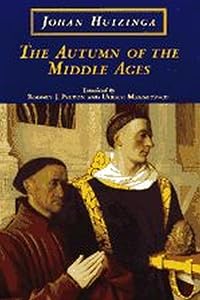
So begins one of the most famous works of history ever published, Johan Huizinga's The Autumn of the Middle Ages. Few who have read this book in English realize that The Waning of the Middle Ages, the only previous translation, is vastly different from the original Dutch, and incompatible with all other European-language translations. Now, for the first time ever, the original version of this classic work has been translated into English. Herfsttij der Middeleeuwen, or The Autumn of the show more Middle Ages - the original title - is a brilliant portrait of life, thought, and art in fourteenth- and fifteenth- century France and the Netherlands. For Huizinga, this period marked not the birth of a dramatically new era in history, the Renaissance, but the fullest, ripest phase of medieval life and thought. Criticized both at home and in Europe for being "old-fashioned" and "too literary" when first published in 1919, the book is now recognized not only for its quality and richness as history, but also as a precursor to the Annales "histoire des mentalites" school of Marc Bloch and Lucien Febvre, two of the few reviewers who praised the book initially. In the 1924 translation, Fritz Hopman adapted, reduced, and altered the Dutch edition - softening Huizinga's often passionate arguments, dulling his nuances, and eliminating theoretical passages. He dropped many passages Huizinga had quoted in their original old French. Additionally, chapters are rearranged and redivided, all references are dropped, and mistranslations are introduced. This translation corrects such errors, recreating the second Dutch edition - which represents Huizinga's thinking at its most important stage - as closely as possible. Everything that was dropped or rearranged has been restored. Prose quotations appear in French, with translations printed at the bottom of the page. Mistranslations have been corrected. Payton and Mammitzsch also have added helpful material, including Huizinga's preface to the first and second Dutch editions (published in 1919 and 1921) and the one to the 1924 German translation, where he touches on the book's title and offers some thoughts on translations. Several notes clarify Huizinga's references to things which would be common knowledge only to Dutch readers. Huizinga frequently refers to paintings, sculptures, and carvings, some little known; this edition is the first in any language to include a full range of illustrations. show lessTags
Recommendations




















Member Reviews
This wonderful book has kept me enthralled over the last four days. This is a translation from a Dutch edition published in 1921, made in 1996 by Payton and Hammitzsch. Huizinga takes a critical look at the history of fourteenth and fifteenth century France and the Low Countries with a view to understanding why people acted the way they did at this period in History.
The writing/translation flows magnificently as Huizinga covers topics such as: the passionate intensity of life, the static social structure, failure of knighthood, the preoccupation of death and fear of life, power of religious imagery, the dualism of piety and worldliness, a failure of imagination and art and literature. Huizinga takes a bleak view of the period and says show more at the end of the first chapter:
"It is an evil world. The fires of hatred and violence burn fiercely. Evil is powerful, the devil covers a darkened earth with his black wings. And soon the end of the world is expected. But mankind does not repent, the church struggles, and the preachers and poets warn and lament in vain."
Huizinga warns us that to understand the culture the reader should transpose his/her thoughts into the minds of the the medievals' and no matter how incomprehensible they are to us we must accept them. The real strength of the book is the attempt to see the world through the eyes of the participants in the history. We learn that they are intensely passionate, cruel aggressive but easily reduced to tears, a belief that God made the world good but man's sinfulness has made it miserable, a mind stuffed with religious imagery and proverbs preventing critical thought and a propensity to take every thought and argument to the highest level (God)
This book has given me an insight to books that I have recently read on this period I have a better understanding of why King Edward III was so intent on securing his French territories and why Chaucer wrote the way he did.
The book was first published in 1919 and academic study of the late middle ages has moved on since then. This is no reason to ignore this marvellous book which gives a view of the period that still has plenty to offer. show less
The writing/translation flows magnificently as Huizinga covers topics such as: the passionate intensity of life, the static social structure, failure of knighthood, the preoccupation of death and fear of life, power of religious imagery, the dualism of piety and worldliness, a failure of imagination and art and literature. Huizinga takes a bleak view of the period and says show more at the end of the first chapter:
"It is an evil world. The fires of hatred and violence burn fiercely. Evil is powerful, the devil covers a darkened earth with his black wings. And soon the end of the world is expected. But mankind does not repent, the church struggles, and the preachers and poets warn and lament in vain."
Huizinga warns us that to understand the culture the reader should transpose his/her thoughts into the minds of the the medievals' and no matter how incomprehensible they are to us we must accept them. The real strength of the book is the attempt to see the world through the eyes of the participants in the history. We learn that they are intensely passionate, cruel aggressive but easily reduced to tears, a belief that God made the world good but man's sinfulness has made it miserable, a mind stuffed with religious imagery and proverbs preventing critical thought and a propensity to take every thought and argument to the highest level (God)
This book has given me an insight to books that I have recently read on this period I have a better understanding of why King Edward III was so intent on securing his French territories and why Chaucer wrote the way he did.
The book was first published in 1919 and academic study of the late middle ages has moved on since then. This is no reason to ignore this marvellous book which gives a view of the period that still has plenty to offer. show less
This book took me 10 months to finish, which usually means it failed to pull me along, and I needed to rely on my completionism to pull me through. Yes this is a seminal wok of (art) history, and i can see why, but the views it espouses on the way are just utterly outdated. From normative and hierarchical views of artistic "progress" to Huizinga's Calvinism tainting his views of medieval catholicism there's a lot in this book that just made me(ahistorically) think what a prick.
I don't think I would recommend reading this book even to art history students (unless to quote mine it, I guess). There are better books out there making good cohesive and readable arguments about the late middle ages (and they'll likely boil down Huizinga's show more main point more succinctly than he ever did). show less
I don't think I would recommend reading this book even to art history students (unless to quote mine it, I guess). There are better books out there making good cohesive and readable arguments about the late middle ages (and they'll likely boil down Huizinga's show more main point more succinctly than he ever did). show less
La malinconica ferocia di un mondo al tramonto. Ideali, canzoni d'amore, tornei dove sovrani veri giocano con i simboli di un passato immaginato.
Un grande libro, un intramontabile classico della storiografia del primo novecento. Si legge come un romanzo perchè in ogni parola risuona l'amore dell'autore per il passato fiammeggiante di un paese scomparso dai libri di storia
Un grande libro, un intramontabile classico della storiografia del primo novecento. Si legge come un romanzo perchè in ogni parola risuona l'amore dell'autore per il passato fiammeggiante di un paese scomparso dai libri di storia
Johan Huizinga (1872-1945) was a professor of history at the University of Leiden from 1915 until the Nazis closed the university in 1942 and held him hostage until shortly before his death. He first published The Autumn of the Middle Ages in 1919; this book represents a translation of 1921’s second edition. The current translators, both from the University of Western Washington, cite problems with the first translation into English, such as adaptations and misstatements that change Huizinga’s original meaning, as justification for their own version. This current version was not published until 1996, after the death of Ulrich Mammitzsch.
Huizinga set himself the task of pinpointing the changes in philosophy, art, and literature which show more mark the end of the Medieval period, and the beginning of the Renaissance. He tackled it with unstinting effort and monumental erudition. He sets his stage in the fourteenth and fifteenth centuries, in Burgundy, France, Belgium, and the Netherlands.
Following a rigorous and concise logic, Huizinga establishes the culture of the time: in secular politics it was a time of insecurity, marked by separation of families, regions, and nations into feuding parties. This insecurity led nobility and the merchant class to agitate with their overlords to subject their neighbors to a reign of terror. In religion, the Church’s faithful followed a primitive (Huizinga’s word) and impersonal form of adoration based on visual icons (which made it easier to worship) and an absurd legalistic weighing and balancing of sins and indulgences as they tried to finagle their way into heaven. Literature, even of the more serious, higher kind, followed set formulae of verse length, rhyming patterns, and even theme.
The author treats each of these features at considerable length, and cites a wide range of contemporary sources and examples. I found the whole to be entirely convincing, even though the later chapters suffer from an overabundance of citation and a growing mix of sources, themes, and points he felt he had to make. The book is set up somewhat awkwardly as well: I read the epub version and found jumping between the many passages in the original Middle French, and the appendices containing translations, a bit burdensome. I’m not sure how I would have solved this issue; I may have put the originals in appendices and let the main narrative flow with translations.
Huizinga takes pains to point out areas where 14th or 15th Century Burgundian or French thought anticipated the Renaissance humanism which would follow, but his conclusions about such things always carries magisterial weight. I am no one to question it. He’s always reasonable, specific, and balanced.
This is a useful volume; it puts the curious reader directly in touch with a famous scholar who has studied his subject closely and communicates his conclusions persuasively. If this period in history interests you, this late-coming treatise is an excellent place to start.
https://bassoprofundo1.blogspot.com/2025/02/the-autumn-of-middle-ages-by-johan.h... show less
Huizinga set himself the task of pinpointing the changes in philosophy, art, and literature which show more mark the end of the Medieval period, and the beginning of the Renaissance. He tackled it with unstinting effort and monumental erudition. He sets his stage in the fourteenth and fifteenth centuries, in Burgundy, France, Belgium, and the Netherlands.
Following a rigorous and concise logic, Huizinga establishes the culture of the time: in secular politics it was a time of insecurity, marked by separation of families, regions, and nations into feuding parties. This insecurity led nobility and the merchant class to agitate with their overlords to subject their neighbors to a reign of terror. In religion, the Church’s faithful followed a primitive (Huizinga’s word) and impersonal form of adoration based on visual icons (which made it easier to worship) and an absurd legalistic weighing and balancing of sins and indulgences as they tried to finagle their way into heaven. Literature, even of the more serious, higher kind, followed set formulae of verse length, rhyming patterns, and even theme.
The author treats each of these features at considerable length, and cites a wide range of contemporary sources and examples. I found the whole to be entirely convincing, even though the later chapters suffer from an overabundance of citation and a growing mix of sources, themes, and points he felt he had to make. The book is set up somewhat awkwardly as well: I read the epub version and found jumping between the many passages in the original Middle French, and the appendices containing translations, a bit burdensome. I’m not sure how I would have solved this issue; I may have put the originals in appendices and let the main narrative flow with translations.
Huizinga takes pains to point out areas where 14th or 15th Century Burgundian or French thought anticipated the Renaissance humanism which would follow, but his conclusions about such things always carries magisterial weight. I am no one to question it. He’s always reasonable, specific, and balanced.
This is a useful volume; it puts the curious reader directly in touch with a famous scholar who has studied his subject closely and communicates his conclusions persuasively. If this period in history interests you, this late-coming treatise is an excellent place to start.
https://bassoprofundo1.blogspot.com/2025/02/the-autumn-of-middle-ages-by-johan.h... show less
Ein Klassiker der Kulturgeschichtsschreibung - vergleichbar mit Jakob Burkhardts "Kultur der Renaissance". Huizingas großes Panorama der Kultur des Spätmittelalters beruht auf der gründlichen Auswertung von Quellen des burgundischen und französischen Raums (einschließlich von Bildwerken, theologischen Texten und fiktionaler Literatur). Brilliant geschrieben und ein Lesegenuss.
I read the old translation (The Waning of the Middle Ages) many years ago and found it vivid. I understand this new translation is considered better and conveys a more positive image of the late middle ages.
900 HUI 1/2
Members
- Recently Added By
Lists

Best General History Books
50 works; 22 members

r/AskHistorians' Recommended Books
1,068 works; 19 members

Het laatste woord
27 works; 1 member

Top Five Books of 2016
795 works; 229 members

Edad Media
33 works; 1 member

Trinity College Booklist (1951): Class Four, History
120 works; 2 members

Canon van de Nederlandse letterkunde
125 works; 5 members

Books Read in 2016
4,666 works; 199 members

1001 Books You Must Read Before You Die
1,448 works; 1,135 members

Books Read in 2021
5,361 works; 114 members

the preppy handbook
36 works; 1 member

Mustich's 1000 Books to Read Before You Die: A Life Changing List
1,001 works; 20 members

My List
302 works; 1 member
Author Information

81+ Works 6,448 Members
Some Editions
Awards and Honors
Notable Lists
Series

Common Knowledge
- Canonical DDC/MDS
- 944.025
Classifications
- Genres
- History, Nonfiction, General Nonfiction, Art & Design
- DDC/MDS
- 944.025 — History & geography History of Europe France and Monaco France Capet and Valois 987-1589 Philip VI 1328-50; John II 1350-64; Charles V 1364-80 ; XIVth Century
- LCC
- DC33.2 .H83 — History of Europe, Asia, Africa and Oceania France – Andorra – Monaco History of France Antiquities. Social life and customs. Ethnography
- BISAC
Statistics
- Members
- 1,899
- Popularity
- 11,310
- Reviews
- 26
- Rating
- (4.01)
- Languages
- 18 — Czech, Dutch, English, Estonian, Finnish, French, German, Hebrew, Hungarian, Italian, Norwegian (Bokmål), Polish, Romanian, Russian, Spanish, Swedish, Turkish, Portuguese (Portugal)
- Media
- Paper, Ebook
- ISBNs
- 73
- ASINs
- 25