Frankenstein: A Cultural History
by Susan Tyler Hitchcock
On This Page
Description
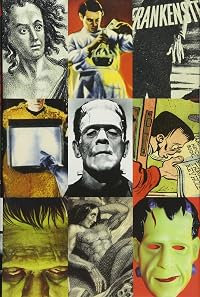
Frankenstein began as the nightmare of an unwed teenage mother in Geneva, Switzerland, in 1816. At a time when the moral universe was shifting and advances in scientific knowledge promised humans dominion over that which had been God's alone, Mary Shelley envisioned a story of human presumption and its misbegotten consequences. Two centuries later, that story is still constantly retold and reinterpreted, from Halloween cartoons to ominous allusions in the public debate, capturing and show more conveying meaning central to our consciousness today and our concerns for tomorrow. From Victorian musical theater to Boris Karloff with neck bolts, to invocations at the President's Council on Bioethics, the monster and his myth have inspired everyone from cultural critics to comic book addicts. This is a lively and eclectic cultural history, illuminated with dozens of pictures and illustrations, and told with skill and humor. Susan Tyler Hitchcock uses film, literature, history, science, and even punk music to help us understand the meaning of this monster made by man. --Publisher. show lessTags
Recommendations












Member Recommendations
Member Reviews
It was a dark and stormy night. . .
The story is a famous one—a group of writers, bored, wintering in a Swiss villa and kept inside by the inclement weather, challenge each other to write a ghost story. Two of the group—Percy Bysshe Shelley and Lord Byron—were already literary rock stars and one might have expected great things from either man’s pen. But it was a third member, a young, quiet woman named Mary Wollstonecraft, whose story against all expectations would end up a literary and cultural classic.
I’ll admit, I can count on one hand the number of books that have ever actually scared me, the literary moments that made me physically shiver, and Frankenstein is one of them:
“. . . by the dim and yellow light of the moon, show more as it forced its way through the window shutters, I beheld the wretch—the miserable monster whom I had created. He held up the curtain of the bed; and his eyes, if eyes they may be called, were fixed upon me. His jaws opened, and he muttered some inarticulate sounds, while a grin wrinkled his cheeks. . .I had gazed upon him while unfinished; he was ugly then; but when those muscles and joints were rendered capable of motion, it became a thing such as even Dante could not have conceived.”
The horror of the moment when Frankenstein steps back from his finished creation and realizes it is not a triumph of science but a monster he has unleashed upon the world gave me nightmares for days. I’ve never been able to bring myself to re-read the book without skipping over that section.
Who is Frankenstein? What is his monster? How did a scribbled tale dashed off one dark and stormy night in an Swiss villa become such a universally recognized symbol? Where does our deep-seated horror and disgust come from? And how did the monster become what some people have called “our first modern myth”?
These are some of the questions that Susan Tyler Hitchcock attempts to answer in Frankenstein: A Cultural History (W.W. Norton; $25.95)—an ambitious work of cultural, literary, cinematic and historical investigation. Hitchcock, whose expertise comes from a twenty-year old fascination with Frankensteinia, carefully dissects (pun intended) the many layered meanings in Frankenstein’s monster; as a symbol of the rewards of scientific pride and arrogance; the unholy, immoral consequences of man who challenges God; the inevitable and horrific results when a man lays claim to what is a woman’s domain—to give birth, to create life. . .read full review show less
The story is a famous one—a group of writers, bored, wintering in a Swiss villa and kept inside by the inclement weather, challenge each other to write a ghost story. Two of the group—Percy Bysshe Shelley and Lord Byron—were already literary rock stars and one might have expected great things from either man’s pen. But it was a third member, a young, quiet woman named Mary Wollstonecraft, whose story against all expectations would end up a literary and cultural classic.
I’ll admit, I can count on one hand the number of books that have ever actually scared me, the literary moments that made me physically shiver, and Frankenstein is one of them:
“. . . by the dim and yellow light of the moon, show more as it forced its way through the window shutters, I beheld the wretch—the miserable monster whom I had created. He held up the curtain of the bed; and his eyes, if eyes they may be called, were fixed upon me. His jaws opened, and he muttered some inarticulate sounds, while a grin wrinkled his cheeks. . .I had gazed upon him while unfinished; he was ugly then; but when those muscles and joints were rendered capable of motion, it became a thing such as even Dante could not have conceived.”
The horror of the moment when Frankenstein steps back from his finished creation and realizes it is not a triumph of science but a monster he has unleashed upon the world gave me nightmares for days. I’ve never been able to bring myself to re-read the book without skipping over that section.
Who is Frankenstein? What is his monster? How did a scribbled tale dashed off one dark and stormy night in an Swiss villa become such a universally recognized symbol? Where does our deep-seated horror and disgust come from? And how did the monster become what some people have called “our first modern myth”?
These are some of the questions that Susan Tyler Hitchcock attempts to answer in Frankenstein: A Cultural History (W.W. Norton; $25.95)—an ambitious work of cultural, literary, cinematic and historical investigation. Hitchcock, whose expertise comes from a twenty-year old fascination with Frankensteinia, carefully dissects (pun intended) the many layered meanings in Frankenstein’s monster; as a symbol of the rewards of scientific pride and arrogance; the unholy, immoral consequences of man who challenges God; the inevitable and horrific results when a man lays claim to what is a woman’s domain—to give birth, to create life. . .read full review show less
Interesting look at the Frankenstein mythos from Mary Shelley's authoring of the novel through the film adaptations, its absorption into popular culture and the way it has worked as a metaphor in politics, science and other issues. Doesn't dig too much into historical or mythological precedence, but there is enough here to keep any fan of the original story interested.
As a history of the enduring popularity of the Frankenstein story in its many re-incarnations, and its endless manifestations in popular culture, this entertaining book indispensable. But as cultural history, it is rather superficial. Hitchcock could go much further in explaining why the story is so popular, what that popularity and the evolution of the Frankenstein story says about the cultures that have embraced it.
Ratings
Members
- Recently Added By
Talk Discussions
Past Discussions
Frankenstein in Thing(amabrarian)s That Go Bump in the Night (October 2007)
Author Information

28+ Works 1,230 Members
Susan Tyler Hitchcock holds a B.A. and M.A. in English from the University of Michigan and a Ph.D. in English from the University of Virginia
Awards and Honors
Common Knowledge
- People/Characters
- Mary Wollstonecraft Shelley; Frankenstein's Monster
- Dedication
- As did Mary Shelley, so do I inscribe this volume TO MY FATHER
- First words
- The weather was strange all summer long in 1816.
- Last words
- (Click to show. Warning: May contain spoilers.)Cantor knew nothing of Kass's deliberate avoidance of the novel--but Kass should have known that by the twenty-first century, no romanticist would consider talking about science and literature without invoking Frankenstein.
- Blurbers
- Nichols, Ashton; Dillard, R.H.W.; Cantor, Paul A.; Lugosi, Bela, Jr.
Classifications
Statistics
- Members
- 126
- Popularity
- 259,956
- Reviews
- 4
- Rating
- (3.90)
- Languages
- English, Portuguese
- Media
- Paper
- ISBNs
- 3
- ASINs
- 1