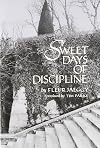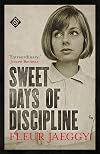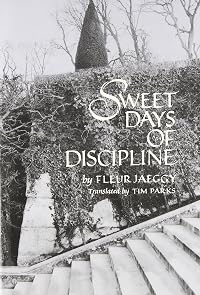
Sweet Days of Discipline
by Fleur Jaeggy
On This Page
Description
The story of a fourteen-year-old girl living in a bording school in postwar Switzerland.Tags
Recommendations













Member Reviews
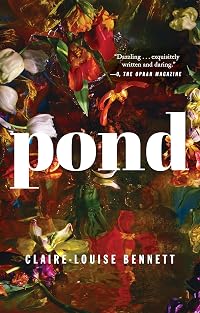
Prose like cut-glass in an almost plotless tale of schoolgirl obsession. "Her looks were those of an idol, disdainful. Perhaps that was why I wanted to conquer her....The first thing I thought was she had been further than I had." I found it another of those oddly compelling novels I'm drawn to (like Pond) where not much happens but the writing sweeps you along.
For starters: let it be clear that the title of this booklet (In English “Sweet days of Discipline”) is meant to be sarcastic. A woman looks back on her childhood, which she spent in different boarding schools in Switserland, a chilling story of suppressed feelings, coldness and gloom. On the surface, this seems like a rather classic coming-of-age novel, with all the usual ingredients of the stifling, over-disciplined life at a boarding school in Switzerland in the 1950s. But the reference, at the very beginning to Robert Walser is not an innocent link. That Swiss writer was the master of stories in which apparently nothing much happens, but which are imbued with the gravity and chillness of life, written in accurate, almost show more merciless prose.
And that is also the case with Jaeggy. For instance, the absent mother (who conducts her daughter's life from Brazil), and the cold, distant father who lives in hotel rooms, make clear that the unnamed narrative voice has been more or less left to her own fate. She seeks rapprochement with two other girls, one mysterious and detached, the other exuberantly extravert, with a suppressed sexual undertone, but that also not leads to much. There is a veil of gloom over the entire story, which also regularly contains references to death. Again, as with Walser, not much is happening, but it is mainly the intense, sombre atmosphere that makes this short booklet stand out; you cannot put your finger on it, but this story sticks, that’s for certain. show less
And that is also the case with Jaeggy. For instance, the absent mother (who conducts her daughter's life from Brazil), and the cold, distant father who lives in hotel rooms, make clear that the unnamed narrative voice has been more or less left to her own fate. She seeks rapprochement with two other girls, one mysterious and detached, the other exuberantly extravert, with a suppressed sexual undertone, but that also not leads to much. There is a veil of gloom over the entire story, which also regularly contains references to death. Again, as with Walser, not much is happening, but it is mainly the intense, sombre atmosphere that makes this short booklet stand out; you cannot put your finger on it, but this story sticks, that’s for certain. show less
Prose like cut-glass in an almost plotless tale of schoolgirl obsession. "Her looks were those of an idol, disdainful. Perhaps that was why I wanted to conquer her....The first thing I thought was she had been further than I had." I found it another of those oddly compelling novels I'm drawn to (like Pond) where not much happens but the writing sweeps you along.
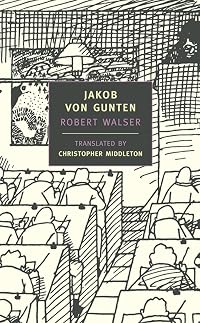
This novel has the flavor of Dostoevsky's Notes from Underground combined with the clipped sentences of Robert Walser's Jakob von Gunten. Not un-coincidentally, the novel names Robert Walser in its first lines: "At fourteen I was a boarder in a school in the Appenzell. This is where Robert Walser used to take his many walks when he was in the mental hospital in Herisau, not far from our college. He died in the snow. Photographs show his footprints and the position of his body in the snow. We didn't know the writer."
What follows is a feminine parallel to Walser's novel,Jakob, the purported diary of a well-off young man who enrolls in a servant's school where he, according to Coetzee's review of it, reflects "on the education he receives show more there—an education in humility—and on the strange brother and sister who offer it."
In Jaeggy's reimagining, which I take to be an homage to Walser, the setting is the equally confining all-girl boarding school, and about how relationships formed there and the discipline learned there are always at risk of becoming fetishized. For the inhabitants of the girls' school, and for Jakob von Gunten, and for the man himself Walser, such discipline necessarily makes one go truly mad.
While the nihilistic narrator of Sweet Days of Discipline claims that she and her fellow boarders "didn't know the author," (i.e. either personally or through his works), they nevertheless come to know him--and madness--through their experiences in the shared landscape. show less
What follows is a feminine parallel to Walser's novel,Jakob, the purported diary of a well-off young man who enrolls in a servant's school where he, according to Coetzee's review of it, reflects "on the education he receives show more there—an education in humility—and on the strange brother and sister who offer it."
In Jaeggy's reimagining, which I take to be an homage to Walser, the setting is the equally confining all-girl boarding school, and about how relationships formed there and the discipline learned there are always at risk of becoming fetishized. For the inhabitants of the girls' school, and for Jakob von Gunten, and for the man himself Walser, such discipline necessarily makes one go truly mad.
While the nihilistic narrator of Sweet Days of Discipline claims that she and her fellow boarders "didn't know the author," (i.e. either personally or through his works), they nevertheless come to know him--and madness--through their experiences in the shared landscape. show less
a strange, cold book that seems to borrow a lot from Duras' self-conscious literariness. it has beautiful turns of phrase and is quite moving in its evocation of underloved rich boarding school girls with their undeclared queerness, but i found the casual racism toward "the black girl" unpalatable and the novel was slight, i am not sure it'll linger with me.
i had a hard time holding onto much here but am not totally sure if it's the book, the translation, or me. i thought there were some potentially interesting parts and wish they were more expanded upon, but there wasn't a lot of space to do that in a book this short. i'd have appreciated more character development but i don't think that was the point here.
The narrator of this slim novel is a teenage girl who’s spent most of her life on extremely exclusive boarding schools, having her future mapped out by very distant parents who she rarely meets. At Bausler Institut in the Swiss alps, she makes friends with the chilly and perfect Frederique, and discovers a new side of herself, a streak of darkness and self-destructiveness.
I thought this simple set-up sounded fascinating in an Amelie Nothomb sort of way (which is something very positive in my book), but was disappointed . It’s so understated it’s virtually static, and never seems to leave ground, despite a nice, detached writing style and a melancholy tone in it’s claustrophobic world. The closeness of life in a secluded school show more in a small village far from everything is well captured, as is the environment. But it’s just not enough. A few late twists, not unexpected but interesting enough, save the book somewhat, but it remains front heavy and not quite worth it. Read Nothomb’s AntiChrista instead. Or Prep by Curtis Sittenfeld. show less
I thought this simple set-up sounded fascinating in an Amelie Nothomb sort of way (which is something very positive in my book), but was disappointed . It’s so understated it’s virtually static, and never seems to leave ground, despite a nice, detached writing style and a melancholy tone in it’s claustrophobic world. The closeness of life in a secluded school show more in a small village far from everything is well captured, as is the environment. But it’s just not enough. A few late twists, not unexpected but interesting enough, save the book somewhat, but it remains front heavy and not quite worth it. Read Nothomb’s AntiChrista instead. Or Prep by Curtis Sittenfeld. show less
Members
- Recently Added By
Lists

Italian Literature
556 works; 41 members

Lithub: The 50 Best Contemporary Novels Under 200 Pages
50 works; 4 members

Library ebooks and electronic audio books
52 works; 1 member

Academia in Fiction
158 works; 23 members

Books Read in 2022
5,166 works; 112 members

Schwob Nederland
207 works; 2 members

Stuff from Bard
70 works; 1 member

Books for Birute
39 works; 1 member

Llibres que he llegit el 2025
81 works; 2 members
Author Information

16 Works 1,478 Members
Some Editions
Awards and Honors
Series
Belongs to Publisher Series
Fabula [Adelphi] (33)
And Other Stories (56)
Gallimard, Folio (4135)
Common Knowledge
- Canonical title*
- Счастливые несчастливые годы
- Original title
- I beati anni del castigo
- Original publication date
- 1989
- Important places
- Appenzell, Switzerland; Switzerland
- First words
- At fourteen I was a boarder in a school in Appenzell. This was the area where Robert Walser used to take his many walks when he was in the mental hospital in Herisau, not far from our college. He died in the snow. Photographs... (show all) show his footprints and the position of his body in the snow. We didn't know the writer. And nor did our literature teacher. Sometimes I think it might be nice to die like that, after a walk, to let yourself drop into a natural grave in the snow of the Appenzell, after almost thirty years of mental hospital, in Herisau. It really is a shame we didn't know of Walser's existence, we would have picked a flower for him.
A quattordici anni ero educanda in un collegio dell'Appenzell. - Last words
- (Click to show. Warning: May contain spoilers.)Ripetei ancora il nome del collegio. Mi sbagliavo, disse. Mi scusai. Questa, disse, è una clinica per ciechi. Adesso è così. Una clinica per ciechi.
- Blurbers
- Brodsky, Joseph
- Original language
- Italian
- Canonical DDC/MDS
- 853.914
- Canonical LCC
- PQ4870.A4 B4313
*Some information comes from Common Knowledge in other languages. Click "Edit" for more information.
Classifications
- Genres
- General Fiction, Fiction and Literature
- DDC/MDS
- 853.914 — Literature & rhetoric Italian, Romanian & related literatures Italian fiction 1900- 20th Century 1945-1999
- LCC
- PQ4870 .A4 .B4313 — Language and Literature French, Italian, Spanish and Portuguese literatures Italian literature Individual authors, 1961-2000
- BISAC
Statistics
- Members
- 637
- Popularity
- 45,570
- Reviews
- 13
- Rating
- (3.60)
- Languages
- 16 — Catalan, Chinese, Danish, Dutch, English, Estonian, French, German, Galician, Italian, Norwegian (Bokmål), Portuguese, Russian, Spanish, Swedish, Turkish
- Media
- Paper, Audiobook, Ebook
- ISBNs
- 41
- ASINs
- 8