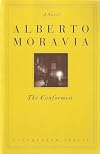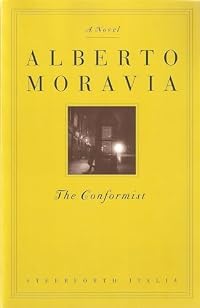
The Conformist
by Alberto Moravia
On This Page
Description
Marcello Clerici is a social deviant who is repelled by his own actions and strives to be normal. As we follow his life we bear witness to his psychological struggle between perverse desires and his desperate wish to conform.Tags
Recommendations













Member Recommendations

Member Reviews
Alberto Moravia - [The Conformist]
Bernado Bertolucci - [Il conformista]
My last read of a book published in 1951 in the year 2020; proved to be one of the best reads of the year and I got to see an impressive film to boot. Facist Italy in 1937 forms the backdrop to much of Moravia's The Conformist although there is also a sojourn in Paris. The novelist focuses on Marcello who works for the state and drifts into espionage, but this is a story of Marcello's voyage of self discovery as he scrutinises his own actions in an attempt to fit in; to achieve a much sought after normalcy after believing himself to be abnormal. Moravia shows us everything through Marcello's eyes and yet the writing keeps just a little distance from him, because of show more Marcello's tight control of his emotions and one wonders if he is a character without a soul; perhaps a character like Meursault in Camus L'etranger. It has a feeling of an exercise in existentialism although Moravia does not stray into absurdism. The novel bristles with themes and ideas as we follow Marcello's journey through life; the grimy world of espionage, homosexuality, desire, religion, a tightly controlled police state and the inevitability of reactions as a result of actions taken.
In a prolog to the main action of the novel we meet Marcello as an innocent thirteen year old who is bullied at school and whose father is well on the way to his insanity and his mother has her own issues. Marcello takes pleasure in killing lizards and to his surprise discovers that his behaviour is seen as abnormal by his friend next door. He is picked up while walking home from school by a man driving an impressive car and bargains with him to obtain a hand gun. He avoids being raped by shooting his adversary Lino (a defrocked priest) and escapes any consequences. This incident remains with him all his life. We pick up Marcello's story in his early thirties; he has graduated and is a government employee, a member of the facist party and about to get married. He concentrates his efforts into being a good husband and model employee, but his enthusiasm to do what is expected of him is derailed by his selection to carry out a clandestine operation by his employers and the sexual desire of his fiancé.
His acceptance of his part in a mission to kill his old and revered professor who is making anti-fascist waves in Paris and his attraction to the professors wife (Lina) leads to further complications, but Marcello's psychopathic tendencies enable him to find his way through. It is a complicated situation made more so by the professor's young wife wanting to seduce Marcello's fiancé Giulia and the professor himself refusing to acknowledge the machinations of the fascist plot. There are some brilliant set piece incidents in the book which make great subject matter for the film: Marcello must go to confession before his marriage and decides to confess to the murder of Lino, the professor and his wife take Marcello and his wife who are on their honeymoon to a lesbian club in Paris, the fall of Mussolini and Marcello's flight to the countryside. These incidents along with the earlier one of Marcello's seduction by Lina are used by Bertolucci's to create a sort of cut and paste cinema style. Marcello just appears to move on to the next thing he must do, hardly questioning anything, sleepwalking almost in his desire to be seen as normal. He enjoys the regularity of life as a government employee, he looks forward to a settled marriage, but must exert an almost iron willed control on his emotions and feeling that threaten to disrupt his life. This is a tightly controlled novel with sinister overtones that is unsettling in its depiction of Marcello as a man just on the outer edge of normalcy.
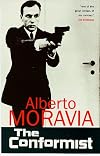
The film released in 1970 is an impressive piece of artwork. The director uses a backdrop of modernist monumental architecture with its impeccable clean lines and grandeur that dwarf the human characters. It lends an added depth to the character of Marcello who is a character with a vital something missing. It expresses the would be power of the fascist state and its overriding feeling of control permeates throughout. It is also a good backdrop to the decadence of the principal characters, both morale and physical. Like the book the film has an unsettling edge to it enhanced by the performance of Jean-Louis Trintignant as Marcello. I think it is a visual masterpiece; a delight to the senses. I viewed the film just after finishing the book and although the film is not exactly faithful to the book I found my imagination bouncing around between the two. You can hardly have a better compliment to the film maker.
There is no doubting the erotic charge to the book which the film does not quite capture in all its complexities but here is an example:
In Lina, was the purity he seemed to perceive there - mortified in the prostitute, triumphant in Lina. He now understood that only the radiant light emanating from Lina's forehead could dissipate the disgust for decadence, corruption and impurity that had burdened him all his life and which his marriage to Giulia had in noway mitigated.
The eroticism is set by the female characters, they make the decisions, they make the first move, they look to satisfy their desires. They threaten Marcello's ideal world of order and conformity, but they don't threaten his inviolable inner world. This is a novel that would benefit from a re-read and it would go back on my shelf, however I note that I have got the kindle version, my old penguin orange and white cover hard copy must have bitten the dust some time ago - 5 stars. show less
Bernado Bertolucci - [Il conformista]
My last read of a book published in 1951 in the year 2020; proved to be one of the best reads of the year and I got to see an impressive film to boot. Facist Italy in 1937 forms the backdrop to much of Moravia's The Conformist although there is also a sojourn in Paris. The novelist focuses on Marcello who works for the state and drifts into espionage, but this is a story of Marcello's voyage of self discovery as he scrutinises his own actions in an attempt to fit in; to achieve a much sought after normalcy after believing himself to be abnormal. Moravia shows us everything through Marcello's eyes and yet the writing keeps just a little distance from him, because of show more Marcello's tight control of his emotions and one wonders if he is a character without a soul; perhaps a character like Meursault in Camus L'etranger. It has a feeling of an exercise in existentialism although Moravia does not stray into absurdism. The novel bristles with themes and ideas as we follow Marcello's journey through life; the grimy world of espionage, homosexuality, desire, religion, a tightly controlled police state and the inevitability of reactions as a result of actions taken.
In a prolog to the main action of the novel we meet Marcello as an innocent thirteen year old who is bullied at school and whose father is well on the way to his insanity and his mother has her own issues. Marcello takes pleasure in killing lizards and to his surprise discovers that his behaviour is seen as abnormal by his friend next door. He is picked up while walking home from school by a man driving an impressive car and bargains with him to obtain a hand gun. He avoids being raped by shooting his adversary Lino (a defrocked priest) and escapes any consequences. This incident remains with him all his life. We pick up Marcello's story in his early thirties; he has graduated and is a government employee, a member of the facist party and about to get married. He concentrates his efforts into being a good husband and model employee, but his enthusiasm to do what is expected of him is derailed by his selection to carry out a clandestine operation by his employers and the sexual desire of his fiancé.
His acceptance of his part in a mission to kill his old and revered professor who is making anti-fascist waves in Paris and his attraction to the professors wife (Lina) leads to further complications, but Marcello's psychopathic tendencies enable him to find his way through. It is a complicated situation made more so by the professor's young wife wanting to seduce Marcello's fiancé Giulia and the professor himself refusing to acknowledge the machinations of the fascist plot. There are some brilliant set piece incidents in the book which make great subject matter for the film: Marcello must go to confession before his marriage and decides to confess to the murder of Lino, the professor and his wife take Marcello and his wife who are on their honeymoon to a lesbian club in Paris, the fall of Mussolini and Marcello's flight to the countryside. These incidents along with the earlier one of Marcello's seduction by Lina are used by Bertolucci's to create a sort of cut and paste cinema style. Marcello just appears to move on to the next thing he must do, hardly questioning anything, sleepwalking almost in his desire to be seen as normal. He enjoys the regularity of life as a government employee, he looks forward to a settled marriage, but must exert an almost iron willed control on his emotions and feeling that threaten to disrupt his life. This is a tightly controlled novel with sinister overtones that is unsettling in its depiction of Marcello as a man just on the outer edge of normalcy.
The film released in 1970 is an impressive piece of artwork. The director uses a backdrop of modernist monumental architecture with its impeccable clean lines and grandeur that dwarf the human characters. It lends an added depth to the character of Marcello who is a character with a vital something missing. It expresses the would be power of the fascist state and its overriding feeling of control permeates throughout. It is also a good backdrop to the decadence of the principal characters, both morale and physical. Like the book the film has an unsettling edge to it enhanced by the performance of Jean-Louis Trintignant as Marcello. I think it is a visual masterpiece; a delight to the senses. I viewed the film just after finishing the book and although the film is not exactly faithful to the book I found my imagination bouncing around between the two. You can hardly have a better compliment to the film maker.
There is no doubting the erotic charge to the book which the film does not quite capture in all its complexities but here is an example:
In Lina, was the purity he seemed to perceive there - mortified in the prostitute, triumphant in Lina. He now understood that only the radiant light emanating from Lina's forehead could dissipate the disgust for decadence, corruption and impurity that had burdened him all his life and which his marriage to Giulia had in noway mitigated.
The eroticism is set by the female characters, they make the decisions, they make the first move, they look to satisfy their desires. They threaten Marcello's ideal world of order and conformity, but they don't threaten his inviolable inner world. This is a novel that would benefit from a re-read and it would go back on my shelf, however I note that I have got the kindle version, my old penguin orange and white cover hard copy must have bitten the dust some time ago - 5 stars. show less
Questo è il terzo libro che ho letto di Moravia (dopo La vita è gioco e La ciociara) e quello che mi è piaciuto di più. Gli altri li avevo trovato per caso, ma un mio amico mi aveva detto que Il conformista è il migliori di Moravia, quindi ho deciso di comprarlo. Sebbene Moravia forse non sia un maestro della sottilezza in quanto alle sue idee (il romanzo è, secondo me, pieno di spiegazioni superflue), ha una certa arte di scegliere i detagli precisi e le immagini giuste. A differenza di La ciociara, libro che mi è sembrato forse un po' essaggerato nella sfilza di scene violente e tristi, Il conformista mi pare un libro molto equilibrato, veramente ben fatto. Non ti stanchi di leggerlo, ma ha anche una profondità è una bellezza show more che a volte ti sorprendono. Un libro veramente bello.
Another book on my list of Italian classics to read, recommended by a friend who lists Moravia as one of the best Italian authors of the 20th century. The Conformist is a book that it relatively simple and quick to read, but with a certain profundity and even beauty despite the decidedly ugly things that take place. Moravia is, as usual, a bit heavy-handed on the explanations in order to drive his point home, but in the end the book comes off as very well put together. Moravia has a way of writing scenes that stick with you for a long time, as I am sure will be the case with this. Overall, I would highly recommend this book. show less
Another book on my list of Italian classics to read, recommended by a friend who lists Moravia as one of the best Italian authors of the 20th century. The Conformist is a book that it relatively simple and quick to read, but with a certain profundity and even beauty despite the decidedly ugly things that take place. Moravia is, as usual, a bit heavy-handed on the explanations in order to drive his point home, but in the end the book comes off as very well put together. Moravia has a way of writing scenes that stick with you for a long time, as I am sure will be the case with this. Overall, I would highly recommend this book. show less
A longer review will have to wait, but this was excellent. Enthusiastically received by my advanced English college seminar!
the novel upon which Bertolucci's film was based. A remarkable piece of work!
«El conformista» sigue la vida de Marcello Clerici, un hombre que, marcado por un trauma infantil y obsesionado con la idea de normalidad, decide integrarse en el aparato fascista italiano. Su misión —vigilar y eliminar a un antiguo profesor exiliado— lo conduce a un viaje físico y moral que revela la fragilidad de sus convicciones y la violencia latente en su deseo de encajar. La novela explora la psicología del conformismo, la culpa y la manipulación ideológica en el contexto del ascenso del fascismo.
Moravia construye una novela de gran densidad psicológica, donde la introspección del protagonista se entrelaza con una crítica lúcida a los mecanismos sociales y políticos del totalitarismo. La prosa es precisa, sobria y show more analítica, con un ritmo narrativo que alterna escenas de tensión con pasajes reflexivos. El autor disecciona la figura del «hombre común» que, por miedo o deseo de aceptación, se convierte en cómplice de sistemas opresivos.
La traducción de Juan Moreno mantiene la claridad y el tono contenido del original italiano. Desde el punto de vista técnico, la novela destaca por su estructura lineal, su uso del monólogo interior y su capacidad para mostrar cómo la ideología se infiltra en la vida cotidiana. Es una obra fundamental de la narrativa italiana del siglo XX y una de las reflexiones más penetrantes sobre el conformismo moral y político. show less
Moravia construye una novela de gran densidad psicológica, donde la introspección del protagonista se entrelaza con una crítica lúcida a los mecanismos sociales y políticos del totalitarismo. La prosa es precisa, sobria y show more analítica, con un ritmo narrativo que alterna escenas de tensión con pasajes reflexivos. El autor disecciona la figura del «hombre común» que, por miedo o deseo de aceptación, se convierte en cómplice de sistemas opresivos.
La traducción de Juan Moreno mantiene la claridad y el tono contenido del original italiano. Desde el punto de vista técnico, la novela destaca por su estructura lineal, su uso del monólogo interior y su capacidad para mostrar cómo la ideología se infiltra en la vida cotidiana. Es una obra fundamental de la narrativa italiana del siglo XX y una de las reflexiones más penetrantes sobre el conformismo moral y político. show less
May 6, 2026Spanish
El conformista, publicada por primera vez en 1951 es, en su superficie, el retrato de un personaje de la Italia de Mussolini y de la sociedad en la que lucha por integrarse. Pero bajo este trasfondo histórico que tanto influyó en Moravia y sus contemporáneos, subyace una idea más ambiciosa: intentar explicar un comportamiento moral característico de nuestro tiempo, el conformismo, un deseo deconfundirse en la masa y no destacar aun a costa de perder la libertad individual. Un fenómeno capaz de convertir a sociedades cultas y críticas en masas indeterminadas capaces de seguir los dictados de cualquier caudillo «redentor». El viaje de novios de Marcello, su biografía y la descripción de su entorno, se transforman así en un show more alegato en contra de los mecanismos del Estado totalitario, y en una de las novelas más atrevidas y actuales del escritor romano. show less
Mar 27, 2023Spanish
פורטריט פסיכולוגי של פשיסט. ניסיון להתחקות אחרי שורשי הפאשיזם ולמצוא אותם בפחדים הומסקסואליים לטנטיים, בצורך לקונפורמיזם ובברוטליות. האם הפורטריט האינדיבידואלי הוא גם קבוצתי. הסרט של ברטולוצ'י היה שונה מאוד וטוב מן הספר. מוראביה כרגיל מאכיל אותך את המסקנות בכפית ומושך את הדברים יותר מדי.
Nov 3, 2011Hebrew
1
Members
- Recently Added By
Lists

Books Set in Italy
167 works; 19 members

Italian Literature
556 works; 38 members

20th Century Literature
1,161 works; 55 members

Canon de la narrativa universal del siglo XX
254 works; 6 members

Existentialism
90 works; 11 members

100 Best Thrillers of All Time
100 works; 6 members

Canon de la narrativa universal del s. XX (cicutadry)
499 works; 3 members

Best of World Literature
431 works; 51 members
Author Information

461+ Works 10,452 Members
Born in Rome of Jewish-Roman Catholic parents, Moravia was not much affected by the "Fascist racial laws" until Mussolini's fall in 1943 and the consequent German occupation of Rome. Under fascism, Moravia published his first novel, The Time of Indifference (1929), at his own expense when he was only 22; yet it was a great success and remains his show more most characteristic work. He produced nothing to match it until after World War II, when he emerged as the leading Italian neorealist, publishing in rapid order The Woman of Rome (1947), Disobedience (1948), The Conformist (1951), Ghost at Noon (1948), Roman Tales (1954), and Two Women (1957). Many believe the latter is his best novel, telling of the efforts of a shopkeeper and her daughter, raped by Italy's liberators and learning to adapt themselves to the postwar new order. Moravia made a great stir in world literary circles after World War II by announcing his conversion to Roman Catholicism, which had given him solace and protection during the German occupation. Among his more recent publications is 1984. In 1941 Moravia married ~Elsa Morante. They separated in 1962. (Bowker Author Biography) show less
Some Editions
Awards and Honors
Series
Belongs to Publisher Series
Work Relationships
Is contained in
Has the adaptation
Common Knowledge
- Canonical title*
- Il conformista
- Original title
- Il conformista
- Original publication date
- 1951
- People/Characters
- Marcello Clerici; Lino; Giulia; Edmondo Quadri; Lina; Gabrio (show all 7); Lucilla Clerici
- Important places
- Rome, Italy; Paris, France
- Related movies
- Il conformista (1970 | IMDb)
- First words
- Throughout his childhood, Marcello was as fascinated by objects as a magpie.
- Quotations
- He had grown up in a beautiful, tasteful home and knew very well that everything that surrounded him was ugly beyond remedy; but it was exactly what he needed, this anonymous ugliness - one more thing he would have in common ... (show all)with his peers.
Normal men weren't good, he thought, because normality must always be paid for at a high price, whether consciously or not, by various but always negative complicities, by insensitivity, stupidity, cowardice, even criminality... (show all). - Last words
- (Click to show. Warning: May contain spoilers.)Finally the plane was on top of him, trailing after it, as it distanced itself in the burning sky, silence and the night.
*Some information comes from Common Knowledge in other languages. Click "Edit" for more information.
Classifications
- Genres
- General Fiction, Fiction and Literature
- DDC/MDS
- 853.912 — Literature & rhetoric Italian, Romanian & related literatures Italian fiction 1900- 20th Century 1900-1945
- LCC
- PQ4829 .O62 .C67813 — Language and Literature French, Italian, Spanish and Portuguese literatures Italian literature Individual authors, 1900-1960
- BISAC
Statistics
- Members
- 775
- Popularity
- 35,917
- Reviews
- 12
- Rating
- (3.90)
- Languages
- 17 — Catalan, Czech, Danish, Dutch, English, Estonian, Finnish, French, German, Greek, Hungarian, Italian, Polish, Portuguese, Russian, Spanish, Swedish
- Media
- Paper, Ebook
- ISBNs
- 49
- ASINs
- 18