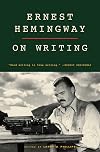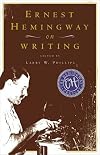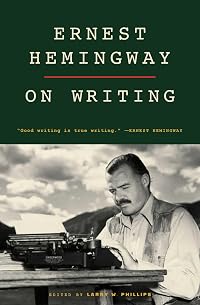
Ernest Hemingway on Writing
by Ernest Hemingway 
On This Page
Description
Contains excerpts from the novels and stories, letters, interviews, and articles of Ernest Hemingway in which he commented upon the art of writing and the realities of a writer's life.Tags
Recommendations



Member Reviews
There can scarcely be any better education for a writer than to read the works of Ernest Hemingway. Clean, precise and literary, his writing makes you want to write the way looking at a finely-carpentered oak table makes you wish you could work with wood. And, what is more, he occasionally interjects his writing with salient and opinionated thoughts on writing itself, many of which Larry W. Phillips has collated into this thin volume.
It's a bracing read, and one that Hemingway himself, for all his pugnacity on the topic, might have approved of. Its brevity is well in keeping with the philosophy of its author, who pioneered the 'iceberg theory' of writing: this is not Hemingway abridged but Hemingway's scattered advice on writing cut show more down to its essence. There is practical advice (not least, the valuable tip to "stop when you are going good and when you know what will happen next" (pg. 41)) but also thoughts on the landscape of writing: the terrors and joys of it, the temptation to fake, on ambition and comparing yourself against the greats.
But while Phillips' compilation more than suffices as the crib notes, reading all of Hemingway's works, major and minor, is the true syllabus. There is no complete instruction manual to writing well that can be spoon-fed to you, not even from the Hemingways of the world. After all, "there is a mystery in all great writing and that mystery does not dis-sect out… Each time you re-read you see or learn something new" (pg. 5). Read well, and read widely, in order to stand a chance at writing well; it's a surprise how many wannabe writers feel no joy in learning this is the only advice that truly applies, and instead think there is some exam to pass, some board-approved criteria to follow. show less
It's a bracing read, and one that Hemingway himself, for all his pugnacity on the topic, might have approved of. Its brevity is well in keeping with the philosophy of its author, who pioneered the 'iceberg theory' of writing: this is not Hemingway abridged but Hemingway's scattered advice on writing cut show more down to its essence. There is practical advice (not least, the valuable tip to "stop when you are going good and when you know what will happen next" (pg. 41)) but also thoughts on the landscape of writing: the terrors and joys of it, the temptation to fake, on ambition and comparing yourself against the greats.
But while Phillips' compilation more than suffices as the crib notes, reading all of Hemingway's works, major and minor, is the true syllabus. There is no complete instruction manual to writing well that can be spoon-fed to you, not even from the Hemingways of the world. After all, "there is a mystery in all great writing and that mystery does not dis-sect out… Each time you re-read you see or learn something new" (pg. 5). Read well, and read widely, in order to stand a chance at writing well; it's a surprise how many wannabe writers feel no joy in learning this is the only advice that truly applies, and instead think there is some exam to pass, some board-approved criteria to follow. show less
Hemingway engenders strong opinions. Of late, there has been a surge in opinion that he doesn’t deserve the attention and acclaim that he garnered over the years. There are those who think that his stripped down, powerful prose is just a sign of a writer lacking in language and imagination. Others continue to hail him as a genius. If anything, Papa would be pleased to be at the center of such a debate, to have so many arguing over the worth of his work.
If nothing else, [Ernest Hemingway on Writing] shows us that worth was something he thought a lot about. The book excerpts Hemingway’s letters, books, and essays for comments on the craft. The man refused to reduce his own thoughts in one place for any one treatise on the topic – show more he said many times that it would knock the dust from the butterfly’s wings to do so. But he commented on his work many times in private correspondence and in the fiction he wrote. On nearly every page, there is a comment from Hemingway that he is constantly striving to be the best author and to produce the best writing.
“…writing is something that you can never do as well as it can be done. It is a perpetual challenge and it is more difficult than anything else that I have ever done – so I do it. And it makes me happy when I do it well.”
Passages like that are paired with rants about other authors, and how is either measures up or doesn’t. Say what you want, but I’ve read few author’s comments that anguish so over whether they’ve achieved a measure of success with their writing. Today, writing books go out of their way to make everyone feel better about themselves, to see success in the act of putting any word to paper. But Hemingway believed there was a truth to fiction that couldn’t be achieved without constant and committed work. He was not be the kind of teacher who could cultivate the midrange writer up standards, but he could inspire anyone to strive in their soul with his example.
Along the way, he comments on his writing practice, even down to how he picks up the thread from the previous day’s writing in a way that helps to create a unified narrative. He comments that on how to write from the senses, how to observe the events of the day and translate them into truth on the page. And he even comments on what a writer should be reading, providing a reading list of the authors he thinks have something to teach. He even debunks symbolism, reminding us that sometimes the boy is a boy and the fish is a fish.
I wish that Hemingway had not been worried about the butterfly, that he would have had the confidence in his own ability to share it without worry that the act would separate him from the spiritual connection he felt. And that’s the only criticism for the book. It’s not one that could be remedied, and, in a way, it makes Larry Phillips success in creating the book that much more impressive.
Bottom Line: An all too narrow glimpse into a master’s mind, but a glimpse worth taking for anyone who has the same passion.
4 bones!!!!! show less
If nothing else, [Ernest Hemingway on Writing] shows us that worth was something he thought a lot about. The book excerpts Hemingway’s letters, books, and essays for comments on the craft. The man refused to reduce his own thoughts in one place for any one treatise on the topic – show more he said many times that it would knock the dust from the butterfly’s wings to do so. But he commented on his work many times in private correspondence and in the fiction he wrote. On nearly every page, there is a comment from Hemingway that he is constantly striving to be the best author and to produce the best writing.
“…writing is something that you can never do as well as it can be done. It is a perpetual challenge and it is more difficult than anything else that I have ever done – so I do it. And it makes me happy when I do it well.”
Passages like that are paired with rants about other authors, and how is either measures up or doesn’t. Say what you want, but I’ve read few author’s comments that anguish so over whether they’ve achieved a measure of success with their writing. Today, writing books go out of their way to make everyone feel better about themselves, to see success in the act of putting any word to paper. But Hemingway believed there was a truth to fiction that couldn’t be achieved without constant and committed work. He was not be the kind of teacher who could cultivate the midrange writer up standards, but he could inspire anyone to strive in their soul with his example.
Along the way, he comments on his writing practice, even down to how he picks up the thread from the previous day’s writing in a way that helps to create a unified narrative. He comments that on how to write from the senses, how to observe the events of the day and translate them into truth on the page. And he even comments on what a writer should be reading, providing a reading list of the authors he thinks have something to teach. He even debunks symbolism, reminding us that sometimes the boy is a boy and the fish is a fish.
I wish that Hemingway had not been worried about the butterfly, that he would have had the confidence in his own ability to share it without worry that the act would separate him from the spiritual connection he felt. And that’s the only criticism for the book. It’s not one that could be remedied, and, in a way, it makes Larry Phillips success in creating the book that much more impressive.
Bottom Line: An all too narrow glimpse into a master’s mind, but a glimpse worth taking for anyone who has the same passion.
4 bones!!!!! show less
"Writing is easy; you just open a vein and bleed."
There's no evidence that Hemingway ever said this, or anything much like it. He wasn't given much to ironic statements that mean to say the opposite of their literal meaning, and he was quick to assert that serious writing is hard work indeed. From the time he was a young man, Hemingway's driving ambition was to be the best American prose writer of his generation, and he didn't take his task casually. Whatever you think of Hemingway as a human being—and I find I like him more the more I learn about him as opposed to his myth—he took his work much more seriously than he took himself.
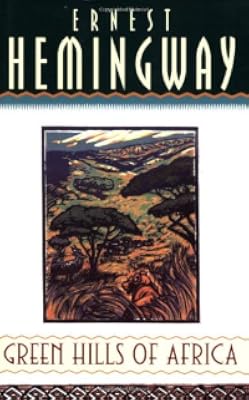
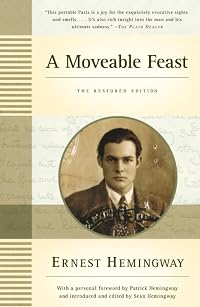
This collection picks what Hemingway wrote or said about writing and the writing life, in his personal show more letters, in interviews, and in works such as A Moveable Feast and The Green Hills of Africa. As the editor notes, quotes dating from the early 1920s to the late 1950s, even taken out of context and mashed together regardless of chronology, paint a consistent picture: Hemingway's ideas about writing didn't change significantly between youth and old age. And they're worth listening to by any aspiring writer. The quotations are grouped into thirteen chapters by subject, including "What Writing Is and Does," "The Pain and Pleasure of Writing," "Working Habits," "Characters," "Knowing What to Leave Out" and "The Writer's Life." Although most quotations don't run more than a paragraph and many are just one or two sentences, I found the collection easy to read straight through and worth keeping on the shelf. show less
There's no evidence that Hemingway ever said this, or anything much like it. He wasn't given much to ironic statements that mean to say the opposite of their literal meaning, and he was quick to assert that serious writing is hard work indeed. From the time he was a young man, Hemingway's driving ambition was to be the best American prose writer of his generation, and he didn't take his task casually. Whatever you think of Hemingway as a human being—and I find I like him more the more I learn about him as opposed to his myth—he took his work much more seriously than he took himself.
This collection picks what Hemingway wrote or said about writing and the writing life, in his personal show more letters, in interviews, and in works such as A Moveable Feast and The Green Hills of Africa. As the editor notes, quotes dating from the early 1920s to the late 1950s, even taken out of context and mashed together regardless of chronology, paint a consistent picture: Hemingway's ideas about writing didn't change significantly between youth and old age. And they're worth listening to by any aspiring writer. The quotations are grouped into thirteen chapters by subject, including "What Writing Is and Does," "The Pain and Pleasure of Writing," "Working Habits," "Characters," "Knowing What to Leave Out" and "The Writer's Life." Although most quotations don't run more than a paragraph and many are just one or two sentences, I found the collection easy to read straight through and worth keeping on the shelf. show less
Phillips puts together a collection of quotes from Hemingway's work and also from a number of letters and interviews. I am not sure Hemingway would have been happy about this book, although Mr Hemingway's fourth wife Mary Welsh Hemingway gave the editor (Phillips) permission to use the various quotes from Hemingway's major works. Phillips' major contribution is putting together Hemingway's thoughts on writing in one convenient place. Other than that, it smacks of someone getting to publish a book simply because the subject is famous. It is a very quick read and I enjoyed reading it, but I was a little disappointed that it is just a series of quotes organised thematically. Worth a read, worth keeping to refer back to, but reading about show more Hemingway just isn't the same as reading Hemingway. show less
A collection of quotes from Hemingway on writing. A hard charger in all respects he was particular intense and dogmatic about writing. The story is what is important and what you must do is write and re-write and what you should write is what you know. This sums it up. He also wanted to be the best and he worked hard at it.
Lot of fun readng some of these letters...the one he writes comparing other writers to boxers is a classic!
Great, wonderful book. This isn't anything but a collection of wisdoms from Hemingway, but if you're interested in how he looked at writing (and if you want to write yourself) this is a goldmine not to be underestimated. Highly recommended.
Members
- Recently Added By
Author Information

Ernest Miller Hemingway was born in the family home in Oak Park, Ill., on July 21, 1899. In high school, Hemingway enjoyed working on The Trapeze, his school newspaper, where he wrote his first articles. Upon graduation in the spring of 1917, Hemingway took a job as a cub reporter for the Kansas City Star. After a short stint in the U.S. Army as a show more volunteer Red Cross ambulance driver in Italy, Hemingway moved to Paris, and it was here that Hemingway began his well-documented career as a novelist. Hemingway's first collection of short stories and vignettes, entitled In Our Time, was published in 1925. His first major novel, The Sun Also Rises, the story of American and English expatriates in Paris and on excursion to Pamplona, immediately established him as one of the great prose stylists and preeminent writers of his time. In this book, Hemingway quotes Gertrude Stein, "You are all a lost generation," thereby labeling himself and other expatriate writers, including F. Scott Fitzgerald, T.S. Eliot, and Ford Madox Ford. Other novels written by Hemingway include: A Farewell To Arms, the story, based in part on Hemingway's life, of an American ambulance driver on the Italian front and his passion for a beautiful English nurse; For Whom the Bell Tolls, the story of an American who fought, loved, and died with the guerrillas in the mountains of Spain; and To Have and Have Not, about an honest man forced into running contraband between Cuba and Key West. Non-fiction includes Green Hills of Africa, Hemingway's lyrical journal of a month on safari in East Africa; and A Moveable Feast, his recollections of Paris in the Roaring 20s. In 1954, Hemingway won the Nobel Prize in Literature for his novella, The Old Man and the Sea. A year after being hospitalized for uncontrolled high blood pressure, liver disease, diabetes, and depression, Hemingway committed suicide on July 2, 1961, in Ketchum, Idaho. (Bowker Author Biography) show less
Ernest Hemingway has a Legacy Library. Legacy libraries are the personal libraries of famous readers, entered by LibraryThing members from the Legacy Libraries group.
All Editions
Some Editions
Common Knowledge
- Canonical title
- Ernest Hemingway on Writing
- Original publication date
- 1984
- People/Characters
- Ernest Hemingway
- Dedication
- This book is dedicated to my Mother and Father; to Mr. Edwin Benish; and to Charles ("Pete") Redfield of the Silver Coach.
Classifications
Statistics
- Members
- 797
- Popularity
- 34,723
- Reviews
- 10
- Rating
- (3.95)
- Languages
- Danish, English, Spanish, Turkish
- Media
- Paper, Audiobook, Ebook
- ISBNs
- 15
- ASINs
- 5