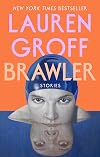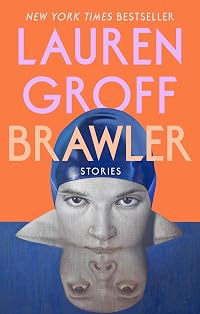
Brawler
by Lauren Groff
On This Page
Description
"Ranging from the 1950s to the present day and moving across age, class, and region-from New England to Florida to California-these nine stories reflect and expand upon a shared theme: the ceaseless battle between humans' dark and light angels"-- Provided by publisher.Tags
Recommendations









Member Reviews
“In every human there is both an animal and a god wrestling unto death.” This sentiment seems to encapsulate Groff’s collection, and her stories capture the moments when one wins out. She frames her stories as a struggle between opposing forces within people—love vs. violence, compassion vs. survival, instinct vs. morality, connection vs. isolation. Nearly every story hinges on a decision that feels both inevitable and devastating (e.g., leaving a sibling, staying with a partner, failing a friend) and Groff structures them to land on moments when something irreversible has already happened. These turning points manifest as physical abuse, emotional neglect, betrayal, and silence within families and relationships. Many of the show more protagonists are women or girls forced into impossible roles—caretaker, survivor, witness—where any choice carries damage. Love is rarely redemptive in a simple way; it’s binding, burdensome, and often the very thing that traps characters in harmful situations.
The structures of these stories are particularly effective. There is always some kind of payoff. The characters feel believable because we see them at the exact instant when their internal contradictions become visible. In the title story, Groff builds tension between the girl’s discipline vs. her internal fury, her responsibility vs. her desire to escape. The payoff feels both shocking and completely inevitable. Groff doesn’t frame it as triumph or failure—it’s more like a release valve opening.
In "Sunland" the protagonist’s strong sense of obligation meets a longing for independence. The payoff is less about a single dramatic event and more about moral recognition—the moment the protagonist understands the cost of her choice, even as she continues with it. What does it feel like to choose yourself when someone else depends on you? Both of these stories hinge on a brutal idea: Care can become a kind of captivity.
The title of "Annunciation" matters because here, the revelation isn’t divine. It’s the slow realization that seeing people suffer isn’t neutral and not acting is its own kind of action. Unlike the other two stories there is no clean turning point here. Instead, the ending leaves you with a lingering unease: Has she crossed a line? Or does she simply recognize that she always existed on that line? This story forces the reader into the same position as the protagonist: you see, but you don’t know what the correct response should be.
"Birdie" is a story about how memory edits reality, how friendships survive by ignoring certain truths and how proximity doesn’t always equal intimacy. Groff delivers a gut punch of disillusionment. The past isn’t shared—it’s contested. Relationships aren’t always as deep as they may seem. Even at the edge of death, people remain partially unknowable. There’s no dramatic betrayal—just the slow realization that the betrayal may have always been there, embedded in the friendship itself.
These stories tend to be less event-driven than realization-driven. Instead of “something happens,” the ending lands when a perception changes, a comforting illusion collapses or a character (or reader) can no longer look away. This exceptional collection derives its power by quietly refusing to ask: What do we do when faced with difficult choices? Instead, it asks: What if there is no clean choice? What if understanding itself is incomplete—or compromised? show less
The structures of these stories are particularly effective. There is always some kind of payoff. The characters feel believable because we see them at the exact instant when their internal contradictions become visible. In the title story, Groff builds tension between the girl’s discipline vs. her internal fury, her responsibility vs. her desire to escape. The payoff feels both shocking and completely inevitable. Groff doesn’t frame it as triumph or failure—it’s more like a release valve opening.
In "Sunland" the protagonist’s strong sense of obligation meets a longing for independence. The payoff is less about a single dramatic event and more about moral recognition—the moment the protagonist understands the cost of her choice, even as she continues with it. What does it feel like to choose yourself when someone else depends on you? Both of these stories hinge on a brutal idea: Care can become a kind of captivity.
The title of "Annunciation" matters because here, the revelation isn’t divine. It’s the slow realization that seeing people suffer isn’t neutral and not acting is its own kind of action. Unlike the other two stories there is no clean turning point here. Instead, the ending leaves you with a lingering unease: Has she crossed a line? Or does she simply recognize that she always existed on that line? This story forces the reader into the same position as the protagonist: you see, but you don’t know what the correct response should be.
"Birdie" is a story about how memory edits reality, how friendships survive by ignoring certain truths and how proximity doesn’t always equal intimacy. Groff delivers a gut punch of disillusionment. The past isn’t shared—it’s contested. Relationships aren’t always as deep as they may seem. Even at the edge of death, people remain partially unknowable. There’s no dramatic betrayal—just the slow realization that the betrayal may have always been there, embedded in the friendship itself.
These stories tend to be less event-driven than realization-driven. Instead of “something happens,” the ending lands when a perception changes, a comforting illusion collapses or a character (or reader) can no longer look away. This exceptional collection derives its power by quietly refusing to ask: What do we do when faced with difficult choices? Instead, it asks: What if there is no clean choice? What if understanding itself is incomplete—or compromised? show less
Often when I finish a short story collection I have trouble recalling them. But the stories in Brawler get under your skin, stick in your heart like a pin. They don’t let go.
The terrifying decline into madness in What’s the Time, Mr Wolf? The heartbreaking inability to escape in The Wind. The haunting nostalgia of Annunciation. The chilling way a woman deals with her loss in Under the Waves.
Oh, the things we do for love! It’s not all pretty, even when we intend the best.
The writing is magnificent, at turns lyrical, humorous, and noir.
These stunning stories will haunt you.
Thanks to the publisher for a free book.
The terrifying decline into madness in What’s the Time, Mr Wolf? The heartbreaking inability to escape in The Wind. The haunting nostalgia of Annunciation. The chilling way a woman deals with her loss in Under the Waves.
Oh, the things we do for love! It’s not all pretty, even when we intend the best.
The writing is magnificent, at turns lyrical, humorous, and noir.
These stunning stories will haunt you.
Thanks to the publisher for a free book.
Some of these nine stories appeared in the New Yorker, but I find that the impact is always stronger when short stories are read in the context of other short stories. This collection is so varied that the reader can but wonder how and where Groff is able to conquer such completely different realms. The primary commonality is the inner lives of children who have been emotionally and/or physically abused. The first, The Wind, was proceeded thematically by Anna Quindlen's disturbing 2010 novel, Black and Blue. The one with the most resonance to me was Under the Wave, a fictionalization (or perhaps not) of the aftermath of the 2004 Indian Ocean Tsunami. The longest, almost a novella, What's The Time, Mr. Wolf?, is a stunning denunciation show more of the impact of wealth and privilege on a son who inherits misery along with financial security. The stories are exactly what you'd expect from Lauren Groff, one of our finest writers, who never disappoints. show less
Excellent collection. The thread throughout these stories is basically versions of people grappling (or giving into) their worst selves and letting their best selves claw their way out (or not). I don't know, is that most stories? Other than the stranger coming to town ones, and there are a few of those here too. Anyway, I really enjoy her writing, so this was a good one for me. I'd read a few in the New Yorker over the years and it was good to revisit them—the opener is still a gut punch.
A solid collection of short stories that begins with The Wind, which I'd read before and read again and, again, it knocked me over with its urgency, followed immediately with To Sunland, a second story set in the past. All the stories are well-crafted and worth reading, and many deal with the experience of people of different economic backgrounds coming up against each other, or people in desperate circumstances with very few choices left to them. The longest story, What's the Time Mr Wolf, felt like a not quite successful John Cheever/Joyce Carol Oates mash up, but the thing about Groff is that even her less successful stories are better than most.
One word–WOW! I kid you not, every single story was a 5* for me. Did I have a favorite, yes! But each carried its own weight in the collection. I am so glad I took my time with each one. Groff’s writing is tight and clean without being blunt. Her characters are so tenderly drawn that it hurts to fully see them. At the same time it feels so right when she serves up the outcome of the story she laid out.
Many of the stories are set in or near places I've lived, which makes it difficult to tell if Groff's settings are vivid in themselves or if I'm filling in the blanks with my memories. Either way, I enjoyed this collection that explores what lies beneath the exterior we present to the world. I especially enjoyed "What's the Time, Mr. Wolf?", "Annunciation," and "Such Small Islands."
Groff narrates the audiobook, and she does well, but it could have benefited from a professional narrator or two to read some of the stories.
Groff narrates the audiobook, and she does well, but it could have benefited from a professional narrator or two to read some of the stories.
Members
- Recently Added By
Lists

2026
20 works; 1 member
Author Information

33+ Works 15,082 Members
Lauren Groff graduated from Amherst College and received an MFA in fiction from the University of Wisconsin at Madison. Her books include The Monsters of Templeton, Delicate Edible Birds, and Fates and Furies. Arcadia won of the Medici Book Club Prize. Her fiction has also won the Paul Bowles Prize for Fiction, the PEN/O. Henry Award, and the show more Pushcart Prize. Her work has appeared in numerous magazines including the New Yorker, the Atlantic Monthly, Harper's, Tin House, One Story, McSweeney's, and Ploughshares, and in the anthologies 100 Years of the Best American Short Stories, The Pushcart Prize: Best of the Small Presses, PEN/O. Henry Prize Stories, and three editions of the Best American Short Stories. (Bowker Author Biography) show less
Awards and Honors
Common Knowledge
- Canonical title
- Brawler
- Original title
- Brawler
Classifications
Statistics
- Members
- 200
- Popularity
- 163,985
- Reviews
- 17
- Rating
- (4.04)
- Languages
- English, French
- Media
- Paper, Audiobook, Ebook
- ISBNs
- 6
- ASINs
- 1