On This Page
Description
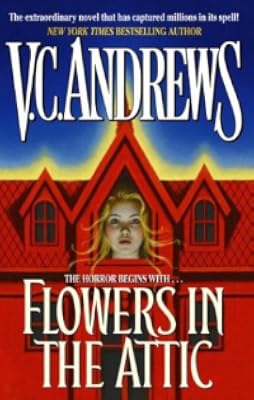
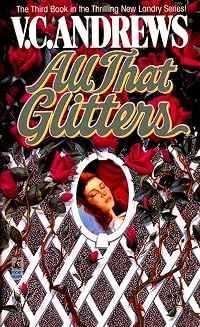
"At the top of the stairs there are four secrets hidden. Blond, beautiful, innocent, and struggling to stay alive... They were a perfect family, golden and carefree - until a heartbreaking tragedy shattered their happiness. Now, for the sake of an inheritance that will ensure their future, the children must be hidden away out of sight, as if they never existed. Kept on the top floor of their grandmother's vast mansion, their loving mother assures them it will be just for a little while. But show more as brutal days swell into agonizing months and years, Cathy, Chris, and twins Cory and Carrie realize their survival is at the mercy of their cruel and superstitious grandmother... and this cramped and helpless world may be the only one they ever know."-Book cover. show lessTags
Recommendations


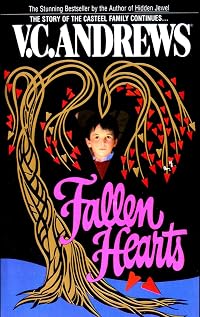
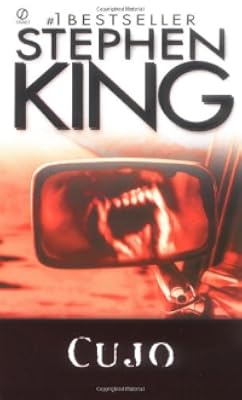
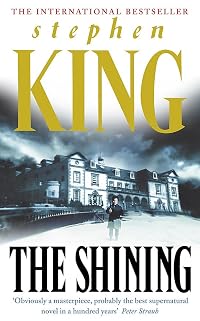
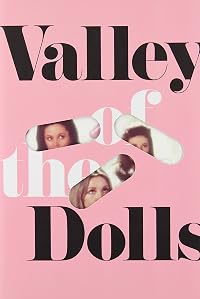
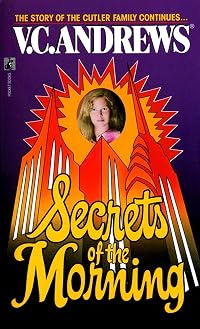
Member Recommendations

LauraT81 If you enjoy V.C. Andrews then you'll love The Girl In The Lighthouse.
11
Member Reviews
“Children are very wise intuitively; they know who loves them most, and who only pretends.”
It would be an understatement to say that I was a fan of V.C. Andrews growing up. I was an "uber-fan." My sister had these books on her bed when I was in the fourth grade, and I was fascinated by the covers, the way they opened to reveal these morbid looking family photos inside the cover, and of course I loved the movie made in 80s. Now I know the movie is horrid, although the score from Christopher Young still remains one of my top favorites to this day. Soon I had my old grubby little hands on this series, which fascinated me back then.
There was something sinister but exciting about V.C. Andrews original stories. I had no idea then what show more Gothic style was, I just knew I was hooked by the shocking developments, the taboo subjects, the weird twists and betrayals, and of course the innocent main characters sucked into the morbid world.
I was dreading this fourth re-read a little because it's been so long since I've read this one - I was sadly let down a few years back with another re-read of My Sweet Audrina, just as I was when I re-read Garden of Shadows. The overly melodramatic writing went down like cough syrup. I'm happy to say that wasn't the case here - it wasn't a perfect read with the writing style, but it really was her shining moment. Not weighted down yet by overly done prose, it crossed the flowery writing line sometimes but reeled itself back in before it was obnoxious.
You'd think that a book where kids sit in one room and an attic for years would become lethargic with pacing, but somehow Andrews keeps it entertaining. If you didn't know the story at all, I imagine it would have kept you even more glued, but for me I still found it hard to put down. There were little tidbits I'd forgotten.
The grandmother is a kind of horror that hides in the background - she's not really shown much considering the length of the book - but her scenes impress themselves in the brain so deeply it seems she's always there somewhere, looming about. The mother fascinated me in book form - in both movie versions, she's rather one-dimensional - but in the novel, the transition she goes through sort of intrigued me. She didn't come off as a straight villain all the time, although ultimately she did the unforgivable things. It was a morbid character study on a person who lost their pillar of strength and becomes consumed by greed.
Would anyone else have found the twin Carrie annoying? Cory was much more adorable. I can't stand screaming, tantrum throwing little girls - but the group was well done anyway. They were similar but there was also that contrast of personality strengths that played off each other. Not only that, but Andrews shows the depth of betrayal and hope the characters hold, unique to them, with the people in their lives that they love. How they come to realizations and acceptances at different times, how they handle it, played off the psychology of convincing characters.
With this re-read, I think I was more impressed with the creativity of the children than I had been before. The paper garden in the attic that changed seasons as seasons outside changed - Andrews really concentrated on this to show the depth of their coping, a way they tried to keep connected to an actual world outside that seemed more unreal the longer they were locked up.
There's tragedy, there's taboo (that incest thing ya'll), there's betrayal - all kinds of twists that kept me going through this re-read. Inching toward five star, but the writing style has flaws. This was always Andrews best book, and now it's time to start re-reading the rest of the series for review. I pretty much forgot everything in Petals on the Wind, If there be thorns, and Seeds of Yesterday. Hope they hold up as well. show less
It would be an understatement to say that I was a fan of V.C. Andrews growing up. I was an "uber-fan." My sister had these books on her bed when I was in the fourth grade, and I was fascinated by the covers, the way they opened to reveal these morbid looking family photos inside the cover, and of course I loved the movie made in 80s. Now I know the movie is horrid, although the score from Christopher Young still remains one of my top favorites to this day. Soon I had my old grubby little hands on this series, which fascinated me back then.
There was something sinister but exciting about V.C. Andrews original stories. I had no idea then what show more Gothic style was, I just knew I was hooked by the shocking developments, the taboo subjects, the weird twists and betrayals, and of course the innocent main characters sucked into the morbid world.
I was dreading this fourth re-read a little because it's been so long since I've read this one - I was sadly let down a few years back with another re-read of My Sweet Audrina, just as I was when I re-read Garden of Shadows. The overly melodramatic writing went down like cough syrup. I'm happy to say that wasn't the case here - it wasn't a perfect read with the writing style, but it really was her shining moment. Not weighted down yet by overly done prose, it crossed the flowery writing line sometimes but reeled itself back in before it was obnoxious.
You'd think that a book where kids sit in one room and an attic for years would become lethargic with pacing, but somehow Andrews keeps it entertaining. If you didn't know the story at all, I imagine it would have kept you even more glued, but for me I still found it hard to put down. There were little tidbits I'd forgotten.
The grandmother is a kind of horror that hides in the background - she's not really shown much considering the length of the book - but her scenes impress themselves in the brain so deeply it seems she's always there somewhere, looming about. The mother fascinated me in book form - in both movie versions, she's rather one-dimensional - but in the novel, the transition she goes through sort of intrigued me. She didn't come off as a straight villain all the time, although ultimately she did the unforgivable things. It was a morbid character study on a person who lost their pillar of strength and becomes consumed by greed.
Would anyone else have found the twin Carrie annoying? Cory was much more adorable. I can't stand screaming, tantrum throwing little girls - but the group was well done anyway. They were similar but there was also that contrast of personality strengths that played off each other. Not only that, but Andrews shows the depth of betrayal and hope the characters hold, unique to them, with the people in their lives that they love. How they come to realizations and acceptances at different times, how they handle it, played off the psychology of convincing characters.
With this re-read, I think I was more impressed with the creativity of the children than I had been before. The paper garden in the attic that changed seasons as seasons outside changed - Andrews really concentrated on this to show the depth of their coping, a way they tried to keep connected to an actual world outside that seemed more unreal the longer they were locked up.
There's tragedy, there's taboo (that incest thing ya'll), there's betrayal - all kinds of twists that kept me going through this re-read. Inching toward five star, but the writing style has flaws. This was always Andrews best book, and now it's time to start re-reading the rest of the series for review. I pretty much forgot everything in Petals on the Wind, If there be thorns, and Seeds of Yesterday. Hope they hold up as well. show less
Virginia Andrews, and Flowers in the Attic in particular, was a sort of rite of passage for so many teenage readers (now women of a certain age!) And I have to say - reading this dated, badly written dross as a preteen, before acquiring maturity and discernment, is probably the best idea. As to the 'inappropriate' content, I think the generation who read anything they could get their hands on, rather than being restricted to a particular age bracket ('I don't want my teenager reading sex scenes!'), probably had more fun!
That said, this is a terrible example. Andrews' worrying obsession with incest builds throughout the story, from the short-lived dad kissing his children on the lips, the mum fondling her teenage son and constantly show more pressing his face into her chest, both of the older children eyeing the mother up and calling her 'sexy', before finally turning to each other. They are all deeply warped, throughout, not just in the one rape scene followed by victim blaming ('I shouldn't have worn skimpy little see-through garments around a brother who had all a man's strong physical needs').
It's also easy to spot the real villain, in what is probably Andrews' one strength, possibly based on experience - narcissistic, emotionally immature mothers. Corinne, the beautiful, spoiled and grasping mother, drags her kids along on her mission to reclaim her inheritance, keeping them stashed away out of sight in her parents' attic, but gradually drifts away when their unconditional love and attention is replaced by her father's money and a new husband. The gradual shift in her personality, or watching her mask drop, is the most realistic part of the story. (The most farfetched is when the grandmother is trying to starve the kids and Chris cuts his wrist so that the twins can drink his blood. What. The. Fuck.)
The kids themselves, with eldest daughter Cathy, are equally irritating. Cathy, twelve when they arrive in the attic, is far too eager to develop 'curves' and appeal to men like her mother, although she also wises up to her mother first, brother Chris is a condescending little manchild who is in love with his mother, and the five year old twins Cory and Carrie (PLEASE STOP with the matching names!) are almost feral, biting legs and speaking in their own stunted language. In fact, I'm not sure that the author knew any actual children, or ever was one herself!
The narration and dialogue is excruciatingly dated - 'golly-lolly!' - and so is the misogyny ('she'd be the perfect housekeeper, the most faithful of devoted wives, the best of mothers, and she'd never nag, or complain, or cry'). Very much a novel of its time. I did appreciate that even though 'the grandmother' is a religious nutbag who terrorises the children, she is actually a) right (the mother ran off and married her uncle, after all, and Cathy and Chris don't fall far from the twisted tree), and b) not the woman they should actually hate. When Chris starts eavesdropping and realises just how badly the children have been betrayed, I was actually kind of hooked!
Dated and written like enthusiastic fan fiction, the incest is actually the least disturbing element of this infamous novel (and it is fiction, not an instruction manual!) show less
That said, this is a terrible example. Andrews' worrying obsession with incest builds throughout the story, from the short-lived dad kissing his children on the lips, the mum fondling her teenage son and constantly show more pressing his face into her chest, both of the older children eyeing the mother up and calling her 'sexy', before finally turning to each other. They are all deeply warped, throughout, not just in the one rape scene followed by victim blaming ('I shouldn't have worn skimpy little see-through garments around a brother who had all a man's strong physical needs').
It's also easy to spot the real villain, in what is probably Andrews' one strength, possibly based on experience - narcissistic, emotionally immature mothers. Corinne, the beautiful, spoiled and grasping mother, drags her kids along on her mission to reclaim her inheritance, keeping them stashed away out of sight in her parents' attic, but gradually drifts away when their unconditional love and attention is replaced by her father's money and a new husband. The gradual shift in her personality, or watching her mask drop, is the most realistic part of the story. (The most farfetched is when the grandmother is trying to starve the kids and Chris cuts his wrist so that the twins can drink his blood. What. The. Fuck.)
The kids themselves, with eldest daughter Cathy, are equally irritating. Cathy, twelve when they arrive in the attic, is far too eager to develop 'curves' and appeal to men like her mother, although she also wises up to her mother first, brother Chris is a condescending little manchild who is in love with his mother, and the five year old twins Cory and Carrie (PLEASE STOP with the matching names!) are almost feral, biting legs and speaking in their own stunted language. In fact, I'm not sure that the author knew any actual children, or ever was one herself!
The narration and dialogue is excruciatingly dated - 'golly-lolly!' - and so is the misogyny ('she'd be the perfect housekeeper, the most faithful of devoted wives, the best of mothers, and she'd never nag, or complain, or cry'). Very much a novel of its time. I did appreciate that even though 'the grandmother' is a religious nutbag who terrorises the children, she is actually a) right (the mother ran off and married her uncle, after all, and Cathy and Chris don't fall far from the twisted tree), and b) not the woman they should actually hate. When Chris starts eavesdropping and realises just how badly the children have been betrayed, I was actually kind of hooked!
Dated and written like enthusiastic fan fiction, the incest is actually the least disturbing element of this infamous novel (and it is fiction, not an instruction manual!) show less
Utterly drunk on this thing. Flowers in the Attic is a perfect gothic horror and everything I look for in the genre. It brilliantly uses the landscape of family as a battleground of intergenerational trauma, sex and gender, and loss of innocence. Andrews isn't afraid to let her characters go to the extremes we may one day find ourselves in: her characters are imperfect, emotional animals caught in the selfish crossfire of those sworn to protect them and failing miserably to do so.
I recognize that the novel isn't perfect, and could be criticized as "pulp", but I think that's missing the depths of issues this story tackles. I know my enjoyment of this novel was due in great part to the mirror it held up to the slow abandonment by own show more mother, the role of "mom" I took on after she left, and the generational turmoil of neglect, abuse, and incest I bore the brunt of as a child. It's melodramatic and possibly a bit insane for some, but if you also grew up in a house of terrors, this will scrape against old wounds in terrible and redolent ways. The first book I can think of in memory that caused me a proper nightmare. show less
I recognize that the novel isn't perfect, and could be criticized as "pulp", but I think that's missing the depths of issues this story tackles. I know my enjoyment of this novel was due in great part to the mirror it held up to the slow abandonment by own show more mother, the role of "mom" I took on after she left, and the generational turmoil of neglect, abuse, and incest I bore the brunt of as a child. It's melodramatic and possibly a bit insane for some, but if you also grew up in a house of terrors, this will scrape against old wounds in terrible and redolent ways. The first book I can think of in memory that caused me a proper nightmare. show less
Flowers in the Attic is well written, with characters that reveal some aspects of their personalities quickly while slowly unveiling other aspects. The book is about an extremely dysfunctional family with four children hidden in the upper rooms of a large mansion. I won't say much more than that, because so much of the tension depends on learning what is really going on and watching the children trying to cope. This is a horror novel, but not one based on a supernatural monster. This terror is based on the betrayal of family rationalized with a combination of materialism and distorted religious beliefs. It is depressing at times, but the tension and fascinating characters kept me turning the pages.
Flowers in the Attic was published 40 show more years ago, but the flaws in the characters it portrays are always relevant. show less
Flowers in the Attic was published 40 show more years ago, but the flaws in the characters it portrays are always relevant. show less
Sadly, this wasn't the first VCA book I ever read (I started off with the Cutler family series) but when I finally got around to this, I was not disappointed. It is easily one of the best books I have ever read. Now, I realize that that is a subjective opinion given some of the cheesiness in this book. This is... trashy, but it's a good and fun kind of trashy. The drama, the intrigue, the suspense... I have read this book several times and never get tired of it.
You can't help but feel bad for the poor kids, especially with their harsh treatment by their grandmother and the blatant selfishness of their mother. Things get even more fucked up as the story goes along, like peeling back the layers of an onion when the grandfather comes into show more play, especially when it comes to the Christmas party scene.
It's absolutely insane how people could hate innocent children so much, but then considering what goes on in the world today, it's not surprising. show less
You can't help but feel bad for the poor kids, especially with their harsh treatment by their grandmother and the blatant selfishness of their mother. Things get even more fucked up as the story goes along, like peeling back the layers of an onion when the grandfather comes into show more play, especially when it comes to the Christmas party scene.
It's absolutely insane how people could hate innocent children so much, but then considering what goes on in the world today, it's not surprising. show less
***SPOILERS HIDDEN***
Despite being an avid reader since I was a little kid, I didn’t hear about V.C. Andrews’s Flowers in the Attic until I was an adult, from friends. All of them had read it in their teens. They labeled it “messed-up” and “trashy.” So I began reading Flowers in the Attic doubting that I was spending time with a book I’d find rewarding or valuable in some way.
I can’t disagree with friends’ assessments. Flowers in the Attic is a morbid, messed-up, R-rated reading experience that romanticizes some things that should never be romanticized. It’s not appropriate for readers with impressionable minds (i.e., young readers) not because of its sexual content but because of that romanticization. It isn’t show more even a complex mystery-suspense. It does boast an inventive premise, several suspenseful scenes, and interesting characters, but it’s hurt by a simplistic, plot-driven, movie-ready central mystery rather than a layered, character-driven one.
The villains are cardboard—a direct result of the narrative perspective: Flowers in the Attic is told through the eyes of the oldest daughter, Cathy. On the one hand, this perspective is necessary to paint a nuanced, complete portrait of imprisonment. Andrews was successful there. On the other hand, the villains are reduced to their cruelty. Full-bodied portrayals of Mom, Grandma, and Grandpa are missing.
I thought about Gillian Flynn a few times while reading this—first, because Flowers in the Attic has that darkness that Flynn is so good at evoking, and second, because of the particular brand of villain:female psychopath. Flynn knows how to write those. She even wrote the foreword to this 40th-anniversary edition, and in it she says that when reading fairy tales as a kid she was attracted to the witch, not the princess. That’s an ironic thing to say in a foreword to a mystery with cardboard villains. Flowers in the Attic is suspenseful for sure, but without fleshed-out villains it doesn’t come close to true greatness, and to top it off, incest plays a starring role.
I’m looking askance at Andrews because although while I read Flowers in the Attic I was confident I knew what she was trying to do, I see she continued the story of Cathy and her older brother Chris in later books.So their incest isn’t a repellent one-off; in the next books they go on to live as a couple and have children. While I think Andrews did a good job showing how the horror of incest can happen, it’s unbelievable and beyond disturbing that her depiction is ultimately positive. These characters are much too tender with each other, and their unusual relationship is too emotionally moving. This includes the violent rape of Cathy by Chris, something Cathy brushes off immediately. Flowers in the Attic is a portrait of incest as much as it is a mystery-suspense, and if I were Andrews I absolutely would have ended the story here, with book one. I was intrigued and sickened at the same time; upon finishing I feel filthy to the core, haunted by scenes I wish I could erase from my memory.
Flowers in the Attic doesn’t deserve more than two stars, and those two stars may be generous. I can’t recommend the book widely and feel wrong recommending it to young readers. People should know going in that Flowers in the Attic is deeply distressing in parts, with graphic scenes of child abuse that range from whippings to starvation. It’s a hard book to read and one I could easily have skipped.
NOTE: I received this as a 40th-Anniversary Edition from Goodreads in November 2019. show less
Despite being an avid reader since I was a little kid, I didn’t hear about V.C. Andrews’s Flowers in the Attic until I was an adult, from friends. All of them had read it in their teens. They labeled it “messed-up” and “trashy.” So I began reading Flowers in the Attic doubting that I was spending time with a book I’d find rewarding or valuable in some way.
I can’t disagree with friends’ assessments. Flowers in the Attic is a morbid, messed-up, R-rated reading experience that romanticizes some things that should never be romanticized. It’s not appropriate for readers with impressionable minds (i.e., young readers) not because of its sexual content but because of that romanticization. It isn’t show more even a complex mystery-suspense. It does boast an inventive premise, several suspenseful scenes, and interesting characters, but it’s hurt by a simplistic, plot-driven, movie-ready central mystery rather than a layered, character-driven one.
The villains are cardboard—a direct result of the narrative perspective: Flowers in the Attic is told through the eyes of the oldest daughter, Cathy. On the one hand, this perspective is necessary to paint a nuanced, complete portrait of imprisonment. Andrews was successful there. On the other hand, the villains are reduced to their cruelty. Full-bodied portrayals of Mom, Grandma, and Grandpa are missing.
I thought about Gillian Flynn a few times while reading this—first, because Flowers in the Attic has that darkness that Flynn is so good at evoking, and second, because of the particular brand of villain:
I’m looking askance at Andrews because although while I read Flowers in the Attic I was confident I knew what she was trying to do, I see she continued the story of Cathy and her older brother Chris in later books.
Flowers in the Attic doesn’t deserve more than two stars, and those two stars may be generous. I can’t recommend the book widely and feel wrong recommending it to young readers. People should know going in that Flowers in the Attic is deeply distressing in parts, with graphic scenes of child abuse that range from whippings to starvation. It’s a hard book to read and one I could easily have skipped.
NOTE: I received this as a 40th-Anniversary Edition from Goodreads in November 2019. show less
It's difficult to know what to say about this because all the other comments are TRUE. I don't know why I didn't read this when it came out because it was everywhere. Kids passed it around; copies could be found discarded at bus stops, displayed at doctor's office waiting rooms, abandoned in public restroom stalls (grossly appropriate), and, yes, shelved in school libraries. It seems like a lot of people know this as "that incest book" or "that rape book." I have only ever known it as that book with that creepy looking girl peering out of the attic. It was popular around the same time as The Amityville Horror, which I have also thus far avoided. I am now aware that that is a very different horror than the horrors in V. C. Andrew's show more world, but I'm sure it was all conflated in my intake of pop culture back then.
The enduring legacy finally makes sense: it is hypnotically, compulsively readable despite the myriad types of dis-ease it inculcates. I couldn't put it down though I had the distinct feeling of being sullied at the soul level. Which was strangely sort of fun too. I now understand the hold it held on my peers who were reading it when we were far too young to be reading that kind of stuff or on the adults in their lives. Kids who find this and read it get twisted; adults who know what this is and give it to kids to read are twisted. show less
The enduring legacy finally makes sense: it is hypnotically, compulsively readable despite the myriad types of dis-ease it inculcates. I couldn't put it down though I had the distinct feeling of being sullied at the soul level. Which was strangely sort of fun too. I now understand the hold it held on my peers who were reading it when we were far too young to be reading that kind of stuff or on the adults in their lives. Kids who find this and read it get twisted; adults who know what this is and give it to kids to read are twisted. show less
Members
- Recently Added By
Lists

Best Gothic Fiction
110 works; 31 members

Read the book and saw the movie
1,170 works; 195 members

BBC Big Read
191 works; 46 members
Scary Stories for the Season
160 works; 94 members

PBS The Great American Read
100 works; 21 members

Guilty Pleasures
7 works; 4 members

To Read - Horror
137 works; 14 members

Recommended Horror and Dark Fiction by Women
81 works; 13 members

Movie Adaptations
111 works; 4 members
DELETE
48 works; 2 members

Dysfunctional Families
133 works; 7 members

Books We Couldn't Put Down
443 works; 197 members

Guilty Pleasures
223 works; 86 members

Gen X Library
245 works; 4 members
horror
11 works; 1 member

Top Five Books of 2025
954 works; 303 members

psychological
14 works; 1 member
Books in Riverdale
123 works; 3 members

Books featured on I Don't Even Own a Television
167 works; 3 members

Jones & Newman: Best Horror Books Further Recommended Reading
577 works; 4 members

Paperbacks from Hell
382 works; 9 members

Most Disturbing Books
124 works; 27 members

Books Featured in "Paperback Crush"
228 works; 7 members

Books Tagged Abuse
152 works; 4 members

Overdue Podcast
803 works; 9 members

The Worst Bestsellers Podcast
293 works; 5 members

A Novel Cure
742 works; 23 members
Best family sagas
244 works; 32 members

1970s
657 works; 23 members
BlackDog's Complete Paperbacks From Hell List
639 works; 3 members
Author Information

337+ Works 68,777 Members
Born on June 6, 1924 in Portsmouth, Va., Virginia Cleo ("V. C.") Andrews was one of three children of William Henry and Lillian Lilnora. Andrews worked as a commercial fashion and portrait artist for a time. However, after her father's death in the late 1960s and the family's subsequent move to Manchester, Mo, she began what she described as show more "closet" writing. It was her publisher's decision to use the initials V. C. rather than her full name. This was done for the purpose of neutralizing her gender so as to sell to adult male audiences; the common belief was that men did not like to read books by women writers. Andrews eventually became a full-time writer. Her first novel was a science fiction fantasy entitled The Gods of the Green Mountains, published in 1972. In 1980, she published the bestseller Flowers in the Attic, followed by Petals on the Wind, If There Be Thorns, Seeds of Yesterday, and Garden of Shadows; all of which comprise the Dollanganger Series. Andrews died of breast cancer on December 19, 1986, in Virginia Beach, Virginia. After her death, her family hired a ghost writer, Andrew Neiderman, to finish the manuscripts she had started. He would complete the next two novels, Garden of Shadows and Fallen Hearts, and they were published soon after. These two novels are considered the last to bear the "V. C. Andrews" name and to be almost completely written by Andrews herself. She left a legacy of books that have been sold worldwide and translated into 13 foreign languages. (Bowker Author Biography) V.C. Andrews' novels have sold more than eighty-five million copies and have been translated into sixteen foreign languages. All 38 of V.C. Andrews' novels have hit the New York Times bestseller list. (Publisher Provided) show less
Some Editions
Awards and Honors
Awards
Notable Lists
BBC's Big Read (200)
Series

Work Relationships
Is contained in
Has the adaptation
Common Knowledge
- Canonical title
- Flowers in the Attic
- Original title
- Flowers in the Attic
- Original publication date
- 1979-11-01
- People/Characters
- Catherine Dollanganger; Christopher Dollanganger; Carrie Dollanganger; Cory Dollanganger; Corinne Foxworth Dollanganger Winslow; Christopher Dollanganger Sr. (show all 9); Olivia Foxworth; Malcolm Foxworth; Bartholomew Winslow
- Important places
- Charlottesville, Virginia, USA; Foxworth Hall (estate)
- Related movies
- Flowers in the Attic (1987 | IMDb); Flowers in the Attic (2014 | IMDb)
- Epigraph
- (Part One) Shall the clay say to him that fashioneth it, What makest thou?
Isaiah 45:9 - Dedication
- This book is dedicated to my mother.
- First words
- It is so appropriate to color hope yellow, like that sun we seldom saw. (Prologue)
Truly, when I was very young, way back in the Fifties, I believed all of life would be like one long and perfect summer day. (Chapter 1) - Last words
- (Click to show. Warning: May contain spoilers.)But how we managed to survive-- that's another story.
- Original language
- English
- Disambiguation notice
- DO NOT COMBINE WITH BOXED SETS OR MULTIPLE-NOVELS
Classifications
Statistics
- Members
- 7,253
- Popularity
- 1,596
- Reviews
- 212
- Rating
- (3.53)
- Languages
- 11 — Czech, Dutch, English, Finnish, French, German, Polish, Portuguese, Russian, Spanish, Swedish
- Media
- Paper, Audiobook, Ebook
- ISBNs
- 113
- UPCs
- 2
- ASINs
- 36