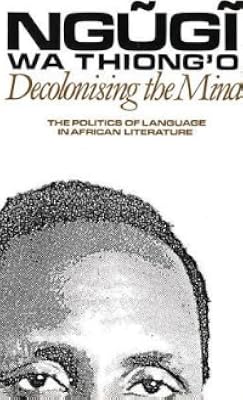
Decolonising the Mind: The Politics of Language in African Literature
by Ngũgĩ wa Thiong'o
On This Page
Description
"Afro-European"--The literature written by Africans in European languages - may come to be seen as part and parcel of the uneasy period between colonialism and full independence, a period equally reflected in the continent's political instability. This book presents the arguments for using African language and forms.Tags
Recommendations


Member Reviews
Ngũgĩ wa Thiong'o had already published four acclaimed novels in English when, in 1977, he gave up the language as a vehicle for fiction. A few years later he published this polemic, which he said would be his last writing in English in any genre.
Consequently, he's now probably even more famous among sociolinguists than students of literature, because Decolonising the Mind is a rare example of a top practitioner setting out a total rationale, complete with backstory and running examples, of the political and cultural implications of choosing one language over another.
It would be possible to argue on purely artistic grounds that a local language is simply better at describing certain things – the rhythms of daily life, say, or show more regional wildlife – than another. But what makes Ngũgĩ's argument so powerful is that his grounds are not artistic, but political. Writing in Kikuyu may give him access to new and interesting aesthetic effects, but that's not why he does it – he does it to resist cultural appropriation and to target a more primary audience.
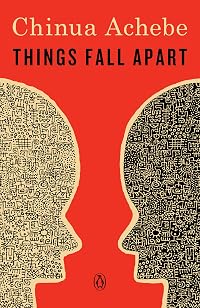
There's always been a big irony in literature from former colonies that uses a colonial language – what Ngũgĩ calls ‘Afro-European’ literature, a useful term that I'm happy to adopt. Abroad, it's often praised in proportion to how well it shows us the details of different, alien lives, and yet it's obviously aimed at us, not them: the people described are often exactly those excluded from reading it. Chinua Achebe's descriptions of yam farmers in Nigeria will rarely be read by yam farmers in Nigeria, because most of them can't read English.
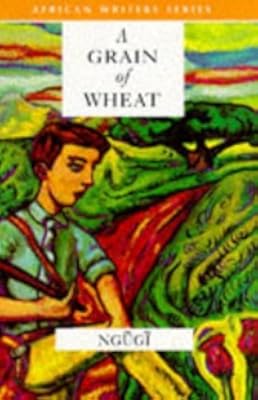
Ngũgĩ had a crisis about this after writing his third novel, A Grain of Wheat (still the only one of his that I've so far read).
I knew whom I was writing about but whom was I writing for? The peasants whose struggles fed the novel would never read it.
There's an obvious answer, of course, which is that people write in order to communicate ideas, and writing in a major world language communicates your ideas more widely than doing so in a small regional language. Six or seven million people speak Kikuyu, whereas four hundred million speak English natively and probably almost as many again as a second language. The implications of this are not just remunerative – though that's no small consideration – they're also practical, if you're interested in influencing bigger audiences.
Nevertheless, for Ngũgĩ this is an argument for having a better translation culture, not for the abandonment of a writer's native language. The attempt to wrangle African languages into English has been invigorating and transformative for English – one thinks of Amos Tutuola or Ben Okri – but, at the end of the day, why the hell should we be benefitting at the expense of other languages? ‘We cannot have our cake and eat it,’ he says.
Why, we may ask, should an African writer, or any writer, become so obsessed by taking from his mother-tongue to enrich other tongues?
It's a fair point. For Ngũgĩ, there's little difference between a postcolonial English enriching itself from African languages, and a colonial England enriching itself from African labour or resources. The problem is circular, because the lack of literatures in many smaller languages leads to an assumption, even from native speakers, that they are unable to support a literature, let alone a world literature. But if addressing that misconception is not the job of writers, whose job is it?
We African writers are bound by our calling to do for our languages what Spencer, Milton and Shakespeare did for English; what Pushkin and Tolstoy did for Russian; indeed what all writers in world history have done for their languages by meeting the challenge of creating a literature in them, which process later opens the languages for philosophy, science, technology and all the other areas of human creative endeavours.
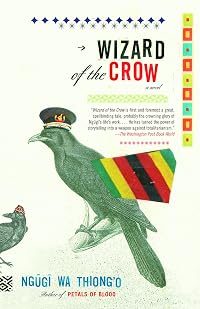
As an English-speaker, one reads this book with, first of all, a renewed sense of gratitude that so many writers have in fact chosen to write in English, along with a troubling re-evaluation of why they felt it was necessary to do so. At the very least everyone should agree that more translated fiction should be out there, and not just coming from the major languages. Ngũgĩ is one of the few big writers putting his money where his mouth is by writing only in his native tongue, but even he's had to make concessions: his major work, Wizard of the Crow (Mũrogi wa Kagogo), was translated into English by Ngũgĩ himself, so he did actually write the text of the English novel that everyone's reading. If that's not having your cake and eating it, I'm not sure what is. show less
Consequently, he's now probably even more famous among sociolinguists than students of literature, because Decolonising the Mind is a rare example of a top practitioner setting out a total rationale, complete with backstory and running examples, of the political and cultural implications of choosing one language over another.
It would be possible to argue on purely artistic grounds that a local language is simply better at describing certain things – the rhythms of daily life, say, or show more regional wildlife – than another. But what makes Ngũgĩ's argument so powerful is that his grounds are not artistic, but political. Writing in Kikuyu may give him access to new and interesting aesthetic effects, but that's not why he does it – he does it to resist cultural appropriation and to target a more primary audience.
There's always been a big irony in literature from former colonies that uses a colonial language – what Ngũgĩ calls ‘Afro-European’ literature, a useful term that I'm happy to adopt. Abroad, it's often praised in proportion to how well it shows us the details of different, alien lives, and yet it's obviously aimed at us, not them: the people described are often exactly those excluded from reading it. Chinua Achebe's descriptions of yam farmers in Nigeria will rarely be read by yam farmers in Nigeria, because most of them can't read English.
Ngũgĩ had a crisis about this after writing his third novel, A Grain of Wheat (still the only one of his that I've so far read).
I knew whom I was writing about but whom was I writing for? The peasants whose struggles fed the novel would never read it.
There's an obvious answer, of course, which is that people write in order to communicate ideas, and writing in a major world language communicates your ideas more widely than doing so in a small regional language. Six or seven million people speak Kikuyu, whereas four hundred million speak English natively and probably almost as many again as a second language. The implications of this are not just remunerative – though that's no small consideration – they're also practical, if you're interested in influencing bigger audiences.
Nevertheless, for Ngũgĩ this is an argument for having a better translation culture, not for the abandonment of a writer's native language. The attempt to wrangle African languages into English has been invigorating and transformative for English – one thinks of Amos Tutuola or Ben Okri – but, at the end of the day, why the hell should we be benefitting at the expense of other languages? ‘We cannot have our cake and eat it,’ he says.
Why, we may ask, should an African writer, or any writer, become so obsessed by taking from his mother-tongue to enrich other tongues?
It's a fair point. For Ngũgĩ, there's little difference between a postcolonial English enriching itself from African languages, and a colonial England enriching itself from African labour or resources. The problem is circular, because the lack of literatures in many smaller languages leads to an assumption, even from native speakers, that they are unable to support a literature, let alone a world literature. But if addressing that misconception is not the job of writers, whose job is it?
We African writers are bound by our calling to do for our languages what Spencer, Milton and Shakespeare did for English; what Pushkin and Tolstoy did for Russian; indeed what all writers in world history have done for their languages by meeting the challenge of creating a literature in them, which process later opens the languages for philosophy, science, technology and all the other areas of human creative endeavours.
As an English-speaker, one reads this book with, first of all, a renewed sense of gratitude that so many writers have in fact chosen to write in English, along with a troubling re-evaluation of why they felt it was necessary to do so. At the very least everyone should agree that more translated fiction should be out there, and not just coming from the major languages. Ngũgĩ is one of the few big writers putting his money where his mouth is by writing only in his native tongue, but even he's had to make concessions: his major work, Wizard of the Crow (Mũrogi wa Kagogo), was translated into English by Ngũgĩ himself, so he did actually write the text of the English novel that everyone's reading. If that's not having your cake and eating it, I'm not sure what is. show less
This is Ngugi's farewell to the English language, and he lays out his reasons for returning to his mother tongue of Gikuyu in a series of lectures converted into essays. His discussion of audience is particularly interesting, and his criticism of his own earlier work brutally honest: he draws attention to his own dishonesty in claiming to write for the people while doing so in the language of their colonisers, cutting them off from being able to read it.
His arguments also go further than the issue of language itself, as he argues for a more inclusive method of artistic creation altogether. Drawing on his experience in the Kamiriithu theatre, he argues that audience members should be involved in the editing and creation of the work, show more rather than having it created in secret and then suddenly unveiled, provoking "envious admiration: oh, what perfection, what talents, what inspired gifts - I certainly could never do such a thing! Such a theatre is part of the general bourgeois education system which practises education as a process of weakening people, of making them feel they cannot do this or that - oh, it must take such brains! - In other words education as a means of mystifying knowledge and hence reality."
Ngugi says that this makes people accept their fate and believe that they cannot take action to improve their conditions. Literature should be the opposite of this bourgeois culture that deifies "superstar politicians, scientists, sportsmen, actors, the handsome doers or heroes, with the ordinary people watching passively, gratefully, admiringly." And yet twenty years after this was written, novels are still written by individuals whom we then venerate, plays are still rehearsed in secret and unveiled with much sound and fury, and we still watch passively as a handful of celebrities act out events while we do nothing, simply continuing to go to work every morning and trying to suppress our bitterness. Is literature really doing anything to challenge this orthodoxy? Or is it just contributing to the problem by pumping up literary megastars (Zadie Smith, anyone?) and leaving the rest of us trying to hide our consequent feelings of inadequacy by reading complex novels and going on websites to write about them, in other words indulging in a highbrow form of escapism that does nothing concrete to improve our lives. show less
His arguments also go further than the issue of language itself, as he argues for a more inclusive method of artistic creation altogether. Drawing on his experience in the Kamiriithu theatre, he argues that audience members should be involved in the editing and creation of the work, show more rather than having it created in secret and then suddenly unveiled, provoking "envious admiration: oh, what perfection, what talents, what inspired gifts - I certainly could never do such a thing! Such a theatre is part of the general bourgeois education system which practises education as a process of weakening people, of making them feel they cannot do this or that - oh, it must take such brains! - In other words education as a means of mystifying knowledge and hence reality."
Ngugi says that this makes people accept their fate and believe that they cannot take action to improve their conditions. Literature should be the opposite of this bourgeois culture that deifies "superstar politicians, scientists, sportsmen, actors, the handsome doers or heroes, with the ordinary people watching passively, gratefully, admiringly." And yet twenty years after this was written, novels are still written by individuals whom we then venerate, plays are still rehearsed in secret and unveiled with much sound and fury, and we still watch passively as a handful of celebrities act out events while we do nothing, simply continuing to go to work every morning and trying to suppress our bitterness. Is literature really doing anything to challenge this orthodoxy? Or is it just contributing to the problem by pumping up literary megastars (Zadie Smith, anyone?) and leaving the rest of us trying to hide our consequent feelings of inadequacy by reading complex novels and going on websites to write about them, in other words indulging in a highbrow form of escapism that does nothing concrete to improve our lives. show less
I was planning on arguing against Ngugi about the need for African writers to write ::solely:: in an African language, but his argument (with a mix of Marxist criticism and history of colonialism) was too compelling. A really great read.
Since I've become a Ngugi fan,, I was eager to read this book. The four linked essays in it were originally given as talks in the early 80s; Ngugi had already stopped writing fiction in English and this book was the last nonfiction he wrote in English.
The word "politics" in the title is the key, as this is a very political book, and resonates with some of the rhetoric I remember from the mid- to late 70s and early 80s, when this was witten. For that reason, I will be particularly interested in reading the book Lois mentions in #45, because I would very much like to see how Ngugi feels things have changed or not changed since he wrote this book.
If I could summarize the essays briefly, I would say that Ngugi's focus is on what he show more considers authentically African literature as expressed by peasants and workers, and not by the elite in independent Kenya and Africa who have internalized (not the word he uses) the perspectives and values of the colonizers, even though the country ihas become independent. The most interesting parts of the book for me were the sections in which he described his involvement in community-based theater and the way, in prison, he decided to develop his first novel written in Gikuyu so that it would be accessible and meaningful to the peasants and workers and not just the people who had been schooled in English literary tradition. show less
The word "politics" in the title is the key, as this is a very political book, and resonates with some of the rhetoric I remember from the mid- to late 70s and early 80s, when this was witten. For that reason, I will be particularly interested in reading the book Lois mentions in #45, because I would very much like to see how Ngugi feels things have changed or not changed since he wrote this book.
If I could summarize the essays briefly, I would say that Ngugi's focus is on what he show more considers authentically African literature as expressed by peasants and workers, and not by the elite in independent Kenya and Africa who have internalized (not the word he uses) the perspectives and values of the colonizers, even though the country ihas become independent. The most interesting parts of the book for me were the sections in which he described his involvement in community-based theater and the way, in prison, he decided to develop his first novel written in Gikuyu so that it would be accessible and meaningful to the peasants and workers and not just the people who had been schooled in English literary tradition. show less
Ngugi points out that the colonial administration by the British in Kenya included teaching English in the schools to wean the populace off of their own language and culture and ,
therefore, weaken them. After Kenya gained independence Ngugi with others had to fight to gain preeminence of native languages. He eventually would only write in Gikuyu. Marx is often used and quoted and the hatred for the bourgeoisie is made a fundamental point. When writing this book the author had been exiled from Kenya. This is a short but broad tract whose main argument is well made and is so helpful for understanding the many issues African writers and peoples face.
QUOTES: (Introduction) “The oppressed and the exploited of the earth maintain defiant show more liberty from theft. But the biggest weapon wielded and actually daily unleashed by imperialism against the collective defiance is the cultural bomb. The effect of the cultural bomb is to annihilate a people's belief their names, in their languages, in their environment, in their heritage of struggle, in their unity, in their capacities and ultimately in themselves. It makes them see their past as one wasteland of non-achievement and it makes them want to identify with that which is furthest removed from themselves; for instance, with other peoples' languages rather than their own. ...The intended results are despair, despondency, and a collective death wish.”
(page 11) “It was after the declaration of a state of emergency over Kenya in 1952 that all schools run by patriotic nationalists were taken over by the colonial regime and were placed under District Education Boards chaired by Englishmen. English became the language of my formal education. In Kenya, English became more that a language: it was the language, and all the others had to bow before it in deference.
Thus on of the most humiliating experiences was to be caught speaking Gikuyu in the vicinity of the school. The culprit was given corporal punishment- three to five strokes of the cane on bare buttocks – or was made to carry a metal plate around the neck with inscriptions such as I am Stupid or I am a donkey.” show less
therefore, weaken them. After Kenya gained independence Ngugi with others had to fight to gain preeminence of native languages. He eventually would only write in Gikuyu. Marx is often used and quoted and the hatred for the bourgeoisie is made a fundamental point. When writing this book the author had been exiled from Kenya. This is a short but broad tract whose main argument is well made and is so helpful for understanding the many issues African writers and peoples face.
QUOTES: (Introduction) “The oppressed and the exploited of the earth maintain defiant show more liberty from theft. But the biggest weapon wielded and actually daily unleashed by imperialism against the collective defiance is the cultural bomb. The effect of the cultural bomb is to annihilate a people's belief their names, in their languages, in their environment, in their heritage of struggle, in their unity, in their capacities and ultimately in themselves. It makes them see their past as one wasteland of non-achievement and it makes them want to identify with that which is furthest removed from themselves; for instance, with other peoples' languages rather than their own. ...The intended results are despair, despondency, and a collective death wish.”
(page 11) “It was after the declaration of a state of emergency over Kenya in 1952 that all schools run by patriotic nationalists were taken over by the colonial regime and were placed under District Education Boards chaired by Englishmen. English became the language of my formal education. In Kenya, English became more that a language: it was the language, and all the others had to bow before it in deference.
Thus on of the most humiliating experiences was to be caught speaking Gikuyu in the vicinity of the school. The culprit was given corporal punishment- three to five strokes of the cane on bare buttocks – or was made to carry a metal plate around the neck with inscriptions such as I am Stupid or I am a donkey.” show less
Keniano, Ngũgĩ è il più leggendario degli scrittori dell’Africa orientale. Negli anni Sessanta si “sbattezzò” rifiutando il nome di James e riprendendo quello kikuyu, mentre decideva di scrivere i nuovi romanzi e pièce nella sua lingua madre o in kiswahili. Sperimentò le galere di Daniel arap Moi e nel 1982 si esiliò negli Usa. Qualche anno dopo usciva questa raccolta di conferenze, ora in edizione italiana per la prima volta (ma Jaca Book ha edito negli anni diverse sue opere).
Tema del presente saggio è appunto l’uso della lingua in letteratura, una scelta «centrale per la definizione che un popolo dà di sé in relazione con il proprio ambiente naturale e sociale – anzi, con l’intero universo».
Tema del presente saggio è appunto l’uso della lingua in letteratura, una scelta «centrale per la definizione che un popolo dà di sé in relazione con il proprio ambiente naturale e sociale – anzi, con l’intero universo».
Sep 20, 2015 (Edited)Italian
Ratings
Members
- Recently Added By
Lists

The Black Archives: All Power To the People! Reading List
79 works; 10 members
Author Information

70+ Works 7,467 Members
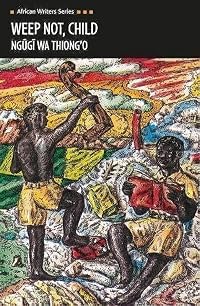
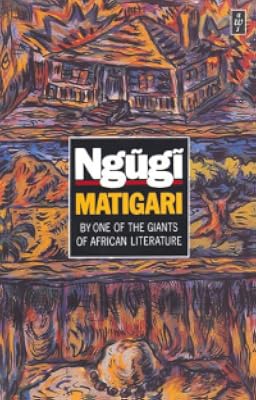
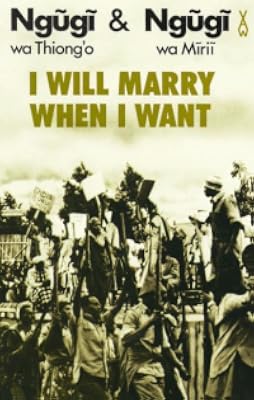
Novelist, playwright, and essayist, Ngugi wa Thiong'o was born in Kenya on January 5, 1938. He received a B.A. in English from Makerere University College in Kampala, Uganda in 1963. He is Kenya's best-known writer and one of East Africa's most outspoken social critics. His first novel, Weep Not, Child (1964), was a penetrating account of the Mau show more Mau uprising (a tribal revolt that occurred in colonial Kenya) and was the first English-language novel by an East African. Two subsequent works, The River Between (1965) and A Grain of Wheat (1967), are sensitive novels about the Kikuyu people caught between the old and the new Africa. One of his major concerns has been the lack of reading materials in native African languages. In an attempt to bring literature to African peasants and workers, he wrote and produced the play I Will Marry When I Want (1977) in his native Kikuyu language. The play, which shows the exploitation of Kikuyu workers and peasants, attracted a large audience of poor Kenyans. It also led to Ngugi's arrest and imprisonment. After his release from prison, he went into exile and is currently living in the United States. His other works include Detained (1981); Decolonising the Mind: The Politics of Language in African Literature (1986); and Matigari (1987). He received the 2001 Nonino International Prize for Literature. In 2006, Random House published his first new novel in nearly two decades, Wizard of the Crow. (Bowker Author Biography) show less
Some Editions
Awards and Honors
Series
Belongs to Publisher Series
Common Knowledge
- Canonical title
- Decolonising the Mind: The Politics of Language in African Literature
- Original publication date
- 1986
- Important places
- Africa
- Dedication
- This book is gratefully dedicated to all those who write in African languages, and to all those who over the years have maintained the dignity of the literature, culture, philosophy, and other treasures carried by African lan... (show all)guages.
Classifications
- Genres
- Nonfiction, Literature Studies and Criticism
- DDC/MDS
- 809.8896 — Literature & rhetoric Literature, rhetoric & criticism History, description, critical appraisal of more than two literatures By or for groups of persons African literature
- LCC
- PL8010 .N48 — Language and Literature Languages and literatures of Eastern Asia, Africa, Oceania Languages of Eastern Asia, Africa, Oceania African languages and literature Literature
- BISAC
Statistics
- Members
- 489
- Popularity
- 61,894
- Reviews
- 6
- Rating
- (4.03)
- Languages
- 6 — Catalan, English, French, German, Italian, Spanish
- Media
- Paper, Ebook
- ISBNs
- 14
- UPCs
- 1
- ASINs
- 6