On This Page
Description
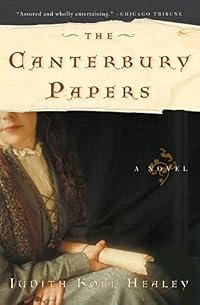
The only thing I felt was a strong hand around my neck, another around my waist, and -- before I could cry out -- I smelled the thick, sweet scent of a mandrake-soaked cloth. Unforgiving hands clapped it against my face, and all went dark. Alaïs, the king of France's sister, is abducted while on her mission for the wily Eleanor of Aquitaine, the former Queen of England, to retrieve hidden letters that, in the wrong hands, could bring down the English king. In exchange, the French princess show more was to receive long-heldand dangerous information. Now Alaïs, along with help from the very intriguing leader of the Knights Templar, must unravel a tangled web of family secrets and lies. Filled with intrigue and peopled with compelling legendary figures, The Canterbury Papers is an "electrifying journey into the past" (Booklist). show lessTags
Recommendations

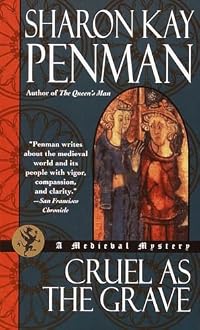
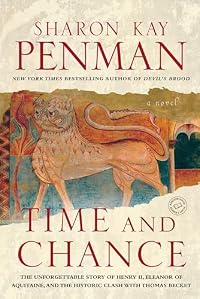
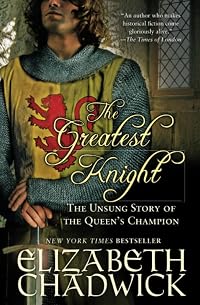

Member Recommendations
Member Reviews
I’ve read this book twice now. The first time was about four years ago, and I recall LOVING it—why, I can’t imagine, since on a second reading, I found The Canterbury Papers to be mediocre at best. Maybe I’ve been spoiled by the novels of Sharon Kay Penman and Elizabeth Chadwick, who far and away write far more compelling stories than this one.
Maybe it’s the plot of this book that doesn’t work for me: it’s completely far-fetched and unrealistic. Granted, it’s an interesting way to learn about the Plantagenets during the last quarter of the 12th century, but I simply couldn’t get over the fact that the author has a French princess playing detective, all the while to recover a set of incriminating letters. I also found show more it hard to believe that a woman of Alais’s station in life would be have the way she does here, or that she would have the kind of independence that she has here. Plus, the dialogue was sort of stilted, and the author, for whatever reason, had her characters speaking English—in France.
The mystery itself is trite and predictable; I could see that coming from a mile away. Don’t know what the pendant had to do with anything, as it seemed a little bit incidental to the mystery. Also, the connection between the Templars and the mystery was never fully explored. Also superficially explored was Alais’s past. Healey has fodder here for a much deeper, more emotional story, but doesn’t use it to its full potential. Maybe she’ll explore Alais’s story more in her next book, The Rebel Princess? Still, this book is a light read, and a quick way to pass the time. Just don’t take the whole story as gospel fact. show less
Maybe it’s the plot of this book that doesn’t work for me: it’s completely far-fetched and unrealistic. Granted, it’s an interesting way to learn about the Plantagenets during the last quarter of the 12th century, but I simply couldn’t get over the fact that the author has a French princess playing detective, all the while to recover a set of incriminating letters. I also found show more it hard to believe that a woman of Alais’s station in life would be have the way she does here, or that she would have the kind of independence that she has here. Plus, the dialogue was sort of stilted, and the author, for whatever reason, had her characters speaking English—in France.
The mystery itself is trite and predictable; I could see that coming from a mile away. Don’t know what the pendant had to do with anything, as it seemed a little bit incidental to the mystery. Also, the connection between the Templars and the mystery was never fully explored. Also superficially explored was Alais’s past. Healey has fodder here for a much deeper, more emotional story, but doesn’t use it to its full potential. Maybe she’ll explore Alais’s story more in her next book, The Rebel Princess? Still, this book is a light read, and a quick way to pass the time. Just don’t take the whole story as gospel fact. show less
I read this book very quickly – the majority in under a day – but had some fairly large problems with the plot and characters. The story takes place in 1200, the time of the Crusades, the Knights Templar, Eleanor of Aquitaine – a lot of material for the author to work with. The main character is Princess Alaïs of France, daughter of Louis VII, and a stepdaughter of Eleanor. It’s a pretty interesting idea – following a side character during a period of historical interest – can describe the actual historical conflicts, but not confined by history in terms of plot. The author gives the actual background on Alaïs - she was engaged to Richard, the son of Henry of England, a marriage that never happened, and also became show more Henry’s mistress. The story takes place a number of years later.
Bored and stifled at the French court, Alaïs accepts a commission from Eleanor (with whom she still has a number of unresolved issues) to retrieve some hidden letters at Canterbury. Along the way she’s abducted and is drawn into a plot involving the succession of the English throne, a conflict between John of England and the Knights Templar, and political intriguing between the Christian and Arab powers. After Alaïs gets to Canterbury, I was hooked and read pretty much straight through. However, there were several problems with the plot.
In the latter half of the book, all the secrets come out, but it was a lot of travel-revelations-travel-revelations. The main plot was also very predictable. It was extremely easy to pick out who her love interest would be, and there were too many coincidences connecting them. Their relationship is very ‘hate-like-hate-like’ and ‘you’re keeping secrets from me!’ The identity of another character becomes important later on, but this is obvious too, because Alaïs’ interest in the character is developed, while most of the other people she’s travelling with have nothing to do. Or are conveniently around to answer questions that pop up, then aren’t important anymore. For example, Alaïs’ jewel – a present from Richard – excites interest from an Arabic scholar. She meets an expert at Canterbury, who gives her some info. When more questions about the jewel arise later in the journey, the same scholar happens to be along, Alaïs gets more answers, then the character sort of fades into the background.
The jewel gets its own subplot; this was an unnecessary distraction. In this case, the plot was not predictable, but seemed random instead. People are after her pendant, but the breaking in and chasing and such act as red herrings for the Eleanor/John/letters plot. It’s unlikely that two sets of people would be after her on her travels. Also, the explanations for the jewel plot seem hurriedly thrown in – if this plot was really necessary (since the book is the first in a series, maybe it is important later on), it probably could have been developed more organically – e.g., mentioning bits of important information earlier or connecting that information to the characters. I get that the jewel was a symbol of her and Richard and her connection with the whole family – all the bitterness of her past etc. – and letting it go at the end was about her being in a better place – but same could have been done if she just lost it, or someone stole it just because it was a valuable jewel.
Alaïs the character seems to be tailored to 21st century tastes – she’s always protesting when people are trying to protect her and in one instance runs off in disguise to get away from everyone. I’m not really a huge historical fiction fan, but the couple other books I read that fall firmly in this genre also had this problem – mildly annoying. After learning about some secrets from her past, she becomes very angry and has a couple breakdowns. It’s really more of a 21st century reaction – of course it would be bad if she were treated that way today, but considering all of the events that she personally experienced and witnessed (sons against their father, a husband imprisoning his wife, just for starters), it’s not as huge of a betrayal. In addition, she’s described as a psychic, but that doesn’t prevent her from constantly getting into trouble and overall doesn’t add anything to the character.
So I don’t think I’ll read more in the series – it was certainly a fast read, but I can probably find other books that will be just as addictive but less annoying. I might try to find a good bio of Eleanor though – she sounded like a fascinating character. show less
Bored and stifled at the French court, Alaïs accepts a commission from Eleanor (with whom she still has a number of unresolved issues) to retrieve some hidden letters at Canterbury. Along the way she’s abducted and is drawn into a plot involving the succession of the English throne, a conflict between John of England and the Knights Templar, and political intriguing between the Christian and Arab powers. After Alaïs gets to Canterbury, I was hooked and read pretty much straight through. However, there were several problems with the plot.
In the latter half of the book, all the secrets come out, but it was a lot of travel-revelations-travel-revelations. The main plot was also very predictable. It was extremely easy to pick out who her love interest would be, and there were too many coincidences connecting them. Their relationship is very ‘hate-like-hate-like’ and ‘you’re keeping secrets from me!’ The identity of another character becomes important later on, but this is obvious too, because Alaïs’ interest in the character is developed, while most of the other people she’s travelling with have nothing to do. Or are conveniently around to answer questions that pop up, then aren’t important anymore. For example, Alaïs’ jewel – a present from Richard – excites interest from an Arabic scholar. She meets an expert at Canterbury, who gives her some info. When more questions about the jewel arise later in the journey, the same scholar happens to be along, Alaïs gets more answers, then the character sort of fades into the background.
The jewel gets its own subplot; this was an unnecessary distraction. In this case, the plot was not predictable, but seemed random instead. People are after her pendant, but the breaking in and chasing and such act as red herrings for the Eleanor/John/letters plot. It’s unlikely that two sets of people would be after her on her travels. Also, the explanations for the jewel plot seem hurriedly thrown in – if this plot was really necessary (since the book is the first in a series, maybe it is important later on), it probably could have been developed more organically – e.g., mentioning bits of important information earlier or connecting that information to the characters. I get that the jewel was a symbol of her and Richard and her connection with the whole family – all the bitterness of her past etc. – and letting it go at the end was about her being in a better place – but same could have been done if she just lost it, or someone stole it just because it was a valuable jewel.
Alaïs the character seems to be tailored to 21st century tastes – she’s always protesting when people are trying to protect her and in one instance runs off in disguise to get away from everyone. I’m not really a huge historical fiction fan, but the couple other books I read that fall firmly in this genre also had this problem – mildly annoying. After learning about some secrets from her past, she becomes very angry and has a couple breakdowns. It’s really more of a 21st century reaction – of course it would be bad if she were treated that way today, but considering all of the events that she personally experienced and witnessed (sons against their father, a husband imprisoning his wife, just for starters), it’s not as huge of a betrayal. In addition, she’s described as a psychic, but that doesn’t prevent her from constantly getting into trouble and overall doesn’t add anything to the character.
So I don’t think I’ll read more in the series – it was certainly a fast read, but I can probably find other books that will be just as addictive but less annoying. I might try to find a good bio of Eleanor though – she sounded like a fascinating character. show less
I'm not a reader of historical fiction, so I wasn't sure if I'd like this, but I was pleasantly surprised. It has plenty of twists and turns to keep the reader interested and has a reasonably satisfying conclusion. It is a bit of a slow burner though, compared to regular contemporary thrillers, and the number of characters can get a little confusing (not helped by the fact that several characters have the same name.)
Light, fun, and somewhat predictable, without being silly or condescending. The fact that the two protaganists are in their mid- to late-thirties, which for 1200 was seriously middle-aged if not elderly, simultaneously drives home the distance between our world and theirs while making them more sympathetic and real than younger characters might be. It's cleverly jarring when the reader realizes that the narrator, who has been talking of her aches and feebleness and how if she had a child it could be twenty, is thirty-five.
Not great literature, but I enjoyed it. I found myself thinking it would make a fine movie; Healey makes the visual aspect of the time shine to that extent.
Not great literature, but I enjoyed it. I found myself thinking it would make a fine movie; Healey makes the visual aspect of the time shine to that extent.
A mystery about Princess Alais, daughter of king Louis VII and his second wife, quest for the truth about the son she had with King Henry II that she believed died in infancy. There were historical rumours about the relationship and possible child. The princess is written as very feisty and has a love/hate relationship with Eleanor of Aquitaine who sends her on a quest with a promise to tell her abut her child if she suceeds. All the characters are well written and feel like real people, William of Caen a little less so. I would have like a better understanding of him and why he really fell in love with the princess, not just he'd had feelings for her since they were children. Lots of memories of her as a child and growing up with her show more bethrothed, Richard (the lionhearted to be) his brothers, her sister and William. Which I enjoyed , as not many historical novels deal with childhood. The love relationship alais has in the story seems to come up out of nothing. Although I'm having a hard time buying into most love stories in book these days, so maybe just me. But a well written mystery. And on to read the sequel. show less
A solid piece of imaginative historical fiction. A lot of mystery, a lot of intrigue, a little bit of romance, a fair bit of historical detail to flesh out the story. I might have been a little more involved if I knew my European history a bit better, and knew the actual history of the Plantagenets and Capets and Knights Templar. Still, I was able to follow the story just fine. Not a knock-out of a novel, no big showy dramatic punch or anything, and I figured out some of the "twists" well ahead of when they were revealed, but nevertheless a solid, entertaining read.
First off, this is not a novel of suspense. When I think of suspense I think of that feeling I get when I KNOW the monster is behind the door and I want to reach into the book and shake the protagonist and say "Don't open the door you bloody fool, the werewolf is right there!!!!!" I didn't get that feeling once while reading this book.
The Canterbury Papers of the title are a set of letters that Eleanor of Aquitaine (Queen of France, then of England) has hidden away. Now that her older son Richard Lionheart is dead, her dimwitted asshole of a younger son Bad King John is in charge of England. (Thank goodness I watched "Disney's Robin Hood" as a kid.) Something in these hidden letters threatens his throne. So of course, she wants them show more back. She sends her stepdaughter Alais to go fetch them from Canterbury...and when she does, she will let Alais in on a secret that will change her life.
Now, here's the kicker. I liked this book. It was a fun, leisurely read...in spite of these facts:
Alais falls into the category of women that I don't like in historical novels: she's got a mysteriously 20th-century sensibility for a woman of the middle ages. This is my #1 problem with female protagonists in historical fiction. Not only does her character completely conflict with the times, she's psychic. Yeah, right. Luckily, it's only brought up once or twice. I wish that the author would have left that out. She's remarkably dense for a psychic woman.
Healey has sooooooooo much information out there to draw on. Eleanor of Aquatiane and the other royalty of this time are absolutely kickass. She could have painted a fantastic picture of the times, places, and characters of the day. Instead, it felt rather shallow. I didn't have a clear picture of Alais in my mind, even at the end of the book.
Little things. Like Tom, the steward, has only one eye. But Alais could "see the fear in his eyes". It's probably an editing boo-boo, but man, did it bug me. Other little things like that.
The motherfrakking Knights Templar make an appearance. I just think it's overdone.
Anyway, I liked the book. I didn't expect too much in the way of scholarly information from it, but it was a two-day read and I did get caught up in it enough to be late for dinner one night. I picked it up with an inkling that it would be more like The Birth of Venus than The Agony and the Ecstasy, but I was alright with that. It was the right book at the right time. show less
The Canterbury Papers of the title are a set of letters that Eleanor of Aquitaine (Queen of France, then of England) has hidden away. Now that her older son Richard Lionheart is dead, her dimwitted asshole of a younger son Bad King John is in charge of England. (Thank goodness I watched "Disney's Robin Hood" as a kid.) Something in these hidden letters threatens his throne. So of course, she wants them show more back. She sends her stepdaughter Alais to go fetch them from Canterbury...and when she does, she will let Alais in on a secret that will change her life.
Now, here's the kicker. I liked this book. It was a fun, leisurely read...in spite of these facts:
Alais falls into the category of women that I don't like in historical novels: she's got a mysteriously 20th-century sensibility for a woman of the middle ages. This is my #1 problem with female protagonists in historical fiction. Not only does her character completely conflict with the times, she's psychic. Yeah, right. Luckily, it's only brought up once or twice. I wish that the author would have left that out. She's remarkably dense for a psychic woman.
Healey has sooooooooo much information out there to draw on. Eleanor of Aquatiane and the other royalty of this time are absolutely kickass. She could have painted a fantastic picture of the times, places, and characters of the day. Instead, it felt rather shallow. I didn't have a clear picture of Alais in my mind, even at the end of the book.
Little things. Like Tom, the steward, has only one eye. But Alais could "see the fear in his eyes". It's probably an editing boo-boo, but man, did it bug me. Other little things like that.
The motherfrakking Knights Templar make an appearance. I just think it's overdone.
Anyway, I liked the book. I didn't expect too much in the way of scholarly information from it, but it was a two-day read and I did get caught up in it enough to be late for dinner one night. I picked it up with an inkling that it would be more like The Birth of Venus than The Agony and the Ecstasy, but I was alright with that. It was the right book at the right time. show less
Members
- Recently Added By
Author Information

5 Works 668 Members
Some Editions
Series

Common Knowledge
- Canonical title
- The Canterbury Papers
- Original title
- The Canterbury Papers
- Alternate titles
- The Lost Letters of Aquitaine
- Original publication date
- 2003-12-23
- People/Characters
- Alys, Countess of the Vexin (Alaïs Capet); Eleanor of Aquitaine; Henry II, King of England; Philippe II, King of France
- Important places
- Canterbury Cathedral, Canterbury, Kent, England, UK; Old Sarum, Wiltshire, England, UK
- Epigraph
- On the imagination:
The truth of the imagination leads us to compassion. These two, imagination and compassion, are the only possibility of salvation.
- W. S. Merwin
Joseph Warren Beach lecture
... (show all)>
University of Minnesota
March 26, 2001 - Dedication
- To my husband, Michael
- First words
- Lady Eleanor was my stepmother, and the dearest friend of my childhood.
- Last words
- (Click to show. Warning: May contain spoilers.)And that was sufficient for the moment.
- Blurbers
- Alexander, Robert; Harper, Karen
- Original language
- English
- Disambiguation notice
- also published as The Lost Letters of Aquitaine
Classifications
Statistics
- Members
- 551
- Popularity
- 53,599
- Reviews
- 17
- Rating
- (3.47)
- Languages
- English, French, German
- Media
- Paper, Ebook
- ISBNs
- 12
- ASINs
- 3