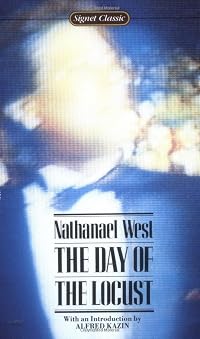
The Day of the Locust
by Nathanael West
On This Page
Description
Admired by F. Scott Fitzgerald, Dorothy Parker, and Dashiell Hammett, and hailed as one of the best one hundred English-language novels by Time magazine, The Day of the Locust continues to influence American writers, artists, and culture. Bob Dylan wrote the classic song "Day of the Locusts" in homage, and Matt Groening's Homer Simpson is named after one of its characters. No novel more perfectly captures the nuttier side of Hollywood. Here the lens is turned on its fringes-actors out of show more work, film extras with big dreams, and parents lining their children up for small roles. But it's the bit actress Faye Greener who steals the spotlight with her wildly convoluted dreams of stardom: "I'm going to be a star some day-if I'm not I'll commit suicide.". show lessTags
Recommendations



Member Recommendations
Member Reviews
With a little bit of distance I can see that this is an accomplished novel, well written and stunningly relevant in places for all that it is seventy years old. The problem is that I just did not enjoy it! In fact, it left me feeling slightly uncomfortable and more than a little unclean. I appreciate it for its clever story telling but would struggle to recommend or to re-read.
Plot in a Nutshell
Less plot and more a study of a group of characters as told by Tod Hackett, a relatively recent arrival to Depression era Hollywood. Through his interactions with the would be stars, in reality minor extras with limited opportunity we see a spotlight shone on the promise of the American dream.
Thoughts
On paper the Golden Age of Hollywood is in show more full swing and the Depression sweeping the rest of America seems quieter here. However hiding not very far below the surface is a Hollywood where dreams don’t stand up to scrutiny and dreamers come to die. So far so depressing right? It gets worse…
West compellingly paints a picture of cynical, self serving characters – at first glance they all seem slightly overdone and almost caricatured versions of our current worst thoughts about Hollywood. It took me a little while to remind myself that this was not a modern day satirical take on Hollywood but rather an ‘of the age’ satirical take on Hollywood. The more we get to know them however we see each has zero ability for them to emotionally connect with each other – each interaction is underpinned by a strong sense of ‘what’s in it for me’. If West wanted to paint a soulless environment and relationships he succeeded. And that’s before was addressing the fact that main character is open to discussing his fantasies of raping the woman he is infatuated with.
On the subject of strong female characters; Faye is a real disappointment. The lust the male characters have for her permeates the book and should have the reader feeling much more sympathetic. She is after all still a teenager predominantly spending time with much older men. She is however decidedly unsympathetic and her manipulations of her would be suitors meant I could not connect with her at all. As a metaphor for Hollywood itself she was well written, as a character you could empathise with less so show less
Plot in a Nutshell
Less plot and more a study of a group of characters as told by Tod Hackett, a relatively recent arrival to Depression era Hollywood. Through his interactions with the would be stars, in reality minor extras with limited opportunity we see a spotlight shone on the promise of the American dream.
Thoughts
On paper the Golden Age of Hollywood is in show more full swing and the Depression sweeping the rest of America seems quieter here. However hiding not very far below the surface is a Hollywood where dreams don’t stand up to scrutiny and dreamers come to die. So far so depressing right? It gets worse…
West compellingly paints a picture of cynical, self serving characters – at first glance they all seem slightly overdone and almost caricatured versions of our current worst thoughts about Hollywood. It took me a little while to remind myself that this was not a modern day satirical take on Hollywood but rather an ‘of the age’ satirical take on Hollywood. The more we get to know them however we see each has zero ability for them to emotionally connect with each other – each interaction is underpinned by a strong sense of ‘what’s in it for me’. If West wanted to paint a soulless environment and relationships he succeeded. And that’s before was addressing the fact that main character is open to discussing his fantasies of raping the woman he is infatuated with.
On the subject of strong female characters; Faye is a real disappointment. The lust the male characters have for her permeates the book and should have the reader feeling much more sympathetic. She is after all still a teenager predominantly spending time with much older men. She is however decidedly unsympathetic and her manipulations of her would be suitors meant I could not connect with her at all. As a metaphor for Hollywood itself she was well written, as a character you could empathise with less so show less
Rating: 3* of five
The Publisher Says: The Day of the Locust is a novel about Hollywood and its corrupting touch, about the American dream turned into a sun-drenched California nightmare. Nathaniel West's Hollywood is not the glamorous "home of the stars" but a seedy world of little people, some hopeful, some desparing, all twisted by their by their own desires—from the ironically romantic artist narrator to a macho movie cowboy, a middle-aged innocent from America's heartland, and the hard-as-nails call girl would-be-star whom they all lust after. An unforgettable portrayal of a world that mocks the real and rewards the sham, turns its back on love to plunge into empty sex, and breeds a savage violence that is its own undoing, this show more novel stands as a classic indictment of all that is most extravagant and uncontrolled in American life.
My Review:
Sad. Yes, that's it, I feel sad. This is a classic of Hollywood literature, I can even sort of see that, but it's as bleak as they come and it's all told, very little shown, at very crucial points. If this is a novel, I'm at a loss to see how; it's some biting character studies glued together by accidents of geography. To me it reads more like a treatment that had to be abandoned, was too dear to West's heart-shaped ice cube, and instead got its B12 shots, 50,000 volts, and liiiiiived.
So Tod (Death in German, get it?) HACKett (movie hanger-on, usu. a writer, get it?) falls for the vapidity that is bleached-blonde Faye Greener, as does poor rube-a-licious Homer Simpson (!!), as does no-bit extra Earle Shoop...I suspect, from some of Faye's father's mannerisms, that he and Faye got up to the badger game a time or two. What in the name of common sense is the appeal?! She's hard as nails, not terribly bright, and unbelievably self-centered. I couldn't abide her from the moment West put this in her mouth:
That wasn't fresh and new in 1939, either. I agree that this person exists in her legions at every doorway to stardom, but Faye doesn't rise above that generic feel at any turn. After each encounter with Faye, particularly the après-cockfight cocktail party and its aftermath, I want to ask West, "...AND?! What is it, why are these men so hot-to-trot for this trollop?" He's dead these 74 years, so he won't answer even if I shout, so I'm left bewildered.
Homer Simpson, apparently the lovable loser who gave cartoonist Matt Groening the name for his quarter-century old cartoon oaf, is the most realistic and fully drawn character in the piece. In creating Homer, West has fully focused our attention on him and relegated narrator Tod to the Nick Carraway position as he focuses on Homer and his back-story, his sad and empty existence (the part about the deck chair and the view is one of the best an most telling character tics West ladles on to Homer), and his doom (in the original Celtic meaning of Bha so an dàn duit, this was destined for thee). Homer tries and misses, tries and misses again, tries.... He's never, ever the fun guy or the sweet guy, he's the useful but horrendously annoying guy with the car and the cards.
His passion for the cipher Faye comes to its absolutely clearly telegraphed and inevitable conclusion, Tod twitters and flails ineffectually to interfere with it, and in the end it drives both Tod and Homer into the climactic ending of the book:
And this at last wove the book together for me, made the preceding ~200pp make some sense to me. This is West's cri de coueur and shout to the gods that Prometheus is back to make trouble again.
A year later he was dead. Hm.
There is no smallest question that West can craft some lovely sentences and some incisive character sketches. He can hang all them on a plot of sorts and make your readerly curiousity bump itch so bad you have to scratch it with his tyrannosaurus-armed stories, even at the risk of running afoul of the brute's severing teeth. But here, in this book, the alchemy that elevates Miss Lonelyhearts to the cold and glittering glory of Everest's heights settles instead into the weirder, less pristine shape of Kilimanjaro: Feet in the humid heat, midsection arid and weirdly populated with things not seen elsewhere, and then the transcendent snowy glory of the ending.
Some years back, my real-life book circle read What Makes Sammy Run? by Budd Schulberg. Sammy Glick, he of the title, is a character I can't forget and find myself thinking about. Sammy's is a story of hustle and flow, make and do and create...Tod never does one damned thing in this book except chase Faye and wander around. Yet which of these two books has been made into a movie? Not the solid, excellent What Makes Sammy Run?, no sirree, but this collection of grotesques gets made. In a weird sort of way, The Day of the Locust feels to me like a precursor to the viciously cuttingly unfunny humor of A Confederacy of Dunces. Both are utterly of a place, can't be told against the backdrop of any other place, and are pitilessly clear of vision. Both are the best-remembered works by their early-dead authors. And each is, taken on its own merits, marvelous parts in search of a gestalt to animate into more than some wonderful, memorable set-pieces embedded in perfunctory plotlike matrices. show less
The Publisher Says: The Day of the Locust is a novel about Hollywood and its corrupting touch, about the American dream turned into a sun-drenched California nightmare. Nathaniel West's Hollywood is not the glamorous "home of the stars" but a seedy world of little people, some hopeful, some desparing, all twisted by their by their own desires—from the ironically romantic artist narrator to a macho movie cowboy, a middle-aged innocent from America's heartland, and the hard-as-nails call girl would-be-star whom they all lust after. An unforgettable portrayal of a world that mocks the real and rewards the sham, turns its back on love to plunge into empty sex, and breeds a savage violence that is its own undoing, this show more novel stands as a classic indictment of all that is most extravagant and uncontrolled in American life.
My Review:
It is hard to laugh at the need for beauty and romance, no matter how tasteless, even horrible, the results of that need are. But it is easy to sigh. Few things are sadder than the truly monstrous.
Sad. Yes, that's it, I feel sad. This is a classic of Hollywood literature, I can even sort of see that, but it's as bleak as they come and it's all told, very little shown, at very crucial points. If this is a novel, I'm at a loss to see how; it's some biting character studies glued together by accidents of geography. To me it reads more like a treatment that had to be abandoned, was too dear to West's heart-shaped ice cube, and instead got its B12 shots, 50,000 volts, and liiiiiived.
So Tod (Death in German, get it?) HACKett (movie hanger-on, usu. a writer, get it?) falls for the vapidity that is bleached-blonde Faye Greener, as does poor rube-a-licious Homer Simpson (!!), as does no-bit extra Earle Shoop...I suspect, from some of Faye's father's mannerisms, that he and Faye got up to the badger game a time or two. What in the name of common sense is the appeal?! She's hard as nails, not terribly bright, and unbelievably self-centered. I couldn't abide her from the moment West put this in her mouth:
“I'm going to be a star some day," she announced as though daring him to contradict her.
"I'm sure you..."
"It's my life. It's the only thing in the whole world that I want."
"It's good to know what you want. I used to be a bookkeeper in a hotel,
but..."
"If I'm not, I'll commit suicide.”
That wasn't fresh and new in 1939, either. I agree that this person exists in her legions at every doorway to stardom, but Faye doesn't rise above that generic feel at any turn. After each encounter with Faye, particularly the après-cockfight cocktail party and its aftermath, I want to ask West, "...AND?! What is it, why are these men so hot-to-trot for this trollop?" He's dead these 74 years, so he won't answer even if I shout, so I'm left bewildered.
Homer Simpson, apparently the lovable loser who gave cartoonist Matt Groening the name for his quarter-century old cartoon oaf, is the most realistic and fully drawn character in the piece. In creating Homer, West has fully focused our attention on him and relegated narrator Tod to the Nick Carraway position as he focuses on Homer and his back-story, his sad and empty existence (the part about the deck chair and the view is one of the best an most telling character tics West ladles on to Homer), and his doom (in the original Celtic meaning of Bha so an dàn duit, this was destined for thee). Homer tries and misses, tries and misses again, tries.... He's never, ever the fun guy or the sweet guy, he's the useful but horrendously annoying guy with the car and the cards.
Only those who still have hope can benefit from tears. When they finish, they feel better. But to those without hope, whose anguish is basic and permanent, no good comes from crying. Nothing changes for them. They usually know this, but still can’t help crying.
His passion for the cipher Faye comes to its absolutely clearly telegraphed and inevitable conclusion, Tod twitters and flails ineffectually to interfere with it, and in the end it drives both Tod and Homer into the climactic ending of the book:
Their boredom becomes more and more terrible. They realize that they’ve been tricked and burn with resentment. Every day of their lives they read the newspapers and went to the movies. Both fed them on lynchings, murder, sex crimes, explosions, wrecks, love nests, fires, miracles, revolutions, war. This daily diet made sophisticates of them. The sun is a joke. Oranges can’t titillate their jaded palates. Nothing can ever be violent enough to make taut their slack minds and bodies. They have been cheated and betrayed. They have slaved and saved for nothing.
And this at last wove the book together for me, made the preceding ~200pp make some sense to me. This is West's cri de coueur and shout to the gods that Prometheus is back to make trouble again.
A year later he was dead. Hm.
There is no smallest question that West can craft some lovely sentences and some incisive character sketches. He can hang all them on a plot of sorts and make your readerly curiousity bump itch so bad you have to scratch it with his tyrannosaurus-armed stories, even at the risk of running afoul of the brute's severing teeth. But here, in this book, the alchemy that elevates Miss Lonelyhearts to the cold and glittering glory of Everest's heights settles instead into the weirder, less pristine shape of Kilimanjaro: Feet in the humid heat, midsection arid and weirdly populated with things not seen elsewhere, and then the transcendent snowy glory of the ending.
Some years back, my real-life book circle read What Makes Sammy Run? by Budd Schulberg. Sammy Glick, he of the title, is a character I can't forget and find myself thinking about. Sammy's is a story of hustle and flow, make and do and create...Tod never does one damned thing in this book except chase Faye and wander around. Yet which of these two books has been made into a movie? Not the solid, excellent What Makes Sammy Run?, no sirree, but this collection of grotesques gets made. In a weird sort of way, The Day of the Locust feels to me like a precursor to the viciously cuttingly unfunny humor of A Confederacy of Dunces. Both are utterly of a place, can't be told against the backdrop of any other place, and are pitilessly clear of vision. Both are the best-remembered works by their early-dead authors. And each is, taken on its own merits, marvelous parts in search of a gestalt to animate into more than some wonderful, memorable set-pieces embedded in perfunctory plotlike matrices. show less
horrifyingly ecstatic. the complete breakdown of physical reality in the final chapter, as if the narrative cannot bring itself to use human language for such a deplorable hell-pit. the all-pervasive violence that has infected 20th century americans and brought them to southern california—to convulse, to expire, to kill
It is often difficult to separate the film version of a book from the work itself; this is the case for me with "Day of the Locust." I have tried not to compare the two, but unfortunately I rewatched the film about a week before I read the book. I had seen the film version (directed by John Schlesinger and released in 1975) of Nathanael West's iconic story of Depression-era Los Angeles years ago. Scenes and impressions had stuck with me -- like Homer Simpson sadly sitting in his backyard watching a lizard -- but I was still surprised by the book. It is quite different from the film in a number of important and interesting ways. It is rich and beautifully-written book, suffused with the atmosphere of the seedier side of Hollywood. While show more reading, I kept thinking about people like Charlie Sheen. Wealthy, yet relentlessly sleazy. In "Day of the Locust" we meet sleaze at both ends of the economic spectrum. Success in Hollywood is not predicated on integrity, kindness, or even good taste.
One difference between the film and the book is the character of set designer/painter Tod Hackett. Schlesinger doesn't convey his violent thoughts in the film. Tod seems relatively benign and well-meaning in the film, a Yale man slumming it in Hollywood. But in the book he reveals himself to be more in his element than one might imagine; he fantasizes and raping and beating his neighbor, aspiring actress Fay Greener, who is 17 years old. Tod seems much more emotionally unstable. Slowly, Tod fills the walls of his apartment with apocalyptic sketches and studies in the film, but the book reveals that he's planning a large painting called "The Burning of Los Angeles." Those dark red drawings, with dead faces make more sense. The book emphasizes that these are all people who have come to Los Angeles to die.
The book also creates a more nuanced portrait of Homer Simpson, although Donald Sutherland's portrayal in the film is perfect. Homer is the only sympathetic character -- and then he brings about a tragedy. Homer probably has some form of autism; he definitely suffers from Obsessive Compulsive Disorder. At one point, Tod asks him to stop doing the same thing with his hands and Homer answers, "I have to do it three times." He is so profoundly disturbed that you sense impending doom from the first time you meet him.
The end of the book is horrific, but much is left to the reader's imagination. Thus, to me it was more effective than the violent and chaotic ending to Schlesinger's film. "Day of the Locust" is one of those books that I wish I could read for the first time again. It's disturbing and weirdly resonant with Los Angeles today. And I recommend reading the book before watching the film if you haven't seen it already. show less
One difference between the film and the book is the character of set designer/painter Tod Hackett. Schlesinger doesn't convey his violent thoughts in the film. Tod seems relatively benign and well-meaning in the film, a Yale man slumming it in Hollywood. But in the book he reveals himself to be more in his element than one might imagine; he fantasizes and raping and beating his neighbor, aspiring actress Fay Greener, who is 17 years old. Tod seems much more emotionally unstable. Slowly, Tod fills the walls of his apartment with apocalyptic sketches and studies in the film, but the book reveals that he's planning a large painting called "The Burning of Los Angeles." Those dark red drawings, with dead faces make more sense. The book emphasizes that these are all people who have come to Los Angeles to die.
The book also creates a more nuanced portrait of Homer Simpson, although Donald Sutherland's portrayal in the film is perfect. Homer is the only sympathetic character -- and then he brings about a tragedy. Homer probably has some form of autism; he definitely suffers from Obsessive Compulsive Disorder. At one point, Tod asks him to stop doing the same thing with his hands and Homer answers, "I have to do it three times." He is so profoundly disturbed that you sense impending doom from the first time you meet him.
The end of the book is horrific, but much is left to the reader's imagination. Thus, to me it was more effective than the violent and chaotic ending to Schlesinger's film. "Day of the Locust" is one of those books that I wish I could read for the first time again. It's disturbing and weirdly resonant with Los Angeles today. And I recommend reading the book before watching the film if you haven't seen it already. show less
Eleinte azt hittem, hogy pont jó lesz a túlértékelt klasszikusok kihívásba: céljaiban monumentális Hollywood-tabló, de a megvalósítás tekintetében elhibázott, élvezhetetlenségig szétszórt, töredezett torzó. Talán a harmadán is túl voltam már, amikor elkezdtek hatni ezek a szépen elnyújtott, tökéletesen megkomponált jelenetek, a különös, élettel teli szereplők, és ez a vészjósló, lassan felépített atmoszféra, ami az amerikai regényirodalom egyik legapokaliptikusabb végkifejletében kulminál. West egy tipikusan gatsby-s háromszögből építkezik, de teljesen újként hat, amit kihoz ebből. Van Tod, a festő, hollywood-i bedolgozó, Homer*, tipikus keleti parti naiv melák és Faye, mindenki show more szerelme (és amúgy meg egy… hát nevezzük felettébb ambiciózus hölgynek). És a stáblistán szerepelnek még: csóró cowboyok, extrovertált törpék, szánalmas volt és reménybeli jövendő színészek, középszerű producerek – és persze a csőcselék, akik közé talán a regény szereplői is tartoznak (még ha ezt nem is vallanák be maguknak), a csőcselék, aki alig visszafojtott indulattal várja, hogy valamiképpen az Amerikai Álom közelébe férkőzhessen, és a kezei közé kaparintsa azt. Eszméletlen kis szöveg, tele elektromossággal, szinte szétfeszíti önmagát – az „elveszett nemzedék” jelentős szellemi produktuma. Olvasásra, sőt újraolvasásra érdemes.
* Teljes nevén Homer Simpson. Véletlen volna ez? show less
* Teljes nevén Homer Simpson. Véletlen volna ez? show less
Nathanael West’s satire of 1930’s Hollywood, done mainly through its wannabes and outcasts, is pointed and ahead of his time. Behind the glittering image of Tinseltown, he shows us squalor, broken dreams, and a world where everything seems as phony as the facades of a set design. There are prostitutes, stage moms, and con men. The pretentiousness of those who have made it, with their ostentatious houses, are compared with the delusions of grandeur of those who haven’t, with their banal ideas for screenplays. He gives us various lifestyles that made me smile, since I didn’t realize how far back in time these stereotypical Hollywood images went, with vegetarians and those on a raw food diet, as well as those who attend alternative show more churches, such as the ‘Church of Christ, Physical’, “where holiness was attained through the constant use of chest-weights and spring grips”. He also doesn’t shy away from showing us cruelty in the form of cockfighting, or a dangerous mob. Even the protagonist who is navigating through this world has violent rape fantasies. West would die the following year at 37 in a car crash which is a shame, as this novel demonstrates his talent at making dark observations about the human condition, as well as an improved discipline and maturity as a writer.
Just this quote, on people retiring in California:
“Once there, they discover that sunshine isn’t enough. They get tired of oranges, even of avocado pears and passion fruit. Nothing happens. They don’t know what to do with their time. They haven’t the mental equipment for leisure, the money nor the physical equipment for pleasure. Did they slave so long just to go to an Iowa picnic? What else is there? They watch the waves come in at Venice. There wasn’t any ocean where most of them came from, but after you’ve seen one wave, you’ve seen them all. The same is true of the airplanes at Glendale. If only a plane would crash once in a while so that they could watch the passengers being consumed in a ‘holocaust of flame’, as the newspapers put it. But the planes never crash.
Their boredom becomes more and more terrible. They realise that they’ve been tricked and burn with resentment. Every day of their lives they read the newspapers and went to the movies. Both fed them on lynchings, murder, sex crimes, explosions, wrecks, love nests, fires, miracles, revolutions, war. This daily diet made sophisticates of them. The sun is a joke. Oranges can’t titillate their jaded palates. Nothing can ever be violent enough to make taut their slack minds and bodies.” show less
Just this quote, on people retiring in California:
“Once there, they discover that sunshine isn’t enough. They get tired of oranges, even of avocado pears and passion fruit. Nothing happens. They don’t know what to do with their time. They haven’t the mental equipment for leisure, the money nor the physical equipment for pleasure. Did they slave so long just to go to an Iowa picnic? What else is there? They watch the waves come in at Venice. There wasn’t any ocean where most of them came from, but after you’ve seen one wave, you’ve seen them all. The same is true of the airplanes at Glendale. If only a plane would crash once in a while so that they could watch the passengers being consumed in a ‘holocaust of flame’, as the newspapers put it. But the planes never crash.
Their boredom becomes more and more terrible. They realise that they’ve been tricked and burn with resentment. Every day of their lives they read the newspapers and went to the movies. Both fed them on lynchings, murder, sex crimes, explosions, wrecks, love nests, fires, miracles, revolutions, war. This daily diet made sophisticates of them. The sun is a joke. Oranges can’t titillate their jaded palates. Nothing can ever be violent enough to make taut their slack minds and bodies.” show less
West's grotesque tale of the dark side of Hollywood still resonates--but like a bell with a crack in it. Nothing seems quite real, as the author depicts an artist, a retired hotel bookkeeper, a former vaudevillian reduced to selling silver polish, the vaudevillian's beautiful but intensely strange daughter, her other suitors, cockfighters, a successful screenwriter, but above all, the crowd of nonentities who inhabit the corners of the place, slowly building up their anger over being cheated by the California dream.
The book is more notable for its scenes than for its overall story. I especially enjoyed the Battle of Waterloo that the artist witnesses on a back lot. All the while, the artist is working on his masterpiece, a painting show more called "The Burning of Los Angeles". West seems to find it a distinct possibility, and not from wildfires, but almost 75 years after this novel was written, not much has really changed. The little people are still little. show less
The book is more notable for its scenes than for its overall story. I especially enjoyed the Battle of Waterloo that the artist witnesses on a back lot. All the while, the artist is working on his masterpiece, a painting show more called "The Burning of Los Angeles". West seems to find it a distinct possibility, and not from wildfires, but almost 75 years after this novel was written, not much has really changed. The little people are still little. show less
Members
- Recently Added By
Published Reviews
ThingScore 100
“There are those who believe Los Angeles is a city where dreams come to die. They run out of space as the continent butts against the Pacific. There is nowhere else to go.”
added by Lemeritus
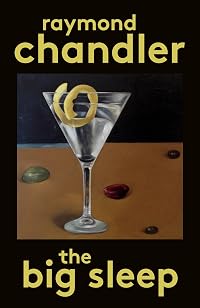
The year 1939, when Europe was going up in flames and America clung to the hope that it need not become part of a world at war, turned out to be a miracle moment for Los Angeles fiction, seeing the publication of "The Big Sleep" by Raymond Chandler, John Fante's "Ask The Dust," and "The Day of the Locust" by Nathanael West (the latter just reissued in a new edition, along with "Miss show more Lonelyhearts," by New Directions, $11.95), three books that distilled distinctly and in very different ways the city that was being written about, and have continued to dictate how Los Angeles is perceived today. show less
added by krbrancolini
Lists

The Guardian's 1000 Novels Everyone Must Read
1,005 works; 550 members

David Bowie's Top 100
97 works; 23 members

Newsweek's Top 100 Books: The Meta-List
100 works; 18 members

Read the book and saw the movie
1,170 works; 195 members

The Top Ten: Writers Pick Their Favorite Books
240 works; 31 members
New York Public Library's Books of the Century
120 works; 20 members
Larry McCaffery's 20th Century Greatest Hits: 100 English-Language Books
103 works; 12 members

New York Public Library's Books of the Century - All
170 works; 14 members
Time Magazine's "All-Time 100"
113 works; 15 members

Canon de la narrativa universal del siglo XX
254 works; 6 members
Harold Bloom - The Western Canon: D. The Chaotic Age
833 works; 24 members
Favourite Books
1,819 works; 316 members

In or About the 1930s
198 works; 27 members
Time's All-Time 100 Novels
100 works; 27 members

Modernism
140 works; 8 members
The Modern Library's 100 Best Novels: The Board's List
85 works; 6 members

Books Read in 2023
5,547 works; 145 members

Undiscovered Classics to Read
70 works; 15 members

greasy film of cinematic fiction
36 works; 3 members

Books Read in 2009
464 works; 11 members
Best Books of the 20th Century
193 works; 5 members
Animals in the Title
498 works; 11 members

Hooray for Hollywood
30 works; 4 members
American Lit for Eng 11 Research Project
368 works; 6 members

Canon de la narrativa universal del s. XX (cicutadry)
499 works; 3 members
Modern Library's 100 Best Novels
100 works; 2 members
.
396 works; 1 member
David Bowie’s Top 100 Favourite Reads
100 works; 3 members

Film
114 works; 1 member
David Bowie's List of Top 100 Books
94 works; 6 members

The Atlantic's The Great American Novel
136 works; 12 members
Franklit
95 works; 1 member
Read These Too
458 works; 9 members

Jones & Newman: Best Horror Books Further Recommended Reading
577 works; 4 members

Antiheroes
17 works; 3 members

Books Set in Los Angeles
40 works; 8 members

Literary Works Read in College
316 works; 15 members
The "A" List
67 works; 8 members
Author Information

20+ Works 6,800 Members
American novelist Nathanael West was born in New York City, the son of a prosperous building contractor. He began his college education at Tufts University but transferred to Brown University, from which he graduated in 1924. After graduation, West went to Europe and lived in Paris for a few years, where he wrote the short novel The Dream Life of show more Balso Snell (1931), an avant--garde work that reflected his concern with the emptiness of contemporary life. West's modest legacy of completed works reached its peak of recognition during the period when later Jewish American writers were discovering black humor. Among novels that chronicle the wasteland despair and grotesque comedy of the time between the wars, West's Miss Lonelyhearts (1933) and The Day of the Locust (1939) stand out as remarkable examples. The first is about a young man conducting a column of advice to the lovelorn who finds it increasingly impossible not to share the problems of his readers. The Day of the Locust story about a riot that ends with the burning of Los Angeles. If Franz Kafka (see Vol. 2) had lived to come to the United States and become a screenwriter, he might have written a book like The Day of the Locust, which Malcolm Cowley called the best novel ever written about Hollywood. West's other short novel, A Cool Million (1934), is, like The Dream Life of Balso Snell, an experimental work that offers variations on the theme of reality and illusion; both works look toward a literature of the absurd and deserve their place in literary history as influences on a school of American writers that came into prominence during the 1960s. West's own life had aspects of tragic absurdity. He was married to Eileen McKenney, the original of the central figure in My Sister Eileen, while his own sister became the wife of humorist S. J. Perelman. After writing Miss Lonelyhearts, West and his wife went to Hollywood and remained there until they were both killed in a car accident in 1940. (Bowker Author Biography) show less
Some Editions
Awards and Honors
Notable Lists
Greatest Books algorithm (735)
Torchlight List (#73)
The Great American Novels (1939)
Series
Belongs to Publisher Series
Work Relationships
Is contained in
Has the adaptation
Has as a student's study guide
Common Knowledge
- Canonical title
- The Day of the Locust
- Original title
- The Day of the Locust
- Original publication date
- 1939
- People/Characters
- Homer Simpson; Faye Greener; Harry Greener; Earle Shoop; Miguel; Abe Kusich (show all 9); Mary Dove; Tod Hackett; Claude Estell
- Important places
- Los Angeles, California, USA
- Important events
- Great Depression
- Related movies
- The Day of the Locust (1975 | IMDb)
- Dedication
- For Laura
- First words
- Around quitting time, Tod Hackett heard a great din on the road outside his office.
- Last words
- (Click to show. Warning: May contain spoilers.)For some reason this made him laugh and he began to imitate the siren as loud as he could.
- Blurbers
- Ballard, J. G.
- Canonical DDC/MDS
- 813.52
- Canonical LCC
- PS3545.E8334
Classifications
Statistics
- Members
- 2,075
- Popularity
- 9,962
- Reviews
- 57
- Rating
- (3.61)
- Languages
- 11 — Dutch, English, Estonian, Finnish, French, German, Hungarian, Italian, Portuguese, Spanish, Swedish
- Media
- Paper, Audiobook, Ebook
- ISBNs
- 66
- UPCs
- 1
- ASINs
- 45