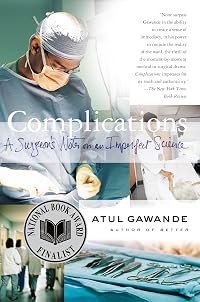
Complications: A Surgeon's Notes on an Imperfect Science
by Atul Gawande
On This Page
Description
**A new unabridged recording** A brilliant and courageous doctor reveals, in gripping accounts of true cases, the power and limits of modern medicine. Sometimes in medicine the only way to know what is truly going on in a patient is to operate, to look inside with one's own eyes. This audio is exploratory surgery on medicine itself, laying bare a science not in its idealized form but as it actually is -- complicated, perplexing, and profoundly human. Atul Gawande offers an unflinching view show more from the scalpel's edge, where science is ambiguous, information is limited, the stakes are high, yet decisions must be made. In dramatic and revealing stories of patients and doctors, he explores how deadly mistakes occur and why good surgeons go bad. He also shows us what happens when medicine comes up against the inexplicable: an architect with incapacitating back pain for which there is no physical cause; a young woman with nausea that won't go away; a television newscaster whose blushing is so severe that she cannot do her job. Gawande offers a richly detailed portrait of the people and the science, even as he tackles the paradoxes and imperfections inherent in caring for human lives. At once tough-minded and humane, Complications is a new kind of medical writing, nuanced and lucid, unafraid to confront the conflicts and uncertainties that lie at the heart of modern medicine, yet always alive to the possibilities of wisdom in this extraordinary endeavor. A Macmillan Audio production from Henry Holt and Company. show lessTags
Recommendations


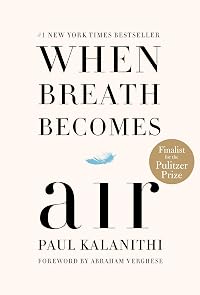

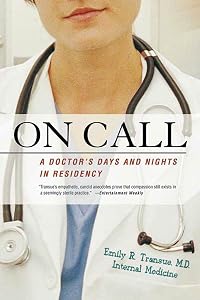
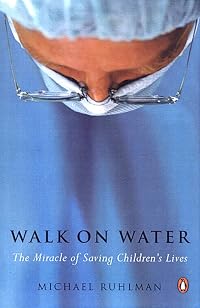
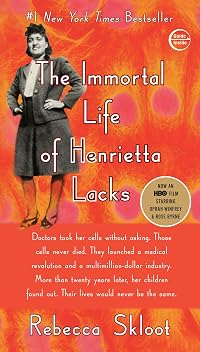





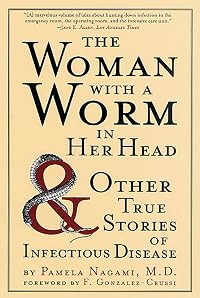
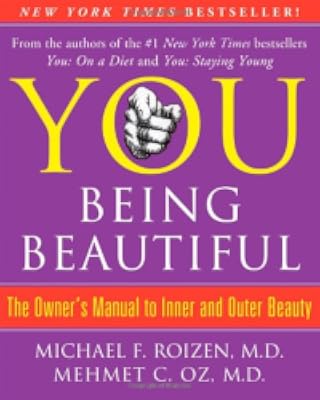
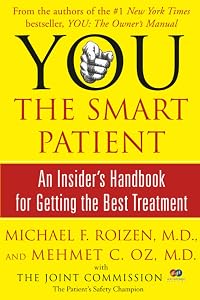
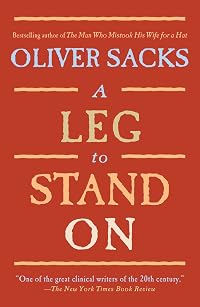

Member Recommendations

Member Reviews
This was my third book by Atul Gawande, and just like with the first two, I couldn't put it down. What an exceptional read! “Complications” dives into the world of surgery and medicine in a way that’s both intriguing and approachable.
Gawande shares a range of captivating stories from his own experiences and those of his colleagues. He strikes a perfect balance between the technical aspects of surgery and the very human side of medicine. It’s an eye-opening account of how doctors don’t always get it right and the challenges they face in diagnosing and treating patients.
What’s particularly wonderful about this book is how it transitions seamlessly between personal reflections, thrilling ER anecdotes, and thoughtful show more observations on medicine and life. Some chapters are deeply personal, delving into the stress of surgical training and the inevitability of tragic mistakes. Others engage with common medical problems that frustrate doctors, like chronic pain and nausea.
However, be warned: this book is not for the faint of heart! It’s quite gory in places and very visceral. If you tend to look away during medical shows when the scalpel comes out, this book might be a bit too intense. But for those who can handle it, it’s a fascinating and rewarding read. show less
Gawande shares a range of captivating stories from his own experiences and those of his colleagues. He strikes a perfect balance between the technical aspects of surgery and the very human side of medicine. It’s an eye-opening account of how doctors don’t always get it right and the challenges they face in diagnosing and treating patients.
What’s particularly wonderful about this book is how it transitions seamlessly between personal reflections, thrilling ER anecdotes, and thoughtful show more observations on medicine and life. Some chapters are deeply personal, delving into the stress of surgical training and the inevitability of tragic mistakes. Others engage with common medical problems that frustrate doctors, like chronic pain and nausea.
However, be warned: this book is not for the faint of heart! It’s quite gory in places and very visceral. If you tend to look away during medical shows when the scalpel comes out, this book might be a bit too intense. But for those who can handle it, it’s a fascinating and rewarding read. show less
You expect medicine to be a hard and fast science. Is versus Isn't. Black and white. Cut and dried. Science simple as that. It is hard to imagine medicine as fuzzy, as imperfect and wishy-washy as gray area, but it is. Gawande doesn't apologize for this less-than-exact science. He is pragmatic in his approach - sometimes doctors get it right and well, sometimes they don't. The essays in Complications are scary and humbling. You hear about real cases. Real patients. Everyday people with seemingly normal lives. Your neighbor. You. Then you hear about the scary stuff. Medical mistakes. Doctors deferring decisions to patients. Surgeons operating with their hearts more than their minds...it happens. As hard as some of the information was to show more digest it was eye opening and a necessary truth. show less
A brief, eloquent, and thoughtful book that describes the messy and occasionally miraculous business of surgery and traces the author's own development from greenhorn resident to accredited surgeon. Clearly written for a general audience, "Complications" makes surgery seem like a very human endeavor, not the domain of mysterious, infallible wise men in white coats. In Gawande's telling, surgery full of unknowns and anxiety for both the doctors and their patients, it takes a great deal practice to get good at it, and everyone involved is faced with tough choices that they sometimes come to regret. The author never seems to forget that both the doctors and patients he describes were people before the operating table and have lives to go show more back to after the surgery is finished. Gawande makes a point of putting the practice of surgery in a larger context and takes several chapters to describe how new technologies and current social trends, like the idea that patients should have the final say about their treatment, have affected the way doctors do things. While he's aware that he has his own professional prejudices, his descriptions of these debates seem admirably fair minded and sensitive to his patients' interests.
Gawande's book also might give some readers a new perspective on their own bodies. While we tend to think that we know our own bodies pretty well, it's fair to say that surgeons have seen more of more human bodies than most people have, or care to. His descriptions of surgical procedures are clear and straightforward and free of unnecessarily technical language The author deserves some credit for not going in for shock value, even when he describes operations that would amaze doctors that practiced just a few decades ago. The human body, which is, perhaps, the real main character of "Complications" is made to look both eminently functional and endlessly strange, sometimes too delicate and sometimes surprisingly resilient, Gawande succeeds, I think, in convincing his readers that its thanks to the surgeons like him that we know as much about it as we do. show less
Gawande's book also might give some readers a new perspective on their own bodies. While we tend to think that we know our own bodies pretty well, it's fair to say that surgeons have seen more of more human bodies than most people have, or care to. His descriptions of surgical procedures are clear and straightforward and free of unnecessarily technical language The author deserves some credit for not going in for shock value, even when he describes operations that would amaze doctors that practiced just a few decades ago. The human body, which is, perhaps, the real main character of "Complications" is made to look both eminently functional and endlessly strange, sometimes too delicate and sometimes surprisingly resilient, Gawande succeeds, I think, in convincing his readers that its thanks to the surgeons like him that we know as much about it as we do. show less
5***** and a ❤
This National Book Award finalist REALLY makes you think! It opens your eyes to the imperfections in our system of medical care.
Gawande is a surgical resident (when he wrote it), a thinker and a poet. He uses case histories to explore the thinking, the philosophy, of medicine. He speaks of mistakes and intuition, luck and skill, good outcomes despite bad treatement, and devastating outcomes despite excellent care. This should be required reading for all medical students and regularly re-read by all MDs.
After I'd read it I couldn't stop talking about it, and convinced one of my F2F book clubs to read it in July 2005.
This National Book Award finalist REALLY makes you think! It opens your eyes to the imperfections in our system of medical care.
Gawande is a surgical resident (when he wrote it), a thinker and a poet. He uses case histories to explore the thinking, the philosophy, of medicine. He speaks of mistakes and intuition, luck and skill, good outcomes despite bad treatement, and devastating outcomes despite excellent care. This should be required reading for all medical students and regularly re-read by all MDs.
After I'd read it I couldn't stop talking about it, and convinced one of my F2F book clubs to read it in July 2005.
CBR 10 BINGO Square: Backlog (Added this to my TBR list on February 12, 2013 - the day I joined Goodreads, apparently)
Best for: People who enjoy good writing about medical issues. NOT for those who get squeamish reading about surgical procedures.
In a nutshell: Surgeon Atul Gawande (you probably know him from Being Mortal; I think my favorite of his is the Checklist Manifesto) shares stories about his time as a surgeon, exploring the reality that surgeons are humans and make mistakes.
Worth quoting:
“In the medicine, we have long faced a conflict between the imperative to give patients the best possible care and the need to provide novices with experience.”
Why I chose it: I can’t believe I haven’t read this yet - I thought I’d show more read all of his books. So when I sorted my Goodreads list for this CBR10 I was shocked to see it on there. I worried I’d start reading it and realize I’d read it before, but nope. It was new to me!
Review:
First off - CANNONBALL! My sixth since I started with CBR 5. Ah, how the time flies.
I enjoyed this book. I think it could have been better organized, but any time I get to read Dr. Gawande’s writing, I know I’m going to learn something and I’m going to enjoy reading it. He’s so talented, it seems unfair - a surgeon who can also write, and write well?
This book explores, through three distinct parts, the challenges of medicine that arise because humans are humans who need to learn and who make mistakes. The first section looks at learning and mistakes, the second at trying (and sometimes failing) to solve medical mysteries, and the third focuses on indecision.
The book starts off intensely, with Gawande sharing how he learned to put in a central line. It’s quite graphic, and does a great job of getting across the point that we all know somewhere in our mind (or every Thursday night when we watch Grey’s Anatomy): that doctors have to learn somehow. And usually that means performing on patients who are sick and injured. As patients, we want the best to treat us and our families, but the best only get there by practicing, which means that at some point we’re going to get the worst.
The second section, on medical mysterious, explores the frustration of healthcare professionals and patients when there is something wrong but we don’t know the cause and don’t know how to fix it. Like, for example, the woman who had nearly uncontrollable nausea for her ENTIRE PREGNANCY. Basically, what the Duchess of Cambridge had, but apparently it never stopped. I just … ack.
The final section is a reminder of the fact that sometimes, doctors just don’t know exactly what to do. The last chapter illustrates this amazingly well, with a woman who either has cellulitis or flesh-eating bacteria, and the doctors — and the patient — need to make a decision on the path forward. It looks at how much should doctors be directing care and how much should patients be? How do you find a compromise that respects the choice of the patient but also the knowledge and experience of the doctor?
Like I said, it’s an interesting book. It’s not a five-star read for me mostly because the chapters aren’t as well-connected as they could be. But it’s a strong four, because it’s Gawande. show less
Best for: People who enjoy good writing about medical issues. NOT for those who get squeamish reading about surgical procedures.
In a nutshell: Surgeon Atul Gawande (you probably know him from Being Mortal; I think my favorite of his is the Checklist Manifesto) shares stories about his time as a surgeon, exploring the reality that surgeons are humans and make mistakes.
Worth quoting:
“In the medicine, we have long faced a conflict between the imperative to give patients the best possible care and the need to provide novices with experience.”
Why I chose it: I can’t believe I haven’t read this yet - I thought I’d show more read all of his books. So when I sorted my Goodreads list for this CBR10 I was shocked to see it on there. I worried I’d start reading it and realize I’d read it before, but nope. It was new to me!
Review:
First off - CANNONBALL! My sixth since I started with CBR 5. Ah, how the time flies.
I enjoyed this book. I think it could have been better organized, but any time I get to read Dr. Gawande’s writing, I know I’m going to learn something and I’m going to enjoy reading it. He’s so talented, it seems unfair - a surgeon who can also write, and write well?
This book explores, through three distinct parts, the challenges of medicine that arise because humans are humans who need to learn and who make mistakes. The first section looks at learning and mistakes, the second at trying (and sometimes failing) to solve medical mysteries, and the third focuses on indecision.
The book starts off intensely, with Gawande sharing how he learned to put in a central line. It’s quite graphic, and does a great job of getting across the point that we all know somewhere in our mind (or every Thursday night when we watch Grey’s Anatomy): that doctors have to learn somehow. And usually that means performing on patients who are sick and injured. As patients, we want the best to treat us and our families, but the best only get there by practicing, which means that at some point we’re going to get the worst.
The second section, on medical mysterious, explores the frustration of healthcare professionals and patients when there is something wrong but we don’t know the cause and don’t know how to fix it. Like, for example, the woman who had nearly uncontrollable nausea for her ENTIRE PREGNANCY. Basically, what the Duchess of Cambridge had, but apparently it never stopped. I just … ack.
The final section is a reminder of the fact that sometimes, doctors just don’t know exactly what to do. The last chapter illustrates this amazingly well, with a woman who either has cellulitis or flesh-eating bacteria, and the doctors — and the patient — need to make a decision on the path forward. It looks at how much should doctors be directing care and how much should patients be? How do you find a compromise that respects the choice of the patient but also the knowledge and experience of the doctor?
Like I said, it’s an interesting book. It’s not a five-star read for me mostly because the chapters aren’t as well-connected as they could be. But it’s a strong four, because it’s Gawande. show less
Complications is a collection of essays about Atul Gawande's experience as a surgeon and his acute observations of how the medical establishment is failing and succeeding. Gawande's essays offer us a look into the murky depths of practicing medicine that we fail to understand and appreciate despite our often frequent contact with the system. Broken up into three sections, Gawande's essays explore doctors' fallibility, unknowns and mysteries that often crop up in the treatment of patients, and, finally, uncertainty itself, a prospect we often fail to consider given the perpetual technological advancement that seems inherent in practicing medicine.
Gawande engages the reader using frequent case studies of patients he and his colleagues show more have encountered. These serve to draw the reader in and also as great jumping off points for Gawande to tackle the struggles and questions that plague both doctors and patients about the state of medicine today. In Complications, Gawande contemplates the mystery of pain, questions how we do and essentially must entrust patient care to doctors in training, the improbable victory of a surgeon's instinct over facts and logic, and many more fascinating topics.
Complications is an important book. It's a book that asks us to consider the fact that even the doctors who are treating us are merely fallible human beings who know a lot but are often forced to rely on gut instinct in a crunch which may work to the benefit of the patient but may also work to their detriment. It's a book that reminds the rest of us, as patients, that we have an important role to play in our own healthcare. All this, and it also features the sort of compelling, easy to understand writing that makes Complications almost impossible to put down. show less
Gawande engages the reader using frequent case studies of patients he and his colleagues show more have encountered. These serve to draw the reader in and also as great jumping off points for Gawande to tackle the struggles and questions that plague both doctors and patients about the state of medicine today. In Complications, Gawande contemplates the mystery of pain, questions how we do and essentially must entrust patient care to doctors in training, the improbable victory of a surgeon's instinct over facts and logic, and many more fascinating topics.
Complications is an important book. It's a book that asks us to consider the fact that even the doctors who are treating us are merely fallible human beings who know a lot but are often forced to rely on gut instinct in a crunch which may work to the benefit of the patient but may also work to their detriment. It's a book that reminds the rest of us, as patients, that we have an important role to play in our own healthcare. All this, and it also features the sort of compelling, easy to understand writing that makes Complications almost impossible to put down. show less
A surgeon's journal, Complications is riveting, frightening, and fascinating. Dr. Gawande is honest, more so than perhaps he should be, but it makes for fascinating reading.
The premise of the book is that medicine is far less the science patients suppose it to be. While surgeons are highly trained, a disturbing amount of intuition and guesswork is involved. And newbie cutters have to learn on someone, and those patients usually aren't informed of the fact they'll be a surgeon's first solo patient. And if this deception didn't occur, there would simply be no new surgeons trained.
The three sections of the book are titled Fallibility, Mystery, and Uncertainty. I'm hoping even more than before I read this that I never need to worry about show more any of this first-hand. show less
The premise of the book is that medicine is far less the science patients suppose it to be. While surgeons are highly trained, a disturbing amount of intuition and guesswork is involved. And newbie cutters have to learn on someone, and those patients usually aren't informed of the fact they'll be a surgeon's first solo patient. And if this deception didn't occur, there would simply be no new surgeons trained.
The three sections of the book are titled Fallibility, Mystery, and Uncertainty. I'm hoping even more than before I read this that I never need to worry about show more any of this first-hand. show less
Members
- Recently Added By
Lists

Best Medical Nonfiction
79 works; 29 members

Really Good Narrative Non-Fiction
65 works; 24 members

medical memoirs
24 works; 3 members

So you want to get into medicine
29 works; 6 members

Authors from the United States
245 works; 3 members
Author Information

12+ Works 17,006 Members
Atul Gawande is a surgical resident in Boston and staff writer on medicine and science for The New Yorker. A former Rhodes scholar, he received his M.D. from Harvard Medical School. He lives with his wife and three children in Newton, Massachusetts. (Publisher Fact Sheets) Atul Gawande is a surgeon at Brigham and Women's Hospital in Boston, a show more staff writer for The New Yorker, and a professor at Harvard Medical School and the Harvard School of Public Health. He is also the Executive Director of Ariadne Labs and chairman of Lifebox, a nonprofit organization making surgery safer globally. He has written several books including Complications, Better, The Checklist Manifesto, and Being Mortal: Medicine and What Matters in the End. He has won the Lewis Thomas Prize for Writing about Science and two National Magazine Awards. He will be appearing at the 2015 Auckland Writers Festival in New Zealand. He won the prize for Adult Non-fiction in the Indies Choice Book Awards 2015 with Being Mortal: Medicine and What Matters in the End. (Bowker Author Biography) show less
Awards and Honors
Awards
Distinctions
Work Relationships
Has as a student's study guide
Common Knowledge
- Original title
- Complications: A Surgeon's Notes on an Imperfect Science
- Alternate titles
- Complications
- Original publication date
- 2002
- Dedication
- For Kathleen
- First words
- I was once on trauma duty when a young man about twenty was rolled in, shot in the buttock.
- Quotations
- As one surgeon told me, it is a rare but alarming thing to meet a surgeon without fear. "If you're not a little afraid when you operate," he said, "you're bound to do a patient a grave disservice."
Normally, people boarding a bus, plane, or train distribute themselves like repelling magnets, keeping a respectful, anonymous distance from one another and sharing seats only if they have to. - Last words
- (Click to show. Warning: May contain spoilers.)The water was beautiful, she says.
- Blurbers
- Nuland, Sherwin B.; Gladwell, Malcolm
- Original language
- English
Classifications
Statistics
- Members
- 3,444
- Popularity
- 4,833
- Reviews
- 87
- Rating
- (4.12)
- Languages
- 11 — Catalan, Chinese, Dutch, English, German, Hungarian, Italian, Polish, Romanian, Spanish, Portuguese (Portugal)
- Media
- Paper, Audiobook, Ebook
- ISBNs
- 33
- ASINs
- 13