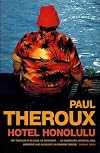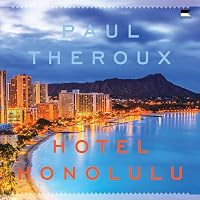
Hotel Honolulu
by Paul Theroux
On This Page
Description
In this wickedly satiric romp, Paul Theroux captures the essence of Hawaii as it has never been depicted. The novel's narrator, a down-on-his-luck writer, escapes to Waikiki and soon finds himself the manager of the Hotel Honolulu, a low-rent establishment a few blocks off the beach. Honeymooners, vacationers, wanderers, mythomaniacs, soldiers, and families all check in to the hotel. Like the Canterbury pilgrims, every guest has come in search of something - sun, love, happiness, objects of show more unnamable longing - and everyone has a story. By turns hilarious, ribald, tender, and tragic, HOTEL HONOLULU offers a unique glimpse of the psychological landscape of an American paradise. show lessTags
Recommendations





Member Reviews
"Reason being, you're a mainland howlie": Why Hotel Honolulu was a partial, though epic, fail, in my humble opinion.
On my trip east and back again for the recent AWP 2011 conference, I tucked myself into Paul Theroux's Hotel Honolulu (2001). Having never read Theroux but recognizing the name as one I'm "supposed" to have read, this novel--which I obtained, free, on a stoop in Fort Greene while I still lived there--seemed as a good a place as any to make entry into his considerable body of work.
Perhaps an ill-fated choice.
I wish to GOD that amongst the dozen reviews listed on the book's back cover and inside first pages, a single one had come from a local. Might have saved me time and aggravation.
Hotel Honolulu itself is a fast read, show more even at 424 pages, plenty of sex and sexiness and booze and intriguing little anecdotes--one reviewer likened it aptly to Chaucer's Canterbury Tales--to keep the pages turning. The white characters--mainlanders who had come to make Honolulu home--rang true, if as assholes, and the seedy side of Waikiki--well, that ain't fiction, folks.
What I can't figure out is how Theroux so holds me in his hand such that I kept flipping pages despite the fact that every third page managed to offend me.
Trolling the Internet for a local person's thoughts on the subject, I came up with nada, but there was plenty of talk about the book. those who weren't wowed by the book mostly focused on the sexual depravity and "ugly intimacies" as one reader put it.
That actually didn't bother me. The world is ugly. Sex is awkward. People aren't nice. Welcome to the world.
But Theroux's use of pidgin and Hawaiian in the book downright made me see red. The choices he made in spelling the language, the way he unnecessarily at times threw around terms and then pedantically defined them, the imprecise ways he employed pidgin, especially. Ohhhhh! $%*@(#*@))#@(! It was as if he'd not read any local authors' books in consideration of how to render the language on the page; instead, he just ... winged it.
Also, and it must be said, the depiction of the locals--as a generalized category, as if all people born there were born to the same slow song, the same VOG clouding their brains--well, as a former local myself, I really didn't appreciate it. Even filtered through an ostensible narrator, I couldn't help but wonder if those views were held by Theroux himself, and I will tell you why--it's because his narrator seems meant to be a stand-in for himself, a well-known writer experiencing an entire chunk of years of writer's block. Hawai'i is rendered in Theroux's narrator's eyes as a place where burnouts and dropouts and the lazy, broken, depraved, drunk, and damaged come to rest--a final stop for losers.
Portraying Hawai'i as paradise lost instead of paradise itself is fine. Good, even--better to try for realism than to naively portray the impossible. Not exactly new--see the entire basis of Lois-Ann Yamanaka's career--but fine. But even at Yamanaka's roughest, she rendered not only the backward and broken-down qualities of the place and people, but also their raw humanity. In Theroux's hands, I feel the people and place have been rendered exotic, but worse, exotic in a seedy way--a sideways glance at the people, as if they are up to something on the cover of his book that makes you want to cover it in brown paper before you take it on the subway, as if saying "I will pray for them" while staring agog at a particularly bloody and gutsy car accident or not changing the channel very fast when you see a late-night TV investigation about a Russian club where women have sex with bears. That strange, unadmittable pull of simultaneous repulsion and attraction.
Maybe I'm just having the gut instinct, the defensiveness kick in: Not every local person is like that! Portray a full range of people! If people are like this in Hawaii, so are they the world over! Where do you come from? I will show you the slow-minded and assholy people there, too! Be fair! et cetera. I am who I am and I read what I read, so says the literary Popeye. I can't help what offends me, even if perhaps it isn't certain that the author meant to offend. That said, I also think that when writing about others, especially as a white male, I wish he'd taken greater care not to exoticize or offend.
On the other hand, Theroux's musings via his narrator (thinly veiled, really himself) about writing and writer's and block and so forth read like a craft book. Those parts were probably my favorites, along with the structure and pacing--all of which I count as successes on his part.
A few months back, I made some firm resolution to not review books for which I couldn't give a pleasant review. To refocus my energies and attention on those who deserved attention rather than talk shit about books or authors that I felt had failed.
That didn't last very long, did it?
So, whatever. Take these words or leave them. I definitely don't pretend to speak for anyone but myself. This is not "the local view" or anything like that. It is one person's thoughts, one person's review, based on a history of where I was born, where I grew, what I read, who I met, how I lived, that I write, and the unfortunate confluence of events that led me--the me that is OBSESSED with how pidgin and really any dialect/vernacular gets treated in literature--to find myself reading Hotel Honolulu. show less
On my trip east and back again for the recent AWP 2011 conference, I tucked myself into Paul Theroux's Hotel Honolulu (2001). Having never read Theroux but recognizing the name as one I'm "supposed" to have read, this novel--which I obtained, free, on a stoop in Fort Greene while I still lived there--seemed as a good a place as any to make entry into his considerable body of work.
Perhaps an ill-fated choice.
I wish to GOD that amongst the dozen reviews listed on the book's back cover and inside first pages, a single one had come from a local. Might have saved me time and aggravation.
Hotel Honolulu itself is a fast read, show more even at 424 pages, plenty of sex and sexiness and booze and intriguing little anecdotes--one reviewer likened it aptly to Chaucer's Canterbury Tales--to keep the pages turning. The white characters--mainlanders who had come to make Honolulu home--rang true, if as assholes, and the seedy side of Waikiki--well, that ain't fiction, folks.
What I can't figure out is how Theroux so holds me in his hand such that I kept flipping pages despite the fact that every third page managed to offend me.
Trolling the Internet for a local person's thoughts on the subject, I came up with nada, but there was plenty of talk about the book. those who weren't wowed by the book mostly focused on the sexual depravity and "ugly intimacies" as one reader put it.
That actually didn't bother me. The world is ugly. Sex is awkward. People aren't nice. Welcome to the world.
But Theroux's use of pidgin and Hawaiian in the book downright made me see red. The choices he made in spelling the language, the way he unnecessarily at times threw around terms and then pedantically defined them, the imprecise ways he employed pidgin, especially. Ohhhhh! $%*@(#*@))#@(! It was as if he'd not read any local authors' books in consideration of how to render the language on the page; instead, he just ... winged it.
Also, and it must be said, the depiction of the locals--as a generalized category, as if all people born there were born to the same slow song, the same VOG clouding their brains--well, as a former local myself, I really didn't appreciate it. Even filtered through an ostensible narrator, I couldn't help but wonder if those views were held by Theroux himself, and I will tell you why--it's because his narrator seems meant to be a stand-in for himself, a well-known writer experiencing an entire chunk of years of writer's block. Hawai'i is rendered in Theroux's narrator's eyes as a place where burnouts and dropouts and the lazy, broken, depraved, drunk, and damaged come to rest--a final stop for losers.
Portraying Hawai'i as paradise lost instead of paradise itself is fine. Good, even--better to try for realism than to naively portray the impossible. Not exactly new--see the entire basis of Lois-Ann Yamanaka's career--but fine. But even at Yamanaka's roughest, she rendered not only the backward and broken-down qualities of the place and people, but also their raw humanity. In Theroux's hands, I feel the people and place have been rendered exotic, but worse, exotic in a seedy way--a sideways glance at the people, as if they are up to something on the cover of his book that makes you want to cover it in brown paper before you take it on the subway, as if saying "I will pray for them" while staring agog at a particularly bloody and gutsy car accident or not changing the channel very fast when you see a late-night TV investigation about a Russian club where women have sex with bears. That strange, unadmittable pull of simultaneous repulsion and attraction.
Maybe I'm just having the gut instinct, the defensiveness kick in: Not every local person is like that! Portray a full range of people! If people are like this in Hawaii, so are they the world over! Where do you come from? I will show you the slow-minded and assholy people there, too! Be fair! et cetera. I am who I am and I read what I read, so says the literary Popeye. I can't help what offends me, even if perhaps it isn't certain that the author meant to offend. That said, I also think that when writing about others, especially as a white male, I wish he'd taken greater care not to exoticize or offend.
On the other hand, Theroux's musings via his narrator (thinly veiled, really himself) about writing and writer's and block and so forth read like a craft book. Those parts were probably my favorites, along with the structure and pacing--all of which I count as successes on his part.
A few months back, I made some firm resolution to not review books for which I couldn't give a pleasant review. To refocus my energies and attention on those who deserved attention rather than talk shit about books or authors that I felt had failed.
That didn't last very long, did it?
So, whatever. Take these words or leave them. I definitely don't pretend to speak for anyone but myself. This is not "the local view" or anything like that. It is one person's thoughts, one person's review, based on a history of where I was born, where I grew, what I read, who I met, how I lived, that I write, and the unfortunate confluence of events that led me--the me that is OBSESSED with how pidgin and really any dialect/vernacular gets treated in literature--to find myself reading Hotel Honolulu. show less
DNF@15% Ultimately a collection of short stories that have an annoying air of pretentiousness and feel annoyingly repetitive because of the finish given to the end of each chapter/story. While I find a lot of the writing very engaging, the tone of the last few lines to complete and/or twist the story are just irking me. Perhaps I could tolerate this better if I was just reading a single chapter before bed or something, but reading one after another it really wears.
A series of short chapters/vignettes describing Hawaii through the eyes of a jaded mainland writer-turned-hotel manager. He doesn't pull punches describing the bad & good of Islanders and mainlanders. They tie together well but some I skimmed through and others only interesting because they were outrageous. Comic tragedy throughout with many insightful comments by Theroux, the erstwhile hotel manager. And Theroux can turn a phrase. He also took a couple of pot shots at Stephen King for some reason.
More of a 4 than a 3.5 but it was a good read mostly.
More of a 4 than a 3.5 but it was a good read mostly.
This was not really a novel. It was an excuse to write a whole bunch of disconnected stories about people whose lives barely touched each others'. None of the characters had anything about them that induced sympathy or make you like them. There was so much greed and vice and sheer nastiness about everyone that I didn’t want to hear much more.
The only interesting thing was the writer’s relationship with his wife. He married her because she was strong and earthy and sexy. He kept mentioning how she wasn’t very smart and when she would come out with some nugget of wisdom, he was always surprised that her tiny brain could have produced it. It seemed a weird basis for a marriage. And the daughter they had was just unreal. So literal show more and pedantic at age 5 that you wondered if she had been born without an imagination the way some kids are born without limbs. A birth defect. show less
The only interesting thing was the writer’s relationship with his wife. He married her because she was strong and earthy and sexy. He kept mentioning how she wasn’t very smart and when she would come out with some nugget of wisdom, he was always surprised that her tiny brain could have produced it. It seemed a weird basis for a marriage. And the daughter they had was just unreal. So literal show more and pedantic at age 5 that you wondered if she had been born without an imagination the way some kids are born without limbs. A birth defect. show less
Theroux is a favorite author: O-Zone. This book reads like a collection of short stories, centered around guests, employees, the owner and visitors to a B-class Honolulu hotel. The stories are dark, funny, fascinating at times, and really have something for everyone. My personal fave was "Brudda Iz," about, who else? Israel Kamakawiwo'ole, who was a "calabash cousin" of the hotel janitor. Really delightful except I get sick of authors who perpetuate the stories of old farts who marry young women and have kids who everyone thinks is their grandchild, as if that were a normal thing to do.
Anecdotal, with some extremely fun and/or bizarre characterizations of people who stay and/or work at the hotel. The narrator is the manager, a writer with writer's block, and he recounts his stories in a very colorfully subjective way. One gets a very true feeling for Hawaii.
Weird, in a surreal, quasi Falknerian way. A Dahlesque macabre keeps you attentive.
Members
- Recently Added By
Published Reviews
If you can get past the false modesty of the narrator, whose allusions to his discarded fame only make him sound smug, there’s wonder on every floor of the Hotel Honolulu.
added by John_Vaughan
Lists

Books Set on Islands
190 works; 24 members

Novels with a city or town in the title
61 works; 1 member

Books With Place Names in the Title
315 works; 12 members
Author Information

117+ Works 32,445 Members
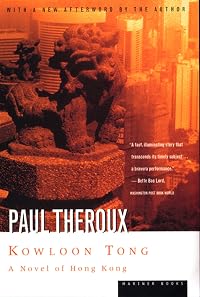
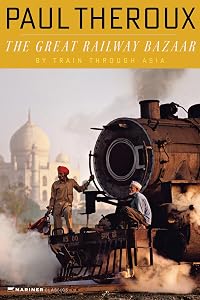
Paul Edward Theroux was born on April 10, 1941 in Medford, Massachusetts and is an acclaimed travel writer. After attending the University of Massachusetts Amherst he joined the Peace Corps and taught in Malawi from 1963 to 1965. He also taught in Uganda at Makerere University and in Singapore at the University of Singapore. Although Theroux has show more also written travel books in general and about various modes of transport, his name is synonymous with the literature of train travel. Theroux's 1975 best-seller, The Great Railway Bazaar, takes the reader through Asia, while his second book about train travel, The Old Patagonian Express (1979), describes his trip from Boston to the tip of South America. His third contribution to the railway travel genre, Riding the Iron Rooster: By Train Through China, won the Thomas Cook Prize for best literary travel book in 1989. His literary output also includes novels, books for children, short stories, articles, and poetry. His novels include Picture Palace (1978), which won the Whitbread Award and The Mosquito Coast (1981), which won the James Tait Black Memorial Prize. Theroux is a fellow of both the British Royal Society of Literature and the Royal Geographic Society. His title Lower River made The New York Times Best Seller List for 2012. Currently his 2015 book, Deep South , is a bestseller. (Bowker Author Biography) Paul Theroux is the distinguished author of numerous award-winning books, including "The Mosquito Coast," "Kowloon Tong," & "Half Moon Street." (Publisher Provided) show less
Awards and Honors
Distinctions
Common Knowledge
- Original publication date
- 2001
- Important places
- Hawai'i, USA; Honolulu, O'ahu, Hawai'i, USA
- First words
- Nothing to me is so erotic as a hotel room, and therefore so penetrated with life and death.
- Last words
- (Click to show. Warning: May contain spoilers.)I had proved what I had always suspected, that even the crookedest journey is the way home.
- Blurbers
- Preston, John; Cohu, Will; Kemp, Peter
Classifications
Statistics
- Members
- 668
- Popularity
- 43,221
- Reviews
- 16
- Rating
- (3.33)
- Languages
- 5 — Dutch, English, French, German, Spanish
- Media
- Paper, Audiobook, Ebook
- ISBNs
- 28
- UPCs
- 2
- ASINs
- 7