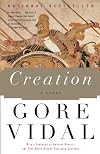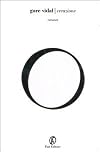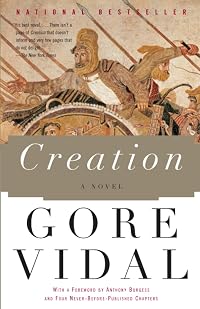
Creation: A Novel {restored}
by Gore Vidal
On This Page
Description
Once again the incomparable Gore Vidal interprets and animates history -- this time in a panoramic tour of the 5th century B.C. -- and embellishes it with his own ironic humor, brilliant insights, and piercing observations. We meet a vast array of historical figures in a staggering novel of love, war, philosophy, and adventure . . . "There isn't a page of CREATION that doesn't inform and very few pages that do not delight." -- John Leonard, The New York TimesTags
Recommendations
















Member Reviews
This novel purports to be the memoir of Cyrus Spitama, the fictional grandson of the prophet Zoroaster and Friend of Xerxes. Now 75 years old and blind, he dictates to his nephew Democritus (a historical figure; Vidal invents the family connection for the book’s purpose). Spitama serves as the mouthpiece for Vidal’s well-researched views, but the constellation of blind, elderly narrator and youthful scribe is also reminiscent of Vidal’s childhood relation to his grandfather, Thomas Pryor Gore, to whom the book is dedicated.
Three questions animated Spitama throughout his life: who created the universe (and why), why evil was created with good, and what happens to us after we die? In addition to hearing the last words of his show more grandfather, his service to the Persian king of kings permits him to listen to the varied answers from the remarkable figures who appeared in India, China, and Greece in the fifth century before the Common Era: Gotama (the Buddha), Master Li (teacher of the Way, Tao), Master K’ung (Confucius), and Anaxagoras. Even the young Socrates makes a comical cameo appearance. While these were all men, several remarkable women also appear, such as Aspasia, the courtesan companion of Pericles, or Atossa, Darius’s wife and Xerxes’s mother.
One theme throughout the book concerns the distortions in each philosopher’s teachings that accompanied their transcription into writing as the last eyewitnesses approached death.
Notable in their absence are the Hebrew prophets who also flourished in what Karen Armstrong called this time of the great transformation. Given the aversion to the Judaeo-Christian tradition that is prominent in many of Vidal’s other books, this silence contributes to an overall tolerant, if bemused, tone appropriate to the narrator. This man has seen much in his long, widely traveled life and declares, “in this old world, there is nothing new but ourselves.”
In reflecting on what he has heard from the teachers he has encountered, he concludes: “In the course of a long life I have been startled to find in other religions elements that I always took to be special revelations from the Wise Lord to Zoroaster. But now I realize that the Wise Lord is able to speak in all the languages of the world, and in all the languages of the world, his words are seldom understood or acted upon. But they do not vary. Because they are true.”
His caustic commentary on Athens and its politics, hauntingly reminiscent of late twentieth-century America, stands out against this backdrop. Vidal can also be counted on to differ from commonly accepted views, such as when Spitama says that Herodotus was wrong to say that Pythagoras adopted the teaching of metempsychosis (rebirth) from the Egyptians or when he offers his revisionist account of the battle of Marathon. Concerning haoma, the sacred drink of the Zoroastrians. Vidal shares the minority view that it was psychedelic.
Since this is a work of fiction, there is no index. But so many historical figures populate its pages that I found listing them as they appeared helpful. I read the second edition, which restored four chapters Vidal’s editor cut from the first because he feared the book was too long. It is long, but it held my interest throughout its 574 pages. Despite my enjoyment, I’m withholding the fifth star in my rating because I realize the subject matter and length might rule it out for some readers. show less
Three questions animated Spitama throughout his life: who created the universe (and why), why evil was created with good, and what happens to us after we die? In addition to hearing the last words of his show more grandfather, his service to the Persian king of kings permits him to listen to the varied answers from the remarkable figures who appeared in India, China, and Greece in the fifth century before the Common Era: Gotama (the Buddha), Master Li (teacher of the Way, Tao), Master K’ung (Confucius), and Anaxagoras. Even the young Socrates makes a comical cameo appearance. While these were all men, several remarkable women also appear, such as Aspasia, the courtesan companion of Pericles, or Atossa, Darius’s wife and Xerxes’s mother.
One theme throughout the book concerns the distortions in each philosopher’s teachings that accompanied their transcription into writing as the last eyewitnesses approached death.
Notable in their absence are the Hebrew prophets who also flourished in what Karen Armstrong called this time of the great transformation. Given the aversion to the Judaeo-Christian tradition that is prominent in many of Vidal’s other books, this silence contributes to an overall tolerant, if bemused, tone appropriate to the narrator. This man has seen much in his long, widely traveled life and declares, “in this old world, there is nothing new but ourselves.”
In reflecting on what he has heard from the teachers he has encountered, he concludes: “In the course of a long life I have been startled to find in other religions elements that I always took to be special revelations from the Wise Lord to Zoroaster. But now I realize that the Wise Lord is able to speak in all the languages of the world, and in all the languages of the world, his words are seldom understood or acted upon. But they do not vary. Because they are true.”
His caustic commentary on Athens and its politics, hauntingly reminiscent of late twentieth-century America, stands out against this backdrop. Vidal can also be counted on to differ from commonly accepted views, such as when Spitama says that Herodotus was wrong to say that Pythagoras adopted the teaching of metempsychosis (rebirth) from the Egyptians or when he offers his revisionist account of the battle of Marathon. Concerning haoma, the sacred drink of the Zoroastrians. Vidal shares the minority view that it was psychedelic.
Since this is a work of fiction, there is no index. But so many historical figures populate its pages that I found listing them as they appeared helpful. I read the second edition, which restored four chapters Vidal’s editor cut from the first because he feared the book was too long. It is long, but it held my interest throughout its 574 pages. Despite my enjoyment, I’m withholding the fifth star in my rating because I realize the subject matter and length might rule it out for some readers. show less
A wide-ranging tour of the cultures, religions, philosophies and major figures of the 5th century B.C. told in a often humorous, even snarky, fashion by a skilled author (Gore Vidal) who obviously did his homework. The fictional narrator is Cyrus Spitama, the Persian ambassador to Athens sometime around 445 B.C. From his unique vantage point, he observes and comments on Greek personages (like Pericles and Socrates), politics, and culture. If you have not read Histories by Herodotus, you may not see what Gore Vidal is doing here - the book is a clever, subtle satire of Herodotus, replete with all the gossip, digressions, descriptive style found in the "Histories." Only instead of being told by a Greek, it's told by a Persian, the Greeks' show more arch-enemy during this period of history. And whereas Herodotus traveled to Egypt and Central Asia, Cyrus Spitama travels to India and Cathay. There he meets and converses with Buddha, Lao Tzu and Confucius so we get a dose of eastern philosophy as well. show less
A bildungsroman in the sense Umberto Eco was smeared by. At times no more than fictionalized accounts of historical people and events as if ripped from a history book on the era. A book like Name of the Rose managed to sneak the educational snippets in under the radar of the central murder mystery in a monastery setting. Creation doesn't have a comparative core of plot and character driving it forward. It's not uninteresting or a failure as a result, just less than what it might have been. It also suffers a bit from having the learned men of the era come across as 20th century transplants, where a book like Baudolino keeps more of the to us alien reasoning of the foreign era alive.
Still, probably the best and most erudite novel of the show more ancient era I've come across. show less
Still, probably the best and most erudite novel of the show more ancient era I've come across. show less
The late Gore Vidal had a penchant for upending history, with his retellings of Burr, Lincoln, the Emperor Julian, and Roosevelt. Here, he has an irresistible setting - the memoirs and recollections of a Persian diplomat who is fed up with listening to Herodotus boast about an imagined victory (barbarians!), and retells his life to his son. He has met, and hobnobbed with, Zoroaster, Anaximander, Pericles, Socrates, the Buddha, Confucius, Xerxes, Darius, and Lao Tsi.
All of these figures (with the exception of Zoroaster) did live within roughly the same time frame, the 5th century b.c. The setting alone, and the luxurious descriptions thereof, are a traveler's and historian's dream.
Of course, our narrator is a diplomat after all. So in show more between the descriptions are some universal truths about politics in human nature - that is, it's a whole bunch of assholes trying to fuck each other.
In contrast to this, the narrator makes a point to search for Truth. He is a dualist, believing in the struggle between good and evil, and seeks to find Truth wherever he goes. This his earnest questions of prophets and sages abroad.
The history and setting alone make this worth a good look. The political descriptions are especially tedious (!) but the rest is worth reading. show less
All of these figures (with the exception of Zoroaster) did live within roughly the same time frame, the 5th century b.c. The setting alone, and the luxurious descriptions thereof, are a traveler's and historian's dream.
Of course, our narrator is a diplomat after all. So in show more between the descriptions are some universal truths about politics in human nature - that is, it's a whole bunch of assholes trying to fuck each other.
In contrast to this, the narrator makes a point to search for Truth. He is a dualist, believing in the struggle between good and evil, and seeks to find Truth wherever he goes. This his earnest questions of prophets and sages abroad.
The history and setting alone make this worth a good look. The political descriptions are especially tedious (!) but the rest is worth reading. show less
"Creation" is a novel that goes beyond its historical setting and explores the human condition, the legacy of ancient civilizations, and the power of ideas to shape history. The book delves into the intellectual currents of the time, including Zoroastrianism, Buddhism, Taoism, and Confucianism, offering a fascinating insight into the development of these philosophies. The book is lengthy, and the historical and philosophical discussions can sometimes be dense. The plot takes a backseat to the rich tapestry of conversations, which can feel slow for readers seeking a fast-paced narrative. Still, through characters such as Xerxes, Aspasia, and Confucius, Vidal explores themes of power, love, and the quest for truth with subtlety and depth. show more Review AI-assisted. show less
This is one of the most amazing pieces of work I have ever read; Vidal was a master at his craft, no doubt about it. The detailed history is written in a most engaging manner, not dull and dry but full of palace intrigue and fighting wars and interviews with characters (historical people) from all sorts of walks of life. I learned a ton, things that would otherwise most assuredly never be retained in my mind, and enjoyed every moment of it. Not to be missed.
Interesting book, life of the fictional Cyrus Spitama, grandson of Zoroaster, the religious teacher, as told to his grandson. Set in Persia right before, during and after the Greco-Persian War. Cyrus gives a completely different version of that war than we're used to, describes his boyhood years growing up with Xerxes, who later becomes Great King. Then Cyrus is appointed ambassador to several countries, most notably India and Cathay. Darius, at that time king, wants to invade. Much of the book recounts Cyrus' travels, customs of people he meets and always the religious Cyrus is searching for alternate theories of Creation and the problem of evil. We get a quick overview of Eastern religions, of course, through Cyrus' eyes, always show more comparing with Zoroastrianism. Cyrus meets such figures as Socrates, Buddha, Confucius, famous Greeks of that period. Cyrus finally dies, but his grandson, after many years of travel and living in many countries, finally figures out what he feels must be the answer to Cyrus' questions. The book was quite witty, sometimes even 'snarky'. The politics bored me. show less
Members
- Recently Added By
Lists

1001 Books You Must Read Before You Die
1,448 works; 1,134 members

Best Historical Fiction
620 works; 257 members

Top Five Books of 2013
1,562 works; 715 members

Best historical fiction set in the ancient world
126 works; 40 members

Best Books About Journeys and Quests
117 works; 30 members

Historical Fiction
889 works; 91 members

20th Century Literature
1,161 works; 55 members

Best of American Literature
146 works; 9 members

Anthony Burgess 99 Post War Novels
99 works; 7 members

once upon a time ~ ancient world
46 works; 7 members
Author Information

168+ Works 31,207 Members
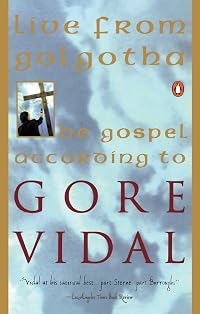
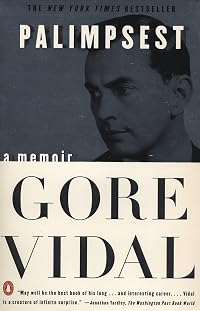
Gore Vidal was born Eugene Luther Gore Vidal Jr. on October 3, 1925 at the U.S. Military Academy at West Point, New York. He did not go to college but attended St. Albans School in Washington and graduated from Phillips Exeter Academy in New Hampshire in 1943. He enlisted in the Army, where he became first mate on a freight supply ship in the show more Aleutian Islands. His first novel, Williwaw, was published in 1946 when he was twenty-one years old and working as an associate editor at the publishing company E. P. Dutton. The City and the Pillar was about a handsome, athletic young Virginia man who gradually discovers that he is homosexual, which caused controversy in the publishing world. The New York Times refused to advertise the novel and gave a negative review of it and future novels. He had such trouble getting subsequent novels reviewed that he turned to writing mysteries under the pseudonym Edgar Box and then gave up novel-writing altogether for a time. Once he moved to Hollywood, he wrote television dramas, screenplays, and plays. His films included I Accuse, Suddenly Last Summer with Tennessee Williams, Is Paris Burning? with Francis Ford Coppola, and Ben-Hur. His most successful play was The Best Man, which he also adapted into a film. He started writing novels again in the 1960's including Julian, Washington, D.C., Myra Breckenridge, Burr, Myron, 1876, Lincoln, Hollywood, Live From Golgotha: The Gospel According to Gore Vidal, and The Golden Age. He also published two collections of essays entitled The Second American Revolution, which won the National Book Critics Circle Award for criticism in 1982 and United States: Essays 1952-1992. In 2009, he received the National Book Awards lifetime achievement award. He died from complications of pneumonia on July 31, 2012 at the age of 86. (Bowker Author Biography) show less
Work Relationships
Contains
Common Knowledge
- Canonical title
- Creation: A Novel {restored}
- Original publication date
- 2002-08-27
Classifications
Statistics
- Members
- 882
- Popularity
- 30,587
- Reviews
- 17
- Rating
- (4.02)
- Languages
- 6 — English, French, Italian, Portuguese, Spanish, Turkish
- Media
- Paper, Audiobook, Ebook
- ISBNs
- 15
- ASINs
- 2