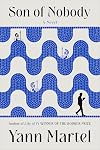
Son of Nobody
by Yann Martel
On This Page
Description
From the author of the international bestseller Life of Pi, a brilliant retelling of the Trojan War from the perspective of two commoners: an ancient soldier and a modern scholar.Tags
Recommendations












Member Reviews
Yann Martel gives us an ambitious and intellectually layered novel that seeks to link antiquity to modernity, scholarship to grief, and myth to lived experience. A dual narrative lies at its core. One arm is a reconstructed ancient text tied to the Trojan War tradition. The other is a contemporary commentary by an obscure Classics graduate student whose personal life is quietly unraveling while his research is beginning to blossom.
One of the novel’s most compelling strengths is its thematic scope. Martel probes the relationship between past and present with a persistent skepticism toward accepted narratives, particularly those surrounding “The Iliad.” He suggests that foundational myths may be less historical truth than carefully show more shaped stories crafted for political, cultural, or even religious motives. Martel raises questions that extend beyond academics into everyday life by inviting his readers to consider how ancient storytelling traditions may underpin modern systems of belief and authority.
Equally effective is the novel’s exploration of power. This theme operates on at least two levels. Within the ancient world, war is a vehicle for dominance. Whereas, within modern academics, hierarchies exist between established scholars and aspiring students. Each echoes a struggle for control and recognition. The protagonist’s own ambitions, and the toll they take on his personal life, provide a more intimate counterpoint. His prioritization of intellectual achievement over family life ultimately intersects with the novel’s meditation on grief, lending emotional weight to what might otherwise feel like a purely intellectual exercise.
Notwithstanding its many clear strengths, the novel’s structure is likely to divide readers. Its fragmented narrative clearly mirrors the papyrus scraps the protagonist is painstakingly reconstructing. Despite serving as a clever formal device, reinforcing the themes of incompleteness and interpretive uncertainty, this disjointed structure hinders narrative momentum. Readers accustomed to a more traditional arc, with clearly evolving characters and a steady buildup of tension, may find the experience here to be rambling and frustrating. Also, the protagonist’s extended scholarly musings, while thematically relevant, sometimes can feel arbitrary, dense, and risk overshadowing the emotional core of the story.
Nevertheless, for readers willing to engage with its unconventional form, “Son of Nobody” does offer considerable rewards. Martel’s prose is thoughtful and often evocative, particularly when juxtaposing the stark realities of ancient warfare with the quieter devastations of modern life. The parallels between reconstructing a lost text and attempting to make sense of personal loss are especially resonant, suggesting that both history and grief are processes of piecing together fragments that never fully cohere.
In the final analysis, this is a novel that prioritizes ideas over immediacy. Its ambition and intellectual rigor are undeniable, even if its execution occasionally sacrifices accessibility. For some, its fragmented structure and reflective tone will feel like obstacles; for others, they will be integral to its meaning. Either way, Martel’s challenging and thought-provoking novel invites careful reading and sustained reflection. show less
One of the novel’s most compelling strengths is its thematic scope. Martel probes the relationship between past and present with a persistent skepticism toward accepted narratives, particularly those surrounding “The Iliad.” He suggests that foundational myths may be less historical truth than carefully show more shaped stories crafted for political, cultural, or even religious motives. Martel raises questions that extend beyond academics into everyday life by inviting his readers to consider how ancient storytelling traditions may underpin modern systems of belief and authority.
Equally effective is the novel’s exploration of power. This theme operates on at least two levels. Within the ancient world, war is a vehicle for dominance. Whereas, within modern academics, hierarchies exist between established scholars and aspiring students. Each echoes a struggle for control and recognition. The protagonist’s own ambitions, and the toll they take on his personal life, provide a more intimate counterpoint. His prioritization of intellectual achievement over family life ultimately intersects with the novel’s meditation on grief, lending emotional weight to what might otherwise feel like a purely intellectual exercise.
Notwithstanding its many clear strengths, the novel’s structure is likely to divide readers. Its fragmented narrative clearly mirrors the papyrus scraps the protagonist is painstakingly reconstructing. Despite serving as a clever formal device, reinforcing the themes of incompleteness and interpretive uncertainty, this disjointed structure hinders narrative momentum. Readers accustomed to a more traditional arc, with clearly evolving characters and a steady buildup of tension, may find the experience here to be rambling and frustrating. Also, the protagonist’s extended scholarly musings, while thematically relevant, sometimes can feel arbitrary, dense, and risk overshadowing the emotional core of the story.
Nevertheless, for readers willing to engage with its unconventional form, “Son of Nobody” does offer considerable rewards. Martel’s prose is thoughtful and often evocative, particularly when juxtaposing the stark realities of ancient warfare with the quieter devastations of modern life. The parallels between reconstructing a lost text and attempting to make sense of personal loss are especially resonant, suggesting that both history and grief are processes of piecing together fragments that never fully cohere.
In the final analysis, this is a novel that prioritizes ideas over immediacy. Its ambition and intellectual rigor are undeniable, even if its execution occasionally sacrifices accessibility. For some, its fragmented structure and reflective tone will feel like obstacles; for others, they will be integral to its meaning. Either way, Martel’s challenging and thought-provoking novel invites careful reading and sustained reflection. show less
April 8, 2026 Update I've added several paraphrased or remembered Qs&As from last night's Yann Martel interview at the Toronto Reference Library as an Addendum below.
A Workingman's Iliad 🍁
A review of the Knopf Canada audiobook ARC provided by NetGalley for the Knopf Canada hardcover/eBook/audiobook published March 31, 2026.
I'm a bit of an Iliad nut, so even with a last minute approval for this audiobook ARC edition I had no fear about managing Son of Nobody in only a few days before NetGalley reviews had to be archived.
I don't pretend to being a Homer or Iliad scholar. Most of my early reads were from pre-GR and pre-reviewing days. So I've read and/or listened to the Rieu, Fagles and Mitchell translations/adaptations and still have show more Watson waiting in the wings (in reserve for the next LBC I think, but now I'm tempted to start it earlier).
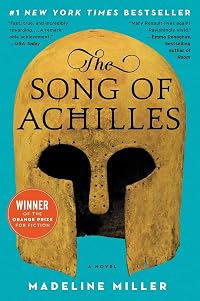
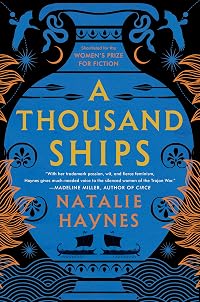
I have been equally, or perhaps even more fascinated, by the other readings and adaptations such as Christopher Logue's War Music, Madeline Miller's The Song of Achilles, Pat Barker's The Silence of the Girls, Natalie Haynes' A Thousand Ships, Alice Oswald's Memorial, David Malouf's Ransom, etc.
There seem to be endless possibilities in translation and adaptation. As an anecdote quoted by Alberto Manguel says, a Colombian hill village refused to return their travelling library copy of The Iliad because:
Newcomers should have no fear, Yann Martel is a steady hand in guiding you through Son of Nobody. You don't have to stress about whether or not you've read a Homer version or not. Along the way Martel points out where his fictional epic The Psoad differs from Homer's The Iliad throughout.
In Son of Nobody, Martel becomes Harlow Donne, a fictional discoverer, translator and narrator of a newly discovered Ancient Greek poetry epic which he calls The Psoad after its main character Psoas, the titular Son of Nobody, who is fighting on the side of the Greeks while they besiege Troy in their 10-year grinding stalemate of war. Donne has a scholarship grant to work in Oxford University, and he pieces together the lost epic from pottery and papyrus fragments from the museums there.
Son of Nobody is presented in an unorthodox style. In the audiobook, the translated poem The Psoad is narrated in chapters by one narrator in serious epic poetry voice. That is countered with Footnotes voiced by the second narrator who is the voice of Harlow Donne. The footnotes are not just comments on the text. They tell the background story of Donne's family, his wife Gail and daughter Helen, his dealings with his Oxford mentor and his research and observations on Iliad and other Trojan related epics, etc. You will note the parallels of Donne's abandoning his family back in Canada to go off on a foreign expedition i.e. such as Odysseus leaving Penelope in Homer's The Odyssey, Agamemnon betraying his family in order to lead the invasion, etc.
What is especially terrific about Martel's Son of Nobody is that the focus of The Psoad is on a common man, a son of nobody, a cheesemaker in his earlier Greek life, set into the Homeric world that otherwise mostly only spoke of Kings, Princes, Heroes and Gods. Many of the regular Iliad characters still appear, but often in cameo roles only. The main figure on the Trojan side is not even Hector, but an entirely different son of Priam.
Martel takes the opportunity to explode the myths around the Trojan War. The Iliad can be interpreted as a propaganda piece manipulated by the Achaeans (i.e. Agamemnon and Menelaus) to justify their campaign of looting a rich neighbouring kingdom by an invented story of the abduction of Helen of Troy. There is no honour or glory behind it at all. It is blood and sacrifice by the foot soldiers in the trenches to satisfy the greed of the rulers.
The even greater irony or tragedy to this is that even though Martel worked on this book for the past 10 years it has been published exactly at a time when a modern day "mad king" is lying and foaming at the mouth in order to justify his own reckless overseas campaign of war crimes in the quest for loot (whether through oil or manipulation of stock market / currency / commodities trading and betting).
This was a 5-star experience for all the above reasons and the performance of the narrators enhanced it even further. I look forward to reading this in print.
My thanks to Knopf Canada and NetGalley for the opportunity to listen to this ARC copy of the audiobook, in exchange for which I provide this honest review.
p.s. I'm going to a talk by Yann Martel tomorrow at the Toronto Reference Library, so some further notes may be added to this review as an addendum afterwards.
Addendum
These are as best remembered but with a lot of paraphrasing. Very roughly in order. The interview was one hour. I have added links to the books when mentioned and the dates of publication which Martel did not actually say.
Q: Did Stephen Harper ever answer your letters and book gifts from [book:101 Letters to a Prime Minister: The Complete Letters to Stephen Harper|11843247] (2011)? A: No, never.
Q: Would you send books to Mark Carney? A: I think Carney is already a more enlightened individual.
Q: Why is Son of Nobody structured like it is? A: The style of the book wasn't inspired by Nabokov's [book:Pale Fire|7805] (1962) (also a poem with lots of footnotes), which is what most people think, but more from reading [book:The Divine Comedy: Inferno - Purgatorio - Paradiso|6656] (1320) where the extended footnotes are needed to explain who are all these people that Dante is talking about.
Q: Have you read a lot of Homer? A: I had never read Homer until my wife suggested that I read the Stephen Mitchell translation [book:The Iliad: The Stephen Mitchell Translation|169945735] (2011). Mitchell's version is leaner as he cuts out a lot of the endless repetitions of "swift-footed Achilles" and "horse-taming Hector," which were needed in the Ancient Greek for the metre, but which get really tiresome in English.
I wrote Son of Nobody on the assumption that the reader had not read Homer's The Iliad, so I tried to provide enough background to it.
Q: Has success changed you as a writer? A: Not at all, except that it has allowed me to provide for my family. Each book is still a journey where I seek to answer a question.
Q (Audience): From what book did you learn the most from asking a question? A: My first book [book:Self|3311] (1996) and its exploration of gender fluidity.
Q: Why does [book:Life of Pi|4214] (2001) take place over 227 days? A: I chose it because 227 is a prime number, divisible only by itself and 1. An audience member once asked me that as well and then to my surprise said that 22 divided by 7 is Pi (i.e. 3.14...) , so I learn things about my books from my audience that I never even thought of.
Lightning Round:
Q: What were your favourite jobs before you became a writer? A: A tree planter in Northern Ontario, then a dishwasher, and was also a security guard at the Canadian Embassy in Paris, an easy job since most people love us 🍁.
Q: What is the most non-writerly thing about you? A: Everything, I am a slow, slothful kind of writer and not anything like the image I have of how a writer should be.
Q: Which books have you re-read many times? A: Kafka: [book:The Metamorphosis|17986414] (1915), Hemingway: [book:The Old Man and the Sea|2165] (1952).
Q: What famous book have you never read? A: I read a lot of long books between writing. The next one will be [book:Middlemarch|19089] (1872), which was a toss-up with [book:Don Quixote|3836] (1615).
Q: On a desert island, what food would you take if you could only have one meal choice? A: First answer "tacos," because of fond memories of eating them with my parents / but then on second thought "sushi."
Q: On a desert island, what film/vhs/dvd/bluray would you take if you could only have one? Answer: "How to Build a Raft."
Q: (Fumbled): Matt Damon was in Good Will Hunting directed by Ang Lee who directed Life of Pi and now Matt Damon will be in the new Christopher Nolan film The Odyssey, so are you best friends with Matt Damon?
Audience: Good Will Hunting was directed by Gus Van Sant!
Interviewer: Oh I guess I messed up my final question. show less
A Workingman's Iliad 🍁
A review of the Knopf Canada audiobook ARC provided by NetGalley for the Knopf Canada hardcover/eBook/audiobook published March 31, 2026.
I'm a bit of an Iliad nut, so even with a last minute approval for this audiobook ARC edition I had no fear about managing Son of Nobody in only a few days before NetGalley reviews had to be archived.
I don't pretend to being a Homer or Iliad scholar. Most of my early reads were from pre-GR and pre-reviewing days. So I've read and/or listened to the Rieu, Fagles and Mitchell translations/adaptations and still have show more Watson waiting in the wings (in reserve for the next LBC I think, but now I'm tempted to start it earlier).
I have been equally, or perhaps even more fascinated, by the other readings and adaptations such as Christopher Logue's War Music, Madeline Miller's The Song of Achilles, Pat Barker's The Silence of the Girls, Natalie Haynes' A Thousand Ships, Alice Oswald's Memorial, David Malouf's Ransom, etc.
There seem to be endless possibilities in translation and adaptation. As an anecdote quoted by Alberto Manguel says, a Colombian hill village refused to return their travelling library copy of The Iliad because:
They explained that Homer’s story reflected their own: it told of a war-torn country in which mad gods mix with men and women who never know exactly what the fighting is about, or when they will be happy, or why they will be killed.
Newcomers should have no fear, Yann Martel is a steady hand in guiding you through Son of Nobody. You don't have to stress about whether or not you've read a Homer version or not. Along the way Martel points out where his fictional epic The Psoad differs from Homer's The Iliad throughout.
In Son of Nobody, Martel becomes Harlow Donne, a fictional discoverer, translator and narrator of a newly discovered Ancient Greek poetry epic which he calls The Psoad after its main character Psoas, the titular Son of Nobody, who is fighting on the side of the Greeks while they besiege Troy in their 10-year grinding stalemate of war. Donne has a scholarship grant to work in Oxford University, and he pieces together the lost epic from pottery and papyrus fragments from the museums there.
Son of Nobody is presented in an unorthodox style. In the audiobook, the translated poem The Psoad is narrated in chapters by one narrator in serious epic poetry voice. That is countered with Footnotes voiced by the second narrator who is the voice of Harlow Donne. The footnotes are not just comments on the text. They tell the background story of Donne's family, his wife Gail and daughter Helen, his dealings with his Oxford mentor and his research and observations on Iliad and other Trojan related epics, etc. You will note the parallels of Donne's abandoning his family back in Canada to go off on a foreign expedition i.e. such as Odysseus leaving Penelope in Homer's The Odyssey, Agamemnon betraying his family in order to lead the invasion, etc.
What is especially terrific about Martel's Son of Nobody is that the focus of The Psoad is on a common man, a son of nobody, a cheesemaker in his earlier Greek life, set into the Homeric world that otherwise mostly only spoke of Kings, Princes, Heroes and Gods. Many of the regular Iliad characters still appear, but often in cameo roles only. The main figure on the Trojan side is not even Hector, but an entirely different son of Priam.
Martel takes the opportunity to explode the myths around the Trojan War. The Iliad can be interpreted as a propaganda piece manipulated by the Achaeans (i.e. Agamemnon and Menelaus) to justify their campaign of looting a rich neighbouring kingdom by an invented story of the abduction of Helen of Troy. There is no honour or glory behind it at all. It is blood and sacrifice by the foot soldiers in the trenches to satisfy the greed of the rulers.
The even greater irony or tragedy to this is that even though Martel worked on this book for the past 10 years it has been published exactly at a time when a modern day "mad king" is lying and foaming at the mouth in order to justify his own reckless overseas campaign of war crimes in the quest for loot (whether through oil or manipulation of stock market / currency / commodities trading and betting).
This was a 5-star experience for all the above reasons and the performance of the narrators enhanced it even further. I look forward to reading this in print.
My thanks to Knopf Canada and NetGalley for the opportunity to listen to this ARC copy of the audiobook, in exchange for which I provide this honest review.
p.s. I'm going to a talk by Yann Martel tomorrow at the Toronto Reference Library, so some further notes may be added to this review as an addendum afterwards.
Addendum
These are as best remembered but with a lot of paraphrasing. Very roughly in order. The interview was one hour. I have added links to the books when mentioned and the dates of publication which Martel did not actually say.
Q: Did Stephen Harper ever answer your letters and book gifts from [book:101 Letters to a Prime Minister: The Complete Letters to Stephen Harper|11843247] (2011)? A: No, never.
Q: Would you send books to Mark Carney? A: I think Carney is already a more enlightened individual.
Q: Why is Son of Nobody structured like it is? A: The style of the book wasn't inspired by Nabokov's [book:Pale Fire|7805] (1962) (also a poem with lots of footnotes), which is what most people think, but more from reading [book:The Divine Comedy: Inferno - Purgatorio - Paradiso|6656] (1320) where the extended footnotes are needed to explain who are all these people that Dante is talking about.
Q: Have you read a lot of Homer? A: I had never read Homer until my wife suggested that I read the Stephen Mitchell translation [book:The Iliad: The Stephen Mitchell Translation|169945735] (2011). Mitchell's version is leaner as he cuts out a lot of the endless repetitions of "swift-footed Achilles" and "horse-taming Hector," which were needed in the Ancient Greek for the metre, but which get really tiresome in English.
I wrote Son of Nobody on the assumption that the reader had not read Homer's The Iliad, so I tried to provide enough background to it.
Q: Has success changed you as a writer? A: Not at all, except that it has allowed me to provide for my family. Each book is still a journey where I seek to answer a question.
Q (Audience): From what book did you learn the most from asking a question? A: My first book [book:Self|3311] (1996) and its exploration of gender fluidity.
Q: Why does [book:Life of Pi|4214] (2001) take place over 227 days? A: I chose it because 227 is a prime number, divisible only by itself and 1. An audience member once asked me that as well and then to my surprise said that 22 divided by 7 is Pi (i.e. 3.14...) , so I learn things about my books from my audience that I never even thought of.
Lightning Round:
Q: What were your favourite jobs before you became a writer? A: A tree planter in Northern Ontario, then a dishwasher, and was also a security guard at the Canadian Embassy in Paris, an easy job since most people love us 🍁.
Q: What is the most non-writerly thing about you? A: Everything, I am a slow, slothful kind of writer and not anything like the image I have of how a writer should be.
Q: Which books have you re-read many times? A: Kafka: [book:The Metamorphosis|17986414] (1915), Hemingway: [book:The Old Man and the Sea|2165] (1952).
Q: What famous book have you never read? A: I read a lot of long books between writing. The next one will be [book:Middlemarch|19089] (1872), which was a toss-up with [book:Don Quixote|3836] (1615).
Q: On a desert island, what food would you take if you could only have one meal choice? A: First answer "tacos," because of fond memories of eating them with my parents / but then on second thought "sushi."
Q: On a desert island, what film/vhs/dvd/bluray would you take if you could only have one? Answer: "How to Build a Raft."
Q: (Fumbled): Matt Damon was in Good Will Hunting directed by Ang Lee who directed Life of Pi and now Matt Damon will be in the new Christopher Nolan film The Odyssey, so are you best friends with Matt Damon?
Audience: Good Will Hunting was directed by Gus Van Sant!
Interviewer: Oh I guess I messed up my final question. show less
This is a very interesting read from the author best known for his Life of Pi.
Harlow Donne, a Canadian doctoral candidate studying Ancient Greek literature, leaves his wife Gail and his daughter Helen for a study year at Oxford University. From scraps of papyrus, he pieces together fragments of an unknown epic poem that he entitles The Psoad. This poem, about the Trojan War, differs in some ways from the version in The Iliad. What is most interesting is that Donne’s discovery presents the Trojan War from the point of view of Psoas, an ordinary foot soldier.
The novel has an interesting structure. Donne’s translation of this imagined Greek text is accompanied by commentary. Some of the annotations are academic in nature, clarifying, show more analyzing and interpreting the text. For instance, Donne notes differences between The Psoad and The Iliad and suggests parallels between The Iliad and the Bible as well as similarities between Psoas and Jesus. But there are also personal musings on his life with Gail and Helen.
Donne is not an especially likeable character. There is no doubt that he loves Helen, but he is academically ambitious and puts his studies before his family. After a tragedy, the extent of his self-centredness is emphasized. I noted that his academic notations tend be be precise and detailed whereas his personal reflections are much more general. There are several explanations for this but one is definitely that his focus is his scholarship; he himself admits that his “mind, strapped to the mast of a ship, was in the thrall of a Siren’s song.”
A major theme is that “the past is never done with, that always there are parallels and returns and repetitions, always the song continues.” Donne argues that The Iliad, Gilgamesh, and the Bible are foundational stories with few verifiable facts: “distant, immediate, unverifiable, compelling, subjective.” He also mentions “a commonality between the story of Troy and the story of Jesus: the acquiescent sacrifice of an offspring without which neither story can proceed. In both, the future is begot by killing the future.”
This theme is further explored with suggestions of parallels between Psoas and Donne. Both leave their countries and families on a quest, both have difficulties adjusting to their new environments, both experience a madness of sorts, and both are visited by tragedy. I did find that the parallels are sometimes spotlighted in a heavy-handed fashion. For instance, Psoas’ conversation with Hades obviously points towards a major event in Donne’s life. Obviously, the book highlights universal human experiences and emotions. Both Psoas and Donne experience homesickness, love, loss, anger, regret, and grief. Both learn about the sacrifices and cost of ambition.
Another theme is ordinary people are not really different than those of high status. Commoners are also capable of strength and courage. The Iliad focuses on the feats of heroes but Donne argues that The Psoad is a “radical call for egalitarianism” because it shows Psoas, often described as the son of nobody, as also capable of acts that are deemed heroic. Both Donne, a nobody from an unknown university, and Psoas dare to challenge those in authority. Even Jesus was “an illiterate, impoverished tradesman from an oppressed minority.” And, on the other hand, regardless of status, people can be “hiding places for monsters.”
This is a thought-provoking novel that I really enjoyed. It is unique and creative in its exploration of how an ancient story can resonate in the present.
Note: I received an eARC from the publisher via NetGalley.
Please check out my reader's blog (https://schatjesshelves.blogspot.com/). show less
Harlow Donne, a Canadian doctoral candidate studying Ancient Greek literature, leaves his wife Gail and his daughter Helen for a study year at Oxford University. From scraps of papyrus, he pieces together fragments of an unknown epic poem that he entitles The Psoad. This poem, about the Trojan War, differs in some ways from the version in The Iliad. What is most interesting is that Donne’s discovery presents the Trojan War from the point of view of Psoas, an ordinary foot soldier.
The novel has an interesting structure. Donne’s translation of this imagined Greek text is accompanied by commentary. Some of the annotations are academic in nature, clarifying, show more analyzing and interpreting the text. For instance, Donne notes differences between The Psoad and The Iliad and suggests parallels between The Iliad and the Bible as well as similarities between Psoas and Jesus. But there are also personal musings on his life with Gail and Helen.
Donne is not an especially likeable character. There is no doubt that he loves Helen, but he is academically ambitious and puts his studies before his family. After a tragedy, the extent of his self-centredness is emphasized. I noted that his academic notations tend be be precise and detailed whereas his personal reflections are much more general. There are several explanations for this but one is definitely that his focus is his scholarship; he himself admits that his “mind, strapped to the mast of a ship, was in the thrall of a Siren’s song.”
A major theme is that “the past is never done with, that always there are parallels and returns and repetitions, always the song continues.” Donne argues that The Iliad, Gilgamesh, and the Bible are foundational stories with few verifiable facts: “distant, immediate, unverifiable, compelling, subjective.” He also mentions “a commonality between the story of Troy and the story of Jesus: the acquiescent sacrifice of an offspring without which neither story can proceed. In both, the future is begot by killing the future.”
This theme is further explored with suggestions of parallels between Psoas and Donne. Both leave their countries and families on a quest, both have difficulties adjusting to their new environments, both experience a madness of sorts, and both are visited by tragedy. I did find that the parallels are sometimes spotlighted in a heavy-handed fashion. For instance, Psoas’ conversation with Hades obviously points towards a major event in Donne’s life. Obviously, the book highlights universal human experiences and emotions. Both Psoas and Donne experience homesickness, love, loss, anger, regret, and grief. Both learn about the sacrifices and cost of ambition.
Another theme is ordinary people are not really different than those of high status. Commoners are also capable of strength and courage. The Iliad focuses on the feats of heroes but Donne argues that The Psoad is a “radical call for egalitarianism” because it shows Psoas, often described as the son of nobody, as also capable of acts that are deemed heroic. Both Donne, a nobody from an unknown university, and Psoas dare to challenge those in authority. Even Jesus was “an illiterate, impoverished tradesman from an oppressed minority.” And, on the other hand, regardless of status, people can be “hiding places for monsters.”
This is a thought-provoking novel that I really enjoyed. It is unique and creative in its exploration of how an ancient story can resonate in the present.
Note: I received an eARC from the publisher via NetGalley.
Please check out my reader's blog (https://schatjesshelves.blogspot.com/). show less
I love the structure of this novel and how Martel builds tension. I kept forgetting that the translation in the novel isn't an actual Ancient Greek tale. The ending doesn't quite deliver on the promise of the rest of the novel, but the book is still quite enjoyable.
Ratings
Members
- Recently Added By
Lists

LoanStars | Adult List: March 2026
10 works; 1 member

The LonesomeReader Book Club
36 works; 1 member

Globe and Mail | Canadian Fiction: April 11, 2026
10 works; 1 member
Globe and Mail | Canadian Fiction: April 18, 2026
10 works; 1 member

Globe and Mail | Canadian Fiction: April 25, 2026
10 works; 1 member
Author Information

12+ Works 52,813 Members
Yann Martel was born in Salamanca, Spain on June 25, 1963. After studying philosophy at Trent University in Peterborough, Ontario, he worked at odd jobs and travelled widely before turning to writing. His works include Seven Stories, What Is Stephen Harper Reading?, and Beatrice and Virgil. He was awarded the Journey Prize for the title story in show more The Facts Behind the Helsinki Roccamatios. His second novel, Life of Pi, won numerous awards including the 2002 Man Booker. He continued to make the bestseller list in 2018 with his title, The High Mountains of Portugal. (Bowker Author Biography) show less
Awards and Honors
Distinctions
The Guardian Book of the Day (2026-04-20)
Common Knowledge
- Canonical title
- Son of Nobody
Classifications
Statistics
- Members
- 155
- Popularity
- 210,801
- Reviews
- 4
- Rating
- (3.66)
- Languages
- English
- Media
- Paper, Audiobook, Ebook
- ISBNs
- 7
- ASINs
- 2