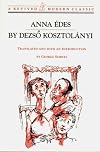
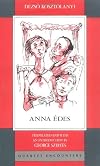
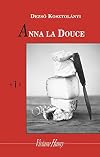
Anna la dulce
by Dezső Kosztolányi
On This Page
Description
A skillful portrayal of the cruelty and emptiness of bourgeois life,Anna Ã%des was first published in 1926 and enthusiastically received by the intellectual coffee-house society through which it circulated. The novel was later acknowledged by authors such as Thomas Mann as a model of language and form, and in turn established Dezso Kosztolanyi as one of the most significant writers of Eastern European fiction. Anna is the hard-working and long-suffering heroine, the unhappy maid destroyed show more by her pitiless employers. Her tragic relationship with them is played out against the political turbulence in Budapest following the First World War. Yet her endurance and revenge are depicted with keen psychological as well as historical insight, becoming, in the words of the translator, "not merely an argument about social conditions but raised to genuine tragedy." show lessTags
Recommendations
































Member Recommendations

by CFons
Member Reviews
Here's what I wrote in 2011 about this read: "Third by this author in two months; think I'm catching on now. Like, Kornel Esti stories reflects Hungary both pre and post WWI; but back to Anna . . . Hungarian bourgeoise trying to cope in a rapidly changing, post WWI state and culture drive a servant to murder. We don't really understand Anna too well (who saw that murder coming?!), but society was completely quick to convict her in the court of public opinion and then formally jail her. The doctor saw her as a fellow human and the crime of her employers to de-humanize her. And then there's the story of the worthless nehpew Janczi (of course did see his abuse of Anna coming from the long way off!)"
I read Skylark several years ago and came away largely unimpressed. I thought that except for the parents (the focus of the book), all of the characters were simply “a type [rather than an individual]. They all do what you would expect, say what you would imagine, react as you would guess. Indeed, except for the little "twist" at the end, which isn't even that much of a "twist," I simply didn't find much to the book.” I have somewhat the same criticism here, though I also think this is a much more successful work. The story is simple: the exploitation of a country girl—the title character—who comes to Budapest and ends up working for an upper class family. Anna is a superb servant/maid and is treated poorly; not badly, but show more poorly. The wife’s playboy nephew has a fling with her and too much of the book is stereotyped treatments of all of the characters, including all the major ones as well as most minor ones. Arguably, even Anna herself isn’t really a well-developed character. The feel for place and time is quite good but the end is predictable and I find, as I said of Skylark, there simply isn’t much to the book. show less
Többszörösen kiszolgáltatott helyzet - feloldhatatlan kapcsolatok. Nem csak a múlt - időtlen megfogalmazás.
Mevrouw Vizy is nogal hysterisch. Ze heeft haar zinnen gezet op dienstbode Anna, haar aangeprezen door de conciërge van het gebouw waar ze woont. Eindelijk komt Anna. Mevrouw beschouwt haar als een soort leerling, die precies moet doen wat zij zegt. Anna moet al het zware werk opknappen en dan blijkt ze ook nog goed te kunnen koken en bakken. Maar een complimentje kan er niet af. Een neef komt een poosje inwonen en die verleidt Anna. Even krijgt Anna aandacht, dan is het weer over. Na een groot feest in huize Vizy komt de woede van Anna ineens naar buiten. Ook dienstbodes blijken gevoel te hebben. Al komt dat bij de verhoren en de rechtszaak totaal niet aan de orde.
Leuke stijl, en het laatste hoofdstuk, een soort epiloog, verrassend show more door het verschijnen van de schrijver daarin. show less
Leuke stijl, en het laatste hoofdstuk, een soort epiloog, verrassend show more door het verschijnen van de schrijver daarin. show less
May 1, 2015Dutch
une histoire simple, celle d'une bonne qui travaille chez un couple de bourgeois et qui finit par les assasiner, sans raison. C'est simple, c'est beau, j'ai beaucoup aimé
Oct 3, 2009French
Ratings
Members
- Recently Added By
Author Information

125+ Works 1,690 Members
Some Editions
Awards and Honors
Notable Lists
Hungarian Big Read (43)
Series
Belongs to Publisher Series
Common Knowledge
- Canonical title
- Anna Édes; Anna la dulce
- Original title
- Édes Anna
- Alternate titles*
- Anna Édes
- Original publication date
- 1926; 1992 (French) (French)
- People/Characters
- Anna Edes; Familia Vizy; Los porteros Ficsor
- Important places
- Hungary; Budapest, Hungary
- Important events
- Entre las dos Guerras Mundiales
- First words
- Bela Kun huyó del país en un avión.
- Last words
- (Click to show. Warning: May contain spoilers.)Las palabras de los tres hombres se perdieron en medio de los ladridos de Cisne, el perro blanco que velaba por la seguridad de la casa y se había despertado con los pasos de los humanos, había bajado corriendo hasta la valla y se había puesto a la dar con furia.
- Original language
- Húngaro
*Some information comes from Common Knowledge in other languages. Click "Edit" for more information.
Classifications
- Genres
- Fiction and Literature, General Fiction
- DDC/MDS
- 894.51133 — Literature & rhetoric Asian Literature Literatures of Altaic, Uralic, Hyperborean, Dravidian languages; literatures of miscellaneous languages of south Asia Finno-Ugric languages Ugric languages Hungarian Hungarian fiction 1900–2000
- LCC
- PH3281 .K85 .E3413 — Language and Literature Uralic languages. Basque language Uralic. Basque Hungarian
- BISAC
Statistics
- Members
- 248
- Popularity
- 130,419
- Reviews
- 5
- Rating
- (3.94)
- Languages
- 11 — Catalan, Dutch, English, Estonian, French, German, Hungarian, Italian, Norwegian (Bokmål), Norwegian, Spanish
- Media
- Paper, Ebook
- ISBNs
- 41
- ASINs
- 2