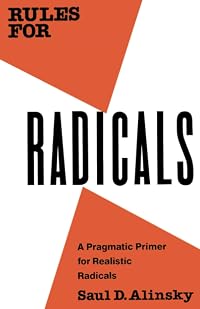
Rules for Radicals: A Practical Primer for Realistic Radicals
by Saul D. Alinsky
On This Page
Description
Rules for Radicals is Saul Alinsky's counsel to young radicals on how to effect constructive social change and know "the difference between being a realistic radical and being a rhetorical one." Written in the midst of radical political developments whose direction Alinsky was one of the first to question, this volume exhibits his style at its best. Like Thomas Paine before him, Alinsky was able to combine, both in his person and his writing, the intensity of political engagement with an show more absolute insistence on rational political discourse and adherence to the American democratic tradition. show lessTags
Recommendations





























Member Recommendations
Member Reviews
I think that Saul Alinsky is disingenuous when he represents the views of communities that he was never a part of. I laugh picturing him lecturing Black Panthers about “working within the system.” If a system is fundamentally opposed to your values and aggressively tries to disenfranchise you, how could you truly work within it? How could you hope to work within a system that strips you of your rights? Obviously radicals should try to build mass support for change, but that change should be precluded by the very institutions Alinsky tries to protect.
Working outside the established system is the only thing that has ever brought about real change. The system itself has a too slow an inertia to accept change. Society is on course for show more environmental catastrophe, mass starvation, and the impending nightmare of climate change. Sometimes radical action is necessary in the short term to prevent devastation in the long term.
I find his ideas about what is needed for a critical mass have been debunked by history. Small groups of people have always been the catalysts for major change. show less
Working outside the established system is the only thing that has ever brought about real change. The system itself has a too slow an inertia to accept change. Society is on course for show more environmental catastrophe, mass starvation, and the impending nightmare of climate change. Sometimes radical action is necessary in the short term to prevent devastation in the long term.
I find his ideas about what is needed for a critical mass have been debunked by history. Small groups of people have always been the catalysts for major change. show less
So this is the infamous Rules for Radicals. Believed by some on the far right as the Gospel according to St. Stalin of the Church of Satanic-Marxism-Leninism.
To be fair, it does hold interesting discussions of community organization, communication, across class and racial bounds to demand reform. Something which will upset conservatives, naturally, as they prefer for things to stay the same, or changed more slowly. There is much valuable to be learned here, for both left and right.
The big gripe is his discussion of ends and means, and his ultra-pragmatic view of them, and avocation of any tactic necessary. If one is in a position of lesser monetary power or political connections, you may well fight like this. It is perhaps the only way show more to win.
Of course, any good little boy or girl who has read their Robert Caro (or god forbid, entered the system) knows that power and power struggles are everything in politics. Everybody uses these ugly tactics, from socialists to reactionaries. The moral element in politics is either a covering, a fools errand, or a reserved for visionaries and prophets, whether deranged or true. But even Christ said, "I come not to bring peace, but a sword". I accept it, but I do not pretend to love it.
And what happens to the radical or the organizer once they gain power? Shall the revolutionary become the tyrant? Of course, power struggles are always an ugly thing. If I ever decide to go into politics for good, I will refer to this book almost biblically, and then delete this review. show less
To be fair, it does hold interesting discussions of community organization, communication, across class and racial bounds to demand reform. Something which will upset conservatives, naturally, as they prefer for things to stay the same, or changed more slowly. There is much valuable to be learned here, for both left and right.
The big gripe is his discussion of ends and means, and his ultra-pragmatic view of them, and avocation of any tactic necessary. If one is in a position of lesser monetary power or political connections, you may well fight like this. It is perhaps the only way show more to win.
Of course, any good little boy or girl who has read their Robert Caro (or god forbid, entered the system) knows that power and power struggles are everything in politics. Everybody uses these ugly tactics, from socialists to reactionaries. The moral element in politics is either a covering, a fools errand, or a reserved for visionaries and prophets, whether deranged or true. But even Christ said, "I come not to bring peace, but a sword". I accept it, but I do not pretend to love it.
And what happens to the radical or the organizer once they gain power? Shall the revolutionary become the tyrant? Of course, power struggles are always an ugly thing. If I ever decide to go into politics for good, I will refer to this book almost biblically, and then delete this review. show less
There are many books on propaganda, but this book is the "how to" book of agitation propaganda (aka activism) that has clearly been very influential on the political left's community organizers over the years. I'm sure Bernie has a copy in his back pocket along with his copy of Marx. Fun read though and useful if you want to raise hell for any reason and believe the ends always justify the means. If I only were lacking a moral compass and had a cause, I'd might try some of the techniques in this book myself. Also provides some psychological illumination as to how easily people's egos are appealed to in order to manipulate their opinions and behavior.
I read Rules for Radicals: A Pragmatic Primer for Realistic Radicals by Saul D. Alinsky back in the summer of 2015, but was not a regular on this thread yet. Alinsky points out that Mahatma Ghandi and Martin Luther King were able to effectually use peaceful means of protest because the relatively free presses of the U.K. and the U.S., respectively, were covering the protests, and the citizens of a democracy were likely to be, and proved to b, sympathetic. Pictures of matriculating students in Mississippi being harassed by German Shepherds or being firehosed doesn't play well. The dictators are not sensitive to this kind of criticism, and eliminate the criticism with extreme prejudice.
The book is cited now by conservatives as a road to show more dystopia. I think most of the "rules" could be used by more conservative elements as well. Further, in the context of the times, I remember it representing a "cooling" of the rhetoric and tactics from the often counterproductive actions of the radical part of the anti-Vietnam war and militant parts of the "civil rights" movement. The book was witty and had me laughing out loud a few times. show less
The book is cited now by conservatives as a road to show more dystopia. I think most of the "rules" could be used by more conservative elements as well. Further, in the context of the times, I remember it representing a "cooling" of the rhetoric and tactics from the often counterproductive actions of the radical part of the anti-Vietnam war and militant parts of the "civil rights" movement. The book was witty and had me laughing out loud a few times. show less
I won't go so far as to say that what you can't learn about organizing and about standing up to the powerful from this book isn't worth knowing, but Saul Alinsky has penned a book that contains nearly all of what you need to know.
How effective was Alinsky? Forty years after his death, the Right still foams at the mouth when they spit out his name, demonstrating the depths of their fear and hatred. When they're using your name as invective, that's proof positive that you've succeeded.
How effective was Alinsky? Forty years after his death, the Right still foams at the mouth when they spit out his name, demonstrating the depths of their fear and hatred. When they're using your name as invective, that's proof positive that you've succeeded.
It is no exaggeration to claim that Saul Alinsky was an organizing genius. The numerous examples in his book as well as his continued influence 40 years after he died have shown he knew how to organize citizens to influence the powers-that-be. Saul Alinsky writes in 1971 to the radicals of the 1960s who have grown disillusioned with the ideas of success their parents have passed on to them. His hope is to provide rules or guidelines for those who want to change their world. He begins, “The Prince was written by Machiavelli for the Haves on how to hold power. Rules for Radicals is written for the Have-Nots on how to take it away (3).”
Alinsky starts his argument by calling his readers to fully recognize “how the world is” without show more seeing it as we want it to be. In this way he is intensely pragmatic in his suggestions. “We must begin with where we are and what we have,” he repeats. He also has a low view of humanity. “The way the world is,” according to Alinsky, is corrupt and broken. The only way for change to be made is to fight one power with another. Further, for Alinsky there are no altruistic acts. Everything is done for one’s self-interest. Part of what motivates his continual fight for justice and equality is the belief that no one is an island. He writes, “A major revolution to be won... is the dissipation of man’s illusion that his own welfare can be separate from that of all others. As long as man is shackled to this myth, so long will the human spirit languish (23).” Therefore, by helping and empowering others, Alinsky sees such causes as helping himself. These assumptions and others undergird his worldview and rules for changing the way things are.
The two chapters people most often reference from Rules for Radicals are “Of Means and Ends” and “Tactics.” No doubt that many would have trouble to embrace many of the tactics he proclaims, and especially the ethics determined by his rules on means and ends. The tactic I had most trouble with was his last: “Pick the target, freeze it, personalize it, and polarize it.” He argues that often issues are so big there is not one person or even one entity responsible; therefore, to make any sort of progress someone in power must be chosen, “frozen,” so that responsibility is not simply pushed onto someone else. The example he gave was targeting the Director of the School Board for the issue of segregation in public schools. He was no doubt not (fully) responsible for segregation – it had a lot to do with segregated neighborhoods. But by polarizing the issue and making it personal for the Director, they were able to see change. The end result of desegregation justified the means of falsely accusing him. But Alinsky also recognized the inconsistencies of this method by claiming an essential characteristic for an organizer is that they must be “a well-integrated political schizoid.... Before [people] will act an issue must be polarized (78).” Therefore the better organizer can polarize an issue “100 to nothing” but they know that nothing is really black and white.
My bigger trouble with Alinsky is what many others have claimed before – his ethics are questionable. “Consistency” for Alinsky “is not a virtue.” Consistency is to be standing still or not moving. He writes, “Men must change with the times or die (31-32).” Truth is relative; ethics are relative. Repeatedly he looks at the ethical inconsistencies in history, notably Abraham Lincoln, and sees justification for acting inconsistently today. His third rule for ethics sums it up: “In war the end justifies almost any means.” The power struggles of both the corporate and public sectors are seen as a type of war. People resort to almost anything to accomplish their goal, and it usually victory or defeat which determines its morality. I believe Alinsky offers profound insight on the way things are corruptly carried out, but I cannot follow their example. Repeated deceit will tarnish the soul. show less
Alinsky starts his argument by calling his readers to fully recognize “how the world is” without show more seeing it as we want it to be. In this way he is intensely pragmatic in his suggestions. “We must begin with where we are and what we have,” he repeats. He also has a low view of humanity. “The way the world is,” according to Alinsky, is corrupt and broken. The only way for change to be made is to fight one power with another. Further, for Alinsky there are no altruistic acts. Everything is done for one’s self-interest. Part of what motivates his continual fight for justice and equality is the belief that no one is an island. He writes, “A major revolution to be won... is the dissipation of man’s illusion that his own welfare can be separate from that of all others. As long as man is shackled to this myth, so long will the human spirit languish (23).” Therefore, by helping and empowering others, Alinsky sees such causes as helping himself. These assumptions and others undergird his worldview and rules for changing the way things are.
The two chapters people most often reference from Rules for Radicals are “Of Means and Ends” and “Tactics.” No doubt that many would have trouble to embrace many of the tactics he proclaims, and especially the ethics determined by his rules on means and ends. The tactic I had most trouble with was his last: “Pick the target, freeze it, personalize it, and polarize it.” He argues that often issues are so big there is not one person or even one entity responsible; therefore, to make any sort of progress someone in power must be chosen, “frozen,” so that responsibility is not simply pushed onto someone else. The example he gave was targeting the Director of the School Board for the issue of segregation in public schools. He was no doubt not (fully) responsible for segregation – it had a lot to do with segregated neighborhoods. But by polarizing the issue and making it personal for the Director, they were able to see change. The end result of desegregation justified the means of falsely accusing him. But Alinsky also recognized the inconsistencies of this method by claiming an essential characteristic for an organizer is that they must be “a well-integrated political schizoid.... Before [people] will act an issue must be polarized (78).” Therefore the better organizer can polarize an issue “100 to nothing” but they know that nothing is really black and white.
My bigger trouble with Alinsky is what many others have claimed before – his ethics are questionable. “Consistency” for Alinsky “is not a virtue.” Consistency is to be standing still or not moving. He writes, “Men must change with the times or die (31-32).” Truth is relative; ethics are relative. Repeatedly he looks at the ethical inconsistencies in history, notably Abraham Lincoln, and sees justification for acting inconsistently today. His third rule for ethics sums it up: “In war the end justifies almost any means.” The power struggles of both the corporate and public sectors are seen as a type of war. People resort to almost anything to accomplish their goal, and it usually victory or defeat which determines its morality. I believe Alinsky offers profound insight on the way things are corruptly carried out, but I cannot follow their example. Repeated deceit will tarnish the soul. show less
Why didn't I learn about Alinsky back in school? I've been flirting with both the philosophical and practical significance of organizing and activism for sometime now. Alinksy makes the irrefutable argument as to its importance.
A disclaimer: our author is clear that activists start by oversimplifying and polarizing a situation, then moving into nuance and compromise at the negotiation stage. And that is what he does with this book. It's monolithic, iconic, archetypal. And, if taken with a grain of salt, invaluable. As Saul might whisper to you in private, it's also not a totally accurate appraisal of reality, or even organizing. But I'm totally fine with that.
The book gets rolling with raising priority number one: communication. How show more will you ever influence your community if you alienate them? The example he gives: you wouldn't come into a Jewish community eating a ham sandwich... And yet this is constantly what "radicals" do, and where they fail—begin by insulting those with whom they need to work with.
To core narrative of this book is about power—about how the "have nots" can take power from the "haves" and distribute it more equitably. It's also pragmatic to the point of being atheistic. Maybe that's partially why Alinsky could both be a significant influence for Hillary Clinton and Barack Obama, and why Clinton and Obama could become totally unmoored from their essential values.
More on this thread of relativism—Alinsky argues that principles are worthless. Charles Eisenstein makes this point as well, but in a very different way. The common ground would be in what Carol Sanford refers to as "regeneration." Frameworks are useful when they help us custom-tailor solutions to the endless diversity of experience we encounter in life. Models and best practices hobble us when we use them "out of the box," without any attempt to regenerate them in each specific instance. I think there's a middle ground which bridges both values and flexibility.
Almost fifty years on, the book could not be better suited to our time. His analysis of the political dynamics at the time strongly mirror what we see today—when the left fails to integrate working-class whites, they join the jingoistic right. You want to resist Trump? Pick up a copy of this book.
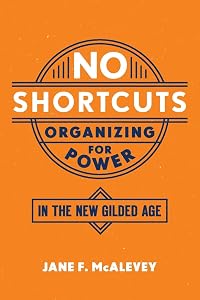
I'm fascinated to learn who has picked up where Alinksy left off. Bill McKibben—obviously. I've heard the names of Jonathan Smucker and Jane McAlevey mentioned as well, although I haven't had the opportunity to explore their works thus far. show less
A disclaimer: our author is clear that activists start by oversimplifying and polarizing a situation, then moving into nuance and compromise at the negotiation stage. And that is what he does with this book. It's monolithic, iconic, archetypal. And, if taken with a grain of salt, invaluable. As Saul might whisper to you in private, it's also not a totally accurate appraisal of reality, or even organizing. But I'm totally fine with that.
The book gets rolling with raising priority number one: communication. How show more will you ever influence your community if you alienate them? The example he gives: you wouldn't come into a Jewish community eating a ham sandwich... And yet this is constantly what "radicals" do, and where they fail—begin by insulting those with whom they need to work with.
To core narrative of this book is about power—about how the "have nots" can take power from the "haves" and distribute it more equitably. It's also pragmatic to the point of being atheistic. Maybe that's partially why Alinsky could both be a significant influence for Hillary Clinton and Barack Obama, and why Clinton and Obama could become totally unmoored from their essential values.
More on this thread of relativism—Alinsky argues that principles are worthless. Charles Eisenstein makes this point as well, but in a very different way. The common ground would be in what Carol Sanford refers to as "regeneration." Frameworks are useful when they help us custom-tailor solutions to the endless diversity of experience we encounter in life. Models and best practices hobble us when we use them "out of the box," without any attempt to regenerate them in each specific instance. I think there's a middle ground which bridges both values and flexibility.
Almost fifty years on, the book could not be better suited to our time. His analysis of the political dynamics at the time strongly mirror what we see today—when the left fails to integrate working-class whites, they join the jingoistic right. You want to resist Trump? Pick up a copy of this book.
I'm fascinated to learn who has picked up where Alinksy left off. Bill McKibben—obviously. I've heard the names of Jonathan Smucker and Jane McAlevey mentioned as well, although I haven't had the opportunity to explore their works thus far. show less
Members
- Recently Added By
Lists

Building Social Movements
13 works; 4 members

Política - Clásicos
164 works; 2 members

Ryan Holiday's Books To Base Your Life On
97 works; 2 members

Books That Changed Our Perspective
423 works; 168 members

Political Theory
23 works; 1 member
Author Information

9+ Works 2,999 Members
Some Editions
Series
Belongs to Publisher Series
Vintage Books (V-736)
Common Knowledge
- Original publication date
- 1971
- First words
- What follows is for those who want to change the world from what it is to what they believe it should be.
- Quotations
- To pander to those who have no stomach for straight language, and insist upon bland, non controversial sauces, is a waste of time... I do not propose to be trapped by tact at the expense of truth.
Classifications
- Genres
- General Nonfiction, Politics and Government, Nonfiction, Philosophy
- DDC/MDS
- 303.484 — Society, government, & culture Social sciences, sociology & anthropology Social processes Social change Causes of change Purposefully induced change
- LCC
- HN65 .A675 — Social sciences Social history and conditions. Social problems. Social reform Social history and conditions. Social problems. By region or country
- BISAC
Statistics
- Members
- 2,501
- Popularity
- 7,724
- Reviews
- 44
- Rating
- (3.58)
- Languages
- 6 — Dutch, English, French, German, Hungarian, Spanish
- Media
- Paper, Audiobook, Ebook
- ISBNs
- 16
- ASINs
- 14