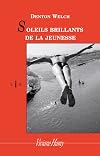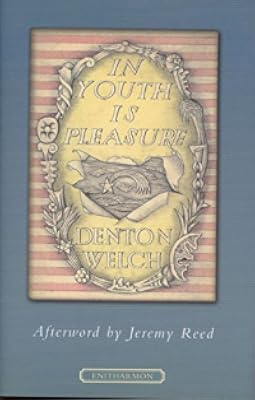
In Youth Is Pleasure
by Denton Welch
On This Page
Description
'Unlike any other person I had come across, Welch seemed to be speaking particularly to me' Alan Bennett 'Vivid ... surprising ... an exquisite balance of pain and beauty' Guardian Orvil Pym does not fit in. A waifish, eccentric, sensitive fifteen-year-old, he hates school and longs to be alone. Spending his Summer holidays in a genteel Surrey hotel with his mysterious father and two brothers who don't understand him, he explores ancient churches, spies on a man rowing in the river and show more collects antiques, escaping into his own singular aesthetic world. First published in 1945, this is an unforgettable portrayal of a young man's sensuous coming-of-age. 'A heightened, sensual journey ... it is Orvil's vibrant energy that allows this book to bubble ... beautifully odd ... spectacular' Independent show lessTags
Recommendations






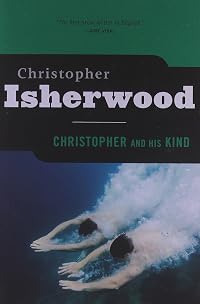
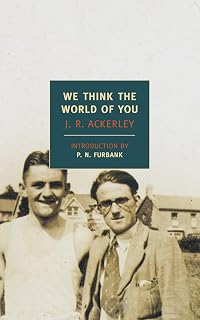













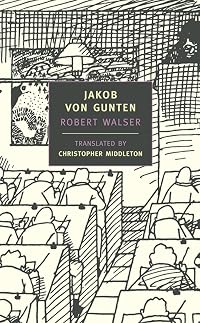











Member Recommendations
Member Reviews
'oscillates between moments of lyrical serenity and outbreaks of psychological disorder'
By sally tarbox TOP 500 REVIEWER on 9 Jan. 2013
Format: Hardcover
'One summer, several years before the war began, a young boy of fifteen was staying with his father and two elder brothers at a hotel near the Thames in Surrey.' With this calm introduction that might come from a Victorian novel, Welch opens a fictionalized autobiography of his own teen years. Bereaved of his mother, bullied at school, and with a burgeoning interest in other boys (but in the restrictive 1930s), Welch relays the summer adventures of Orvil Pym...
This is an absolutely beautiful book that seems to take the reader back to their youth, the illogical things one does, the show more self-awareness, the amazement with the loveliness of the world, and the lust.
Not a hugely eventful work- the main occurrences are Orvil's encounters with a local schoolmaster camping out in a hut with some underprivileged youths - but written more for the joy of the language and the understanding of the adolescent mind.
As Jeremy Reed observes: 'He argues a case for the best poetry often being expressed in the form of prose...even the most simple things are invested with magic by a poet's eye.' show less
By sally tarbox TOP 500 REVIEWER on 9 Jan. 2013
Format: Hardcover
'One summer, several years before the war began, a young boy of fifteen was staying with his father and two elder brothers at a hotel near the Thames in Surrey.' With this calm introduction that might come from a Victorian novel, Welch opens a fictionalized autobiography of his own teen years. Bereaved of his mother, bullied at school, and with a burgeoning interest in other boys (but in the restrictive 1930s), Welch relays the summer adventures of Orvil Pym...
This is an absolutely beautiful book that seems to take the reader back to their youth, the illogical things one does, the show more self-awareness, the amazement with the loveliness of the world, and the lust.
Not a hugely eventful work- the main occurrences are Orvil's encounters with a local schoolmaster camping out in a hut with some underprivileged youths - but written more for the joy of the language and the understanding of the adolescent mind.
As Jeremy Reed observes: 'He argues a case for the best poetry often being expressed in the form of prose...even the most simple things are invested with magic by a poet's eye.' show less
I find this book both fascinating and strange--high praise from me. *g* It's the semi-autobiographical story of an English teenager, Orvil Pym, on his school holidays, and what's great about it is not so much what happens to Orvil, but the way he experiences everything that happens: he's got a wonderfully morbid imagination, and he looks at everything with an amazingly real combination of sadness and wonder. This one's going to stay with me for a long time.
A summer in the life of a delicate child. To recollect the events of the novel, its scenes are vivid, captivating, catching an expression of meaning it would be pointless to expound. Pointless as the meaning comes of itself, is self-evident, does not call for the tribute of exposition. Welch’s language is daring yet sensitive. He focalizes sensuous detail, stilling each instant in the text to the pace of an acute receptivity. We follow Orvil Pym, this summer in his life, but he remains a mystery to us. The genuine mystery of another human being—Welch’s depiction of Orvil is so bright as to convey the genuine mystery of another human being.
This is a lovely book by Denton Welch. It is probably mostly autobiographical, but is presented as fiction. In the meanest terms, it's the story of a boy's summer holiday with his family, which consists of two older brothers and his father. Orvil's mother passed away when he was twelve. A record of this summer's events from another person's perspective would be quite dull, but Welch infuses Orvil with all of his sensitivity, peculiarity and introspection. With these qualities, Orvil's minor misadventures and social gaffs take on a mythic quality.
For those new to Denton Welch, this would be a good book with which to start. It's only 154 pages; an easy to devour morsel no less exquisite for its brevity. (By the way, reading Welch will show more have the adverse effect of making you talk or write like this, as well as using more Ys: tyger, tyre, pyjamas). show less
For those new to Denton Welch, this would be a good book with which to start. It's only 154 pages; an easy to devour morsel no less exquisite for its brevity. (By the way, reading Welch will show more have the adverse effect of making you talk or write like this, as well as using more Ys: tyger, tyre, pyjamas). show less
Denton Welch lived but a short life, and died early, several years after a car accident he had at the age of 20, and suffered from the remainder of his life. The paintings he has left show an extraordinary talent and great originality. Likewise, his prose, most of it composed in the final years of his life, is highly original and externalises his innermost feelings. The prose style is somewhat reminiscent of the writing of Stella Gibbons, as it highlights peculiarities in people, characterizing their features and speech.
Denton Welch prose has a very poetic quality. Like I left my grandfather's house, In youth is pleasure is a shortish novel of fictionalized autobiography looking back to his early youth as a young teenager on a summer show more holiday. show less
Denton Welch prose has a very poetic quality. Like I left my grandfather's house, In youth is pleasure is a shortish novel of fictionalized autobiography looking back to his early youth as a young teenager on a summer show more holiday. show less
Denton Welch writes about a fifteen year old boy's summer holiday around 1930 spent with his father and two older brothers, the boy's name in the book is Orvil, although this is in fact basically autobiographical.
The main part of Orvil's holiday is spent in a Surrey at a hotel near the River Thames, and while his two older brothers and at times some of their friends are there Orvil spends much of his time in his own company - apart from a few days spent with a school friend and his family in Hastings. Orvil is a inquisitive and adventurous boy with a vivid imagination, and people and places he sees conjure in his mind fascinating scenarios. He is especially taken by the sight of a man with two younger boys he sees rowing on the river, show more and sets out to spy on them, later he will encounter the man alone and spend some time with him, a curios meeting. This along with a number of other events clearly hint at Orvil's (Denton's) unmentioned sexual proclivities.
What makes this a fascinating account is the unusual charm and honesty of the young boy. A boy with a fascination for small antique objects, no matter if they are damaged, in fact he is happy to find such for it means he is more likely to be able to afford them, and even in such matters as this his honesty is apparent, for it is clearly the object for its own sake that appeals rather than the object as thing of monetary value or for show. He is honest too in his analysis of the boy's thinking, often angry on the inside with others, or selfish in his reasoning, but rarely openly displaying such - although there are times when this aspect gets the better of him and he lashes out.
For a fifteen year old boy he is remarkably sensitive and visually aware or observant. In addition to his liking for small objects he has a great appreciation for architecture, especially older buildings, and is quite knowledgeable about such, and not without his own views either.
This is a most charming and beautifully written account about a young, somewhat tortured yet creative boy, an individual who does not and conform and is often at odds with those around him. The account concludes with his eventual return to school (for what in fact will be the last time), and there is a lovely incident in which Ben, his older brother by two years, who is also returning with him on the train to their school when seeing Orvil being taken advantage of unhesitatingly and very forcibly comes to his rescue - a moving conclusion to a delightful book. show less
The main part of Orvil's holiday is spent in a Surrey at a hotel near the River Thames, and while his two older brothers and at times some of their friends are there Orvil spends much of his time in his own company - apart from a few days spent with a school friend and his family in Hastings. Orvil is a inquisitive and adventurous boy with a vivid imagination, and people and places he sees conjure in his mind fascinating scenarios. He is especially taken by the sight of a man with two younger boys he sees rowing on the river, show more and sets out to spy on them, later he will encounter the man alone and spend some time with him, a curios meeting. This along with a number of other events clearly hint at Orvil's (Denton's) unmentioned sexual proclivities.
What makes this a fascinating account is the unusual charm and honesty of the young boy. A boy with a fascination for small antique objects, no matter if they are damaged, in fact he is happy to find such for it means he is more likely to be able to afford them, and even in such matters as this his honesty is apparent, for it is clearly the object for its own sake that appeals rather than the object as thing of monetary value or for show. He is honest too in his analysis of the boy's thinking, often angry on the inside with others, or selfish in his reasoning, but rarely openly displaying such - although there are times when this aspect gets the better of him and he lashes out.
For a fifteen year old boy he is remarkably sensitive and visually aware or observant. In addition to his liking for small objects he has a great appreciation for architecture, especially older buildings, and is quite knowledgeable about such, and not without his own views either.
This is a most charming and beautifully written account about a young, somewhat tortured yet creative boy, an individual who does not and conform and is often at odds with those around him. The account concludes with his eventual return to school (for what in fact will be the last time), and there is a lovely incident in which Ben, his older brother by two years, who is also returning with him on the train to their school when seeing Orvil being taken advantage of unhesitatingly and very forcibly comes to his rescue - a moving conclusion to a delightful book. show less
One of W S Burroughs' top ten books (Book of Lists).
Members
- Recently Added By
Published Reviews
ThingScore 75
[...] an exquisite balance of pain and beauty – an aspect of the sublime [...]
added by Nevov
Lists

1940s
221 works; 25 members

A Novel Cure
742 works; 23 members

Cooper
79 works; 1 member

Franklit
95 works; 1 member

Reading LIst
648 works; 1 member
Author Information

30+ Works 1,240 Members
Some Editions
Work Relationships
Is contained in
Common Knowledge
- Original publication date
- 1945
- People/Characters
- Orvil Pym
- Important places
- Surrey, England, UK
- First words
- One summer, several years before the war began, a young boy of fifteen was staying with his father and two elder brothers at a hotel near the Thames in Surrey.
- Last words
- (Click to show. Warning: May contain spoilers.)And so Orvil smiled on everyone, kept the comfortable, well-fed smile on his face, fixed it there and let it broaden, while the train skimmed and trembled over the lines back to school.
Classifications
Statistics
- Members
- 253
- Popularity
- 128,062
- Reviews
- 9
- Rating
- (4.26)
- Languages
- 7 — Danish, English, French, German, Italian, Spanish, Swedish
- Media
- Paper, Ebook
- ISBNs
- 17
- ASINs
- 6