On This Page
Description
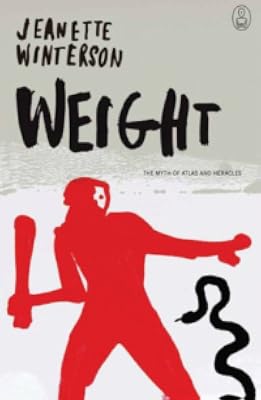
A "profound and provocative" reimagining of the Greek legend by the New York Times-bestselling author of Why Be Happy When You Can Be Normal? (Daily Mail). With wit and verve, Whitbread Award-winning novelist Jeanette Winterson brings the mythical figure of Atlas into the space age and sets him free at last. In her retelling of the story of a god tricked into holding the world on his shoulders and his brief reprieve, she sets difficult questions about the nature of choice and coercion, show more how we choose our own destiny and at the same time can liberate ourselves from our seeming fate. "Dazzling . . . Winterson's embrace of the mythic landscape is evident in her rich imagery . . . cathartic . . . this short novel fulfills a number of the criteria myth is meant to embody" --The New York Times Book Review show lessTags
Recommendations















Member Reviews
Jeanette Winterson's novella Weight is both a retelling of Greek myths involving Atlas and Herakles and a meditation on the real and metaphoric burdens human beings must bear throughout their lives. Atlas, punished for fighting against the Olympian gods, must hold up the Kosmos for eternity. But when Herakles, the only being strong enough to take the old Titan's place, needs a favor, Atlas sees his chance. Which one of them will walk away free of the oppressive Earth?
To this myth Winterson adds some autobiographical material and some facts from astronomy and earth science. I am not sure that the meditative part worked as well as the more vivid storytelling angle. However, the book earns bonus points for including a charming show more characterization of Laika the cosmonaut dog. show less
To this myth Winterson adds some autobiographical material and some facts from astronomy and earth science. I am not sure that the meditative part worked as well as the more vivid storytelling angle. However, the book earns bonus points for including a charming show more characterization of Laika the cosmonaut dog. show less
Rating: 3.75* of five
No one can ever say Jeannette Winterson lacks authorial chops. Self-aware aphoristic ones. That is a beautiful distillation of the purpose of becoming an author.
Atlas, he of the weight of the world on his shoulders, had a mother. She was Earth, Gaia, THE Mother. His Titanic self was born of her union with Poseidon, the Sea, her complement in this Universe of Elements called Air, Fire, Water, and Earth. show more (Not for the Greeks the effete Orientalism of including Wood or Metal! They spring from Earth, are held within her potentialities.)
As we're learning better and better every day. Over 4000 "exoplanets" (humans and their deep-seated need to discriminate!) later, we still have found no other planet truly capable of bringing forth Life as we know it. Permaybehaps because those other Mothers don't have mates:
Or the *right* mates, anyway. She's unique, our Gaia, and we...
...no, not now.
Atlas the Titan rebels against his younger, prettier siblings the Olympians because he didn't want them telling him what to do. His Garden of Eden was Atlantis, the eternally shining and perfect past that every generation of humanity is certain was without problems or cares, everyone always got along, love and respect were common as pig tracks, and Gaia filled our bellies with all her bounty unstintingly.
Snort.
So Atlas pursued his war against the Olympians on the flimsiest of pretexts for both sides:
Zeus and Company prevail in the ensuing war over trivialities, this "we don't like you so we're taking away your stuff because we like doing AND having that." (It's hard for me to read this myth without thinking the Greeks were busy explaining slavery to themselves.) In his "guilt" and its ensuing punishment, Atlas is condemned forever and always to carry the weight of the world on his shoulders as Olympian punishment for the egregious individualistic desire for freedom he went to war to secure:
And that's the crux of the matter. Atlas accepts his punishment and assumes his burden Because.
That's it. Really. Just...because. You can blow all the smoke and angle the mirrors however you like: The only thing you'll ever see is "Because" shaped in smoke and reflected at as many angles as there are. Fate is a deeply convenient double-bind technique, like sin and guilt. "You're bad! BAD! Yes, YOU ARE BAD!!" and the punishments needn't even ever be external...they're hefted onto shoulders by the bearers themselves, never to be put down because they are obviously just and fair and right. Why?
Because.
So here into the narrative comes Enkidu...oh dear, please pardon me!, I meant to type "Heracles" honest I did!...the unbridled, unreflective Master of the Universe, the id-on-legs that Zeus the seducer tricked his wife into suckling (a story I don't know, but feel I should look into) so as to offer his half-human bonny wee laddie immortality. He's godlike in his strength, beauty, and sense of entitlement. He's a rapist, a murderer, and a hero to those it suits him to assist.
I think...it's just a suspicion, mind...but I think it's just possible that Author Winterson (a known Lesbian) might have a few smallish issues with cishet toxic masculinity. Enkidu...there I go again, silly old faggot...HERACLES, of course, rapes women, masturbates in front of his cock-tease stepmother:
...as well as his dupe of a cousin Atlas, and offers half-heartedly to wank the latter when he says, "I don't have a free hand," when Heracles asks him to put on the show. Doesn't happen...Atlas says, "I'm too tired," eliciting from Heracles a derisive snort of "you sound like a girl."
You know the myth: Heracles (literally "the Greatness of Hera") needs Atlas to pilfer the Golden Apples from the Garden of the Hesperides, in return taking the weight of the world onto his own shoulders. It does not go well for Heracles:
Heracles is waking up! At the precise moment he can not run, hide, fight, or fuck his way out of self-reflection, here it is: He's a weakling. He can't do diddly-squat that isn't a feat of his body and using only the basest, most cunning of ruses. Strategy? What's that? But need a tactician and you found your dreamboat.
The myth runs its well-told course along precisely the lines the Greeks told it for so many millennia. The insights Author Winterson are, for all they're sparkling like bubbles in prosecco, not particularly new. She does a fine job of unpacking meaning from myth. One would expect no less from the author of [Sexing the Cherry]. And, to be fair, she wasn't tasked with Revealing New Levels of Meaning in the myth itself, she was asked to retell it in a modern vein. At this she succeeded admirably. But my reading pleasure, my very real Gollumy glomming onto sentences that I want to have made into Jasperware plaques and sculpted into entire palaces of Chihuly glass, is ultimately...okay. Not superb, just okay.
She didn't do it wrong. But I've seen it done before, sometimes with the names changed and sometimes not. That is what gave the read a rating under five stars...that and the (not unreasonable, not unjustified) misandry. It wasn't very subtle, nor was it intended to be (or so it seems to me), but it also wasn't particularly insightful. That I *do* expect from Author Winterson.
Here, as my last salvo, is why I expect the unexpected and the glorious from her:
She speaks to us, the reader, directly and she gives herself the best lines. It's her story, she is entitled to do that. But I wanted more of this from the myth-retelling, and while I got beautiful words, I felt I wasn't given quite as much insightful wordsmithing of this last sort. show less
Autobiography is not important. Authenticity is important. The writer must fire herself through the text, be the molten stuff that welds together disparate elements. I believe there is always exposure, vulnerability, in the writing process, which is not to say it is either confessional or memoir. Simply, it is real.
No one can ever say Jeannette Winterson lacks authorial chops. Self-aware aphoristic ones. That is a beautiful distillation of the purpose of becoming an author.
Atlas, he of the weight of the world on his shoulders, had a mother. She was Earth, Gaia, THE Mother. His Titanic self was born of her union with Poseidon, the Sea, her complement in this Universe of Elements called Air, Fire, Water, and Earth. show more (Not for the Greeks the effete Orientalism of including Wood or Metal! They spring from Earth, are held within her potentialities.)
Earth was always strange and new to herself. She never anticipated what she would do next. She never guessed the coming wonder. She loved the risk, the randomness, the lottery probability of a winner. We forget, but she never did, that what we take for granted is the success story. The failures have disappeared. This planet that seems so obvious and inevitable is the jackpot.
As we're learning better and better every day. Over 4000 "exoplanets" (humans and their deep-seated need to discriminate!) later, we still have found no other planet truly capable of bringing forth Life as we know it. Permaybehaps because those other Mothers don't have mates:
She loved {the Waters} because he showed her to herself.
Or the *right* mates, anyway. She's unique, our Gaia, and we...
...no, not now.
Atlas the Titan rebels against his younger, prettier siblings the Olympians because he didn't want them telling him what to do. His Garden of Eden was Atlantis, the eternally shining and perfect past that every generation of humanity is certain was without problems or cares, everyone always got along, love and respect were common as pig tracks, and Gaia filled our bellies with all her bounty unstintingly.
Snort.
So Atlas pursued his war against the Olympians on the flimsiest of pretexts for both sides:
My daughters {the Hesperides} had been secretly eating the sacred fruit. Who could blame them, the tree, sweet-scented and heavy, and the grass underneath it wet with evening dew? Their feet were bare and their mouths were eager. They are girls after all.
I did not see the harm myself, but the gods are jealous of their belongings.
Zeus and Company prevail in the ensuing war over trivialities, this "we don't like you so we're taking away your stuff because we like doing AND having that." (It's hard for me to read this myth without thinking the Greeks were busy explaining slavery to themselves.) In his "guilt" and its ensuing punishment, Atlas is condemned forever and always to carry the weight of the world on his shoulders as Olympian punishment for the egregious individualistic desire for freedom he went to war to secure:
I bent my back and braced my right leg, kneeling with my left. I bowed my head and held my hands, palms up, almost like surrender. I suppose it was surrender. Who is strong enough to escape their fate? Who can avoid what they must become?
And that's the crux of the matter. Atlas accepts his punishment and assumes his burden Because.
That's it. Really. Just...because. You can blow all the smoke and angle the mirrors however you like: The only thing you'll ever see is "Because" shaped in smoke and reflected at as many angles as there are. Fate is a deeply convenient double-bind technique, like sin and guilt. "You're bad! BAD! Yes, YOU ARE BAD!!" and the punishments needn't even ever be external...they're hefted onto shoulders by the bearers themselves, never to be put down because they are obviously just and fair and right. Why?
Because.
So here into the narrative comes Enkidu...oh dear, please pardon me!, I meant to type "Heracles" honest I did!...the unbridled, unreflective Master of the Universe, the id-on-legs that Zeus the seducer tricked his wife into suckling (a story I don't know, but feel I should look into) so as to offer his half-human bonny wee laddie immortality. He's godlike in his strength, beauty, and sense of entitlement. He's a rapist, a murderer, and a hero to those it suits him to assist.
I think...it's just a suspicion, mind...but I think it's just possible that Author Winterson (a known Lesbian) might have a few smallish issues with cishet toxic masculinity. Enkidu...there I go again, silly old faggot...HERACLES, of course, rapes women, masturbates in front of his cock-tease stepmother:
Hera was beautiful. She was so beautiful that even a thug like Heracles wished he had shaved. Without a mirror she showed him to himself, muscle-swollen and scarred. He feared her and desired her. His prick kept filling and deflating like a pair of fire bellows. He wanted to rape her but he didn’t dare. Her eyes were all contempt and mild disgust.
...as well as his dupe of a cousin Atlas, and offers half-heartedly to wank the latter when he says, "I don't have a free hand," when Heracles asks him to put on the show. Doesn't happen...Atlas says, "I'm too tired," eliciting from Heracles a derisive snort of "you sound like a girl."
You know the myth: Heracles (literally "the Greatness of Hera") needs Atlas to pilfer the Golden Apples from the Garden of the Hesperides, in return taking the weight of the world onto his own shoulders. It does not go well for Heracles:
Hera says, "No hero can be destroyed by the world. His reward is to destroy himself. Not what you meet on the way, but what you are, will destroy you, Heracles."
***
His body was as strong as Atlas’s, but his nature was not. Hera was right about him there. Heracles’s strength was a cover for his weakness.
Heracles is waking up! At the precise moment he can not run, hide, fight, or fuck his way out of self-reflection, here it is: He's a weakling. He can't do diddly-squat that isn't a feat of his body and using only the basest, most cunning of ruses. Strategy? What's that? But need a tactician and you found your dreamboat.
The myth runs its well-told course along precisely the lines the Greeks told it for so many millennia. The insights Author Winterson are, for all they're sparkling like bubbles in prosecco, not particularly new. She does a fine job of unpacking meaning from myth. One would expect no less from the author of [Sexing the Cherry]. And, to be fair, she wasn't tasked with Revealing New Levels of Meaning in the myth itself, she was asked to retell it in a modern vein. At this she succeeded admirably. But my reading pleasure, my very real Gollumy glomming onto sentences that I want to have made into Jasperware plaques and sculpted into entire palaces of Chihuly glass, is ultimately...okay. Not superb, just okay.
She didn't do it wrong. But I've seen it done before, sometimes with the names changed and sometimes not. That is what gave the read a rating under five stars...that and the (not unreasonable, not unjustified) misandry. It wasn't very subtle, nor was it intended to be (or so it seems to me), but it also wasn't particularly insightful. That I *do* expect from Author Winterson.
Here, as my last salvo, is why I expect the unexpected and the glorious from her:
If only I understood that the globe itself, complete, perfect, unique, is a story. Science is a story. History is a story. These are the stories we tell ourselves to make ourselves come true.
What am I? Atoms.
What are atoms? Empty space and points of light.
She speaks to us, the reader, directly and she gives herself the best lines. It's her story, she is entitled to do that. But I wanted more of this from the myth-retelling, and while I got beautiful words, I felt I wasn't given quite as much insightful wordsmithing of this last sort. show less
As an avid reader, one thing I seem to gravitate to are re-tellings of well-known stories by authors. Something about a different take on the story, possibly challenging my own likes or dislikes about the original tale, has always appealed to me, and is probably why I'm such a fan of the "Wicked" series from Gregory Maguire. So a few weeks ago while I browsed the shelves at the local branch of the library, I stumbled across one of The Myths series written by author Jeanette Winterson that piqued my interest.
"Weight" presents her take on the classic Atlas and Heracles myth.
Atlas did the unthinkable -- siding with the Titans in their war against the Olympian Gods. As punishment, Zeus ordered him to support the weight of the entire cosmos show more on his shoulders for all eternity. While he knelt, listening to the world and not realizing how much time was passing, who should happen to appear but Heracles, laboring through the twelve tasks set to him by King Eurystheus.
One of Heracles' tasks is to secure three golden apples from a tree in the Garden of the Hesperides, but he himself is not allowed to pick them. So he devises the brilliant idea of having Atlas retrieve the apples for him. Atlas finds this brief respite from holding the world a chance to taste freedom, even if only for a little while, and agrees. The night before they are to temporarily trade places, they talked over a meal, Heracles ranting about having to obey Eurystheus, why did he need to do that? Atlas replied that there is no such thing as free will, only the will of the Gods.
The next day, after switching places, a question starts buzzing about Heracles' brain: "What if Atlas doesn't return", leaving him to hold up the weight of the world?
Winterson takes her re-telling one step farther by having Atlas, holding the world, the sky and space on his shoulders, ask the question: "What if he put it down?" It's an interesting take on the myth, focusing more on the nature of boundaries, who sets them, and why we follow them. For Heracles, it challenges his concept of destiny, forced to endure inhuman tasks with the hope of pleasing the Gods; for Atlas, it forces him to re-examine the way he blindly believes everything. "What if": two little words with so much power behind them.
As she re-writes the myth, Winterson also interjects her own journey as a writer and why she decided to use the myth of Atlas and Heracles to work through her own inner struggles. After all, much of writing is fantasizing on the 'what ifs' and seeing how they play out. show less
"Weight" presents her take on the classic Atlas and Heracles myth.
Atlas did the unthinkable -- siding with the Titans in their war against the Olympian Gods. As punishment, Zeus ordered him to support the weight of the entire cosmos show more on his shoulders for all eternity. While he knelt, listening to the world and not realizing how much time was passing, who should happen to appear but Heracles, laboring through the twelve tasks set to him by King Eurystheus.
One of Heracles' tasks is to secure three golden apples from a tree in the Garden of the Hesperides, but he himself is not allowed to pick them. So he devises the brilliant idea of having Atlas retrieve the apples for him. Atlas finds this brief respite from holding the world a chance to taste freedom, even if only for a little while, and agrees. The night before they are to temporarily trade places, they talked over a meal, Heracles ranting about having to obey Eurystheus, why did he need to do that? Atlas replied that there is no such thing as free will, only the will of the Gods.
The next day, after switching places, a question starts buzzing about Heracles' brain: "What if Atlas doesn't return", leaving him to hold up the weight of the world?
Winterson takes her re-telling one step farther by having Atlas, holding the world, the sky and space on his shoulders, ask the question: "What if he put it down?" It's an interesting take on the myth, focusing more on the nature of boundaries, who sets them, and why we follow them. For Heracles, it challenges his concept of destiny, forced to endure inhuman tasks with the hope of pleasing the Gods; for Atlas, it forces him to re-examine the way he blindly believes everything. "What if": two little words with so much power behind them.
As she re-writes the myth, Winterson also interjects her own journey as a writer and why she decided to use the myth of Atlas and Heracles to work through her own inner struggles. After all, much of writing is fantasizing on the 'what ifs' and seeing how they play out. show less
For quite a few years, I loved Jeanette Winterson. I bought every book. I wrote quotes in notebooks, on my walls. Then sometime around Gut Symmetries (which I should have loved the most, involving quantum physics as it did), I stopped. They all started to feel like the same book, and it wasn't a book I wanted to read anymore, so I walked away.
Then I went to the bookstore to buy used copies of books I'd loved to give away at Books, Beer, & Pizza. In addition to a few Winterson books I had loved (I bought a copy of The Passion), there was this. I've always loved retellings of myths and fairy tales, so I had to take a chance on it.
The story is very Winterson, and also very Greek myth -- with a somewhat disturbing amount of rapes and show more eternal torture and bodily fluids. But it's a very good story. About fate and free will and what futures we're capable of envisioning for ourselves. I read the whole thing in one night, unable to put it down.
I am very curious to check out more books in the Canongate Myths series. show less
Then I went to the bookstore to buy used copies of books I'd loved to give away at Books, Beer, & Pizza. In addition to a few Winterson books I had loved (I bought a copy of The Passion), there was this. I've always loved retellings of myths and fairy tales, so I had to take a chance on it.
The story is very Winterson, and also very Greek myth -- with a somewhat disturbing amount of rapes and show more eternal torture and bodily fluids. But it's a very good story. About fate and free will and what futures we're capable of envisioning for ourselves. I read the whole thing in one night, unable to put it down.
I am very curious to check out more books in the Canongate Myths series. show less
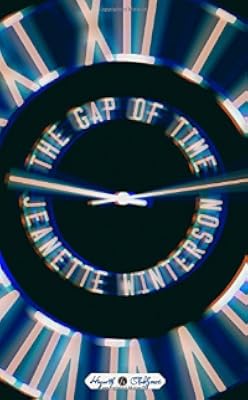
This is a retelling of the myth of Atlas and Heracles (a myth I remembered nothing about, even if I remembered the two characters individually) in Winterson's characterstically cheeky, humorous, poetic, and self-referential style. It feels a bit thin for something by her (I feel like surely it's a novella, not a novel), but I laughed at the jokes and found some keen insights into human nature. The ending is weird, but I think it worked. Sometimes it really is that simple! Not as good as Oranges Are Not the Only Fruit (obviously) or even The Gap of Time, but still highly enjoyable.
In this book, part of the Canongate Myth Series, Jeanette Winterson offers a re-telling of the Atlas myth. In the original story, Atlas is punished for waging war against the gods; he is to support the weight of the kosmos for all of eternity. The author tells this story, then offers a slightly more modern re-telling of the Greek myth itself, then re-tells it in the context of her own life, then offers a scientific re-telling. Through this multi-purpose re-telling, the author explores the idea that stories are universal and change to fit the teller and the listener. Near the end of the book she summarizes - "If I only understood that the globe itself, complete, perfect, unique, is a story. Science is a story. History is a story. These show more are the stories we tell ourselves to make ourselves come true". I found it fascinating and beautifully written, with characters that are at once familiar and also relevant to our modern society. I absolutely loved it! show less
Much has been said about the labors of Heracles, but not often is his mental state addressed in the tales. Winterson comically yet seriously addresses the buzzing 'thought-wasp' that Heracles very seldom engages, being more inclined to smack himself upside the head until the buzzing ceases, couching this tale within her larger exploration of the internal life of Atlas, he who bears the burden of the world's (and we discover, his own) weight.
As part of Heracles' twelve labors, in exchange for his help, Heracles assumes the burden of the world while Atlas fetches three golden fruit from the garden of the Hesperides which, in Winterson's telling, was Atlas' own, tended by his daughters, but now gone to seed, save the tree he stewarded for show more Hera. After Atlas, being of the race of Titans who warred with and lost to the Olympians, was punished by yoking his strength to carry the Earth upon his back, his only other mention is of this encounter with Heracles, played out as if he refuses to resume his burden, but tricked by Heracles into doing so. Passing mention turns Atlas into a fixture, but not a character in the classic tales.
Winterson takes this silent Titan and gives him a glorious internal imagining, exploring her stated themes of boundaries and isolation and freedom and responsibility within the character she develops of Atlas. His punishment becomes a space of rumination; he can hear what happens upon the world, he learns over the long years to differentiate the buzz of a bee from the low of cattle, the strains of song from the vilifying attack. He dwells in isolation, supporting life but never able to cross the boundary and interact.
Enabled by Heracles to be free, Winterson complicates the scenario by engaging Atlas' deep sense of responsibility - he has carried the Earth for an unfathomable time and not merely let it drop, leading one to wonder why if not for this sense of duty, emphasized perhaps in his pre-punishment devotion to his garden - and while there is an element of trickery involved in Heracles getting Atlas to reshoulder the Earth's weight, it is left arguable that Atlas was complicit in this. Heracles may be portrayed as crafty, but Atlas has the wisdom of long meditation; he knew what he was about. A silent isolation for Atlas commences after this time, bounded by the disappearance of his familial gods, leaving him to ossify and calcify under the weight of the Earth, his mind kept contained within the duty his body performs.
'Then the dog came.' With this seemingly benign yet heraldic utterance Winterson brings us to 1957 and a little dog named Laika shot into space by Russia. Atlas frees Laika from her little pod, saving her from the needle that would end her life, and she in turn saves Atlas from hardening into nothingness - a state he has previously longed for, yet which can never be regained. And then he has the thought that took milennia to come to him: why not put the Earth down?
Within this mythic retelling, this central question constantly buzzes in the background; why not just put it down? Why not release the boundaries? By what are we really bounded? Or whom? Winterson revitalizes this tale of Atlas and Heracles, contrasting the strengths and weaknesses of both, pulling from a little space-born pod a reason to dwell upon how we ourselves invoke our own limits. show less
As part of Heracles' twelve labors, in exchange for his help, Heracles assumes the burden of the world while Atlas fetches three golden fruit from the garden of the Hesperides which, in Winterson's telling, was Atlas' own, tended by his daughters, but now gone to seed, save the tree he stewarded for show more Hera. After Atlas, being of the race of Titans who warred with and lost to the Olympians, was punished by yoking his strength to carry the Earth upon his back, his only other mention is of this encounter with Heracles, played out as if he refuses to resume his burden, but tricked by Heracles into doing so. Passing mention turns Atlas into a fixture, but not a character in the classic tales.
Winterson takes this silent Titan and gives him a glorious internal imagining, exploring her stated themes of boundaries and isolation and freedom and responsibility within the character she develops of Atlas. His punishment becomes a space of rumination; he can hear what happens upon the world, he learns over the long years to differentiate the buzz of a bee from the low of cattle, the strains of song from the vilifying attack. He dwells in isolation, supporting life but never able to cross the boundary and interact.
Enabled by Heracles to be free, Winterson complicates the scenario by engaging Atlas' deep sense of responsibility - he has carried the Earth for an unfathomable time and not merely let it drop, leading one to wonder why if not for this sense of duty, emphasized perhaps in his pre-punishment devotion to his garden - and while there is an element of trickery involved in Heracles getting Atlas to reshoulder the Earth's weight, it is left arguable that Atlas was complicit in this. Heracles may be portrayed as crafty, but Atlas has the wisdom of long meditation; he knew what he was about. A silent isolation for Atlas commences after this time, bounded by the disappearance of his familial gods, leaving him to ossify and calcify under the weight of the Earth, his mind kept contained within the duty his body performs.
'Then the dog came.' With this seemingly benign yet heraldic utterance Winterson brings us to 1957 and a little dog named Laika shot into space by Russia. Atlas frees Laika from her little pod, saving her from the needle that would end her life, and she in turn saves Atlas from hardening into nothingness - a state he has previously longed for, yet which can never be regained. And then he has the thought that took milennia to come to him: why not put the Earth down?
Within this mythic retelling, this central question constantly buzzes in the background; why not just put it down? Why not release the boundaries? By what are we really bounded? Or whom? Winterson revitalizes this tale of Atlas and Heracles, contrasting the strengths and weaknesses of both, pulling from a little space-born pod a reason to dwell upon how we ourselves invoke our own limits. show less
Members
- Recently Added By
Lists

Books Read in 2014
2,344 works; 89 members

Five star books
1,767 works; 110 members

Myth (Reuse and Retelling)
188 works; 24 members
Author Information

57+ Works 37,229 Members
Jeanette Winterson was born in Manchester, England in 1959 and graduated from St. Catherine's College, Oxford. Her book, Oranges Are Not the Only Fruit, is a semi-autobiographical account of her life as a child preacher (she wrote and gave sermons by the time she was eight years old). The book was the winner of the Whitbread Prize for best first show more fiction and was made into an award-winning TV movie. The Passion won the John Llewelyn Rhys Memorial Prize for best writer under thirty-five, and Sexing the Cherry won the American Academy of Arts and Letters' E. M. Forster Award. (Bowker Author Biography) Jeanette Winterson lives in London & the Cotswolds. (Publisher Provided) show less
Series

Belongs to Publisher Series
Work Relationships
Common Knowledge
- Canonical title
- Weight: The Myth of Atlas and Heracles
- Original title
- Weight
- Original publication date
- 2005
- People/Characters
- Atlas; Herakles; Laika
- Dedication
- For Deborah Warner, who lifted the weight.
- First words
- Choice of subject, like choice of lover, is an intimate decision.
~ Introduction
The free man never thinks of escape.
~ I want to tell the story again
My father was Poseidon. My mother was the Earth.
~ the story - Quotations
- These are the stories we tell ourselves to make ourselves come true.
Why?
Why not just put it down?
Let me crawl out from under this world I have made.
It doesn't need me any more.
Strangely, I don't need it either. I don't need the weight. Let it go. There are reservations and regrets, but let it go.
I wan... (show all)t to tell the story again. - Last words
- (Click to show. Warning: May contain spoilers.)But I think it is Atlas and Laika walking away.
- Original language
- English
Classifications
Statistics
- Members
- 1,414
- Popularity
- 16,798
- Reviews
- 46
- Rating
- (3.69)
- Languages
- 11 — Dutch, English, Estonian, Finnish, German, Hungarian, Latvian, Norwegian (Bokmål), Spanish, Swedish, Turkish
- Media
- Paper, Audiobook, Ebook
- ISBNs
- 45
- ASINs
- 8