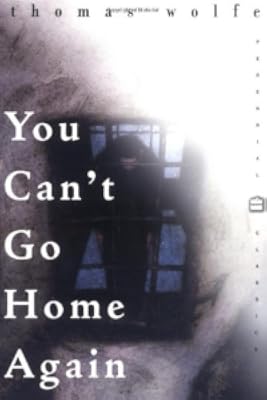
You Can't Go Home Again
by Thomas Wolfe
On This Page
Description
You Can't Go Home Again is a novel by Thomas Wolfe published posthumously in 1940. The novel tells the story of George Webber, a fledgling author, who writes a book that makes frequent references to his home town of Libya Hill. The book is a national success but the residents of the town, unhappy with what they view as Webber's distorted depiction of them, send the author menacing letters and death threats.Tags
Recommendations





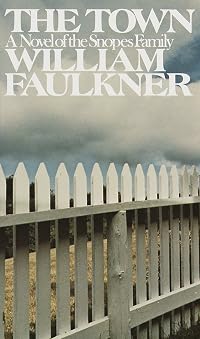

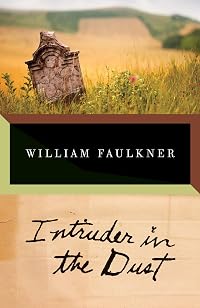


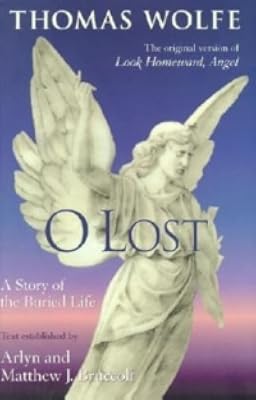

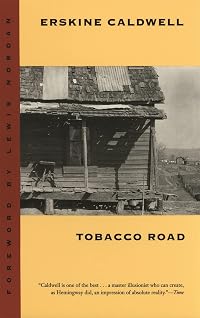
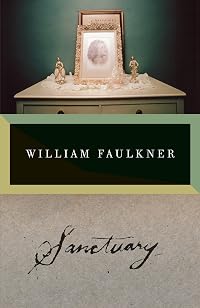
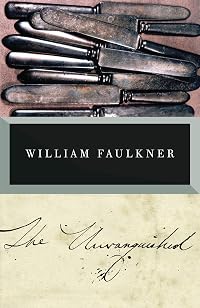
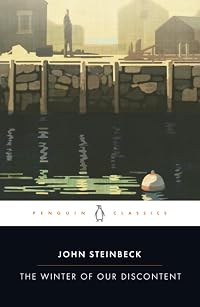


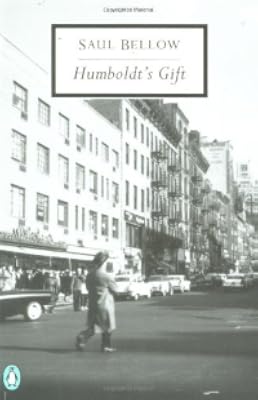

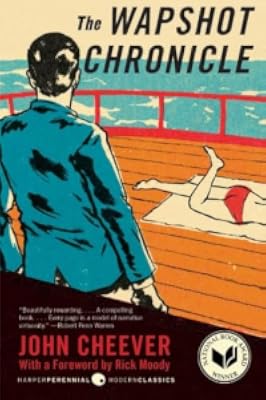

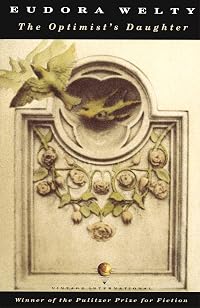


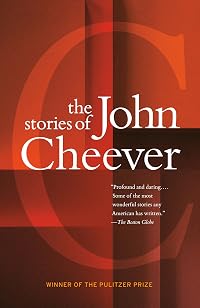
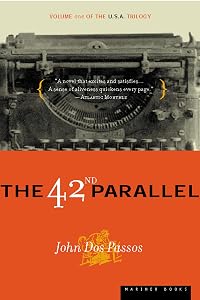
Member Recommendations
Member Reviews
I picture Thomas Wolfe as a precocious 15-year-old kid on the playground, carrying around a 2000-page magnum opus in his lunch pail and shoving other kids aside as he surveys vast soccer fields, and watches clumsy Philistines dangling like cherubs from the monkey bars.
Fast forward a few years, and he's found a generous and encouraging editor, he's traveled widely, dabbled in play writing, and now carts around a wheelbarrow with his unpublished masterpiece balanced like a paper pyramid, still observing the human beings in his vicinity critically and sniffing out myths and legends, legacies and crumbling empires, between the close-printed lines of newspaper articles...
Look Homeward, Angel was a very powerful book. It influenced me at the show more time I read it. I felt myself utterly convinced by Wolfe's skewed Romanticism. Right away, You Can't Go Home Again comes off as the same kind of novel, or possibly, another chapter from the same vast novel.
This novel encapsulates Wolfe's mind, or seems to, in all of its labyrinthine wanderings. This book is an especially good example of his eccentricities. The characters are downright caricatures, cartoonish, amusing mash-ups. George Webber, the protagonist, is no less vain or self-serving at times. He fritters away countless hours scaling the obelisks of his imagined destiny. The scenes are transparently autobiographical, or attain that effect through manipulation.
Luckily, there are many side characters, all of them charming, each exemplifying a certain downfall of forthright American monsters. Nonetheless, the texture that is woven through these absurd descriptions and even absurder soliloquies was almost painfully beautiful to me at times. I don't easily tire of Wolfe's sprawling nature.
Reading his books is like sailing a sea. You glimpse glittering treasures beneath the surface, and legions of sea monsters, but the tides carry you along and you must leave them behind.
So you see this brilliant America vanishing as you turn the pages. If you look up from the words, true life appears all of a sudden bland. There is a certain mesmerism at work in the rhythm of his words, perhaps, unlike anything else in literature. At least, you won't easily find a book so captivating, in such a plethora of ways, so angelically bound by its own laws of passion, that it sabotages your sense of proportion and glues your eyes to the page. show less
Fast forward a few years, and he's found a generous and encouraging editor, he's traveled widely, dabbled in play writing, and now carts around a wheelbarrow with his unpublished masterpiece balanced like a paper pyramid, still observing the human beings in his vicinity critically and sniffing out myths and legends, legacies and crumbling empires, between the close-printed lines of newspaper articles...
Look Homeward, Angel was a very powerful book. It influenced me at the show more time I read it. I felt myself utterly convinced by Wolfe's skewed Romanticism. Right away, You Can't Go Home Again comes off as the same kind of novel, or possibly, another chapter from the same vast novel.
This novel encapsulates Wolfe's mind, or seems to, in all of its labyrinthine wanderings. This book is an especially good example of his eccentricities. The characters are downright caricatures, cartoonish, amusing mash-ups. George Webber, the protagonist, is no less vain or self-serving at times. He fritters away countless hours scaling the obelisks of his imagined destiny. The scenes are transparently autobiographical, or attain that effect through manipulation.
Luckily, there are many side characters, all of them charming, each exemplifying a certain downfall of forthright American monsters. Nonetheless, the texture that is woven through these absurd descriptions and even absurder soliloquies was almost painfully beautiful to me at times. I don't easily tire of Wolfe's sprawling nature.
Reading his books is like sailing a sea. You glimpse glittering treasures beneath the surface, and legions of sea monsters, but the tides carry you along and you must leave them behind.
So you see this brilliant America vanishing as you turn the pages. If you look up from the words, true life appears all of a sudden bland. There is a certain mesmerism at work in the rhythm of his words, perhaps, unlike anything else in literature. At least, you won't easily find a book so captivating, in such a plethora of ways, so angelically bound by its own laws of passion, that it sabotages your sense of proportion and glues your eyes to the page. show less
This is another thing about whether you can go home. When I was little my father disowned us from both sides of our family. Only very recently, a year or two ago did I start seeing my mother's two sisters. I've been invited to a birthday for one of them this weekend, at which I would see oodles of my mother's side of the family, really all there would be to see. Do I go? Every time I think about it, I can't help saying to myself You Can't Go Home, but maybe you can? Maybe? If you suddenly for the first time, in effect, see all these people you might have spent your life with and didn't, is that like going home? I don't know....Does it work? Or will I just feel like I should have left things just as they were. show more
---------------------------------------------
I’ve always known the truth of this, you can’t go home again. Yet, as I’ve spent more time in Adelaide, my home town, over the last few months than I have collectively since I first left in the mid-eighties, I’ve found it even more painful than I expected. For the first time in so many years I’ve started taking buses again and reverting to childhood, sitting at the back, like a young love is going to magically appear next to me and…
I’ve started going to the shopping centre local to my mother again and just stepping into the place makes me want to cry. I don’t want to, please don’t make me go in there, I keep saying to my mother, it’s too big, I get lost, since I can’t tell her why. It, like the buses, is a time machine that takes me right back to my teens, right back to that heady time when everybody in the world loved you and you didn’t even notice, right back to a time where, in the tree of analysis, you took a move that determined your life from that point, but you are back there again, and this time, maybe, you could take that other move and maybe…
If you want to be in the place, the very place you are right now, if that is where you want to be, then everything that came before it, even the miserable, even the fucked-up-what-on-earth-were-you-thinking-about, every bit of it has brought you here.
So, I’m thinking I should spend some months with my mother, just move back to Adelaide for some months, why not, I’m living out of a suitcase anyway and she’d have a nice time and there really isn’t a reason it should hurt me, I love going for visits, it’s just a long visit, but. Usually I don’t go on a bus there. I never step foot in the shopping centre. You can’t go home, this won’t be going home because it can’t be. I shouldn’t be scared of this, should I. show less
---------------------------------------------
I’ve always known the truth of this, you can’t go home again. Yet, as I’ve spent more time in Adelaide, my home town, over the last few months than I have collectively since I first left in the mid-eighties, I’ve found it even more painful than I expected. For the first time in so many years I’ve started taking buses again and reverting to childhood, sitting at the back, like a young love is going to magically appear next to me and…
I’ve started going to the shopping centre local to my mother again and just stepping into the place makes me want to cry. I don’t want to, please don’t make me go in there, I keep saying to my mother, it’s too big, I get lost, since I can’t tell her why. It, like the buses, is a time machine that takes me right back to my teens, right back to that heady time when everybody in the world loved you and you didn’t even notice, right back to a time where, in the tree of analysis, you took a move that determined your life from that point, but you are back there again, and this time, maybe, you could take that other move and maybe…
If you want to be in the place, the very place you are right now, if that is where you want to be, then everything that came before it, even the miserable, even the fucked-up-what-on-earth-were-you-thinking-about, every bit of it has brought you here.
So, I’m thinking I should spend some months with my mother, just move back to Adelaide for some months, why not, I’m living out of a suitcase anyway and she’d have a nice time and there really isn’t a reason it should hurt me, I love going for visits, it’s just a long visit, but. Usually I don’t go on a bus there. I never step foot in the shopping centre. You can’t go home, this won’t be going home because it can’t be. I shouldn’t be scared of this, should I. show less
I don't read a lot of fiction, but since I was in high school, I've been told that Thomas Wolfe was one of America's greatest writers. Since, unlike Fitzgerald and Hemingway, I have never been required to read his work, I thought I would begin with You Can't Go Home Again, which has been called his magnum opus. The book surprised me.
To begin with, I didn't care for the characters. Generally, to really enjoy fiction, I must like or at least relate to the characters. But here, I was either completely indifferent toward, or actively disliked, all of them. Next, the writing style could be difficult. I understand that the style was meant to mirror the atmosphere George Webber, the main and semi-autobiographical character, was immersed in. show more But it was still difficult to wade through. George did have his issues.
What kept me reading were the moments of startling genius that blazed through. I would find myself wanting to toss the book into the backyard, only to be suddenly be pulled up short with an astounding insight into human character made, seemingly out of nowhere. These moments kept me reading.
In the end, I found myself both pleased and aggravated with George's sincere but arrogant assertions that his understanding of how a person ought to behave is the only decent course available. After completing it, I found that the book was published posthumously by Wolfe's editor. This is not Max Perkins on whom Fox Edwards was based, but the editor Wolfe left Perkins for. That explained some things. I give this book a high rating because, in spite of its flaws, it forced me to confront unpleasant traits in human beings and society. Sometimes I don't know the truth until someone like Wolfe points it out. One day, I may work up my nerve to read Wolfe again. show less
To begin with, I didn't care for the characters. Generally, to really enjoy fiction, I must like or at least relate to the characters. But here, I was either completely indifferent toward, or actively disliked, all of them. Next, the writing style could be difficult. I understand that the style was meant to mirror the atmosphere George Webber, the main and semi-autobiographical character, was immersed in. show more But it was still difficult to wade through. George did have his issues.
What kept me reading were the moments of startling genius that blazed through. I would find myself wanting to toss the book into the backyard, only to be suddenly be pulled up short with an astounding insight into human character made, seemingly out of nowhere. These moments kept me reading.
In the end, I found myself both pleased and aggravated with George's sincere but arrogant assertions that his understanding of how a person ought to behave is the only decent course available. After completing it, I found that the book was published posthumously by Wolfe's editor. This is not Max Perkins on whom Fox Edwards was based, but the editor Wolfe left Perkins for. That explained some things. I give this book a high rating because, in spite of its flaws, it forced me to confront unpleasant traits in human beings and society. Sometimes I don't know the truth until someone like Wolfe points it out. One day, I may work up my nerve to read Wolfe again. show less
I wrote this for a blog, but it pretty clearly conveys my feelings about this book.
I have for many years been in awe of Wolfe and his epic-time-description. And to put my sentiments quaintly… nothing changes. His words impress more deeply upon me each time I lift his pages. With each passing moment of my life, his literal life seems to become a greater mirror of mine. Even if you have never missed and longed for someplace so violently that even in your unconscious dreams it brings a blunt and wakeful pain to your heart… his words are worth your while.
“You found the earth too great for your one life… But it has been this way with all men… You have faltered, you have missed the way… And now, because you have known madness and show more despair… We who have stormed the ramparts of the furious earth and been hurled back, we who have been maddened by the unknowable and bitter mystery of love, we who have hungered after fame and savored all of life, the tumult, pain, and frenzy, and now sit quietly by our windows watching all that henceforth never more shall touch us—we call upon you to take heart, for we can swear to you that these things pass.”
The man knew how to pull a pen across a page- and make it last, make it momentous. It is all very real, very true. He does not mimic… for there are mortal recollections and emotions more memorable than pure sadness that only those who have left their true and beloved home—left it against their better judgement—have felt. It is a unique pain, a different yearning. A desperation unknown before that first foolish, weary step.
“…it was silly, anyhow, to feel as he did about the place. But why had he always felt so strongly the magnetic pull of home, why had he thought so much about it and remembered it with such blazing accuracy, if it did not matter, and if this little town, and the immortal hills around it, was not the only home he had on earth?”
It’s not depressing; though I know it may seem tiresome. It is rather, a companion to lonesome wanderers. A textual beacon from the past that has ceased to fade. Will never fade so long as there are restless fools such as myself who act with stubborn insistence upon a sporadic and momentary urge to move. A mistaken epiphany leads dreamers and wanderers much further into solitude with such unceremonious brevity that it is years before one can even begin to notice they are no longer home; that they have left, and kept moving. It is quite a time before one realizes that the faces surrounding are not the same, the streets have changed their course, the music sings of foreign loves; Time has passed, the past is now your future.
“…and he had an instant sense of something re-found that he had always known—something far, near, strange, and so familiar—and it seemed to him that he had never left the hills, and all that had passed in the years between was like a dream.”
Ironically, the restless wanderer has kept stagnant while the immovable past has fled. As long as there are those who once believed that love was something that one could do without, as long as we— the simply ridiculous and clearly delusional—continue to flee, his Homeric lamp will burn.
“…Must the beggar on horseback forever reel?”
“All he knew was that the years flow by like water, and that one day men come home again.” show less
I have for many years been in awe of Wolfe and his epic-time-description. And to put my sentiments quaintly… nothing changes. His words impress more deeply upon me each time I lift his pages. With each passing moment of my life, his literal life seems to become a greater mirror of mine. Even if you have never missed and longed for someplace so violently that even in your unconscious dreams it brings a blunt and wakeful pain to your heart… his words are worth your while.
“You found the earth too great for your one life… But it has been this way with all men… You have faltered, you have missed the way… And now, because you have known madness and show more despair… We who have stormed the ramparts of the furious earth and been hurled back, we who have been maddened by the unknowable and bitter mystery of love, we who have hungered after fame and savored all of life, the tumult, pain, and frenzy, and now sit quietly by our windows watching all that henceforth never more shall touch us—we call upon you to take heart, for we can swear to you that these things pass.”
The man knew how to pull a pen across a page- and make it last, make it momentous. It is all very real, very true. He does not mimic… for there are mortal recollections and emotions more memorable than pure sadness that only those who have left their true and beloved home—left it against their better judgement—have felt. It is a unique pain, a different yearning. A desperation unknown before that first foolish, weary step.
“…it was silly, anyhow, to feel as he did about the place. But why had he always felt so strongly the magnetic pull of home, why had he thought so much about it and remembered it with such blazing accuracy, if it did not matter, and if this little town, and the immortal hills around it, was not the only home he had on earth?”
It’s not depressing; though I know it may seem tiresome. It is rather, a companion to lonesome wanderers. A textual beacon from the past that has ceased to fade. Will never fade so long as there are restless fools such as myself who act with stubborn insistence upon a sporadic and momentary urge to move. A mistaken epiphany leads dreamers and wanderers much further into solitude with such unceremonious brevity that it is years before one can even begin to notice they are no longer home; that they have left, and kept moving. It is quite a time before one realizes that the faces surrounding are not the same, the streets have changed their course, the music sings of foreign loves; Time has passed, the past is now your future.
“…and he had an instant sense of something re-found that he had always known—something far, near, strange, and so familiar—and it seemed to him that he had never left the hills, and all that had passed in the years between was like a dream.”
Ironically, the restless wanderer has kept stagnant while the immovable past has fled. As long as there are those who once believed that love was something that one could do without, as long as we— the simply ridiculous and clearly delusional—continue to flee, his Homeric lamp will burn.
“…Must the beggar on horseback forever reel?”
“All he knew was that the years flow by like water, and that one day men come home again.” show less
(46) Ugh. This was mostly painful. An autobiographical rambling mess of a book which follows the life of young George Webber who just published his first book which contains thinly veiled unflattering portraits of his former hometown and the people in it - a mountain town on the verge of a boom in the rural South - likely based on Asheville, NC where the author grow up. The reception of his novel by his friends and family lead to the books title - but if you thought the aftermath of writing a novel with recognizable characters and estranging yourself from your hometown would be the central conflict of the novel - you were mistaken. While this storyline starts out promising and interesting and well-written as he takes a train home to show more attend the funeral of a family member . . . it then devolves. . .
A mish-mash of a romance with a married rich woman in Manhattan; the crash of 1929; his exile in Brooklyn, minutiae of his publishers' life (?!), his trip to Germany in the late 30's . . . on and on and on. It felt so self-indulgent and self-referential that I began to just abhor the real (not the fictional) author - God rest his poor soul that died of TB at age 38.
Anyway, there were some parts that were quite lovely and evocative, but large swathes of the book rambled and bordered on unreadable - not because they were impenetrable, but because they were dull and pointless. The final letter to his editor when he 'breaks off' his relationship with him was just overwrought and faintly ridiculous - Do (did) people really take themselves and their deep thoughts this seriously?
I don't know. Apparently said beloved publisher had to put this 'novel' (loosely defined) together from reams of unpolished manuscript posthumously. Sad. I cannot say I enjoyed it. It was a long 700 pages. Generous 3 stars - perhaps at least one for reputation and for the author being a UNC grad. show less
A mish-mash of a romance with a married rich woman in Manhattan; the crash of 1929; his exile in Brooklyn, minutiae of his publishers' life (?!), his trip to Germany in the late 30's . . . on and on and on. It felt so self-indulgent and self-referential that I began to just abhor the real (not the fictional) author - God rest his poor soul that died of TB at age 38.
Anyway, there were some parts that were quite lovely and evocative, but large swathes of the book rambled and bordered on unreadable - not because they were impenetrable, but because they were dull and pointless. The final letter to his editor when he 'breaks off' his relationship with him was just overwrought and faintly ridiculous - Do (did) people really take themselves and their deep thoughts this seriously?
I don't know. Apparently said beloved publisher had to put this 'novel' (loosely defined) together from reams of unpolished manuscript posthumously. Sad. I cannot say I enjoyed it. It was a long 700 pages. Generous 3 stars - perhaps at least one for reputation and for the author being a UNC grad. show less
This book was a major disappointment. I really looked forward to reading it for a variety of reasons. I was fascinated that the simple phrase "you can't go home again" is often prefaced by "As Thom Wolfe has said". He owned it. I wanted very much to explore the phrase and thoroughly expected this book to answer that need. The phrase is rich with psychological meaning. It talks to both our present and our past, our seeing the past rosier than it ever was and our having needs that nostalgia addresses. But my hopes were dashed. While Wolfe does explore going back home he puts a spin on it that takes us in an entirely different direction. Instead of being the prodigal son who returns to his people he is the writer who has exposed everything show more about where he came from and more than anything the failings and faults of all the people back there. No wonder no one welcomes his homecoming. He's not the hero, he's a traitor. That was not the exploration of a yearning we all feel. Has he ruined the phrase by immediately associating it was this other issue? Hopefully only those who actually read the book will be sidetracked. A cold shower may not be enough. The phrase " you can't un-ring a bell" comes to mind.
This novel again feels autobiographical. The central character, George Webber, is a southern writer struggling to focus on writing. It also is very much of a time and place. It was written at the height of the depression and with the rise of Nazis and fascists in Europe. Lots of easy targets. The roaring twenties is exposed for its lack of a real foundation. All those beliefs in growth and reward make easy targets for lack of foresight. They didn't see the ground coming out from under them. Wolfe sees them as pure speculators and hucksters, not as builders of a better future. The banker who had been seen as a pillar of the community is now someone who stole other people's money. Not surprising that Wolfe became popular, everyone wanted to put the blame on someone for their predicament. In the beginning of the story George has a wealthy older, married, mistress. He's even invited to a party she's giving with her husband. He reluctantly attends. The party turns out to be a disaster. The performer she's hired brings his own entourage and a fire ends the fiasco. George decides he can't continue with the relationship, he clearly disapproves of her life, her husband and their friends. He decides enough of that, that's all false and he wants to have nothing to do with that. He saw it as interfering with his writing. I was disappointed. That storyline seemed interesting.
George then moves to Brooklyn living a much sparer life style and concentrating on finishing his first book. Not clear that this is what Wolfe did but it would not surprise me. Once his book is published he has some money and moves to Paris, like many writers of that time. He falls under the sway of a major writer who believes that George, based on his first book, is a major writer. George appreciates the attention. He even visits Berlin. He eventually returns to New York living in a apartment with some other Southerners. I found this section of the book less engaging. I did not see the point of it. It's a shame Wolfe dies young and we have so few of his works. He was definitely a talented writer. show less
This novel again feels autobiographical. The central character, George Webber, is a southern writer struggling to focus on writing. It also is very much of a time and place. It was written at the height of the depression and with the rise of Nazis and fascists in Europe. Lots of easy targets. The roaring twenties is exposed for its lack of a real foundation. All those beliefs in growth and reward make easy targets for lack of foresight. They didn't see the ground coming out from under them. Wolfe sees them as pure speculators and hucksters, not as builders of a better future. The banker who had been seen as a pillar of the community is now someone who stole other people's money. Not surprising that Wolfe became popular, everyone wanted to put the blame on someone for their predicament. In the beginning of the story George has a wealthy older, married, mistress. He's even invited to a party she's giving with her husband. He reluctantly attends. The party turns out to be a disaster. The performer she's hired brings his own entourage and a fire ends the fiasco. George decides he can't continue with the relationship, he clearly disapproves of her life, her husband and their friends. He decides enough of that, that's all false and he wants to have nothing to do with that. He saw it as interfering with his writing. I was disappointed. That storyline seemed interesting.
George then moves to Brooklyn living a much sparer life style and concentrating on finishing his first book. Not clear that this is what Wolfe did but it would not surprise me. Once his book is published he has some money and moves to Paris, like many writers of that time. He falls under the sway of a major writer who believes that George, based on his first book, is a major writer. George appreciates the attention. He even visits Berlin. He eventually returns to New York living in a apartment with some other Southerners. I found this section of the book less engaging. I did not see the point of it. It's a shame Wolfe dies young and we have so few of his works. He was definitely a talented writer. show less
"You Can’t Go Home Again" is a story of the 1930s - outdated language and extremely politically incorrect, with long-winded sentences and paragraphs, a rambling plot, and several chapters that have little significance except to add weight to this 743 page novel.
The themes include the Stock Market crash of 1929, the Depression, and pre- World War II years seen from the eyes of an American living in Germany. On a more personal level it explores the life of a struggling writer, and his journey to success as a well known respected author.
Thomas Wolfe’s claim to fame is his character development. And in order to capitalize on that talent he must create a variety of eccentric characters and exploit their anomalous physical distinctions show more and emotional quirks. Needless to say, there is no need for using your own imagination, Mr. Wolfe makes his characters attributes crystal clear.
And the plot? You know simply by the title that the narrator can’t go home again. And that means both physically and in a more abstract philosophical way. Not only has he burned his bridges (so to speak) amongst his home town residents, but the world is changing so quickly and so irrevocably that the familiar past life is gone - forever. The cancel culture of today will not approve of Wolfe’s philosophy. In a sentence - as an author “There can be no compromise with the truth.” If the truth hurts - so be it.
Having actually lived in Germany prior to the start of WW II, upon his return to the USA, Thomas Wolfe was outspoken about the atrocities he witnessed against the Jews. In many ways this novel is autobiographical. And interestingly, "You Can’t Go Home Again" was not published until after Thomas Wolfe’s death in 1938 - and his books were then banned in Germany.
The authenticity, themes, and observations could easily have rated this book a 5 Star and perhaps upon it’s first release it did rate that well, but by today’s standards it is a bit bloated and several whole chapters could have been eliminated to make the plot more powerful. show less
The themes include the Stock Market crash of 1929, the Depression, and pre- World War II years seen from the eyes of an American living in Germany. On a more personal level it explores the life of a struggling writer, and his journey to success as a well known respected author.
Thomas Wolfe’s claim to fame is his character development. And in order to capitalize on that talent he must create a variety of eccentric characters and exploit their anomalous physical distinctions show more and emotional quirks. Needless to say, there is no need for using your own imagination, Mr. Wolfe makes his characters attributes crystal clear.
And the plot? You know simply by the title that the narrator can’t go home again. And that means both physically and in a more abstract philosophical way. Not only has he burned his bridges (so to speak) amongst his home town residents, but the world is changing so quickly and so irrevocably that the familiar past life is gone - forever. The cancel culture of today will not approve of Wolfe’s philosophy. In a sentence - as an author “There can be no compromise with the truth.” If the truth hurts - so be it.
Having actually lived in Germany prior to the start of WW II, upon his return to the USA, Thomas Wolfe was outspoken about the atrocities he witnessed against the Jews. In many ways this novel is autobiographical. And interestingly, "You Can’t Go Home Again" was not published until after Thomas Wolfe’s death in 1938 - and his books were then banned in Germany.
The authenticity, themes, and observations could easily have rated this book a 5 Star and perhaps upon it’s first release it did rate that well, but by today’s standards it is a bit bloated and several whole chapters could have been eliminated to make the plot more powerful. show less
Members
- Recently Added By
Lists

Excessive, Maximalist, Encyclopedic
10 works; 1 member

Edward Gorey Covers
150 works; 8 members

Books Set in North Carolina
84 works; 7 members

1964 College Preparatory Reading List
202 works; 8 members

Recommended Reading : 600 Classics Reviewed, Editors of Salem Press, 2015
634 works; 6 members

Just Kids by Patti Smith
43 works; 1 member
Author Information

147+ Works 8,945 Members
Thomas Wolfe was born in Asheville, North Carolina on October 3, 1900. He graduated from the University of North Carolina and Harvard University. He taught at New York University from 1924 to 1930. His four long autobiographical novels are Look Homeward, Angel; Of Time and the River; The Web and the Rock; and You Can't Go Home Again. He also wrote show more short stories that were collected in The Hills Beyond and From Death to Morning. He wrote several plays including Welcome to Our City. From an early bout with pneumonia, he suffered from tuberculosis of the lungs, which led to fatal tuberculosis of the brain. He died following brain surgery on September 15, 1938 at age 37. (Bowker Author Biography) show less
Some Editions
Awards and Honors
Notable Lists
Series
Belongs to Publisher Series
Perennial Library (P314)
Work Relationships
Is contained in
Has the (non-series) prequel
Is abridged in
Has as a student's study guide
Common Knowledge
- Canonical title*
- Es führt kein Weg zurück
- Original publication date
- 1940; 1934
- People/Characters
- George Webber
- Important places
- New York, New York, USA; Asheville, North Carolina, USA; Paris, France; Berlin, Germany
- First words
- It was the hour of twilight on a soft spring day toward the end of April in the year of Our Lord 1929, and George Webber leaned his elbows on the sill of his back window and looked out at what he could see of New York.
- Last words
- (Click to show. Warning: May contain spoilers.)Something has spoken to me in the night, burning the tapers of the waning year; something has spoken in the night, and told me I shall die, I know not where. Saying: "To lose the earth you know, for greater knowing; to lose the life you have, for greater life; to leave the friends you loved, for greater loving; to find a land more kind than home, more large than earth—Whereon the pillars of this earth are founded, toward which the conscience of the world is tending—a wind is rising, and the rivers flow."
*Some information comes from Common Knowledge in other languages. Click "Edit" for more information.
Classifications
Statistics
- Members
- 1,923
- Popularity
- 11,086
- Reviews
- 29
- Rating
- (4.01)
- Languages
- 5 — Czech, English, French, German, Russian
- Media
- Paper, Audiobook, Ebook
- ISBNs
- 28
- ASINs
- 47