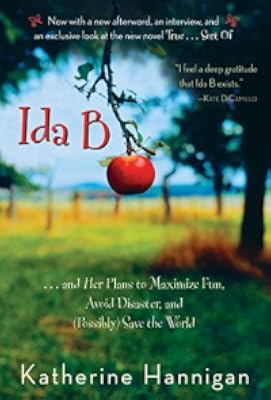
Ida B: . . . and Her Plans to Maximize Fun, Avoid Disaster, and (Possibly) Save the World
by Katherine Hannigan
On This Page
Description
In Wisconsin, fourth-grader Ida B spends happy hours being home-schooled and playing in her family's apple orchard, until her mother begins treatment for breast cancer and her parents must sell part of the orchard and send her to public school.Tags
Recommendations

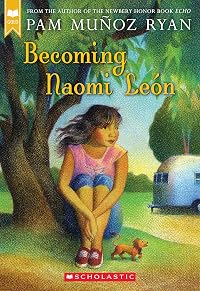
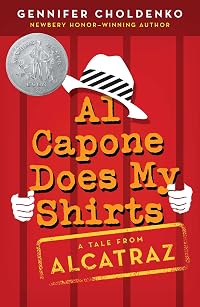
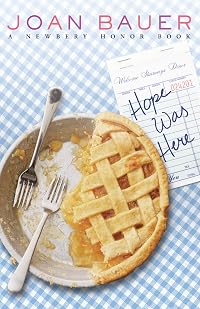
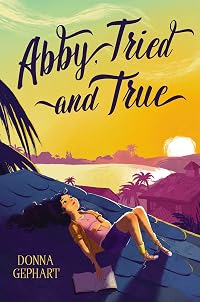
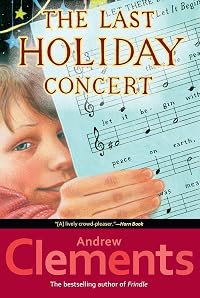

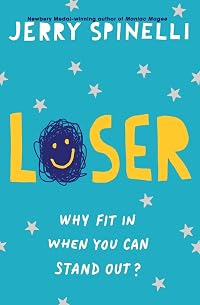
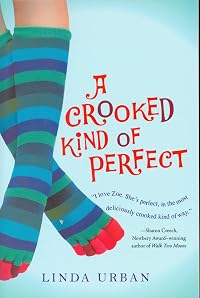
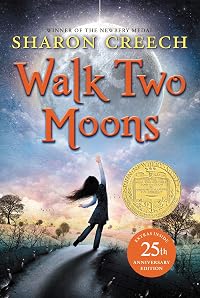








Member Recommendations

caroljeanr child coping with cancer in the family
Member Reviews
Ida B. Applewood has been home-schooled for the last five years. She tried kindergarten but was so unhappy with the rules and regimentation that her parents, apple farmers, decided it would be best if they educated her at home. She’s been blissfully happy ever since. However, now that she’s nine, a big and terrible change has come. “Mama” has been diagnosed with breast cancer, and the treatments she must undergo will not allow her to attend to Ida B.’s instruction. Furthermore, without Ida B.’s mother’s help, “Daddy” will have to do all the farm work himself. The girl has to attend school. What’s more, she has to cope with the fact that in order to pay for her mother’s medical treatment, her father has to sell some show more of the family’s beloved orchard.
Ida B. is not so self-centered that she is not distressed by her mother’s illness and her father’s sadness, but she feels she must harden her heart and sharpen its edges against the blows she has been dealt. It’s the only way to cope with returning to school.
Once at school, she rejects the warmth of her teacher and the friendliness of the students in her class. She discovers, as well, that it is the family of one of her classmates who has purchased the Applewood land. They’re building a house on the property, and they have cut down the lovely apple trees that were Ida B.’s friends.
It takes effort for Ida B. to maintain her hard-heartedness, and the author is very good at depicting the confusion of emotions in her young protagonist as the girl attempts to cope with significant life changes.
At first, I didn’t like this novel at all. Ida B. is more than a bit precious. She names and talks to trees and brooks, who answer her back, and she’s obviously intended to be a darling, nature-loving eccentric. I don’t see any reason why the author couldn’t have left out these annoyingly twee verbal and behavioral tics. It would have made for a far better novel.
So, in the end, I’ve got mixed feelings about this book for girls 8 to 12 years of age. The strengths of the novel include its sensitive rendering of a child’s emotional turmoil, but, unfortunately, they’re coupled with some of the most irritating and sentimental characteristics of American children’s literature. show less
Ida B. is not so self-centered that she is not distressed by her mother’s illness and her father’s sadness, but she feels she must harden her heart and sharpen its edges against the blows she has been dealt. It’s the only way to cope with returning to school.
Once at school, she rejects the warmth of her teacher and the friendliness of the students in her class. She discovers, as well, that it is the family of one of her classmates who has purchased the Applewood land. They’re building a house on the property, and they have cut down the lovely apple trees that were Ida B.’s friends.
It takes effort for Ida B. to maintain her hard-heartedness, and the author is very good at depicting the confusion of emotions in her young protagonist as the girl attempts to cope with significant life changes.
At first, I didn’t like this novel at all. Ida B. is more than a bit precious. She names and talks to trees and brooks, who answer her back, and she’s obviously intended to be a darling, nature-loving eccentric. I don’t see any reason why the author couldn’t have left out these annoyingly twee verbal and behavioral tics. It would have made for a far better novel.
So, in the end, I’ve got mixed feelings about this book for girls 8 to 12 years of age. The strengths of the novel include its sensitive rendering of a child’s emotional turmoil, but, unfortunately, they’re coupled with some of the most irritating and sentimental characteristics of American children’s literature. show less
I read this book so long ago, I can't remember much about the when. What I do remember is how much I loved the story and the quote that was printed at the top of the front cover from Kate DiCamillo that caused me to read the book in the first place. It read, "I feel a deep gratitude that Ida B exists." At least, that's how I remember the quote having gone. In any case, it's a good quote and a true one. I feel the same way. Ida B is one of the few unparalleled joys that children's literature has given me over the past decade. The aspect that I like the most about this book is the gentle competent nature of its adults. So many children's books depend on buffoonish, possibly evil adults to build a plot around. This story focused instead on show more life handing out a lemon and everyone dealing with it as well as they could. I think my favorite adult character was her teacher, and not because she was one of those uncontrolled brilliant geniuses full of quirky Ms. Frizzle-like antics. For once, a teacher was presented in the most honest of terms, as someone who exhibited endless patience above all else. In reality, teachers typically show greatness when they offer patience more than any other quality. It's the general acceptance that teaching is two or three parts listening for every one part sharing advice. My favorite scenes all came on the recess yard when Ida sat with her teacher, who would inevitably ask if there was anything she wanted to talk about only to be answered with silence. She would never get upset. She wouldn't walk off. She'd just sit there with her, not pushing, just waiting until the time was right for Ida. That is great teaching. That is great parenting. That is what is means to be truly worthwhile adult. I feel a deep gratitude that Ida B exists. I feel a deeper gratitude that Katherine Hannigan created a world where someone of Ida's depth could exist. This book is a masterpiece. show less
My main problem with this book is that it's trying too hard to be Kate DiCamillo -- and I'm going to admit something here: I generally don't like Kate DiCamillo's writing. (The exception to this would be The Tale of Despereaux.) So, to me, Ida B. felt disingenuous, like the author was straining to make the main character unique and likable. Ida B.'s narration has a weird, folksy tone that I spent a large portion of the book trying to place. Was it Southern? Appalachian? All-purpose country-girl? In my head, I couldn't make it sound right for rural Wisconsin, which is where the book is set.
The story, once you get beyond the narrative voice, is fairly good: Ida B. spends most of her time playing in the orchard (talking to the trees, which show more she has named) and by the brook near her house. She is home-schooled because traditional schooling didn't work for her, a free spirit. When her mother becomes ill, Ida B. is sent back to school for the first time in four years, and her father has to sell part of the farm (including a few of Ida B.'s beloved trees) to pay the bills. Ida B. must find some way to cope with these changes in her life, and her fears about her mother's health.
I'm not sorry to have read the book, and I did find it a quick read. I imagine its ideal reader (probably a big Kate DiCamillo fan) would really enjoy it . . . I'm just not that reader. show less
The story, once you get beyond the narrative voice, is fairly good: Ida B. spends most of her time playing in the orchard (talking to the trees, which show more she has named) and by the brook near her house. She is home-schooled because traditional schooling didn't work for her, a free spirit. When her mother becomes ill, Ida B. is sent back to school for the first time in four years, and her father has to sell part of the farm (including a few of Ida B.'s beloved trees) to pay the bills. Ida B. must find some way to cope with these changes in her life, and her fears about her mother's health.
I'm not sorry to have read the book, and I did find it a quick read. I imagine its ideal reader (probably a big Kate DiCamillo fan) would really enjoy it . . . I'm just not that reader. show less
Ida B is a heroine in the mold of some of my all time favorites - Laura Ingalls Wilder: Pippi Longstocking; Ramona Quimby; even the more recent Clementine - although I'm most sure that she would be bosom friends with Anne Shirley (of Green Gables fame). The things that I loved best about Anne Shirley are the things that I love best about Ida B: Her connection to nature - talking with the apple trees, chatting with the brook; Her curiousity and ingenuity - tired of having to constantly wash her face, Miss Ida B tries to come up with an ill-fated plan for a Soap Mask; Her troubles with conformity - her first interaction with schooling and all its rules and 'wonderful things everywhere that you couldn't touch or take time for' was such a show more soul-crushing experience that her parents decided to homeschool her, to everyone's benefit.
But when something unexpected happens, and Ida B's mama gets cancer, everything changes. Between the money troubles that lead to selling off parts of their land, Ida B's daddy turning into some tense and promise-breaking stranger, and her mama's sickness & treatment stealing not only her energy and her health, but what Ida B perceives as her 'real mama': her spirit, her light. Things get truly difficult in their household when Ida B has to return to public school, because her mom is just not well enough to teach her anymore.
And when that happens, there's a passage so simple and concise, but breathtakingly true, about how you learn to cope when people let you down or betray you (as Ida B sees it). About how you have to harden your heart in order to just go on. I'm going to include it here, just so you can see how spectacular it is, how sad and awful and... right.
Armed with this new heart, Ida B concots a plan to "just shy of death and dismemberment, to fight the craziness that had taken over my family and was invading my valley. I'd come up with a plan, and they'd be sorry, every single one of them, that they had to reckon with Ida B."
How Ida B puts that plan into action - and the strength it takes her to carry it out, and then to learn to open her heart back up - are what the rest of the book focuses on.
And I loved it because A) Ida B is stubborn & she can stick to that plan of making everybody sorry for as long as humanly possible (and you, as a reader, can't blame her)
B)The other characters in the book deal with Ida B & her stubbornness in different ways - with patience, anger, distrust, confusion - All appropriate responses to a girl who is determined to not have any fun, or be happy, because then it might prove her parents right in sending her back to school. But none of the characters are characitures - Her dad gets mad, but he also tries to stay calm. Her mom is disappointed, but tries not to push to hard. Her teacher (and boy do I love me an awesome teacher) just sits, and schemes her own schemes, and waits Ida B out.
C) When Ida B finally realizes that maybe she's got some apologizing to do, and maybe she's gone too far in this whole campaign, there are no miracle fixes. She has consequences to her previous behaviors, and they're not ridiculous either - no blood feuds or instant bonding here - Just realistic sucking it up and saying you're sorry, and having the other person maybe not looking at you out of the corners of their eyes all the time.
Anyways, Ida B is amazing, and everybody should read it, and then figure out a way to put Lucy Maud Montgomery next to Katherine Hannigan on your bookshelves, just so Ida B and Anne can coexist somewhere besides my brain. show less
But when something unexpected happens, and Ida B's mama gets cancer, everything changes. Between the money troubles that lead to selling off parts of their land, Ida B's daddy turning into some tense and promise-breaking stranger, and her mama's sickness & treatment stealing not only her energy and her health, but what Ida B perceives as her 'real mama': her spirit, her light. Things get truly difficult in their household when Ida B has to return to public school, because her mom is just not well enough to teach her anymore.
And when that happens, there's a passage so simple and concise, but breathtakingly true, about how you learn to cope when people let you down or betray you (as Ida B sees it). About how you have to harden your heart in order to just go on. I'm going to include it here, just so you can see how spectacular it is, how sad and awful and... right.
"But as I cried, my heart was being transformed. It was getting smaller and smaller in my chest and hardening up like a rock. The smaller and harder my heart got, the less I cried, until finally I stopped completely.
By the time I was finished, my heart was a sharp, black stone that was small enough to fit in the palm of my hand. It was so hard nobody could break it and so sharp it would hurt anybody who touched it.
Armed with this new heart, Ida B concots a plan to "just shy of death and dismemberment, to fight the craziness that had taken over my family and was invading my valley. I'd come up with a plan, and they'd be sorry, every single one of them, that they had to reckon with Ida B."
How Ida B puts that plan into action - and the strength it takes her to carry it out, and then to learn to open her heart back up - are what the rest of the book focuses on.
And I loved it because A) Ida B is stubborn & she can stick to that plan of making everybody sorry for as long as humanly possible (and you, as a reader, can't blame her)
B)The other characters in the book deal with Ida B & her stubbornness in different ways - with patience, anger, distrust, confusion - All appropriate responses to a girl who is determined to not have any fun, or be happy, because then it might prove her parents right in sending her back to school. But none of the characters are characitures - Her dad gets mad, but he also tries to stay calm. Her mom is disappointed, but tries not to push to hard. Her teacher (and boy do I love me an awesome teacher) just sits, and schemes her own schemes, and waits Ida B out.
C) When Ida B finally realizes that maybe she's got some apologizing to do, and maybe she's gone too far in this whole campaign, there are no miracle fixes. She has consequences to her previous behaviors, and they're not ridiculous either - no blood feuds or instant bonding here - Just realistic sucking it up and saying you're sorry, and having the other person maybe not looking at you out of the corners of their eyes all the time.
Anyways, Ida B is amazing, and everybody should read it, and then figure out a way to put Lucy Maud Montgomery next to Katherine Hannigan on your bookshelves, just so Ida B and Anne can coexist somewhere besides my brain. show less
Ida B will always be on of my favorite kid's books. I love how quirky and real Ida B is. Dealing with her mom's cancer, Ida B has a very realistic response of lashing out at the world out of fear and missing her old life. I really appreciate that the conflict in this book is primarily internal as Ida B struggles to deal with the changes of her life. I think this book would be a great way to teach metaphor and simile to students as these literary devices are used throughout Ida B's internal monologues to compare and contrast what Ida B is familiar with to things that she isn't to help her cope with the changes.
The most remarkable thing about Ida B. is the voice of the protagonist, Ida. B. Applewood. Beginning when she was kindergarten age and ending in fourth grade, this story in first person describes a young girl’s life with her parents in a rural Wisconsin setting. She spends endless hours blissfully alone in nature—communing with the brook, the trees and a nearby mountain—and she prefers homeschooling to the local public school. Ida B. is intuitively bright and articulate, and has an ability for describing her feelings wryly, honestly and with the clarity of an inward-looking old-soul-of-a-child.
Following news that her mother has breast cancer she retreats from everything and everyone—and her description of her big, open heart show more becoming a small, hard, black stone perfectly captures how this devastating news would affect a young girl. The way Ida B. subsequently copes with her mother’s illness is so believable that this book can be used to help students through similar situations—either to instill compassion or to discuss ways of coping with family crises.
Though the setting is rural/small town, Ida B. is thoroughly contemporary in all aspects. Caring for the environment is a theme woven throughout the book, evident with Ida’s father telling her early on that they are caretakers of their land and it can never, spiritually, belong to them, and more explicitly in the way she intimately communicates with her natural surroundings. Though the setting is rural/small town, Ida B. is thoroughly contemporary in all aspects. Caring for the environment is a theme woven throughout the book, evident with Ida’s father telling her early on that they are caretakers of their land and it can never, spiritually, belong to them, and more explicitly in the way she intimately communicates with her natural surroundings. Some parents’ preference of homeschooling to public education is also an aspect of current American culture, which is reflected in the Applewoods’ initial decision to homeschool their daughter. Target audience grades 4-6.
Hannigan, K. (2004). Ida B: --and her plans to maximize fun, avoid disaster, and (possibly) save the world. New York: Greenwillow Books. show less
Following news that her mother has breast cancer she retreats from everything and everyone—and her description of her big, open heart show more becoming a small, hard, black stone perfectly captures how this devastating news would affect a young girl. The way Ida B. subsequently copes with her mother’s illness is so believable that this book can be used to help students through similar situations—either to instill compassion or to discuss ways of coping with family crises.
Though the setting is rural/small town, Ida B. is thoroughly contemporary in all aspects. Caring for the environment is a theme woven throughout the book, evident with Ida’s father telling her early on that they are caretakers of their land and it can never, spiritually, belong to them, and more explicitly in the way she intimately communicates with her natural surroundings. Though the setting is rural/small town, Ida B. is thoroughly contemporary in all aspects. Caring for the environment is a theme woven throughout the book, evident with Ida’s father telling her early on that they are caretakers of their land and it can never, spiritually, belong to them, and more explicitly in the way she intimately communicates with her natural surroundings. Some parents’ preference of homeschooling to public education is also an aspect of current American culture, which is reflected in the Applewoods’ initial decision to homeschool their daughter. Target audience grades 4-6.
Hannigan, K. (2004). Ida B: --and her plans to maximize fun, avoid disaster, and (possibly) save the world. New York: Greenwillow Books. show less
I really liked this book! This book is about a little girl whose mom gets breast cancer and she ends up losing certain things in her life that she loves, and she goes through a dark phase. She is trying to find her way on her own. Sometimes you have to give things up you love, for someone you love. One of the reasons why I like this book is because of the writing style. It's very engaging to me because I don't really think of tress that can talk so when I read this book, it was interesting to see Ida B's conversation with these trees. For example, "Hey, what's going on?", I yelled... Finally I heard Gertrude whisper, "You tell her Viola"... "All right," Viola whispered back..." It's just interesting to read, because you usually don't show more talk to trees in real life. I also really liked Ida B as a character. She really was acting like a child throughout this book. She was very believable. For example in the story her dad tells her they will have to sell some land in order to pay for her mothers chemotherapy. Well some of that land had her favorite trees on it, Ida B then went into shut down mode. She would keep talking to a minimum. For example "So I just said, "Not now Ronnie."" She really made me believe her as a character, because she stuck with being a child, and not realizing how important that chemo could be for her mother. show less
Members
- Recently Added By
Published Reviews
ThingScore 75
I love this book I read it as a child and have read it multiple times.
added by sgd119
Lists

GCS 6th grade summer reading list
171 works; 4 members
Author Information

7 Works 3,296 Members
Awards and Honors
Awards
Common Knowledge
- Alternate titles
- Ida
- Original publication date
- 2004
- People/Characters
- Ida B. Applewood (9 years old); Mama (Ida | Evan); Ms. Washington (Ida B's fourth grade teacher); Claire (Ida B's classmate who became her new neighbor)
- Important places
- South Carolina, USA
- Dedication
- For the hills and the trees, the wind, the rivers, and the stars. And for Victor. Always-- K. H.
- First words
- "Ida B," Mama said to me on one of those days that start right and just keep heading toward perfect until you go to sleep, "when you're done with the dishes, you can go and play."
- Quotations
- It (my brain) thought about that magic that happens when you tell a story right, and everybody who hears it not only loves the story, but they love you a little bit ,too, for telling it so well.
- Last words
- (Click to show. Warning: May contain spoilers.)"Good night, Ida B," a quiet chorus came back, riding on the breeze.
Classifications
Statistics
- Members
- 2,655
- Popularity
- 7,030
- Reviews
- 77
- Rating
- (3.97)
- Languages
- 5 — English, French, German, Italian, Spanish
- Media
- Paper, Audiobook, Ebook
- ISBNs
- 28
- ASINs
- 9