On This Page
Description
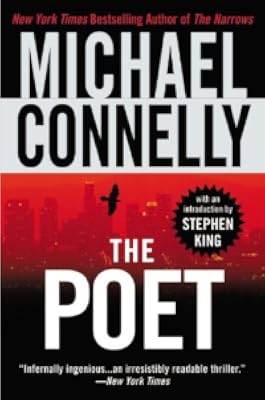
FROM THE #1 BESTSELLING AUTHOR OF THE HARRY BOSCH AND LINCOLN LAWYER SERIESAn electrifying standalone thriller that breaks all the rules! With an introduction by Stephen King.
Death is reporter Jack McEvoy's beat: his calling, his obsession. But this time, death brings McEvoy the story he never wanted to write—and the mystery he desperately needs to solve. A serial killer of unprecedented savagery and cunning is at large. His targets: homicide cops, each haunted by a murder case he show more couldn't crack. The killer's calling card: a quotation from the works of Edgar Allan Poe. His latest victim is McEvoy's own brother. And his last...may be McEvoy himself.
. show less
Tags
Recommendations
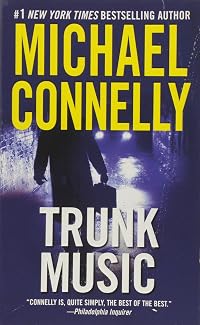
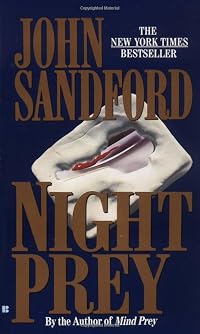
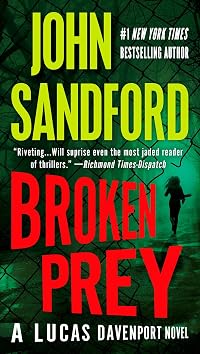

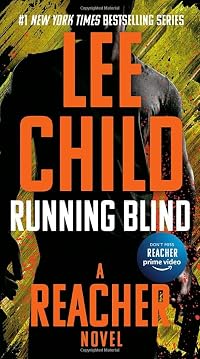
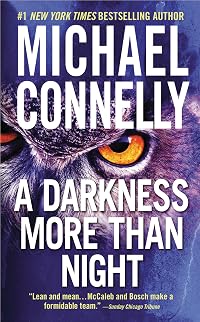
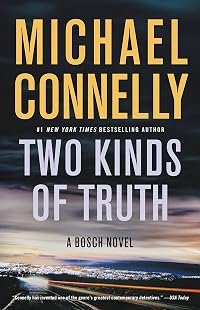
Member Recommendations
mikedraper Fun book by a well regarded author.
mikedraper Book award winner, highly regarded, well written.
mikedraper One of a great author's last books. Brings me back to the old TV westerns.
mikedraper Very descriptive, almost a paranormal.
Member Reviews
I’m not a fan of these everything except the kitchen sink profiler novels. So, the fact Connelly kept my interest is amazing. These books seem to test our ability to reconcile unspeakable evil with the rational, well-ordered world we need to inhabit to maintain our own sanity.
An interesting look at an FBI murder investigation from a journalist's point of view. Jack Riley is an investigative reporter with a plum beat with the Rocky Mountain News where he covers the police beat on his own terms. As the story opens, Jack finds out that his twin brother, Sean, has killed himself in a deserted parking lot of a National Park. The thinking was that an unsolved gruesome murder has haunted Sean, and he couldn't take it any more.
When Jack breaks the story, he uncovers details that bring in the FBI to begin to link his brother's suicide with similar suicides by cops. The other side of the story that Jack finds, and that the FBI investigates, are the series of children's murders committed to which these same cops are show more assigned.
Because of Jack's breaking the case wide open, he is given access to the FBI during its investigation of this case. The common theme of suicide with quotes from Edgar Allen Poe's works begin to point to murders, not suicides. And we are also given the POV of a pedophile named Gladden, released from years-long imprisonment on a technicality, who continues to stalk children now that he is back on the streets.
While the ending seemed like a necessary wrap-up due to the length of this book, the story itself is a good one and kept me and my book group guessing. show less
When Jack breaks the story, he uncovers details that bring in the FBI to begin to link his brother's suicide with similar suicides by cops. The other side of the story that Jack finds, and that the FBI investigates, are the series of children's murders committed to which these same cops are show more assigned.
Because of Jack's breaking the case wide open, he is given access to the FBI during its investigation of this case. The common theme of suicide with quotes from Edgar Allen Poe's works begin to point to murders, not suicides. And we are also given the POV of a pedophile named Gladden, released from years-long imprisonment on a technicality, who continues to stalk children now that he is back on the streets.
While the ending seemed like a necessary wrap-up due to the length of this book, the story itself is a good one and kept me and my book group guessing. show less
Really really good with lots of twists and turns (a couple of which I should have seen coming but didn't). Not only does Connelly craft a great plot, his characters are wonderful multiple layers of humanity. Even a character who you may think is a stock character turns out not to be. Jack McEvoy is the star of this one, a newspaperman whose policeman brother is thought to have committed suicide over a tragic case that he has been unable to solve. Jack wants to figure out the why and uncovers a whole heck of a lot more. He ends up getting himself embedded with the FBI (and in-bedded with one particular agent, Rachel Walling). You never quite know what's coming next and just when you think it's over, it's not. (I am a huge fan of Harry show more Bosch and wasn't sure how I'd feel about a non-HB book by Connelly, but I am sold.) show less
Since my riveting binge of the TV show Bosch during last year’s lockdown, I’ve started reading Michael Connelly’s books focused on his most successful character and reached volume nr. 6 so far, but I’ve become aware that this very prolific author has written a good number of other standalone novels or series, so I decided to expand my search in a wider circle: once I found out that The Poet, first book in the Jack McEvoy series, is also connected to one of the next books for Harry Bosch, I decided to try it - learning that the story was about the search for a serial killer was also a strong motivator.
Jack McEvoy is a journalist specialized in the analysis of violent crimes: when his twin brother Sean, a detective with the Denver show more PD, takes his own life, Jack is shocked but led to think, along everyone else, that Sean was depressed because of his inability to solve a brutal murder he was working on. Searching for details on the case, Jack finds some evidence that seems to indicate Sean’s death could have been a murder disguised as a suicide, and so he starts a search that points toward a serial killer whose actions have eluded the attention of the police and also of the FBI, that is now called into action to uncover the truth under a so-far ignored chain of police officers’ “suicides”. With the help of FBI agent Rachel Walling, Jack joins the pursuit of the killer nicknamed “The Poet” from the Edgar Allan Poe quotes found on the murder scenes: the journalist is driven by the need to discover the truth about what happened to Sean, of course, but there is also the possibility of a huge scoop on the horizon, because discovery and capture of the Poet will gain nationwide attention…
The Poet starts in a quiet, almost sedate way, but once the narrative gears are set in motion the story takes on the speed of an avalanche, inexorably advancing toward the final showdown (which works also as a “to be continued” because not everything is resolved here): I have by now become familiar with Connelly’s narrative style and his successful way of taking the readers through wrong turns and blind alleys, or to trick them with some misleading clues, but here he literally does it with a vengeance, delivering a compulsive read that I found difficult to put down. One of the winning elements in this novel is the change in POV, which alternates between Jack McEvoy (presented in third person) and William Gladden, the killer (presented in first person): where Jack’s segments prove quite intriguing, because the cat-and-mouse game between law enforcement and its prey is based on the collection of clues and a desperate battle against time, Gladden’s sections take us into the mind of this man who is not only a cold-blooded murderer, but also a very organized pedophile, which adds an element of horror to the whole story - not the horror of supernatural monsters, which we can easily dismiss because we subconsciously know they don’t exist, but the horror of a very real, dangerous and disturbed mind.
Considering the subject matter and the kind of emotional triggers it involves, I admired the author’s very light hand in dealing with it and in focusing more on the psychological aspects of the issue rather than on its more shocking ones, while refraining from any kind of moral judgment. On one hand we learn that Gladden was the victim of abuse in his childhood, but on the other we cannot forget that he’s become in turn the monster whose victims have suffered the same kind of abuse before being murdered: both facts are presented as starkly and unemotionally as possible, leaving any form of further consideration to the readers themselves, which is a choice I always appreciate.
Strangely enough, while I literally devoured the novel, I could never feel any kind of attachment to the main character: with any other story this might have proved counterproductive, but in this case the excitement of the chase ended up offering the kind of balance I needed to counteract my displeasure with McEvoy. What I did not like in him is the kind of duality at the roots of his character: of course he wants to know the truth of what happened to his brother, of course he wants justice for him and all the other victims, but underneath it all there is always the need to turn it into the next Great Story, to win the fame and acclaim he craves, even if he does not consciously admit it. Connelly’s characters are more often than not flawed, which makes them human and relatable, but I found Jack’s flaws irritating, and his desire to glean the hard facts for the sake of a Pulitzer-worthy series of articles feels… sinful, for want of a better word, because the victim who started the whole search was his brother, and from where I stand gaining fame and recognition from the death of a loved one feels like an empty accomplishment, if not a vile one.
FBI agent Rachel Walling is, on the other hand, an intriguing character who I believe deserved more narrative space, so I hope that her return in the Harry Bosch novel linked to this one will offer further insights into her personality. What we see here is an individual who is both driven and ambitious, but holds some darkness from the past, and I look forward to learning more about her. Her romantic relationship with McEvoy in The Poet never convinced me fully, partly because of my expressed prejudice against him, and partly because it seemed to evolve too quickly, just as it ended equally quickly, and since there is no POV from Rachel it’s impossible to get into her mind and see what makes her tick.
If, toward the end, the novel falters a little as it falls into the time-honored device of having the bad guy offer a long, drawn-out explanation to McEvoy before trying to kill him, it picks up by leaving the door open for the further exploits of the Poet, to which I certainly look forward. Given my lack of empathy with the main character, I doubt I will read other books in the Jack McEvoy series, but on the other hand The Poet confirmed that Michael Connelly is the first of my go-to authors when I am in the mood for a good thriller or a crime novel. And there’s still a lot of ground of explore there… show less
Jack McEvoy is a journalist specialized in the analysis of violent crimes: when his twin brother Sean, a detective with the Denver show more PD, takes his own life, Jack is shocked but led to think, along everyone else, that Sean was depressed because of his inability to solve a brutal murder he was working on. Searching for details on the case, Jack finds some evidence that seems to indicate Sean’s death could have been a murder disguised as a suicide, and so he starts a search that points toward a serial killer whose actions have eluded the attention of the police and also of the FBI, that is now called into action to uncover the truth under a so-far ignored chain of police officers’ “suicides”. With the help of FBI agent Rachel Walling, Jack joins the pursuit of the killer nicknamed “The Poet” from the Edgar Allan Poe quotes found on the murder scenes: the journalist is driven by the need to discover the truth about what happened to Sean, of course, but there is also the possibility of a huge scoop on the horizon, because discovery and capture of the Poet will gain nationwide attention…
The Poet starts in a quiet, almost sedate way, but once the narrative gears are set in motion the story takes on the speed of an avalanche, inexorably advancing toward the final showdown (which works also as a “to be continued” because not everything is resolved here): I have by now become familiar with Connelly’s narrative style and his successful way of taking the readers through wrong turns and blind alleys, or to trick them with some misleading clues, but here he literally does it with a vengeance, delivering a compulsive read that I found difficult to put down. One of the winning elements in this novel is the change in POV, which alternates between Jack McEvoy (presented in third person) and William Gladden, the killer (presented in first person): where Jack’s segments prove quite intriguing, because the cat-and-mouse game between law enforcement and its prey is based on the collection of clues and a desperate battle against time, Gladden’s sections take us into the mind of this man who is not only a cold-blooded murderer, but also a very organized pedophile, which adds an element of horror to the whole story - not the horror of supernatural monsters, which we can easily dismiss because we subconsciously know they don’t exist, but the horror of a very real, dangerous and disturbed mind.
Considering the subject matter and the kind of emotional triggers it involves, I admired the author’s very light hand in dealing with it and in focusing more on the psychological aspects of the issue rather than on its more shocking ones, while refraining from any kind of moral judgment. On one hand we learn that Gladden was the victim of abuse in his childhood, but on the other we cannot forget that he’s become in turn the monster whose victims have suffered the same kind of abuse before being murdered: both facts are presented as starkly and unemotionally as possible, leaving any form of further consideration to the readers themselves, which is a choice I always appreciate.
Strangely enough, while I literally devoured the novel, I could never feel any kind of attachment to the main character: with any other story this might have proved counterproductive, but in this case the excitement of the chase ended up offering the kind of balance I needed to counteract my displeasure with McEvoy. What I did not like in him is the kind of duality at the roots of his character: of course he wants to know the truth of what happened to his brother, of course he wants justice for him and all the other victims, but underneath it all there is always the need to turn it into the next Great Story, to win the fame and acclaim he craves, even if he does not consciously admit it. Connelly’s characters are more often than not flawed, which makes them human and relatable, but I found Jack’s flaws irritating, and his desire to glean the hard facts for the sake of a Pulitzer-worthy series of articles feels… sinful, for want of a better word, because the victim who started the whole search was his brother, and from where I stand gaining fame and recognition from the death of a loved one feels like an empty accomplishment, if not a vile one.
FBI agent Rachel Walling is, on the other hand, an intriguing character who I believe deserved more narrative space, so I hope that her return in the Harry Bosch novel linked to this one will offer further insights into her personality. What we see here is an individual who is both driven and ambitious, but holds some darkness from the past, and I look forward to learning more about her. Her romantic relationship with McEvoy in The Poet never convinced me fully, partly because of my expressed prejudice against him, and partly because it seemed to evolve too quickly, just as it ended equally quickly, and since there is no POV from Rachel it’s impossible to get into her mind and see what makes her tick.
If, toward the end, the novel falters a little as it falls into the time-honored device of having the bad guy offer a long, drawn-out explanation to McEvoy before trying to kill him, it picks up by leaving the door open for the further exploits of the Poet, to which I certainly look forward. Given my lack of empathy with the main character, I doubt I will read other books in the Jack McEvoy series, but on the other hand The Poet confirmed that Michael Connelly is the first of my go-to authors when I am in the mood for a good thriller or a crime novel. And there’s still a lot of ground of explore there… show less
The backstory: I've been racing through Michael Connelly's Harry Bosch novels and loving them. I decided to read all of his novels in the order in which they were published rather than just the Bosch novels. The Poet is the first non-Bosch mystery.
The basics: When Jack McEvoy, a Denver newspaper journalist, hears his twin brother, a police officer, committed suicide, he doesn't believe it and starts investigating his death as a possible murder.
My thoughts: The best stand-alone mysteries are the stories that couldn't be told the same way if the usual crime-solver caught the case, and The Poet is a stellar mystery. Admittedly, I'm a fan of journalist-fiction, and McEvoy is a smart, savvy journalist (and character) to root for. In many show more ways The Poet is the best of both worlds: solving mysteries inside and outside of law enforcement. McEvoy has access to some clues that may have been missed, while he also relies on law enforcement at other times. The result is a compelling, compulsively-readable mystery I'm still marveling about. Fans of Connelly will enjoy a few delightfully subtle Easter eggs that those who don't know Bosch wouldn't even notice.
The verdict: The Poet may be Michael Connelly's best mystery yet. This mystery is twisty even by his standards, and I hope McEvoy (and other characters from The Poet) pops up in another Connelly mystery down the road. show less
The basics: When Jack McEvoy, a Denver newspaper journalist, hears his twin brother, a police officer, committed suicide, he doesn't believe it and starts investigating his death as a possible murder.
My thoughts: The best stand-alone mysteries are the stories that couldn't be told the same way if the usual crime-solver caught the case, and The Poet is a stellar mystery. Admittedly, I'm a fan of journalist-fiction, and McEvoy is a smart, savvy journalist (and character) to root for. In many show more ways The Poet is the best of both worlds: solving mysteries inside and outside of law enforcement. McEvoy has access to some clues that may have been missed, while he also relies on law enforcement at other times. The result is a compelling, compulsively-readable mystery I'm still marveling about. Fans of Connelly will enjoy a few delightfully subtle Easter eggs that those who don't know Bosch wouldn't even notice.
The verdict: The Poet may be Michael Connelly's best mystery yet. This mystery is twisty even by his standards, and I hope McEvoy (and other characters from The Poet) pops up in another Connelly mystery down the road. show less
Un detective de homicidios se suicida, su hermano gemelo, periodista de nota policiaca, siente que tiene que escribir un reportaje sobre el tema para de algún modo, sacar lo que tiene dentro, esto es el comienzo de una investigación sobre un asesino en serie bastante enfermo y que pone tanto a nuestro protagonista como al FBI en la carrera para detenerlo.
Esta escrito muy bien, ameno, ligero, fácil, aunque algo lento para mí gusto, pero con una intriga constante, en ningún momento baja el ritmo y eso hace de este libro una lectura estupenda.
La típica historia policiaca y gringa, bien llevada, bien contada, bien manejada, nos va marcando pautas pero sin revelar nada, nos tiene dando esos tumbos que tanto nos gustan en las novelas show more policiacas y donde además los gringos se las dan de sabérselas de todas todas, personajes creíbles y bien perfilados, un excelente giro de historia y el final... el final no me gusto.
En general un libro muy bueno, pero muy gringo, recomendable para aquellos que les gustan las películas de Hollywood lo van a disfrutar y para los amantes de la novela policiaca, este será seguramente de los consentidos show less
Esta escrito muy bien, ameno, ligero, fácil, aunque algo lento para mí gusto, pero con una intriga constante, en ningún momento baja el ritmo y eso hace de este libro una lectura estupenda.
La típica historia policiaca y gringa, bien llevada, bien contada, bien manejada, nos va marcando pautas pero sin revelar nada, nos tiene dando esos tumbos que tanto nos gustan en las novelas show more policiacas y donde además los gringos se las dan de sabérselas de todas todas, personajes creíbles y bien perfilados, un excelente giro de historia y el final... el final no me gusto.
En general un libro muy bueno, pero muy gringo, recomendable para aquellos que les gustan las películas de Hollywood lo van a disfrutar y para los amantes de la novela policiaca, este será seguramente de los consentidos show less
The first novel by Connelly that is not part of his Bosch series seems to be trying to be different - even though the story, after weaving through the country, ends up in Los Angeles and in one of the houses on the walls of the canyons, the novel is not about Los Angeles. Or about a broken cop. But it is still about a broken man and his quest for justice. And as with all the early Bosch novels, the book reeks of despair from the first page - although the hope is never too far away.
Meet Jack McEvoy. He is a reporter for a daily paper in Denver and he just lost his brother - a twin he was not that close with. The brother had been a cop but he did not die in the line of duty - he shot himself. Or so everyone believes anyway. Jack does not show more believe that, starts digging and finds what all cops had missed - they had expected a suicide so they either brushed up or ignored anything that did not fit. And the chase is on - because Sean McEvoy had not been the first victim of a murderer with a strange obsession with Poe. Add a woman, a jilted lover, a trek across the country, a red herring or two, a few psychopaths and a few more deaths.
The book is written in 1996 and it shows. No, it is not old-fashioned and the story actually works but... this is the time before wide-spread internet (mails and message boards are already around but the big revolution of Internet is still to come) and (mostly) before mobile phones; before the ability to just open a laptop and find the articles you need. It is in that midway moment in history when the world is already changing but is not where it will be very soon. Had this been set a decade or two later, some of the story could not have worked - the time lost in waiting for searches to be performed and someone to manually scan a book to find a poetry line would not be believable. And some of the plot relies on them. But if you account for the realities of the times, the plot works.
The biggest issue of course is that you know something is coming, a surprise ending. When you are 400 pages in a 500 pages book and it looks like it is wrapping up, you know something else is coming. In this case though it is not unexpected, Connelly leaves the clues through the story and weaves a nice net through them - so he can pull off the ending.
Jack is not supposed to be a likeable character - and he is not. And yet you want him to win - because somehow he is like every human being you know. On the other hand some of the supporting characters (*cough*Warren*cough*) are almost comically stereotyped - anyone not seeing him pulling the stunt he did is just not looking for it. But then, being written 20 years ago, how cliche was that back then? I suspect it was - but it serves its role. In some ways it serves as a smoke screen, hiding what is hidden in some of the other characters' actions.
At the end it was a satisfying read - a bit darker than I expected but at the same time setting up the setting for bringing back some of the characters. And the parallels between McEvoy and Bosch are writing themselves - they have different histories and backgrounds, different jobs and interests and yet, you can see the shadow of one of them in the other. show less
Meet Jack McEvoy. He is a reporter for a daily paper in Denver and he just lost his brother - a twin he was not that close with. The brother had been a cop but he did not die in the line of duty - he shot himself. Or so everyone believes anyway. Jack does not show more believe that, starts digging and finds what all cops had missed - they had expected a suicide so they either brushed up or ignored anything that did not fit. And the chase is on - because Sean McEvoy had not been the first victim of a murderer with a strange obsession with Poe. Add a woman, a jilted lover, a trek across the country, a red herring or two, a few psychopaths and a few more deaths.
The book is written in 1996 and it shows. No, it is not old-fashioned and the story actually works but... this is the time before wide-spread internet (mails and message boards are already around but the big revolution of Internet is still to come) and (mostly) before mobile phones; before the ability to just open a laptop and find the articles you need. It is in that midway moment in history when the world is already changing but is not where it will be very soon. Had this been set a decade or two later, some of the story could not have worked - the time lost in waiting for searches to be performed and someone to manually scan a book to find a poetry line would not be believable. And some of the plot relies on them. But if you account for the realities of the times, the plot works.
The biggest issue of course is that you know something is coming, a surprise ending. When you are 400 pages in a 500 pages book and it looks like it is wrapping up, you know something else is coming. In this case though it is not unexpected, Connelly leaves the clues through the story and weaves a nice net through them - so he can pull off the ending.
Jack is not supposed to be a likeable character - and he is not. And yet you want him to win - because somehow he is like every human being you know. On the other hand some of the supporting characters (*cough*Warren*cough*) are almost comically stereotyped - anyone not seeing him pulling the stunt he did is just not looking for it. But then, being written 20 years ago, how cliche was that back then? I suspect it was - but it serves its role. In some ways it serves as a smoke screen, hiding what is hidden in some of the other characters' actions.
At the end it was a satisfying read - a bit darker than I expected but at the same time setting up the setting for bringing back some of the characters. And the parallels between McEvoy and Bosch are writing themselves - they have different histories and backgrounds, different jobs and interests and yet, you can see the shadow of one of them in the other. show less
Members
- Recently Added By
Lists

100 Mysteries and Thrillers to Read in a Lifetime
99 works; 22 members

NPRs your picks: top 100 Killer Thrillers
100 works; 17 members

Crime and Mysteries to Read
746 works; 31 members

Scary Stories for the Season
160 works; 94 members

Lit Lattes Ep 002
12 works; 1 member

Great Audiobooks
96 works; 10 members

Jarett's Books
86 works; 1 member

Dishonourable Mentions of 2014
80 works; 23 members

Books Read in 2015
3,299 works; 129 members

Books Read in 2008
335 works; 8 members

Books Read in 2018
4,360 works; 110 members

Books Read in 2020
4,379 works; 124 members

Stephen King's 'On Writing' reading list
95 works; 4 members

Books - Connolly, Michael: Bosch
44 works; 1 member
Talk Discussions
Past Discussions
Chat in Book Discussion : The Poet by Michael Connelly (January 2024)
Author Information

160+ Works 154,697 Members
Michael Connelly was born in Philadelphia, Pennsylvania on July 21, 1956. He graduated from the University of Florida in 1980 where he majored in journalism and minored in creative writing. After graduation, he worked at newspapers in Daytona Beach and Fort Lauderdale, Florida, specializing in the crime beat. In 1986, he interviewed survivors of a show more plane crash with two other reporters and the magazine story subsequently written on the crash was on the short list for the Pulitzer Prize for feature writing. This story led to a job as a crime reporter for the Los Angeles Times. After three years there, he began writing his first novel. His first novel, The Black Echo, was published in 1992 and won the Edgar Award for best first novel. He is the author of the Harry Bosch series, the Jack McEvoy series, and the Mickey Haller series. He has won numerous awards including the Anthony Award, Macavity Award, Shamus Award, Dilys Award, Nero Award, Barry Award, Ridley Award, Maltese Falcon Award (Japan), .38 Caliber Award (France), Grand Prix Award (France), Premio Bancarella Award (Italy), and the Pepe Carvalho Award (Spain). (Bowker Author Biography) show less
Some Editions
Awards and Honors
Awards
Series


Belongs to Publisher Series
Work Relationships
Is contained in
The Closers / Chasing the Dime / Echo Park / The Overlook / The Poet / The Last Coyote / The Concrete Blonde / Lost Light / The Black Echo by Michael Connelly
The Black Echo / The Poet / Trunk Music / Angels Flight / The Closers / The Lincoln Lawyer by Michael Connelly
Rachel Walling Appearances: The Poet / The Narrows / Echo Park / The Overlook / The Scarecrow / The Reversal / The Black Box by Michael Connelly
Jack McEvoy Appearances: The Poet / A Darkness More Than Night / The Brass Verdict / The Scarecrow by Michael Connelly
The Black Echo / The Black Ice / The Concrete Blonde / The Last Coyote / The Poet / Trunk Music / Blood Work / Angels Flight / Void Moon / A Darkness More Than Night / City of Bones / Lost Light / The Narrows / The Closers / The Lincoln Lawyer / Echo Park / The Overlook / The Brass Verdict / Nine Dragons / The Reversal by Michael Connelly
Is abridged in
Has as a reference guide/companion
Has as a student's study guide
Common Knowledge
- Canonical title
- The Poet
- Original title
- The Poet
- Original publication date
- 1996
- People/Characters
- Jack McEvoy; Riley McEvoy; Harold Wexler; Ray St. Louis; Sean McEvoy; Theresa Lofton (show all 11); Michael Warren; Rachel Walling; Robert Backus; William Gladden; Gordon Thorson
- Important places
- Denver, Colorado, USA; Phoenix, Arizona, USA; Los Angeles, California, USA
- Dedication
- This is for Philip Spitzer and Joel Gotleb – great advisors and agents, but most of all great friends
- First words
- Death is my beat.
- Last words
- (Click to show. Warning: May contain spoilers.)And I wonder as I watch and wait for the Eidolon when I'll see that flame again.
- Publisher's editor*
- Warner Books Edition
*Some information comes from Common Knowledge in other languages. Click "Edit" for more information.
Classifications
Statistics
- Members
- 5,746
- Popularity
- 2,274
- Reviews
- 128
- Rating
- (3.94)
- Languages
- 15 — Bulgarian, Czech, Danish, Dutch, English, Finnish, French, German, Greek, Italian, Portuguese, Russian, Spanish, Swedish, Turkish
- Media
- Paper, Audiobook, Ebook
- ISBNs
- 133
- ASINs
- 33