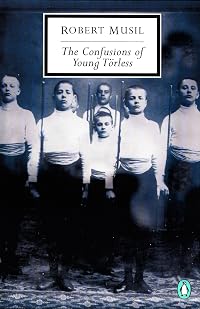
The Confusions of Young Törless
by Robert Musil
On This Page
Description
Musil's limpid, psychological evocation of adolescent sexuality and its often sadistic eroticism which anticipates the carnage of both World Wars. As the nineteenth century draws to an end, young Törless is sent to a military boarding school for the sons of the nobility on the eastern outreaches of the Austro-Hungarian Empire. Far from his comfortable, free-thinking bourgeois home and left to his own devices, he experiences the joy, pain and self-doubt of adolescence. He is confronted with show more desire and love, but also his own cruelty, as he finds himself participating in his fellow pupils' bullying campaigns. A dark Bildungsroman which shocked its readership at the time, Robert Musil's first novel is a fresco of psychoanalysis, philosophy, eroticism, snobbery, sado-masochism and schoolboy humour, a hothouse of alternately repressed and unchained desires that prefigure the carnage of both World Wars. show lessTags
Recommendations





























Member Recommendations


Member Reviews
Robert Musil is one of my favorite authors and his story of Young Torless, published in 1906, is one reason. The novel reflects an obsession in this period with educational institutions and the oppressive impact they exert on personal development. While it is in the tradition of the German Bildungsroman, the novel of education, it is critical of educational system and the institutionalized coercion portrayed in the novel. In my reading experience I compared it with the experience of Philip Carey in Maugham's Of Human Bondage or other traditional British school novels (see Tom Brown). In the American tradition, one thinks of J. D. Salinger's Catcher in the Rye as representing a protest against a social disciplining that is also a show more disciplining of sexuality. Sexual disciplining can often become the standard for other forms of discipline.
The novel tells the story of three students at an Austrian boarding school, Reiting, Beineberg and the titular young Törless. The three catch their classmate Basini stealing money from one of them and decide to punish him themselves instead of turning him in to the school authorities. They start an abusive process, first physically and then psychologically and sexually, while also blackmailing him by threatening to denounce him. While the treatment of Basini becomes openly sexual and increasingly sadistic, he nevertheless masochistically endures it all.
It is the moral and sexual confusion of young Torless that leads him to join Beineberg's and Reiting's degradation of Basini; he is both sexually attracted to Basini and Beineberg and repelled by them. Even though he is a willing participant he tells himself that he is merely trying to understand the gap between his rational self and his obscure irrational self. In a modern way he is both a disturbed and despairing observer of his own states of consciousness. Basini professes love for Törless and Törless begins to reciprocate, but he is ultimately repelled by Basini's unwillingness to stand up for himself. His disgust with Basini's passivity ultimately leads him in a curious way to stand up to Beineberg and Reiting. When the torment becomes unbearable, Törless secretly advises Basini alleviate his situation by confessing to the headmaster.
While an investigation is made, the only party to be found guilty is Basini. Törless makes a strange existential speech to the school authorities about the gap between the rational and irrational: "I said it seemed to me that at these points we couldn't get across merely by the aid of thought, and we needed another and more inward sort of certainty to get us to the other side, as you might say. We can't manage solely by means of thinking, I felt that in the case of Basini too." (p 208)
After he had finished, "When he had left the room, the masters looked at each other with baffled expressions." (p 212)
They decide he is of too refined an intellect for the institute, and suggest to his parents that he be privately educated, a conclusion that he comes to on his own.
Other subplots include Törless's experience with the local prostitute Božena, his encounter with his mathematics teacher, and his analysis of his parents' attitudes toward the world. The severity of the conditions makes one wonder about Musil's own experience. One important theme Musil also takes up is the Nietzschean idea of the dichotomy between Apollo and Dionysus. This can be seen in the "two worlds" (p 45) in which light is contrasted with dark, the controlled and disciplined intellect with more spontaneous sensuality.
Young Torless is an impressive short novel with a depth of meaning and character that often is not achieved in much longer works. It is a show less
The novel tells the story of three students at an Austrian boarding school, Reiting, Beineberg and the titular young Törless. The three catch their classmate Basini stealing money from one of them and decide to punish him themselves instead of turning him in to the school authorities. They start an abusive process, first physically and then psychologically and sexually, while also blackmailing him by threatening to denounce him. While the treatment of Basini becomes openly sexual and increasingly sadistic, he nevertheless masochistically endures it all.
It is the moral and sexual confusion of young Torless that leads him to join Beineberg's and Reiting's degradation of Basini; he is both sexually attracted to Basini and Beineberg and repelled by them. Even though he is a willing participant he tells himself that he is merely trying to understand the gap between his rational self and his obscure irrational self. In a modern way he is both a disturbed and despairing observer of his own states of consciousness. Basini professes love for Törless and Törless begins to reciprocate, but he is ultimately repelled by Basini's unwillingness to stand up for himself. His disgust with Basini's passivity ultimately leads him in a curious way to stand up to Beineberg and Reiting. When the torment becomes unbearable, Törless secretly advises Basini alleviate his situation by confessing to the headmaster.
While an investigation is made, the only party to be found guilty is Basini. Törless makes a strange existential speech to the school authorities about the gap between the rational and irrational: "I said it seemed to me that at these points we couldn't get across merely by the aid of thought, and we needed another and more inward sort of certainty to get us to the other side, as you might say. We can't manage solely by means of thinking, I felt that in the case of Basini too." (p 208)
After he had finished, "When he had left the room, the masters looked at each other with baffled expressions." (p 212)
They decide he is of too refined an intellect for the institute, and suggest to his parents that he be privately educated, a conclusion that he comes to on his own.
Other subplots include Törless's experience with the local prostitute Božena, his encounter with his mathematics teacher, and his analysis of his parents' attitudes toward the world. The severity of the conditions makes one wonder about Musil's own experience. One important theme Musil also takes up is the Nietzschean idea of the dichotomy between Apollo and Dionysus. This can be seen in the "two worlds" (p 45) in which light is contrasted with dark, the controlled and disciplined intellect with more spontaneous sensuality.
Young Torless is an impressive short novel with a depth of meaning and character that often is not achieved in much longer works. It is a show less
Als ich als Jugendliche nach grenzüberschreitenden Büchern gesucht habe, hab ich Sachen wie Edward Lee entdeckt, aber eigentlich hätte ich gerne etwas gefunden wie das hier (oder meine geliebte Sarah Kane).
Tatsächlich hab ich nicht mit etwas derartigem gerechnet, eher mit einem relativ harmlosen Entwicklungsroman in Richtung von Hermann Hesses "Unterm Rad".
"Entwicklungsroman" möglicherweise, "harmlos" sicherlich nicht. Die Hauptthematik ist schließlich, wie drei Jungen einen Mitschüler emotional und körperlich missbrauchen und wie die Hauptfigur, Törleß, innerlich mit sich kämpft. Törleß ist eine sehr sonderbare Figur, mein erster Eindruck war, dass er zwar innerlich sehr schwankt (zwischen Ekel und Erregung gegenüber show more dem sadistischen Hadeln ), aber nach außen hin immer seltsam passiv ist, ein totaler Mitläufer. Er entwickelt sich davon weg, aber so richtig klar wird nicht, warum: Liebe? Kant? Insgesamt Philosophie?
Vielleicht hängt es an diesem Detail, dass es für mich ein Vier-Sterne und kein Fünf-Sterne-Buch ist. Es hat aber auf jeden Fall eine Menge interessantere Aspekte und Gedanken (und eine weitere Figur, die Nietzsche falsch verstanden hat). Ich glaube nicht, dass ich mich beim Lesen eines Buches schon einmal so geekelt habe. show less
Tatsächlich hab ich nicht mit etwas derartigem gerechnet, eher mit einem relativ harmlosen Entwicklungsroman in Richtung von Hermann Hesses "Unterm Rad".
"Entwicklungsroman" möglicherweise, "harmlos" sicherlich nicht. Die Hauptthematik ist schließlich,
Vielleicht hängt es an diesem Detail, dass es für mich ein Vier-Sterne und kein Fünf-Sterne-Buch ist. Es hat aber auf jeden Fall eine Menge interessantere Aspekte und Gedanken (und eine weitere Figur, die Nietzsche falsch verstanden hat). Ich glaube nicht, dass ich mich beim Lesen eines Buches schon einmal so geekelt habe. show less
'A thought—it may have passed through our brain long ago—comes to life only at the moment when it is joined by something that is no longer thought, no longer logical, so that we feel its truth beyond all justification, like an anchor tearing from it into blood-filled, living flesh...'
The Confusions of Young Törless is one of those rare, incendiary books that reframes remarkably diverse avenues of thought without sacrificing an inner-cohesion: here we can find winding, tortured examinations of subjects as diverse as social anxiety, epistemology, mysticism, morality, sexuality, sadism, classism; if the novel succeeds at weaving such disparate threads into a symmetrical whole, it is because the titular Törless' journey from naïveté show more to young adulthood remains isolated as a single point in both time and experience—The Confusions of Young Törless is, expressly, a life examined: but it is a life as difficult to dissect in circumstance as in totality. That it is simultaneously an eerily prophetic cautionary tale (to a point) capable of deftly illustrating the wanton cruelty and corrupting influence of power upon the youth of a pre-Fascist Europe and also a haunting profile of adolescent homosexuality is a testament to Robert Musil's unique talents for subtlety, depth, and hypnotically inward-peering honesty.
Törless, a thoughtful boy, is sent away to a prestigious boarding school, where he finds himself in the company of two other young men (proto-Fascists, both), Reiting and Beineberg; the former idolizes Napoleon and aspires to high authority while the latter possesses a noxiously parochial mystic strain (a remarkable bit of precognition on Musil's part, given the obsession with Occultism that the Nazis, decades later, would fixate upon). Törless, meanwhile, spends much of his time consumed by a kind of inner anarchy, considering at length the paradoxes and slippery formlessness of his own philosophical, near-existential, obsessions—namely, highly contentious questions surrounding the 'what' and the 'why' of the confusing dualities of the rational and irrational (particularly well-illustrated by a meditation on imaginary numbers). A relatively trivial crime—a theft—committed by a further adolescent, the lithe and attractive Basini, sets in motion a series of shockingly debauched episodes in which the three young men—Törless chiefly (though hardly exclusively) in the role of observer—brutally rape, defile, and lambaste the meek, effete, and troubled Basini. Over the course of these debasements, Törless' confusion over his mingled attractions and repulsions regarding the vicitimzed youth, as both an object of disdain and almost transcendent beauty, forces Törless to confront more openly both the anomie of his peers and his own curiously all-encompassing weltschmerz, all the while professing an ultimate indifference towards the fate of the long-suffering Basini.
It is within this last that much of the novel's complexity develops: Törless is concerned with his own development and self-understanding, without exception; and while impulse forces upon him a more magnanimous view of Basini's plight (inasmuch as it amounts to torture), when the dust clears, his repudiation of the barbarism of his peers is more a byproduct of his dismissal of petty arrogance, 'mysticism,' and incongruities of logic than a defense of the abused. He loathes the idea of Basini as much as he finds cause for ridicule in the credos of Reiting or Beineberg, which effectively neutralizes the situation, amid his exhaustive meditation; the highly-immoral persecution of Basini is only disturbing to Törless inasmuch as it distracts him from concrete direction within his own life. Törless never fully disavows or approves of the crimes central to the novel's plot: though it can be argued that by reducing the aggressors to the same feeble folly as the victim, Musil illustrates the hypocrisy and inanity of authoritarianism through the omnipresence of narration.
Robert Musil is chiefly noted for his unfinished The Man Without Qualities, an influential text of Modernism; but it is in The Confusions of Young Törless, his first novel—penned at a mere twenty-six-years-old and highly influenced by his own years in boarding school—that Musil bridges the gap between the Symbolist and Decadent modes contemporaneous with his youth and the Postmodernism that was to evolve in the aftermath of the political and social movements (only in their infancies at the time of publication) that the novel, arguably, presages. Reiting and Beineberg have their analogues in various political figures of the coming decades and it takes little imagination to see these remarkably human characters—here described in their youth with all its folly, naïveté, arrogance, and pretension—as the seeds of later Hitlers, Francos, and Mussolinis. Given the themes, accents, and dubious moralities of The Confusions of Young Törless, then, it is hardly surprising that the Nazi government that came to power in the latter years of Musil's life saw fit to burn it: a circumstance as decidedly bereft of justice as the conclusion of the novel itself.
Very seldom are novels written from places of personal experience without collapsing, even if only briefly, into the motions of maudlin nostalgia or self-defense. This is not one of those novels—from first page to last, this affecting and disturbing account of anxiety, decadence, and the liberation of the intellect is almost clinically concerned with the candor of its narrative. Lacking heavy-handed leitmotif or obvious allegory, indifferent to the attractive glimmer of intellectual or emotional trifles, The Confusions of Young Törless—a century onwards—remains both a classic of Expressionist literature and a strikingly effective indictment of subjugation and violence, even if only through the lens of its protagonist's detached and highly-abstract inquisitions. show less
The Confusions of Young Törless is one of those rare, incendiary books that reframes remarkably diverse avenues of thought without sacrificing an inner-cohesion: here we can find winding, tortured examinations of subjects as diverse as social anxiety, epistemology, mysticism, morality, sexuality, sadism, classism; if the novel succeeds at weaving such disparate threads into a symmetrical whole, it is because the titular Törless' journey from naïveté show more to young adulthood remains isolated as a single point in both time and experience—The Confusions of Young Törless is, expressly, a life examined: but it is a life as difficult to dissect in circumstance as in totality. That it is simultaneously an eerily prophetic cautionary tale (to a point) capable of deftly illustrating the wanton cruelty and corrupting influence of power upon the youth of a pre-Fascist Europe and also a haunting profile of adolescent homosexuality is a testament to Robert Musil's unique talents for subtlety, depth, and hypnotically inward-peering honesty.
Törless, a thoughtful boy, is sent away to a prestigious boarding school, where he finds himself in the company of two other young men (proto-Fascists, both), Reiting and Beineberg; the former idolizes Napoleon and aspires to high authority while the latter possesses a noxiously parochial mystic strain (a remarkable bit of precognition on Musil's part, given the obsession with Occultism that the Nazis, decades later, would fixate upon). Törless, meanwhile, spends much of his time consumed by a kind of inner anarchy, considering at length the paradoxes and slippery formlessness of his own philosophical, near-existential, obsessions—namely, highly contentious questions surrounding the 'what' and the 'why' of the confusing dualities of the rational and irrational (particularly well-illustrated by a meditation on imaginary numbers). A relatively trivial crime—a theft—committed by a further adolescent, the lithe and attractive Basini, sets in motion a series of shockingly debauched episodes in which the three young men—Törless chiefly (though hardly exclusively) in the role of observer—brutally rape, defile, and lambaste the meek, effete, and troubled Basini. Over the course of these debasements, Törless' confusion over his mingled attractions and repulsions regarding the vicitimzed youth, as both an object of disdain and almost transcendent beauty, forces Törless to confront more openly both the anomie of his peers and his own curiously all-encompassing weltschmerz, all the while professing an ultimate indifference towards the fate of the long-suffering Basini.
It is within this last that much of the novel's complexity develops: Törless is concerned with his own development and self-understanding, without exception; and while impulse forces upon him a more magnanimous view of Basini's plight (inasmuch as it amounts to torture), when the dust clears, his repudiation of the barbarism of his peers is more a byproduct of his dismissal of petty arrogance, 'mysticism,' and incongruities of logic than a defense of the abused. He loathes the idea of Basini as much as he finds cause for ridicule in the credos of Reiting or Beineberg, which effectively neutralizes the situation, amid his exhaustive meditation; the highly-immoral persecution of Basini is only disturbing to Törless inasmuch as it distracts him from concrete direction within his own life. Törless never fully disavows or approves of the crimes central to the novel's plot: though it can be argued that by reducing the aggressors to the same feeble folly as the victim, Musil illustrates the hypocrisy and inanity of authoritarianism through the omnipresence of narration.
Robert Musil is chiefly noted for his unfinished The Man Without Qualities, an influential text of Modernism; but it is in The Confusions of Young Törless, his first novel—penned at a mere twenty-six-years-old and highly influenced by his own years in boarding school—that Musil bridges the gap between the Symbolist and Decadent modes contemporaneous with his youth and the Postmodernism that was to evolve in the aftermath of the political and social movements (only in their infancies at the time of publication) that the novel, arguably, presages. Reiting and Beineberg have their analogues in various political figures of the coming decades and it takes little imagination to see these remarkably human characters—here described in their youth with all its folly, naïveté, arrogance, and pretension—as the seeds of later Hitlers, Francos, and Mussolinis. Given the themes, accents, and dubious moralities of The Confusions of Young Törless, then, it is hardly surprising that the Nazi government that came to power in the latter years of Musil's life saw fit to burn it: a circumstance as decidedly bereft of justice as the conclusion of the novel itself.
Very seldom are novels written from places of personal experience without collapsing, even if only briefly, into the motions of maudlin nostalgia or self-defense. This is not one of those novels—from first page to last, this affecting and disturbing account of anxiety, decadence, and the liberation of the intellect is almost clinically concerned with the candor of its narrative. Lacking heavy-handed leitmotif or obvious allegory, indifferent to the attractive glimmer of intellectual or emotional trifles, The Confusions of Young Törless—a century onwards—remains both a classic of Expressionist literature and a strikingly effective indictment of subjugation and violence, even if only through the lens of its protagonist's detached and highly-abstract inquisitions. show less
Livro perturbador e em vários momentos me senti compelido a interromper a leitura. Com poucos personagens e todo passado dentro de um internato de meninos o livro desenvolve a história do jovem Törless e seu descobrimento do mundo abstrato, filosófico e da sua sexualidade. No colégio ele se envolve com dois colegas que resolvem humilhar um terceiro por conta deste estar sempre se endividando e devendo a todos. Isso vai ganhando dimensões maiores envolvendo favores sexuais, atos de sadismo e humilhação. A narrativa só se desenvolve sob a perspectiva de Törless apesar de não ser na primeira pessoa. Parece uma narrativa simbólica no estilo de Thomas Mann entremeando pensamentos e questões filosóficas enquanto cria situações show more bastante inusitadas e com uma descrição vívida que nos permite estar junto nas cenas. O livro é pequeno mas preferi ler com calma refletindo sobre cada parte, apesar de ser possível lê-lo em um dia. O livro me fez ter certeza que não lerei os outros livros de Musil apesar de achar esse bom. show less
If they were to ask him, why did you abuse Basini?, he could hardly answer them: because I was constantly interested in something happening in my mind, a something, which so far I know very little about and which makes everything I think about seem pointless.
Three boys at yer stereotypical turn-of-the-century boarding school get caught up in yer stereotypical turn-of-the-century philosophical quandaries, and take it out on a fourth boy by beating, harrassing and raping him. Yes, this was written in 1906. And besides, there's nothing gay about raping a boy; it's only when you start feeling something that you need to do something about it, when the disconnect between body and mind becomes too hard to handle, that you need to really show more victimize him to make sure you can tell yourself he deserves it.
If that sounds flippant, it's not meant to be. Much of what Musil would perfect (in an imperfect, meandering way) in The Man Without Qualities is already here, and even if Törless has his moments of whiny Holden Caulfieldity, those stereotypical proto-Nietzsche/Dostoevsky/etc ponderings are certainly worth reading again and Musil has a healthy distance to his protagonist. show less
Three boys at yer stereotypical turn-of-the-century boarding school get caught up in yer stereotypical turn-of-the-century philosophical quandaries, and take it out on a fourth boy by beating, harrassing and raping him. Yes, this was written in 1906. And besides, there's nothing gay about raping a boy; it's only when you start feeling something that you need to do something about it, when the disconnect between body and mind becomes too hard to handle, that you need to really show more victimize him to make sure you can tell yourself he deserves it.
If that sounds flippant, it's not meant to be. Much of what Musil would perfect (in an imperfect, meandering way) in The Man Without Qualities is already here, and even if Törless has his moments of whiny Holden Caulfieldity, those stereotypical proto-Nietzsche/Dostoevsky/etc ponderings are certainly worth reading again and Musil has a healthy distance to his protagonist. show less
I've just read so many stories of public schools and the sadism of youths in the past that it seemed like a crime to overlook Musil's novel. It does not shock or surprise me in the least, which might be the reaction if I hadn't read quite so many accounts of 19th and early-20th century boys schools. Two things did surprise me, though.
1. The gun was described and placed there but never used because fuck Chekov, right?
2. Törless is a self-centred little prick and the narrative doesn't seem to criticize/even notice this at the end
But there was something I enjoyed about the unapologetic music. Pages and pages without dialogue, without events, without moving from a spot. Törless' heightened perception of reality where objects are so much show more more than themselves. It reminded me of something I feel when I read Hesse, and it affirms for me the power of that interior exploration which I can shy away from in my own writing for fear of it being uninteresting. Musil executes it so well. Often melancholic, but not always, and if it weren't midnight it would have sent me out for a walk through a park to let myself hold onto all of that just a little longer. show less
1. The gun was described and placed there but never used because fuck Chekov, right?
2. Törless is a self-centred little prick and the narrative doesn't seem to criticize/even notice this at the end
But there was something I enjoyed about the unapologetic music. Pages and pages without dialogue, without events, without moving from a spot. Törless' heightened perception of reality where objects are so much show more more than themselves. It reminded me of something I feel when I read Hesse, and it affirms for me the power of that interior exploration which I can shy away from in my own writing for fear of it being uninteresting. Musil executes it so well. Often melancholic, but not always, and if it weren't midnight it would have sent me out for a walk through a park to let myself hold onto all of that just a little longer. show less
The Confusions of Young Torless is an incredible book, reminiscent at times of Rilke in its ability to wrestle with complex spiritual and psychological themes. Reading this book was like constantly trying to grasp something slightly abstract, slightly out of reach, though very human and real and rooted in language. This is an ambitious (though short) book, an extremely thoughtful and difficult read.
Maybe it is fitting that the book is so hard to describe, since one of its main themes is the ineffable-ness of certain human experience. One thing the book is NOT about, however, is the "devastating" effects of the "abuse of power" as it states in the back of the book. Sure, that's what happens, but the author's focus seems determinedly show more "off", always in the head of young Torless, who approaches the events that unfold with a much deeper and complex inquisitiveness than the simple moral lesson/parable suggested in that blurb.
At the center is the metaphor of imaginative numbers. Torless learns of them in math class, and spends some pages thinking about how we can start with something completely real, apply an element that does not exist to it (but we pretend it does, temporarily, just for the sake of conjecture) and that the logical result of that (because the imaginative numbers eventually cancel each other out on both sides of the equation) is a real result. But that the bridge between the two real worlds is one that's completely made up.
This metaphor, though not always explicitly stated, can be applied to many of the themes in this book: the way our conceptions of "self" are propped up by a set of lies we tell ourselves, the way we conduct our lives in the daytime differently from at night (though we need the night as a bridge to get to the next day), the way we can be completely rational with our thoughts even though we are essentially emotional (and irrational) beings.
The confusion of young Torless becomes our confusion as he thinks obscurely about these themes among many others: guilt, shame, pride, sexuality, the contradictions of the self, coherence between mind, body, and soul… and how we smooth over these contradictions of ourselves. The writing itself is sometimes very confusing, I often found myself lost in what the book was trying to say (especially in the first 50 pages, which seemed at times aimless), but it is that effort that slowly begins to make sense as the book reveals itself; as the book gets less and less abstract, the writing itself becomes more tangible. show less
Maybe it is fitting that the book is so hard to describe, since one of its main themes is the ineffable-ness of certain human experience. One thing the book is NOT about, however, is the "devastating" effects of the "abuse of power" as it states in the back of the book. Sure, that's what happens, but the author's focus seems determinedly show more "off", always in the head of young Torless, who approaches the events that unfold with a much deeper and complex inquisitiveness than the simple moral lesson/parable suggested in that blurb.
At the center is the metaphor of imaginative numbers. Torless learns of them in math class, and spends some pages thinking about how we can start with something completely real, apply an element that does not exist to it (but we pretend it does, temporarily, just for the sake of conjecture) and that the logical result of that (because the imaginative numbers eventually cancel each other out on both sides of the equation) is a real result. But that the bridge between the two real worlds is one that's completely made up.
This metaphor, though not always explicitly stated, can be applied to many of the themes in this book: the way our conceptions of "self" are propped up by a set of lies we tell ourselves, the way we conduct our lives in the daytime differently from at night (though we need the night as a bridge to get to the next day), the way we can be completely rational with our thoughts even though we are essentially emotional (and irrational) beings.
The confusion of young Torless becomes our confusion as he thinks obscurely about these themes among many others: guilt, shame, pride, sexuality, the contradictions of the self, coherence between mind, body, and soul… and how we smooth over these contradictions of ourselves. The writing itself is sometimes very confusing, I often found myself lost in what the book was trying to say (especially in the first 50 pages, which seemed at times aimless), but it is that effort that slowly begins to make sense as the book reveals itself; as the book gets less and less abstract, the writing itself becomes more tangible. show less
Members
- Recently Added By
Published Reviews
I Robert Musils klasseromsfascisme ligger spiren til kommunistenes ideologiske fanatisme og nazistenes industrielle folkemord.
I den tysk-østerrikske verden omkring forrige århundreskifte hørte det med at unge gutter ble sendt på kadettskole. Slik også med unge Tørless. Han finner seg til rette, først nysgjerrig, så med resignert ro. "Lengter Lillegutt hjem?" spør plutselig den to år show more eldre Reiting. Tørless blir et lett bytte for det systemet Reiting og Beneberg har bygget opp i utkanten av – eller i forlengelsen av – skolens regler. Det begynner med at de presser den litt puslete Basini for penger han skylder dem. Det fortsetter med systematisk tyrannisering og mishandling. Inspirert av skolens idealer om legemlig og åndelig disiplin og forakt for svakhet, bygger de sitt eget, fordreide univers av maktbrynde og underkastelse. Tørless er vitne, men tyranniets mekanismer kan ikke forhindre at han også blir medskyldig. Samtidig er han forvirret; han er både frastøtt og tiltrukket av stakkars Basini. Men tvetydighet passer ikke inn i et diktatur. show less
I den tysk-østerrikske verden omkring forrige århundreskifte hørte det med at unge gutter ble sendt på kadettskole. Slik også med unge Tørless. Han finner seg til rette, først nysgjerrig, så med resignert ro. "Lengter Lillegutt hjem?" spør plutselig den to år show more eldre Reiting. Tørless blir et lett bytte for det systemet Reiting og Beneberg har bygget opp i utkanten av – eller i forlengelsen av – skolens regler. Det begynner med at de presser den litt puslete Basini for penger han skylder dem. Det fortsetter med systematisk tyrannisering og mishandling. Inspirert av skolens idealer om legemlig og åndelig disiplin og forakt for svakhet, bygger de sitt eget, fordreide univers av maktbrynde og underkastelse. Tørless er vitne, men tyranniets mekanismer kan ikke forhindre at han også blir medskyldig. Samtidig er han forvirret; han er både frastøtt og tiltrukket av stakkars Basini. Men tvetydighet passer ikke inn i et diktatur. show less
added by kirstenlund
Lists

1001 Books You Must Read Before You Die
1,448 works; 1,134 members

German Literature
518 works; 56 members

Favorite Coming of Age Novels.
164 works; 51 members

1900s (Decade, not century)
73 works; 17 members

Canon de la narrativa universal del siglo XX
254 works; 6 members

Best Friendship Stories
205 works; 16 members

Best School Stories
219 works; 22 members

Best Books Set in Boarding Schools
160 works; 57 members

Harold Bloom - The Western Canon: D. The Chaotic Age
833 works; 24 members

Western World's Greatest Books - Project Gutenberg
295 works; 15 members

Publishing Triangle 100 Best Lesbian and Gay Novels
97 works; 6 members
1,001 BYMRBYD Concensus
723 works; 27 members

Academia in Fiction
158 works; 23 members

Scolaire
11 works; 1 member

Schwob Nederland
207 works; 2 members

Books Read in 2019
4,052 works; 110 members

Books Read in 2024
4,712 works; 127 members
Canon de la narrativa universal del s. XX (cicutadry)
499 works; 3 members
.
396 works; 1 member
Author Information

Robert Musil (November 6, 1880 - April 15, 1942) was an Austrian writer. Musil's Young Torless is a novel of troubled adolescence set in a military school, modeled on the one attended by both Musil and Rainer Maria Rilke. It was his first book and was immediately successful. He then abandoned his studies in engineering, logic, and experimental show more psychology and turned to writing. He was an officer in the Austrian army in World War I, lived in Berlin until the Nazis came to power, and finally settled in Geneva. He also wrote plays, essays, and short stories. The Man without Qualities, Musil's magnum opus, is a novel about the life and history of prewar Austria. It was unfinished when Musil died, though he had labored over the three-volume work for ten years. Encyclopedic in the manner of Proust and Dostoevsky, "it is a wonderful and prolonged fireworks display, a well-peopled comedy of ideas" (V. S. Pritchett)---and a critique of contemporary life. It made Musil's largely posthumous reputation. "Musil's whole scheme prophetically describes the bureaucratic condition of our world, and what can only be called the awful, deadly serious, and self-deceptive love affair of one committee for another" (Pritchett). (Bowker Author Biography) show less
Some Editions
Awards and Honors
Awards
Notable Lists
Der Kanon: Romane (10)
Series
Belongs to Publisher Series
Koliber (59)
Biblioteca Folha (27)
Bibliothek des 20. Jahrhunderts (Dt. Bücherbund) (Musil, Robert)
Nuovi Coralli [Einaudi] (117)
rororo (300)
Reclams Universal-Bibliothek (18789)
Work Relationships
Is contained in
Has the adaptation
Has as a reference guide/companion
Has as a study
Has as a student's study guide
Common Knowledge
- Canonical title
- The Confusions of Young Törless
- Original title
- Die Verwirrungen des Zöglings Törleß; Die Verwirrungen des Zöglins Törless
- Alternate titles
- Young Törless; The Confusions of Young Master Törless
- Original publication date
- 1906
- People/Characters
- Törless; Reiting; Basini; Beineberg
- Important places*
- Oostenrijk
- Related movies
- Der junge Törleß (1966 | IMDb)
- Epigraph*
- "Sobald wir etwas aussprechen, entwerten wir es seltsam. Wir glauben in die Tiefe der Abgründe hinabgetaucht zu sein, und wenn wir wieder an die Oberfläche kommen, gleicht der Wassertropfen an unseren bleichen Fingerspitzen... (show all) nicht mehr dem Meere, dem er entstammt. Wir wähnen eine Schatzgrube wunderbarer Schätze entdeckt zu haben, und wenn wir wieder ans Tageslicht kommen, haben wir nur falsche Steine und Glasscherben mitgebracht; und trotzdem schimmert der Schatz im Finstern unverändert."
Maeterlinck - First words
- It was a small station on the long railroad to Russia.
- Last words
- (Click to show. Warning: May contain spoilers.)And, drawing a deep breath, he considered the faint whiff of scent that rose from his mother's corseted waist.
- Original language*
- Duits
*Some information comes from Common Knowledge in other languages. Click "Edit" for more information.
Classifications
- Genres
- Fiction and Literature, General Fiction
- DDC/MDS
- 833.912 — Literature & rhetoric German & related literatures German fiction 1900- 1900-1990 1900-1945
- LCC
- PT2625 .U8 .V413 — Language and Literature German, Dutch and Scandinavian literatures German literature Individual authors or works 1860/70-1960
- BISAC
Statistics
- Members
- 2,428
- Popularity
- 8,039
- Reviews
- 44
- Rating
- (3.67)
- Languages
- 20 — Catalan, Czech, Danish, Dutch, English, Estonian, Finnish, French, German, Galician, Hungarian, Italian, Norwegian (Bokmål), Polish, Russian, Slovenian, Spanish, Swedish, Turkish, Portuguese (Portugal)
- Media
- Paper, Audiobook, Ebook
- ISBNs
- 120
- ASINs
- 63