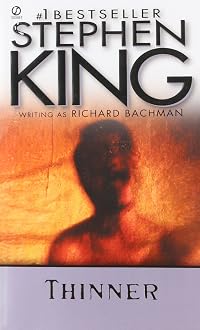
Thinner
by Stephen King
On This Page
Description
The "extraordinary" (Booklist) novel of a cursed man's quest to find the source of his nightmare and to reverse it before he becomes...nothing at all. This #1 New York Times bestseller from Stephen King, writing as Richard Bachman, "pulsates with evil...[and] will have you on the edge of your seat" (Publishers Weekly)."You can't do anything... It's gone too far. You understand, Halleck? Too...far.
Attorney Billy Halleck seriously enjoys living his life of upper-class excess. He's got it show more all—an expensive home in Connecticut, a loving family...and fifty extra pounds that his doctor repeatedly warns will be the death of him. Then, in a moment of carelessness, Halleck commits vehicular manslaughter when he strikes a jaywalking old woman crossing the street. But Halleck has some powerful local connections, and gets off with a slap on the wrist...much to the fury of the woman's mysterious and ancient father, who exacts revenge with a single word: "Thinner." Now a terrified Halleck finds the weight once so difficult to shed dropping effortlessly—and rapidly—by the week. Soon there will be nothing left of Billy Halleck...unless he can somehow locate the source of his living nightmare and reverse what's happened to him before he utterly wastes away... show less
Tags
Recommendations

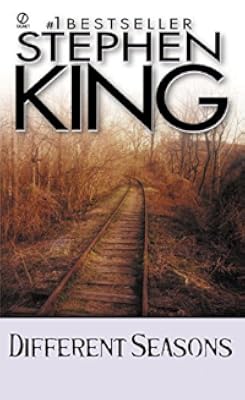
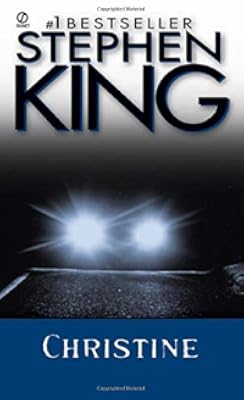
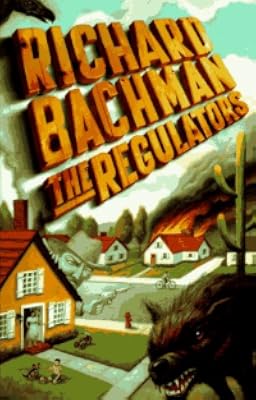
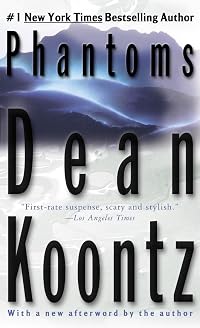








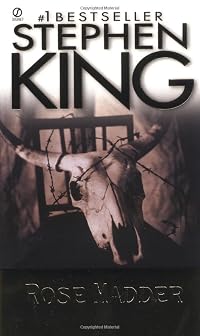
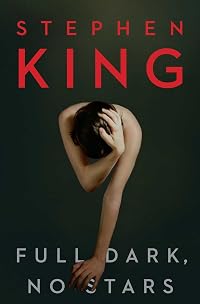
Member Recommendations
Member Reviews
I'm catching up. Now I'm only 32 years behind in my Great Stephen King Re-read.
I still remember seeing this hardcover in the Oshawa Centre mall on my weekly visits to the various bookstores. It sat, tempting me, on the second-from-bottom shelf, and I'd picked it up a couple of times, that stark black cover with the lurid red handprint and thin lettering. But each time, I put it back down. It was a hardcover and it was kind of expensive for a kid not making much money.
Then the rumours broke that it might be Stephen King, and, with no hesitation, curiously piqued, I picked it up from that second-from-bottom shelf and bought it. When I got about halfway through and two characters were discussing how this could be something from a Stephen show more King novel, dropping the name twice, I had to chuckle and hope that it really was him, because...man, the balls on this guy.
32 years later, rereading it, the is he/isn't he Stephen King? mystery and excitement is gone, so now the story stands on its own merits and, for the most part, it holds up fairly well.
My two biggest shocks were, there really are no nice characters in this story. Everyone is tainted with guilt. Because, when it comes down to it, this really is about guilt and how it erodes and eats at you, and the longer it feasts, the uglier you become.
The second shock, along with that first realization is, this. I first thought, There's no good people in this story at about the 3/4 mark, and then immediately followed that with, No, I'm wrong, there's Billy's daughter. Then I realized that, for such a driving force toward the end of this novel, she's essentially a non-character. She's someone that King--through Billy--refers to on occasion, with longing and protectiveness, but we never get to truly see or know. We really don't get more than the barest sketch of their relationship, which is surprising for a King novel, because this is truly where the man shines.
And this, to me, is the ultimate failing of the story. It hinges on a motivation that we are never really shown, only asked to have faith in, because every man loves his daughter, right?
If King had added even twenty pages of character development for Billy and his daughter, this book would have been damn close to perfect. Because that bit at the end? When Billy has to ask his wife to lift a competency order? When he compares that to the Gypsy curse? Man, that shit is brilliant.
So this one was mostly a hit, but there was a big miss in there. show less
I still remember seeing this hardcover in the Oshawa Centre mall on my weekly visits to the various bookstores. It sat, tempting me, on the second-from-bottom shelf, and I'd picked it up a couple of times, that stark black cover with the lurid red handprint and thin lettering. But each time, I put it back down. It was a hardcover and it was kind of expensive for a kid not making much money.
Then the rumours broke that it might be Stephen King, and, with no hesitation, curiously piqued, I picked it up from that second-from-bottom shelf and bought it. When I got about halfway through and two characters were discussing how this could be something from a Stephen show more King novel, dropping the name twice, I had to chuckle and hope that it really was him, because...man, the balls on this guy.
32 years later, rereading it, the is he/isn't he Stephen King? mystery and excitement is gone, so now the story stands on its own merits and, for the most part, it holds up fairly well.
My two biggest shocks were, there really are no nice characters in this story. Everyone is tainted with guilt. Because, when it comes down to it, this really is about guilt and how it erodes and eats at you, and the longer it feasts, the uglier you become.
The second shock, along with that first realization is, this. I first thought, There's no good people in this story at about the 3/4 mark, and then immediately followed that with, No, I'm wrong, there's Billy's daughter. Then I realized that, for such a driving force toward the end of this novel, she's essentially a non-character. She's someone that King--through Billy--refers to on occasion, with longing and protectiveness, but we never get to truly see or know. We really don't get more than the barest sketch of their relationship, which is surprising for a King novel, because this is truly where the man shines.
And this, to me, is the ultimate failing of the story. It hinges on a motivation that we are never really shown, only asked to have faith in, because every man loves his daughter, right?
If King had added even twenty pages of character development for Billy and his daughter, this book would have been damn close to perfect. Because that bit at the end? When Billy has to ask his wife to lift a competency order? When he compares that to the Gypsy curse? Man, that shit is brilliant.
So this one was mostly a hit, but there was a big miss in there. show less
When I finished skimming through this book, frustrated at its utter knack for being incredibly boring and two hundred pages too long, I seethed. Homophobic and racist jokes are sprinkled in for no reason from a doctor who has no bedside manner or ethics to speak of. Said healthcare provider has a seemingly expensive cocaine habit, and the comfort of snorting it right in front of his patients, who he then offers some to. Racial slurs aimed at people of Romani descent and every single harmful stereotype of Romani Travelers, are jammed in this book at dozens per page. How did I ignore this all the first time I read it? I wondered tonight. I puzzled, and realized I'd pardoned it originally because this book was written in 1984. Bad move, show more Past Me. How and why did I originally find this scary, and well-written enough for its original five-star rating on here? I also wondered. I was on a Stephen King reading streak and this one was wildly different from all the others, in my mind. And it--was. When I first read it, I thought it examined race relations in a way that hadn't been done frequently. Uhm, Past Me, I gotta say no. I did feel so weird after reading this the first time that I set out to learn more about people of Romani descent and Travelers as well. That helped me correct a lot of harmful misconceptions I had, and I learned a lot. Part of me wishes King had done that, but I feel so tired and done with him by reading this book that I just can't bring myself to care. My apologies to the Romani and Traveler communities for how insensitive that is.
This book is about a white, non-Romani guy who thinks a lot and loses weight really fast due to at least half a dozen anti-Romani Traveler stereotypes. Also a strawberry pie breathes and squelches for the last thirty pages or so of the book. Not frightening at all. Maybe the tiniest bit unsettling, but mostly odd. Part of my irritation stems from the fact that all of this also means the only Stephen King book I like now is "Carrie." Somehow I feel less-than for being a devout horror/mystery/suspense/thriller reader who doesn't like one of the greats. King's writing doesn't do it for me. This book has a lot of flaws typical to King's writing: problematic on various levels; too wordy; he's freakin' married to every single character in the book, all of whom have extensive backstories, especially minor ones; strangely paced, and--thank you for everything you've done and given the horror genre, but dude, I just don't like your writing a lot of the time. Sometimes I wish I felt differently. The -movie- adaptations, however? -That- is where it's at. I plan to re-read the book "about the sparrows. You know, about the guy with the weird tumor that makes him develop an evil twin" as I describe it. I remember the sparrows most of all, and -that- book was creepy when I read it. If that's not a book I like upon re-reading it, then I'll grimly inform others that yeah, I'm a horror fan but King doesn't do it for me except "Carrie." But I'll read the sparrow book first. show less
This book is about a white, non-Romani guy who thinks a lot and loses weight really fast due to at least half a dozen anti-Romani Traveler stereotypes. Also a strawberry pie breathes and squelches for the last thirty pages or so of the book. Not frightening at all. Maybe the tiniest bit unsettling, but mostly odd. Part of my irritation stems from the fact that all of this also means the only Stephen King book I like now is "Carrie." Somehow I feel less-than for being a devout horror/mystery/suspense/thriller reader who doesn't like one of the greats. King's writing doesn't do it for me. This book has a lot of flaws typical to King's writing: problematic on various levels; too wordy; he's freakin' married to every single character in the book, all of whom have extensive backstories, especially minor ones; strangely paced, and--thank you for everything you've done and given the horror genre, but dude, I just don't like your writing a lot of the time. Sometimes I wish I felt differently. The -movie- adaptations, however? -That- is where it's at. I plan to re-read the book "about the sparrows. You know, about the guy with the weird tumor that makes him develop an evil twin" as I describe it. I remember the sparrows most of all, and -that- book was creepy when I read it. If that's not a book I like upon re-reading it, then I'll grimly inform others that yeah, I'm a horror fan but King doesn't do it for me except "Carrie." But I'll read the sparrow book first. show less
Der Klappentext ist echt dämlich, wenn ich ehrlich bin. Billy Halleck ist ein liebender Vater. Das stimmt. Ein guter Ehemann ist er in gewisser Weise auch. Aber um erneut ehrlich zu sein, er ist auch ein ziemliches Arschloch. Das ist aber auch der Punkt, der dieses Buch so faszinierend gemacht hat für mich. Denn das Arschlochverhalten ist nicht sofort deutlich. Das kommt erst im Laufe der Erzählung. In gewisser Weise ist es fast pervers, wie man mit Halleck mitfiebert und leidet. Er ist kein guter Mensch. Er hat kein Rückgrat. Und auch seine Frau Heidi hat keins. Alles soll heile Welt sein und bleiben, damit man nichts verändern muss. Die Zigeuner waren mir unsympathisch, was das Mitfiebern für Halleck natürlich noch bestärkte. show more Und Ginelli, der Mafia-Heini. Meine Güte, was konnte ich den nicht ausstehen. Und trotzdem: Ich habe mitgefiebert und mitgelitten. Und erst auf den letzten paar Seiten wurde mir bewusst, dass ich Halleck dieses Happy-End nicht gönnte. Nein, das hatte er nicht verdient, denn er hatte kein Bisschen daraus gelernt, was ihm geschehen war. Und auch Heidi nicht. Und Ginelli sowieso nicht. Das einzige unschuldige Opfer war Tochter Linda, aber selbst da kam Hallecks Einsicht einfach zu spät.
Billy Halleck begegnet also nicht einfach mal eben aus heiterem Himmel einer Zigeunerin. Ganz im Gegenteil. Er überfährt sie. Da er einflussreiche Freunde hat, kommt er ausgesprochen glimpflich davon. Und erfahren, dass seine Frau Heidi genau den Moment ausgesucht hatte, ihn mit ihrer Hand zu beglücken während der Autofahrt in Folge dessen der Unfall dann passierte, nein das muss keiner. Niemand muss das wissen. Ist ja peinlich genug. Und überhaupt hat die alte Frau ja selbst Pech gehabt. Dass Tadeus Lemke, der Vater der Zigeunerin und ebenfalls seines Zeichens Zigeuner, angesichts der zum Himmel schreienden Ungerechtigkeit die Dinge selbst in die Hand nimmt und Billy Halleck verflucht, ist in gewisser Weise verständlich, macht es aber nicht unbedingt richtig.
Normalerweise bin ich ja der Ansicht, dass jemand, der versehentlich einen anderen Menschen bei einem Unfall schwer verletzt oder tötet, schon gestraft genug ist. Normalerweise! Bei Billy ist es aber so, dass er die Schuld gar nicht bei sich sieht. Er ist froh, dass er nicht verurteilt wird und niemand erfährt, warum der Unfall eigentlich passiert ist. Eigentlich alles Voraussetzung dafür, dass er sein Leben weiterhin unbedarft leben kann wie bisher. Inkl. seiner Frau und seiner Tochter. Aber dann kommt Lemke und verflucht ihn. Und plötzlich wird aus Billy dem Fettsack von Anwalt, ein Mann, der Gewicht verliert, egal wieviel er isst. Erst als ausgeschlossen ist, dass er keine ernst zu nehmende Krankheit hat wie Krebs, beginnt er nachzudenken, was mit ihm geschieht. Und natürlich wird der Fluch dann Thema. Aber statt sich ernsthaft mit seiner Schuld auseinanderzusetzen und Buße zu tun, versucht Billy alles um nicht nur den Fluch loszuwerden sondern auch um die Schuld auf andere abzuwälzen. Der Hass, den er am Ende seiner Frau Heidi entgegenbringt ist einfach nur schockierend. Aber, wie ich schon schrieb, ich denke, das ist genau das, was dieses Buch ausmacht. Dieses ätzende kleine Mistvieh von Mensch umgeben von vielen anderen ätzenden kleinen Mistviechern und trotzdem fiebert man mit, bis einen die Erkenntnis trifft wie ein Schlag. Man will alle einfach nur schütteln und fragen, was falsch mit ihnen läuft. Und man will sich selbst schütteln, und fragt sich, warum fiebere ich hier eigentlich mit? Ich mag den Typ noch nichtmal!
Fazit
Ich ziehe meinen Hut vor Mr. King, ähm, Mr. Bachman. show less
Billy Halleck begegnet also nicht einfach mal eben aus heiterem Himmel einer Zigeunerin. Ganz im Gegenteil. Er überfährt sie. Da er einflussreiche Freunde hat, kommt er ausgesprochen glimpflich davon. Und erfahren, dass seine Frau Heidi genau den Moment ausgesucht hatte, ihn mit ihrer Hand zu beglücken während der Autofahrt in Folge dessen der Unfall dann passierte, nein das muss keiner. Niemand muss das wissen. Ist ja peinlich genug. Und überhaupt hat die alte Frau ja selbst Pech gehabt. Dass Tadeus Lemke, der Vater der Zigeunerin und ebenfalls seines Zeichens Zigeuner, angesichts der zum Himmel schreienden Ungerechtigkeit die Dinge selbst in die Hand nimmt und Billy Halleck verflucht, ist in gewisser Weise verständlich, macht es aber nicht unbedingt richtig.
Normalerweise bin ich ja der Ansicht, dass jemand, der versehentlich einen anderen Menschen bei einem Unfall schwer verletzt oder tötet, schon gestraft genug ist. Normalerweise! Bei Billy ist es aber so, dass er die Schuld gar nicht bei sich sieht. Er ist froh, dass er nicht verurteilt wird und niemand erfährt, warum der Unfall eigentlich passiert ist. Eigentlich alles Voraussetzung dafür, dass er sein Leben weiterhin unbedarft leben kann wie bisher. Inkl. seiner Frau und seiner Tochter. Aber dann kommt Lemke und verflucht ihn. Und plötzlich wird aus Billy dem Fettsack von Anwalt, ein Mann, der Gewicht verliert, egal wieviel er isst. Erst als ausgeschlossen ist, dass er keine ernst zu nehmende Krankheit hat wie Krebs, beginnt er nachzudenken, was mit ihm geschieht. Und natürlich wird der Fluch dann Thema. Aber statt sich ernsthaft mit seiner Schuld auseinanderzusetzen und Buße zu tun, versucht Billy alles um nicht nur den Fluch loszuwerden sondern auch um die Schuld auf andere abzuwälzen. Der Hass, den er am Ende seiner Frau Heidi entgegenbringt ist einfach nur schockierend. Aber, wie ich schon schrieb, ich denke, das ist genau das, was dieses Buch ausmacht. Dieses ätzende kleine Mistvieh von Mensch umgeben von vielen anderen ätzenden kleinen Mistviechern und trotzdem fiebert man mit, bis einen die Erkenntnis trifft wie ein Schlag. Man will alle einfach nur schütteln und fragen, was falsch mit ihnen läuft. Und man will sich selbst schütteln, und fragt sich, warum fiebere ich hier eigentlich mit? Ich mag den Typ noch nichtmal!
Fazit
Ich ziehe meinen Hut vor Mr. King, ähm, Mr. Bachman. show less
This is really a 3.5 star read, just rounded up to 4.
It's weird. I think I may have read this book before, but now after finishing it this weekend, I have doubts. I maybe just watched the movie and that's where I was recalling most of my information from. I honestly don't like the Bachman books that much that Stephen King wrote. I recall "The Long Walk" and thought how it made no sense to me and how impossible it would be for teenagers to walk 4 miles an hour. I tried that one day at the gym and had to lightly jog. I also remember reading "The Running Man" and went, eh liked the movie better. So now with "Thinner" I have to say that neither the movie or book impressed me much. You have one man dealing with a curse that is slowly show more killing him. He blames his wife. A lot. Most of the book slows down in the last 1/3 and I was just bored until the ending.
"Thinner" deals with the after effects of Billy Halleck (Bill or William depending on who is speaking to him) running over and killing a Romani woman. FYI, be prepared for King to refer to them as Gypsies. I have learned since I got older that's a derogatory term for Romani people, so I am not using it here in my review besides the first occurrence. Due to the people he knows and a lot of the towns people hating the Romani people, Billy isn't tried for hit and run, instead the case is dismissed. An older man who is the head of the group of Romani people comes up to Bill and touches his cheek and says "thinner." From there Bill starts to lose weight and struggles to push out of his mind hitting and killing the older woman and the man who touched him.
Most of the book is Billy justifying what happened and saying how it's not really his fault. Instead it's mostly his wife and the older woman's fault. His wife's fault since she started trying to (makes hand motion) while he was driving and the older woman for not looking both ways. What made me laugh and sigh about though was Billy doesn't take any ownership of the fact that the judge and police officer who helped with things would not have done so if not for him. So you have all three of these men being punished, but it seems as if Billy is the one that got off the lightest.
King does take some time developing the characters. You understand Billy's relationship with his wife and daughter a lot. You also get a look at the secrets a town holds that get revealed when Billy starts going after answers with his doctor, the judge's wife, and the police man. Eventually the book goes sideways when King introduces a friend of Billy's who is going to take care of getting the curse off of him, Ginelli.
Ginelli is shown to be a bit off. He goes after the Romani people with a laser eyed focus. However, it made no sense to me. He's supposed to be a pretty big crime boss. So why in the world didn't he send forth some underlings? And if they popped up dead then go after them? I don't know. The motivations of him to go toe to toe with the Romani didn't work for me at all. Most of the book slowed down after he showed up and when he was retelling his story to Billy I just didn't care.
The writing is more crude than King's works. There are a lot of racial slurs used in this one that put me off a bit. The flow as I said earlier got really bad when Ginelli gets introduced. The book just drags it seems until we get to the ending.
The ending leaves us with Billy as a pale shadow of his former self. He manages to justify to himself what he is about to do and I really ended up loathing him. Of course this being a King book the joke's on him and he has a horrified realization about what his actions have wrought. show less
It's weird. I think I may have read this book before, but now after finishing it this weekend, I have doubts. I maybe just watched the movie and that's where I was recalling most of my information from. I honestly don't like the Bachman books that much that Stephen King wrote. I recall "The Long Walk" and thought how it made no sense to me and how impossible it would be for teenagers to walk 4 miles an hour. I tried that one day at the gym and had to lightly jog. I also remember reading "The Running Man" and went, eh liked the movie better. So now with "Thinner" I have to say that neither the movie or book impressed me much. You have one man dealing with a curse that is slowly show more killing him. He blames his wife. A lot. Most of the book slows down in the last 1/3 and I was just bored until the ending.
"Thinner" deals with the after effects of Billy Halleck (Bill or William depending on who is speaking to him) running over and killing a Romani woman. FYI, be prepared for King to refer to them as Gypsies. I have learned since I got older that's a derogatory term for Romani people, so I am not using it here in my review besides the first occurrence. Due to the people he knows and a lot of the towns people hating the Romani people, Billy isn't tried for hit and run, instead the case is dismissed. An older man who is the head of the group of Romani people comes up to Bill and touches his cheek and says "thinner." From there Bill starts to lose weight and struggles to push out of his mind hitting and killing the older woman and the man who touched him.
Most of the book is Billy justifying what happened and saying how it's not really his fault. Instead it's mostly his wife and the older woman's fault. His wife's fault since she started trying to (makes hand motion) while he was driving and the older woman for not looking both ways. What made me laugh and sigh about though was Billy doesn't take any ownership of the fact that the judge and police officer who helped with things would not have done so if not for him. So you have all three of these men being punished, but it seems as if Billy is the one that got off the lightest.
King does take some time developing the characters. You understand Billy's relationship with his wife and daughter a lot. You also get a look at the secrets a town holds that get revealed when Billy starts going after answers with his doctor, the judge's wife, and the police man. Eventually the book goes sideways when King introduces a friend of Billy's who is going to take care of getting the curse off of him, Ginelli.
Ginelli is shown to be a bit off. He goes after the Romani people with a laser eyed focus. However, it made no sense to me. He's supposed to be a pretty big crime boss. So why in the world didn't he send forth some underlings? And if they popped up dead then go after them? I don't know. The motivations of him to go toe to toe with the Romani didn't work for me at all. Most of the book slowed down after he showed up and when he was retelling his story to Billy I just didn't care.
The writing is more crude than King's works. There are a lot of racial slurs used in this one that put me off a bit. The flow as I said earlier got really bad when Ginelli gets introduced. The book just drags it seems until we get to the ending.
The ending leaves us with Billy as a pale shadow of his former self. He manages to justify to himself what he is about to do and I really ended up loathing him. Of course this being a King book the joke's on him and he has a horrified realization about what his actions have wrought. show less
I found Thinner to be a rather surprising read. I had previously seen the movie, but the novel definitely gets into Billy Halleck's head much more and that's what really drives the story.
The premise of the story is fascinating. What could possibly be horrific about losing weight, especially for someone who is majorly overweight and lacks willpower and motivation? It would seem that Billy had found the miracle obesity cure. The cost - accidentally killing an old gypsy woman with his car and getting away with it. The victim's father curses Billy with a single word: thinner, and the weight just falls off.
What I found interesting about Thinner is Billy's attitude towards the entire ordeal. He begins to lose weight and knows something is show more wrong. Even in his denial, he somehow knows the weight loss is a bad thing connected to his accident. Billy isn't exactly a likeable character and while you can feel and relate to his terror, it's difficult to be sympathetic towards him. He's incapable of taking any sort of responsibility for his actions. He blames the accident on his wife even though he was driving. He blames the curse on the gypsy even though he isn't even remotely repentant for his actions. Everyone is to blame from the cop at the scene, to the judge who let him off, to the victim herself. Everyone except for Billy, who believes himself just as much a victim as the dead woman.
The real question in Thinner is who the evil party actually is. Is it the gypsy who's just looking for justice he can't find through legal means? Or is it Billy who escalates the violence against the clan, costing many more lives. As with many of the best King novels, the heart of the story resides within the main character's thoughts and personality.
Thinner isn't one of the most well known of King's books, nor one of his best. It is a solid read though. It's an intriguing, quick read that'll make you wonder who the real bad guy is. show less
The premise of the story is fascinating. What could possibly be horrific about losing weight, especially for someone who is majorly overweight and lacks willpower and motivation? It would seem that Billy had found the miracle obesity cure. The cost - accidentally killing an old gypsy woman with his car and getting away with it. The victim's father curses Billy with a single word: thinner, and the weight just falls off.
What I found interesting about Thinner is Billy's attitude towards the entire ordeal. He begins to lose weight and knows something is show more wrong. Even in his denial, he somehow knows the weight loss is a bad thing connected to his accident. Billy isn't exactly a likeable character and while you can feel and relate to his terror, it's difficult to be sympathetic towards him. He's incapable of taking any sort of responsibility for his actions. He blames the accident on his wife even though he was driving. He blames the curse on the gypsy even though he isn't even remotely repentant for his actions. Everyone is to blame from the cop at the scene, to the judge who let him off, to the victim herself. Everyone except for Billy, who believes himself just as much a victim as the dead woman.
The real question in Thinner is who the evil party actually is. Is it the gypsy who's just looking for justice he can't find through legal means? Or is it Billy who escalates the violence against the clan, costing many more lives. As with many of the best King novels, the heart of the story resides within the main character's thoughts and personality.
Thinner isn't one of the most well known of King's books, nor one of his best. It is a solid read though. It's an intriguing, quick read that'll make you wonder who the real bad guy is. show less
This might not be King's best, and it's a fairly short story compared to some of his other works, but if you're a King fan, you should not be disappointed. I actually saw the movie first before reading this book, and it was nice to compare. Overall, compared to King's other works, this might be considered a 'light' read, but I enjoyed it nonetheless.
It's interesting to see the reactions of Billy's family to his sudden weight loss, and I also liked the parts with the Gypsies. Part of me says Billy had it coming for what he did to the Gypsy, but part of me also cannot help but feel a bit bad for him. One lesson is clear - don't **** around with the Gypsies. :D
It's interesting to see the reactions of Billy's family to his sudden weight loss, and I also liked the parts with the Gypsies. Part of me says Billy had it coming for what he did to the Gypsy, but part of me also cannot help but feel a bit bad for him. One lesson is clear - don't **** around with the Gypsies. :D
this was not a book i remember liking very much the first time around, so i was pretty surprised to find this as good as i did. it's not mistake-free, but the writing is good, the concepts are solid, and the story is a fast-moving thriller. he has a surprising amount to say about marginalized communities and how we treat them (nothing in depth, but the point is made repeatedly) and i love that. he foreshadows an ending and then gives you a satisfying twist to it. i am definitely pleased with this one overall.
"Sure, we need the Gypsies. We always have. Because if you don't have someone to run out of town once in a while, how are you going to know you yourself belong there?" (italics not mine)
"Sure, we need the Gypsies. We always have. Because if you don't have someone to run out of town once in a while, how are you going to know you yourself belong there?" (italics not mine)
Members
- Recently Added By
Lists

Read the book and saw the movie
1,170 works; 193 members

Stephen King Bibliography
77 works; 3 members

Eerie eTales
192 works; 3 members

Sinister AudioTales
65 works; 1 member

Books Read in 2024
4,727 works; 128 members

Stephen King books
81 works; 1 member
Author Information

966+ Works 867,771 Members
Stephen King was born in Portland, Maine, on September 21, 1947. After graduating with a Bachelor's degree in English from the University of Maine at Orono in 1970, he became a teacher. His spare time was spent writing short stories and novels. King's first novel would never have been published if not for his wife. She removed the first few show more chapters from the garbage after King had thrown them away in frustration. Three months later, he received a $2,500 advance from Doubleday Publishing for the book that went on to sell a modest 13,000 hardcover copies. That book, Carrie, was about a girl with telekinetic powers who is tormented by bullies at school. She uses her power, in turn, to torment and eventually destroy her mean-spirited classmates. When United Artists released the film version in 1976, it was a critical and commercial success. The paperback version of the book, released after the movie, went on to sell more than two-and-a-half million copies. Many of King's other horror novels have been adapted into movies, including The Shining, Firestarter, Pet Semetary, Cujo, Misery, The Stand, and The Tommyknockers. Under the pseudonym Richard Bachman, King has written the books The Running Man, The Regulators, Thinner, The Long Walk, Roadwork, Rage, and It. He is number 2 on the Hollywood Reporter's '25 Most Powerful Authors' 2016 list. King is one of the world's most successful writers, with more than 100 million copies of his works in print. Many of his books have been translated into foreign languages, and he writes new books at a rate of about one per year. In 2003, he received the National Book Foundation Medal for Distinguished Contribution to American Letters. In 2012 his title, The Wind Through the Keyhole made The New York Times Best Seller List. King's title's Mr. Mercedes and Revival made The New York Times Best Seller List in 2014. He won the Edgar Allan Poe Award in 2015 for Best Novel with Mr. Mercedes. King's title Finders Keepers made the New York Times bestseller list in 2015. Sleeping Beauties is his latest 2017 New York Times bestseller. (Bowker Author Biography) Stephen King is the author of more than thirty books, all of them worldwide bestsellers. Among his most recent are "Hearts in Atlantis", "The Girl Who Loved Tom Gordon", "Bag of Bones", & "The Green Mile". "On Writing" is his first book of nonfiction since "Danse Macabre", published in 1981. He served as a judge for Prize Stories: The Best of 1999, The O. Henry Awards. He lives in Bangor, Maine with his wife, novelist Tabitha King. King's book, The Bazaar of Bad Dreams: Stories, made the 2015 New York Times bestseller list. (Publisher Provided) show less
Some Editions
Awards and Honors
Distinctions
Notable Lists
Series
Belongs to Publisher Series
Work Relationships
Is contained in
Has the adaptation
Common Knowledge
- Canonical title
- Thinner
- Original title
- Thinner
- Original publication date
- 1984-11-19
- People/Characters
- Billy Halleck; Heidi Halleck; Linda Halleck; Taduz Lemke; Richie Ginelli; Angelina Lemke (show all 10); Cary Rossington; Leda Rossington; Duncan Hopley; Kirk Penchley
- Important places
- Connecticut, USA; Fairview, Connecticut, USA; Maine, USA; New York, USA; New York, New York, USA
- Related movies
- Thinner (1996 | IMDb)
- Dedication
- To my wife, Claudia Inez Bachman
- First words
- "Thinner," the old gypsy man with the rotting nose whispers to William Halleck as Halleck and his wife, Heidi, come out of the courthouse.
- Last words
- (Click to show. Warning: May contain spoilers.)"Eat hearty," Billy Halleck whispered in the sunny silence of the kitchen, and cut himself a piece of Gypsy pie.
- Original language
- English
Classifications
Statistics
- Members
- 8,719
- Popularity
- 1,257
- Reviews
- 102
- Rating
- (3.45)
- Languages
- 19 — Danish, Dutch, English, Finnish, French, German, Greek, Hungarian, Italian, Japanese, Korean, Norwegian (Bokmål), Polish, Russian, Slovak, Spanish, Swedish, Turkish, Portuguese (Portugal)
- Media
- Paper, Audiobook, Ebook
- ISBNs
- 116
- UPCs
- 2
- ASINs
- 57