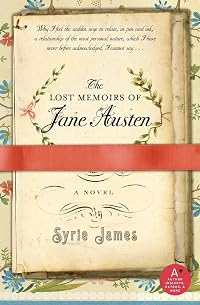
The Lost Memoirs of Jane Austen
by Syrie James
On This Page
Description
What if, hidden in an old attic chest, Jane Austen's memoirs were discovered after hundreds of years? What if those pages revealed the untold story of a life-changing love affair? Jane Austen has given up her writing when, on a fateful trip to Lyme, she meets the well-read and charming Mr. Ashford, a man who is her equal in intellect and temperament. Inspired by the people and places around her, and encouraged by his faith in her, Jane begins revising Sense and sensibility, a book she began show more years earlier, hoping to be published at last. show lessTags
Recommendations

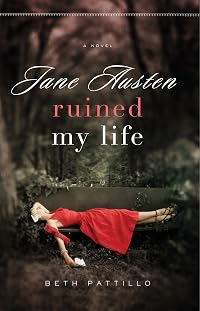
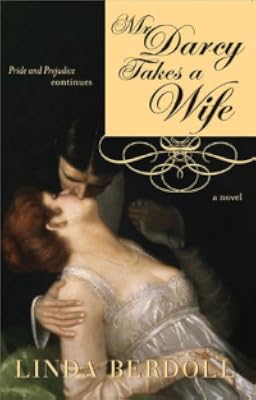
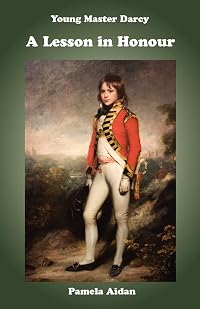
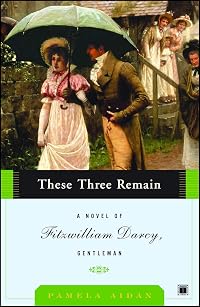
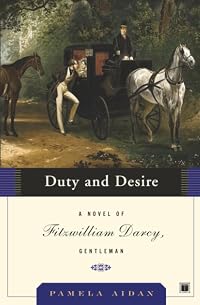

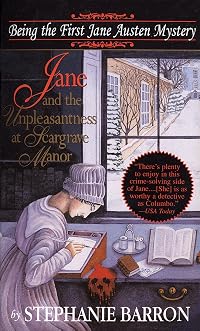
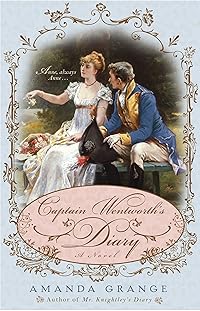
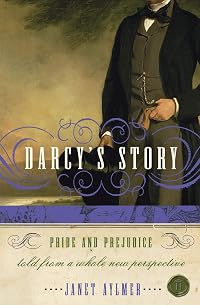

Member Recommendations
Caramellunacy Both are written with a similar conceit - Jane's diaries found and footnoted by the editor/author. "Unpleasantness" has Jane solving a murder mystery to clear her friend, while "Lost Memoirs" delves into the possible romance that inspired Austen's greatest works.
writemeg Another wonderful novel based on the life of Austen -- this time with a wonderful, believable love interest.
Member Reviews
The Book Report: Every Austenian knows Jane went quiet for 10 years, then produced what is arguably the finest body of novelistic work to come out of nineteenth-century England, then died. Nobody knows poo-diddly about Miss Jane's romantic life, or even if there ever was one, in large part because Jane's sister Cassandra went wild with the scissors and made like a Nazi with a Torah (burn, baby, burn) to make sure none of Jane's letters or diaries (if any) survived unexpurgated. Cassandra doubtless felt she was doing the pathologically shy Jane a service by making sure The Ages never got hold of her innermost secrets. The Ages, however, feel most hard-done-by, and to redress the disgruntlement that our own nosy day and time feels, show more screenwriter and novelist Syrie James has stepped in to provide us with a startlingly plausible and well-executed "recovered memoir" plugging up the egregious gaps in our knowledge of Miss Austen's private life.
My Reivew: Depending on what one is expecting when reading the book, it will either be a genuine pleasure to immerse one's self into, or an annoying pastiche of Austen's crystalline, ringing prose. I fall into Camp A.
No one else is Jane Austen, so drop that ax at the door, no grinding allowed. Yes, the authoress has the *gall* to present her story as Austen's own voice telling her own tale; get over it. No one can remotely pretend to be deceived by the narrative frame, so no one can reasonably judge the book by the prose yardstick of Austen herself. Stop it! Quit bellyaching about the pretenders, the laborers in the pasticherie of Austenland. They exist because Austen is a nonpareil, a monadnock of literary talent. That they are not up to her standard of talent is simply *irrelevant* and those who snort derisively that only *true* Austen prose will satisfy them should carry this thought about with them: "So? Who asked you? Go point your nose into some *real* Austen, then."
The rest of us can now get about enjoying Syrie James's full-bodied claret-jug of a book. The memoir tells the tale of Jane Austen's one great love, invented by James out of a one-line reference to some passion of Jane's by Cassandra, many years after the fact; and some clever literary sleuthing in Austen's work. Brava, Miss James! How nicely done!
And also to be praised is James's fidelity to the known facts of Austen's life. At no point does Miss James deviate from the historical record *where one exists.* This by itself would win my praise for the effort. But combine that with a truly Austenian imagination, and a pleasant facility with the language, and one has a rare thing: A novel that *should* be true.
Why not spend a leisurely spring-shading-into-summer afternoon with Jane, Cassandra, Mother, and the miscellany that make up Regency England's finest writer's world? This is, I declare, a most worthy enterprise in which to engage yourself. show less
My Reivew: Depending on what one is expecting when reading the book, it will either be a genuine pleasure to immerse one's self into, or an annoying pastiche of Austen's crystalline, ringing prose. I fall into Camp A.
No one else is Jane Austen, so drop that ax at the door, no grinding allowed. Yes, the authoress has the *gall* to present her story as Austen's own voice telling her own tale; get over it. No one can remotely pretend to be deceived by the narrative frame, so no one can reasonably judge the book by the prose yardstick of Austen herself. Stop it! Quit bellyaching about the pretenders, the laborers in the pasticherie of Austenland. They exist because Austen is a nonpareil, a monadnock of literary talent. That they are not up to her standard of talent is simply *irrelevant* and those who snort derisively that only *true* Austen prose will satisfy them should carry this thought about with them: "So? Who asked you? Go point your nose into some *real* Austen, then."
The rest of us can now get about enjoying Syrie James's full-bodied claret-jug of a book. The memoir tells the tale of Jane Austen's one great love, invented by James out of a one-line reference to some passion of Jane's by Cassandra, many years after the fact; and some clever literary sleuthing in Austen's work. Brava, Miss James! How nicely done!
And also to be praised is James's fidelity to the known facts of Austen's life. At no point does Miss James deviate from the historical record *where one exists.* This by itself would win my praise for the effort. But combine that with a truly Austenian imagination, and a pleasant facility with the language, and one has a rare thing: A novel that *should* be true.
Why not spend a leisurely spring-shading-into-summer afternoon with Jane, Cassandra, Mother, and the miscellany that make up Regency England's finest writer's world? This is, I declare, a most worthy enterprise in which to engage yourself. show less
This was a charming take on Jane Austen's love life. The author dreams up a handsome member of the landed gentry for our Jane; he also encourages her to pick up her pen. I thought the author did a remarkable job of mimicking Jane's voice. While not an exact imitation, it was close enough to be enjoyable, while also a little modernized.
A screenwriter, Ms. James also kept the plot moving merrily along, with a few twists at the end. Austen fans will be delighted at the many references to her work, including a "real-life" Mr. Collins.
I didn't feel that the Editor's Notes, which insisted this was a memoir, not a piece of fiction, really worked as a literary device. Also, some of the footnotes were clunky, and interfered with the flow of the show more story. Fortunately, they decreased in number after a few pages, and some of them were quite interesting.
But these are minor flaws, and despite them I would recommend this book to any Austen fan. show less
A screenwriter, Ms. James also kept the plot moving merrily along, with a few twists at the end. Austen fans will be delighted at the many references to her work, including a "real-life" Mr. Collins.
I didn't feel that the Editor's Notes, which insisted this was a memoir, not a piece of fiction, really worked as a literary device. Also, some of the footnotes were clunky, and interfered with the flow of the show more story. Fortunately, they decreased in number after a few pages, and some of them were quite interesting.
But these are minor flaws, and despite them I would recommend this book to any Austen fan. show less
Written by a Jane Austen scholar, this fictional work begins with the premise that Austen's lost memoirs have been found. The book is written from Austen's point-of-view and covers her late 20s and early 30s. It feels more like a novel than a memoir, but in a good way.
James did an excellent job researching this work and much of it is based in fact, merging real people, places and events of her life with a fictional love affair. She does an impressive job of capturing Austen's writing style and it truly feels like reading another novel from the author.
I loved reading about everything she had to go through to publish her books. It's easy to forget that during her lifetime, turning down a marriage proposal was almost unheard of, show more especially if you had no money or other prospects. Her true life is more fascinating than any fictional love, but that aspect makes it a fun read.
The plot pulls heavily from Sense & Sensibility and also from Pride & Prejudice, but not without reason. In James' book Austen is inspired to write those things because she experienced them.
It was a delightful, quick read and I can't wait to get my hands on her book, The Secret Diaries of Charlotte Brontë.
"I have found that there is never a perfect time or place for anything. We can always find a reason to put off that which we aspire to do, or fear to do, until tomorrow, next week, next month, next year – until, the end, we never accomplish anything at all." show less
James did an excellent job researching this work and much of it is based in fact, merging real people, places and events of her life with a fictional love affair. She does an impressive job of capturing Austen's writing style and it truly feels like reading another novel from the author.
I loved reading about everything she had to go through to publish her books. It's easy to forget that during her lifetime, turning down a marriage proposal was almost unheard of, show more especially if you had no money or other prospects. Her true life is more fascinating than any fictional love, but that aspect makes it a fun read.
The plot pulls heavily from Sense & Sensibility and also from Pride & Prejudice, but not without reason. In James' book Austen is inspired to write those things because she experienced them.
It was a delightful, quick read and I can't wait to get my hands on her book, The Secret Diaries of Charlotte Brontë.
"I have found that there is never a perfect time or place for anything. We can always find a reason to put off that which we aspire to do, or fear to do, until tomorrow, next week, next month, next year – until, the end, we never accomplish anything at all." show less
I’ve enjoyed Jane Austen’s stories for years now. I think I’ve only actually read one of her books, but I’ve enjoyed many different movie and TV adaptations over the years, and I aim to read through all of her works in the near future. But when I saw this book was part of a Jane Austen read-along, I thought it would be a good way to ease into reading her works. I’m so glad I tried it; this was a fascinating story!
I think the thing I loved most about this book was the way the author was able to bring us into Jane Austen’s world, show us what life may have looked like for her, and how her experiences may have (likely) made their way into her novels. As a wanna-be author, I found that inspiring.
This book is also just plain show more high-quality historical fiction, such that when I finished the story, I had to do a Google search to confirm that this was, indeed, fiction! It felt so realistic to me that I had a serious question or two about that. I especially enjoyed the parts of the story that I believe are based on real history, but James did an excellent job combining truth and fiction and the story flowed flawlessly—and it was gripping enough that I finished it in one day, a rarity for me!
If you have ever enjoyed Jane Austen’s works (or adaptations thereof), you’d likely enjoy this book. Perfect for lovers of historical or regency romance, or anyone who enjoys historical fiction inspired by real people and events. show less
I think the thing I loved most about this book was the way the author was able to bring us into Jane Austen’s world, show us what life may have looked like for her, and how her experiences may have (likely) made their way into her novels. As a wanna-be author, I found that inspiring.
This book is also just plain show more high-quality historical fiction, such that when I finished the story, I had to do a Google search to confirm that this was, indeed, fiction! It felt so realistic to me that I had a serious question or two about that. I especially enjoyed the parts of the story that I believe are based on real history, but James did an excellent job combining truth and fiction and the story flowed flawlessly—and it was gripping enough that I finished it in one day, a rarity for me!
If you have ever enjoyed Jane Austen’s works (or adaptations thereof), you’d likely enjoy this book. Perfect for lovers of historical or regency romance, or anyone who enjoys historical fiction inspired by real people and events. show less
'The Lost Memoirs of Jane Austen” is a speculative fiction novel imagining an intense love affair for writer extraordinaire Jane Austen. Jane herself tells the story in journal format. This decision, smartly made and well rendered by the novel’s author, Syrie James, serves to propel the story along nicely. One is quickly engaged and easily taken with Jane’s voice. Ms. James has done an excellent job of mimicking Jane Austen’s writing style (no small task). She has additionally well-researched Jane’s life. The journal timeline is a history lesson in Jane Austen placement.
My first thoughts, upon reading the novel’s premise, were to wonder if Ms. James was brave or egocentric. I must say, after finishing the novel, that she was show more both. It’s a huge task to assume that one can mimic a voice so dearly loved and so distinct for it’s tone and wit. But, Ms. James does such a good job; I’ll bow to her bravery.
History has long wondered about Austen’s amazing ability to write the comedy of manners involved in courtship. And critics have long debated her compact “happily ever after” endings. This novel attempts to shed some light on both. In these tasks, Syrie James succeeds.
Where I find the novel flawed is in its neatly packed ‘Forrest Gumpish” hypotheses. The whole journal is a bit too cataloged. Many, many scenes are taken, almost verbatim, from Austen’s novels. I realize the writer’s attempt to add depth to Austen’s works, but all it did was pop my suspension of disbelief bubble to the point of my saying aloud, “Oh, C’mon!”
Another grumble concerns the novel reading like just that: a novel. It’s supposed to be a memoir. Most memoirs do not contain the amount of dialogue this one pretends. Most memoir writers do not exact pages of specific conversation. In repeating Austen’s voice and tone (well done, as previously stated) Ms. James uses Austen’s novel writing style, also full of witty dialogue exchanges, but not common of personal journals.
Still a final exception is that most journals do not go back in time. They usually stay in the present. A brief recounting of a particular instance might be included, but a huge, chapters long recounting, would not.
I suspect one of two things will happen with readers. They will either love or hate “The Lost Memoirs of Jane Austen.” Any story that supposes a romance for beloved Jane is bound to illicit strong reactions. Let me further explain:
It is my personal observation, from the many romance novels lining shelves in stores and libraries, that romance writing is alive and well. Ask a woman, “What do you read?” It is my experience to have never heard the reply, “romance novels.” Yet, someone is buying romance and her snotty stepsister ‘Chick-Lit.’ The library sale carts are lined with the stuff. My best friend, a used bookstore owner, has to donate piles of romance novels to Goodwill as she gets so many trade-ins. My own mother, a self-avowed man hater, read a romance novel every night of my youth (although I suspect she would deny this to her last breath).
It seems so much more intelligent to say one is a fan of Jane Austen. She’s a respected writer. Yet, isn’t romance a constant recurring theme in all of her novels? On the surface they look very like most modern ‘Chick-Lit’ stories. Today’s modern romance/chick topics observe well-to-do ladies born into privileged circumstances, searching for the latest must-have items all the while keeping their eyes peeled for Mr. Big. It’s no surprise that a vast wealth of Austen inspired books and films have sprung to life.
Literary scholars will begin screaming the merits of Jane’s many contributions about now. They have cause to scream. Austen’s writing is no Harlequin Romance. Her observations of society are bitingly sarcastic and keenly observed. Her flowery speech hides a much deeper meaning. Anyone with English Lit 101 can begin to point out these ideas and the literary types can spend hours rightly effusing Austen’s gifts. Some have gone so far as to compare her to Shakespeare. (Gasp! Harold Bloom is rolling in his grave … oops … brass studded, leather, Queen Anne chair about now).
However, the reader that enjoys the romance theme as the central ‘feel good’ reason for watching Keira Knightly rush from (the poorly cast) Matthew Macfadyen’s side or the ladies with posters of Colin Firth (the quintessential Mr. Darcy) nailed inside their wardrobes (in case the need for an impromptu dance arises) will love The Lost Memoirs of Jane Austen.
Review first published on Many A Quaint & Curious Volume show less
My first thoughts, upon reading the novel’s premise, were to wonder if Ms. James was brave or egocentric. I must say, after finishing the novel, that she was show more both. It’s a huge task to assume that one can mimic a voice so dearly loved and so distinct for it’s tone and wit. But, Ms. James does such a good job; I’ll bow to her bravery.
History has long wondered about Austen’s amazing ability to write the comedy of manners involved in courtship. And critics have long debated her compact “happily ever after” endings. This novel attempts to shed some light on both. In these tasks, Syrie James succeeds.
Where I find the novel flawed is in its neatly packed ‘Forrest Gumpish” hypotheses. The whole journal is a bit too cataloged. Many, many scenes are taken, almost verbatim, from Austen’s novels. I realize the writer’s attempt to add depth to Austen’s works, but all it did was pop my suspension of disbelief bubble to the point of my saying aloud, “Oh, C’mon!”
Another grumble concerns the novel reading like just that: a novel. It’s supposed to be a memoir. Most memoirs do not contain the amount of dialogue this one pretends. Most memoir writers do not exact pages of specific conversation. In repeating Austen’s voice and tone (well done, as previously stated) Ms. James uses Austen’s novel writing style, also full of witty dialogue exchanges, but not common of personal journals.
Still a final exception is that most journals do not go back in time. They usually stay in the present. A brief recounting of a particular instance might be included, but a huge, chapters long recounting, would not.
I suspect one of two things will happen with readers. They will either love or hate “The Lost Memoirs of Jane Austen.” Any story that supposes a romance for beloved Jane is bound to illicit strong reactions. Let me further explain:
It is my personal observation, from the many romance novels lining shelves in stores and libraries, that romance writing is alive and well. Ask a woman, “What do you read?” It is my experience to have never heard the reply, “romance novels.” Yet, someone is buying romance and her snotty stepsister ‘Chick-Lit.’ The library sale carts are lined with the stuff. My best friend, a used bookstore owner, has to donate piles of romance novels to Goodwill as she gets so many trade-ins. My own mother, a self-avowed man hater, read a romance novel every night of my youth (although I suspect she would deny this to her last breath).
It seems so much more intelligent to say one is a fan of Jane Austen. She’s a respected writer. Yet, isn’t romance a constant recurring theme in all of her novels? On the surface they look very like most modern ‘Chick-Lit’ stories. Today’s modern romance/chick topics observe well-to-do ladies born into privileged circumstances, searching for the latest must-have items all the while keeping their eyes peeled for Mr. Big. It’s no surprise that a vast wealth of Austen inspired books and films have sprung to life.
Literary scholars will begin screaming the merits of Jane’s many contributions about now. They have cause to scream. Austen’s writing is no Harlequin Romance. Her observations of society are bitingly sarcastic and keenly observed. Her flowery speech hides a much deeper meaning. Anyone with English Lit 101 can begin to point out these ideas and the literary types can spend hours rightly effusing Austen’s gifts. Some have gone so far as to compare her to Shakespeare. (Gasp! Harold Bloom is rolling in his grave … oops … brass studded, leather, Queen Anne chair about now).
However, the reader that enjoys the romance theme as the central ‘feel good’ reason for watching Keira Knightly rush from (the poorly cast) Matthew Macfadyen’s side or the ladies with posters of Colin Firth (the quintessential Mr. Darcy) nailed inside their wardrobes (in case the need for an impromptu dance arises) will love The Lost Memoirs of Jane Austen.
Review first published on Many A Quaint & Curious Volume show less
Fantastic! Absolutely fabulous story.
I first read this almost 10 years ago---long before I knew anything about Jane Austen or England---and remember feeling so dissatisfied at the end because of the heartbreaking way in which it ends. I felt so sorrowful for Jane and Mr. Ashford---only to turn the page and find it was all a work of fiction?? What??!! I'd actually carried bad feelings about this book all this time....until now.
Now that I've visited England several times, toured the "Jane places" more than once, and read just about every biographical thing there is to be read on her, I was delighted by this sweet story that so well mimics her story lines---even up to the ending where she wraps up the relationship and says, "the end".
This show more was a fun story incorporating several of Austen's own story ideas, with the idea that she wrote about what she'd experienced. It contained neat history on Lyme and Netley Abbey, and was a lovely, yet heartbreaking, tale that could explain some of the missing years in Jane's timeline. show less
I first read this almost 10 years ago---long before I knew anything about Jane Austen or England---and remember feeling so dissatisfied at the end because of the heartbreaking way in which it ends. I felt so sorrowful for Jane and Mr. Ashford---only to turn the page and find it was all a work of fiction?? What??!! I'd actually carried bad feelings about this book all this time....until now.
Now that I've visited England several times, toured the "Jane places" more than once, and read just about every biographical thing there is to be read on her, I was delighted by this sweet story that so well mimics her story lines---even up to the ending where she wraps up the relationship and says, "the end".
This show more was a fun story incorporating several of Austen's own story ideas, with the idea that she wrote about what she'd experienced. It contained neat history on Lyme and Netley Abbey, and was a lovely, yet heartbreaking, tale that could explain some of the missing years in Jane's timeline. show less
I enjoyed this book as a bit of quick reading that I didn't have to think too hard about. I am a devotee of Jane Austen, and even the fictional things written about her usually grab my interest. I think that, on the whole, James' story is a good concept, and the fictional blends with the factual with seamless effort. However, I think the book is a bit on the predictable side, and therefore not something that I would find myself reading over and over again. I did pull a lot of quotes out of it while I was reading, and jot them down in my journal. It's great for one liners of inspiration, just as Austen's works were themselves. I enjoyed it as a quick, springtime, lazy read, but I wouldn't recommend it as anything more than that.
Members
- Recently Added By
Lists

Austenland
165 works; 12 members
Author Information

21+ Works 2,508 Members
Some Editions
Series
Belongs to Publisher Series
Common Knowledge
- Canonical title
- The Lost Memoirs of Jane Austen
- Original title
- The lost memoirs of Jane Austen
- Original publication date
- 2007-11-06
- People/Characters
- Jane Austen; Cassandra Austen; Mr. Ashford
- Important places
- Lyme Regis, Dorset, England, UK; Hampshire, England, UK; Southampton, England, UK
- Dedication
- To my husband Bill, my own Mr. Ashford, whose love makes me complete, and whose support and encouragement have made it possible for me to enjoy this wonderful life as a writer...To my sons Ryan and Jeff, my finest creations, ... (show all)whose insightful input and animated conversations keep me on my creative and intellectual toes. I could not be prouder...To Jane Austen, with admiration, appreciation, and respect...To my agent Tamar Ellman, and my editor, Lucia Marco, whose dedication to and enthusiasm for this project cannot be measured...Thank you with all y heart. You prove to me, on a daily basis, that all things are possible.
- First words
- Why I feel the sudden urge to relate, in pen and ink, a relationship of the most personal nature, which I have never before acknowledged, I cannot say.
- Last words
- (Click to show. Warning: May contain spoilers.)"Do you mean to say, that if I believe in your story as you have told it, then it is as good as if it were true?"
- Publisher's editor
- Macro, Lucia
- Blurbers
- Crombie, Deborah; Cates, Kimberly; Carroll, Susan; Fox, Bette-Lee; Shore, John
Classifications
Statistics
- Members
- 1,028
- Popularity
- 25,215
- Reviews
- 42
- Rating
- (3.76)
- Languages
- 7 — Dutch, English, German, Hungarian, Italian, Polish, Portuguese
- Media
- Paper, Audiobook, Ebook
- ISBNs
- 22
- ASINs
- 9