On This Page
Description
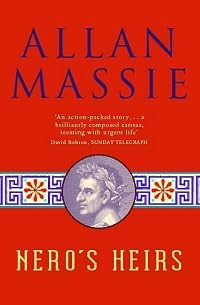
At the beginning of the year 66, Emperor Nero ruled the Roman Empire. By the end of it, Nero had committed suicide and three of his successors were dead, and out of the carnage of civil war at home and a nationalistic uprising in Judaea a new emperor, Vespasian, had emerged. Here Scaurus, once the lover of both Vespasian's son and daughter, looks back on the whole extraordinary year and recreates a world of treachery, malice, passion and - occasionally - quite heroism. Drawing on his show more formidable knowledge of Roman history, Allan Massie brings the distant past vividly to life and creates telling parallels with the present. show lessTags
Recommendations










Member Reviews
The narrator in this novel is Aemilius Scaurus, an aristocratic Roman who was a schoolmate of Domitian, and the lover (at different times in his life) of Titus and Domatilla, and who was later exiled by Domitian but decided not to return to Rome after Domitian's death, having made a life for himself in his place of exile on the Black Sea. He was also a friend of Tacitus, and with a great deal of prodding from Tacitus he writes a series of letters to give him his account of events in Rome in 68 and 69 AD. Disturbed by his memories of that terrible time he intersperses the letters with reflections that he decides not to send Tacitus.
Massie conveys well the sense that the book is describing somebody's memories of events rather than the show more events themselves. There is a certain amount of enjoyment in the fact that the narrator doesn't seem to like Tacitus very much. Scaurus views Tacitus as rather pompous, with a better grasp of what makes for good literary description than of real life, but also unwittingly supplies Tacitus with some of his most memorable quotes.
On the other hand he supplies rather later famous people, such as Napoleon, with some of their best lines as well, which rather spoils the illusion, otherwise very well maintained, that this really is one of Tacitus's sources. show less
Massie conveys well the sense that the book is describing somebody's memories of events rather than the show more events themselves. There is a certain amount of enjoyment in the fact that the narrator doesn't seem to like Tacitus very much. Scaurus views Tacitus as rather pompous, with a better grasp of what makes for good literary description than of real life, but also unwittingly supplies Tacitus with some of his most memorable quotes.
On the other hand he supplies rather later famous people, such as Napoleon, with some of their best lines as well, which rather spoils the illusion, otherwise very well maintained, that this really is one of Tacitus's sources. show less
A fairly graphic and in places rather off-putting rendition of the Year of Four Emperors, 69 AD, when Rome tore itself apart following the suicide of Nero. As it does not focus on one emperor, this lacks some of the flow of the others in the series and is decidedly lacking in sympathetic characters.
Ratings
Members
- Recently Added By
Author Information

Series

Common Knowledge
- Canonical title
- Nero's Heirs
- Original publication date
- 1999
- People/Characters
- Nero Claudius Caesar Augustus Germanicus
- Important places
- Ancient Rome; Rome, Italy
- Important events
- Year of the Three Emperors
- Dedication
- For Alison, as ever
Classifications
Statistics
- Members
- 92
- Popularity
- 350,972
- Reviews
- 2
- Rating
- (3.74)
- Languages
- English, Hungarian, Portuguese (Portugal)
- Media
- Paper, Ebook
- ISBNs
- 8
- ASINs
- 2