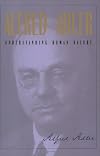
Understanding Human Nature
by Alfred Adler
On This Page
Description
Originally published in 1928 this book was an attempt to acquaint the general public with the fundamentals of Individual Psychology. At the same time it is a demonstration of the practical application of these principles to the conduct of everyday relationships, and the organization of our personal life. Based upon a years' lectures to audiences at the People's Institute in Vienna, the purpose of the book was to point out how the mistaken behaviour of the individual affects harmony of our show more social and communal life; to teach the individual to recognize their own mistakes; and finally, to show them how they may effect a harmonious adjustment to the communal life. Adler felt that mistakes in business or in science were costly and deplorable, but mistakes in the conduct of life are usually dangerous to life itself. This book is dedicated by the author in his preface 'to the task of illuminating man's progress toward a better understanding of human nature.' show lessTags
Recommendations

















































Member Reviews
This was an interesting read, and considering the topic, rather fast. I wasn't agonizing over the pages, which made me happy.
Alfred Adler had some very distinct viewpoints on human beings, and that we as people struggle with inferiority and superiority complexes. His ultimate view is that neither are healthy, and that we need to always keep in mind what is best for the social good. That is the real judge of all actions: Is this contributing to society?
It was a thought provoker...but I'm not sure I'm too inclinded to read more of Adler.
Alfred Adler had some very distinct viewpoints on human beings, and that we as people struggle with inferiority and superiority complexes. His ultimate view is that neither are healthy, and that we need to always keep in mind what is best for the social good. That is the real judge of all actions: Is this contributing to society?
It was a thought provoker...but I'm not sure I'm too inclinded to read more of Adler.
This was an interesting read, and considering the topic, rather fast. I wasn't agonizing over the pages, which made me happy.
Alfred Adler had some very distinct viewpoints on human beings, and that we as people struggle with inferiority and superiority complexes. His ultimate view is that neither are healthy, and that we need to always keep in mind what is best for the social good. That is the real judge of all actions: Is this contributing to society?
It was a thought provoker...but I'm not sure I'm too inclinded to read more of Adler.
Alfred Adler had some very distinct viewpoints on human beings, and that we as people struggle with inferiority and superiority complexes. His ultimate view is that neither are healthy, and that we need to always keep in mind what is best for the social good. That is the real judge of all actions: Is this contributing to society?
It was a thought provoker...but I'm not sure I'm too inclinded to read more of Adler.
The Courage to be Disliked appears to cover more ground then this single book which I wasn't expecting. This book had some insights, but ended up being less prescriptive in nature then what I wanted.
Signed by Jelliffe. Bookplate. Jelliffe arranged the earlist translations of Adler into English. Adler's individual psychology, along with Sigmund Freud's depth psychology and C. G. Jung's analytical psychology, are part of the foundation of modern psychology. The knowledge and insights that Adler acquired as a general practitioner in Vienna formed an important part of the foundations of his psychology, in which he sought to understand the law of human mental development. According to Adler's conviction, this law of mental development is "the most important guide for anyone who does not want to succumb to dark impulses, but rather strives to consciously build his destiny. With these investigations we are pursuing knowledge of human show more nature, a science that is rarely cultivated in any other way, but which seems to us to be the most important and indispensable activity for all classes of the population. His insight that the neuroses are due to the conflicts between people's natural striving for recognition and due to its actual social role, has taken on new meaning in the second half of our century. Adler's fundamental book 'Knowledge of Humanity' is also considered a standard work in modern psychology abroad. show less
First American edition of this best known work from Alfred Adler, founder of the method of individual psychology, a holistic approach to psychotherapy quite separate from Freud's. Translated from the German by Walter Beran Wolfe. Very good in publisher's blue cloth with orange lettering. Head and heel worn thin. Page block shows some tanning with foxing to preliminaries. 8vo - over 7¾ - 9¾ tall.
In German
Members
- Recently Added By
Lists

Psicología - Clásicos
165 works; 2 members
Author Information

81 Works 1,586 Members
Alfred Adler, a contemporary of Sigmund Freud and C. G. Jung, was one of the founding fathers of modern psychology. He was a core member of the famous Vienna Psychoanalytic Society, of which he became president in 1910. Following an ideological split from Freud, he resigned to found Individual Psychology.
Series
Belongs to Publisher Series
Work Relationships
Common Knowledge
- Original title
- Menschenkenntnis
- Original publication date
- 1927
- People/Characters
- Alfred Adler
- Original language
- German
Classifications
- Genres
- Nonfiction, General Nonfiction, Philosophy
- DDC/MDS
- 150.1953 — Philosophy & psychology Psychology Emotions, Relationships, & Family Theory And Instruction Systems, schools, viewpoints Psychoanalytic systems Adlerian system
- LCC
- BF833 .A4 — Philosophy, Psychology and Religion Psychology Psychology Temperament. Character
- BISAC
Statistics
- Members
- 482
- Popularity
- 63,145
- Reviews
- 8
- Rating
- (3.82)
- Languages
- 13 — Czech, Dutch, English, Estonian, French, German, Hungarian, Italian, Lithuanian, Portuguese, Spanish, Swedish, Turkish
- Media
- Paper, Audiobook, Ebook
- ISBNs
- 42
- ASINs
- 28