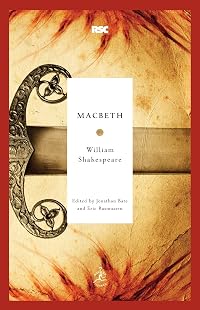
Modern Library Classics : Macbeth
by Jonathan Bate (Editor), Eric Rasmussen (Editor), William Shakespeare (Playwright)
On This Page
Recommendations
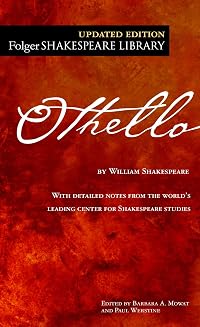
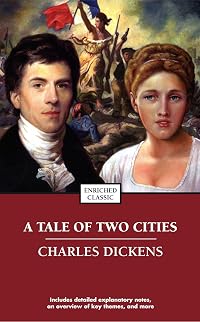
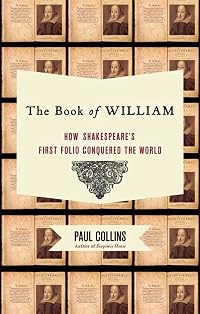
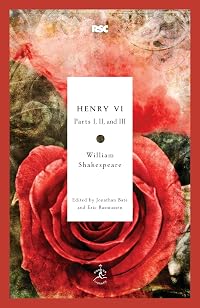





Member Reviews
A profoundly affecting play, Macbeth is Shakespeare's darkest tragedy, though perhaps not as nihilistic as the pre-Christian King Lear. Not that Macbeth's Christian era has any considerable redemptive effect on the play. There is Christian imagery throughout the play, of course, but I would contend with critics like Empson and Bloom that Shakespeare was not a particularly Christian playwright. It has hard to say anything about Shakespeare from his plays - he is the least auto-biographical writer in the Western tradition, one might say. He may well have been Christian (perhaps even Roman Catholic, as some have speculated) but I do not think his plays, Macbeth least of all, espouse any overt religious message. One can tack such a message show more onto Macbeth, if you wish, by investing Macbeth's opponents (young Malcolm, Ross, Macduff, and the other rebellious thanes of Scotland) with the ethos of 'good Christian knights', sent to kill the emissary of evil. But I would contend that this is a misguided misreading of the play. Macbeth may be morally abhorrent, but the play is closer in structure to a Sophoclean tragedy, with the focus nearly entirely on Macbeth, not on the 'avenging Christian heroes'.
Bloom contends that Macbeth is extremely horrifying not because of its disturbing imagery and actions:Titus Andronicus is much more bloody, and yet less horrifying than Macbeth, and in any case, playgoers of his time could go to Tyburn to watch bloody executions. Rather, the horror is in Macbeth's extreme interiority and his proleptic imagination, which infects the whole play, as well as those who watch or read the play. Reading Macbeth awakens anxieties in us because it makes us aware of our own propensity and capacity for evil. 'Evil' is, of course, a particularly ambiguous term nowadays, with relativism making such a strong claim to our morality. But, within the confines of world morality, few would claim that Macbeth and his wife's initial ethos of 'the ends justify the means' is not particularly terrible. Even the Macbeths realise the horror of what they have done, though it has diverging effects on the two. In any case, the though that we may be capable of atrocities is uniquely tempting in this play. Macbeth is initially a 'golden boy', though we sense the danger of his propensity for slaughter, even though it is initially in service of the monarch. I never lost my admiration for Macbeth's bravery throughout the play, though I would strongly condemn his actions. It is this dichotomy between centripetal admiration, and a concurrent centrifugal revulsion, which draws one into Macbeth's unique psychology.
Lady Macbeth is the only of other strong character in the play - the thanes and Malcolm are colourless in comparison. But she falls away after the beginning of Act III, and the play then focuses on Macbeth to the near-exclusion of everything else. This is unique in a Shakespearean tragedy - even Hamlet has his mother, uncle, and Horatio. Macbeth is left centre-stage, with his famous soliloquy on death ('Tomorrow, and tomorrow, and tomorrow...'). Though he is killed, we remain strangely uneasy at the end of the play. I think this is because of the above-mentioned identification with Macbeth: we fear our capabilities for evil, but, in a perverse sense, also exult in them. Even more perversely, I felt a distaste for king Malcolm and his easy morality. Perhaps I am merely a misanthropic egoist, always fearing that the 'do-gooding rabble' might come after me as well. All I can say to that is:
Stars, hide your fires!
Let not light see my black and deep desires.
More seriously (well, you judge whether I was serious previously...) is the role of the witches / weird sisters in the play. Do they control Macbeth, planting the seed of murder in his mind? Or has he always had the potential for evil in him? The text is ambiguous about this, but I suspect that Macbeth considers evil long before the witches appear. For instance, they never, ever tell Macbeth to do anything. He comes to the idea of murder all by himself, with some promptings from his wife. And, conversely, when they make predictions to Banquo, Banquo does not run off to kill the monarch. Evil (whatever you mean by that word) seems to reside in humanity itself, not in the outside universe. Which is a bit of a cop-out: the witches are, after all, in the play. Bloom says, despite his fascination with the witches, that they are nearly redundant, which I would agree with, following my interpretation of Macbeth's own culpability. But, then, why did Shakespeare feel the need to add them to the play? Was it only because James I had an inordinate interest in witches and the supernatural in general? This hardly seems like a good enough reason for such a large aspect of the play. Is it because Holinshed mentions them in his Chronicles, on which the play is based? Shakespeare often leaves out things in Holinshed which he finds extraneous. Or did Shakespeare also find witches fascinating? It could be for anyone of these reasons, but I think the last is the most intriguing.
This is, obviously, a great play. It is economical, fast-paced, and cuts to the bone of what Renaissance tragedy could do. It is also frightening, and more so the more one thinks about it. I could say much more about the play - I've left out a whole discussion on the use of humour in the Porter's scene, which Coleridge hated, but which De Quincey examined at length. I also haven't said much about the role of imagery in the play, or the pathetic fallacy of nature responding to the death of the king. Time is short, the art too long.
On a last note: thank God this play isn't as amenable to post-modern reimagings as, say, Othello or The Tempest! I hate polemical interpretations which pervert Shakespeare's plays beyond all recognition. Retellings are fine, but don't give me a Marxist-feminist-structuralist play in which Macbeth is a hero of the proletariat, who kills the factory boss, but then descends into a homo-erotic coupling with the cross-dressing 'Lady' Macbeth, who convinces him to re-exploit the poor factory workers.
Obviously, at the end, he is overthrown because of repressed longings for Malcolm, who resembles his mother. Obviously.
God, help us. show less
Bloom contends that Macbeth is extremely horrifying not because of its disturbing imagery and actions:Titus Andronicus is much more bloody, and yet less horrifying than Macbeth, and in any case, playgoers of his time could go to Tyburn to watch bloody executions. Rather, the horror is in Macbeth's extreme interiority and his proleptic imagination, which infects the whole play, as well as those who watch or read the play. Reading Macbeth awakens anxieties in us because it makes us aware of our own propensity and capacity for evil. 'Evil' is, of course, a particularly ambiguous term nowadays, with relativism making such a strong claim to our morality. But, within the confines of world morality, few would claim that Macbeth and his wife's initial ethos of 'the ends justify the means' is not particularly terrible. Even the Macbeths realise the horror of what they have done, though it has diverging effects on the two. In any case, the though that we may be capable of atrocities is uniquely tempting in this play. Macbeth is initially a 'golden boy', though we sense the danger of his propensity for slaughter, even though it is initially in service of the monarch. I never lost my admiration for Macbeth's bravery throughout the play, though I would strongly condemn his actions. It is this dichotomy between centripetal admiration, and a concurrent centrifugal revulsion, which draws one into Macbeth's unique psychology.
Lady Macbeth is the only of other strong character in the play - the thanes and Malcolm are colourless in comparison. But she falls away after the beginning of Act III, and the play then focuses on Macbeth to the near-exclusion of everything else. This is unique in a Shakespearean tragedy - even Hamlet has his mother, uncle, and Horatio. Macbeth is left centre-stage, with his famous soliloquy on death ('Tomorrow, and tomorrow, and tomorrow...'). Though he is killed, we remain strangely uneasy at the end of the play. I think this is because of the above-mentioned identification with Macbeth: we fear our capabilities for evil, but, in a perverse sense, also exult in them. Even more perversely, I felt a distaste for king Malcolm and his easy morality. Perhaps I am merely a misanthropic egoist, always fearing that the 'do-gooding rabble' might come after me as well. All I can say to that is:
Stars, hide your fires!
Let not light see my black and deep desires.
More seriously (well, you judge whether I was serious previously...) is the role of the witches / weird sisters in the play. Do they control Macbeth, planting the seed of murder in his mind? Or has he always had the potential for evil in him? The text is ambiguous about this, but I suspect that Macbeth considers evil long before the witches appear. For instance, they never, ever tell Macbeth to do anything. He comes to the idea of murder all by himself, with some promptings from his wife. And, conversely, when they make predictions to Banquo, Banquo does not run off to kill the monarch. Evil (whatever you mean by that word) seems to reside in humanity itself, not in the outside universe. Which is a bit of a cop-out: the witches are, after all, in the play. Bloom says, despite his fascination with the witches, that they are nearly redundant, which I would agree with, following my interpretation of Macbeth's own culpability. But, then, why did Shakespeare feel the need to add them to the play? Was it only because James I had an inordinate interest in witches and the supernatural in general? This hardly seems like a good enough reason for such a large aspect of the play. Is it because Holinshed mentions them in his Chronicles, on which the play is based? Shakespeare often leaves out things in Holinshed which he finds extraneous. Or did Shakespeare also find witches fascinating? It could be for anyone of these reasons, but I think the last is the most intriguing.
This is, obviously, a great play. It is economical, fast-paced, and cuts to the bone of what Renaissance tragedy could do. It is also frightening, and more so the more one thinks about it. I could say much more about the play - I've left out a whole discussion on the use of humour in the Porter's scene, which Coleridge hated, but which De Quincey examined at length. I also haven't said much about the role of imagery in the play, or the pathetic fallacy of nature responding to the death of the king. Time is short, the art too long.
On a last note: thank God this play isn't as amenable to post-modern reimagings as, say, Othello or The Tempest! I hate polemical interpretations which pervert Shakespeare's plays beyond all recognition. Retellings are fine, but don't give me a Marxist-feminist-structuralist play in which Macbeth is a hero of the proletariat, who kills the factory boss, but then descends into a homo-erotic coupling with the cross-dressing 'Lady' Macbeth, who convinces him to re-exploit the poor factory workers.
Obviously, at the end, he is overthrown because of repressed longings for Malcolm, who resembles his mother. Obviously.
God, help us. show less
Ratings
Members
- Recently Added By
Author Information

Jonathan Bate was born June 26, 1958. He is a British biographer, broadcaster, and leading Shakespeare scholar. He studied at Sevenoaks School, the University of Cambridge, and Harvard University. At Cambridge, he was a Fellow of Trinity Hall. While studying at Harvard, he held a Harness Fellowship. Bate is a professor of Shakespeare and show more Renaissance Literature at the University of Warwick. He was previously King Alfred Professor of English Literature at the University of Liverpool. He has also lectured at various universities in the United States. Bate is a Fellow of the British Academy and the Royal Society of Literature. He made the Samuel Johnson 2015 shortliast with his title Ted Hughes: The Unauthorised Life . Bate lives near Stratford-upon-Avon and is married to author and biography, Paula Byrne. They have three children. show less

Eric Rasmussen is the department chair and a professor of English at the University of Nevada, Reno. In addition to being the coeditor of the Royal Shakespeare Company's Complete Works of William Shakespeare, he has edited the authoritative editions of numerous other Elizabethan poets. Rasmussen lives in Reno, Nevada.

William Shakespeare, 1564 - 1616 Although there are many myths and mysteries surrounding William Shakespeare, a great deal is actually known about his life. He was born in Stratford-Upon-Avon, son of John Shakespeare, a prosperous merchant and local politician and Mary Arden, who had the wealth to send their oldest son to Stratford Grammar School. show more At 18, Shakespeare married Anne Hathaway, the 27-year-old daughter of a local farmer, and they had their first daughter six months later. He probably developed an interest in theatre by watching plays performed by traveling players in Stratford while still in his youth. Some time before 1592, he left his family to take up residence in London, where he began acting and writing plays and poetry. By 1594 Shakespeare had become a member and part owner of an acting company called The Lord Chamberlain's Men, where he soon became the company's principal playwright. His plays enjoyed great popularity and high critical acclaim in the newly built Globe Theatre. It was through his popularity that the troupe gained the attention of the new king, James I, who appointed them the King's Players in 1603. Before retiring to Stratford in 1613, after the Globe burned down, he wrote more than three dozen plays (that we are sure of) and more than 150 sonnets. He was celebrated by Ben Jonson, one of the leading playwrights of the day, as a writer who would be "not for an age, but for all time," a prediction that has proved to be true. Today, Shakespeare towers over all other English writers and has few rivals in any language. His genius and creativity continue to astound scholars, and his plays continue to delight audiences. Many have served as the basis for operas, ballets, musical compositions, and films. While Jonson and other writers labored over their plays, Shakespeare seems to have had the ability to turn out work of exceptionally high caliber at an amazing speed. At the height of his career, he wrote an average of two plays a year as well as dozens of poems, songs, and possibly even verses for tombstones and heraldic shields, all while he continued to act in the plays performed by the Lord Chamberlain's Men. This staggering output is even more impressive when one considers its variety. Except for the English history plays, he never wrote the same kind of play twice. He seems to have had a good deal of fun in trying his hand at every kind of play. Shakespeare wrote 154 sonnets, all published on 1609, most of which were dedicated to his patron Henry Wriothsley, The Earl of Southhampton. He also wrote 13 comedies, 13 histories, 6 tragedies, and 4 tragecomedies. He died at Stratford-upon-Avon April 23, 1616, and was buried two days later on the grounds of Holy Trinity Church in Stratford. His cause of death was unknown, but it is surmised that he knew he was dying. (Bowker Author Biography) show less
Series
Belongs to Publisher Series
Work Relationships
Contains
Is a study of
Common Knowledge
- Canonical title
- Modern Library Classics : Macbeth
- Original publication date
- 2009
- People/Characters
- Macbeth; Lady Macbeth
- Original language
- English
- Canonical DDC/MDS
- 822.33
- Disambiguation notice
- One of Shakespeare's most popular plays, filled with fierce, violent action, Macbeth is a human drama of ambition, desire, and guilt in a world of blood and darkness, with whispers of the supernatural.
Under the editorial ... (show all)supervision of Jonathan Bate and Eric Rasmussen, two of today's most accomplished Shakespearean scholars, this Modern Library series incorporates definitive texts and authoritative notes from William Shakespeare: Complete Works. Each play includes an Introduction as well as an overview of Shakespeare's theatrical career; commentary on past and current productions based on interviews with leading directors, actors, and designers; scene-by-scene analysis; key facts about the work; a chronology of Shakespeare's life and times; and black-and-white illustrations.
Ideal for students, theater professionals, and general readers, these modern and accessible editions from the Royal Shakespeare Company set a new standard in Shakespearean literature for the twenty-first century.
Classifications
Statistics
- Members
- 296
- Popularity
- 108,133
- Reviews
- 2
- Languages
- English
- Media
- Paper, Ebook
- ISBNs
- 1
- ASINs
- 2