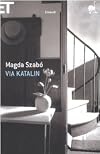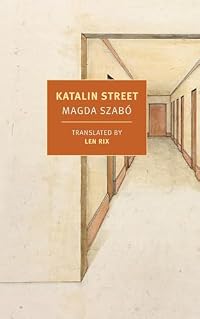
Katalin Street
by Magda Szabó
On This Page
Description
In prewar Budapest three families live side by side on gracious Katalin Street, their lives closely intertwined. A game is played by the four children in which Bálint, the promising son of the Major, invariably chooses Irén Elekes, the headmaster's dutiful elder daughter, over her younger sister, the scatterbrained Blanka, and little Henriette Held, the daughter of the Jewish dentist. Their lives are torn apart in 1944 by the German occupation, which only the Elekes family survives intact. show more The postwar regime relocates them to a cramped Soviet-style apartment and they struggle to come to terms with social and political change, personal loss, and unstated feelings of guilt over the deportation of the Held parents and the death of little Henriette, who had been left in their protection. But the girl survives in a miasmal afterlife, and reappears at key moments as a mute witness to the inescapable power of past events.-- show lessTags
Recommendations




















Member Recommendations
by gust
Member Reviews
One is reminded of Faulkner’s words in reading Magda Szabo’s elegant novel, KATALIN STREET. “The past is never dead. It's not even past.”
This is the story of three families—more specifically four children—living in adjacent houses in Budapest. Irén and Blanka Elekes, Bálint Temes, and Henriette Held have comfortable lives on Katalin Street in an affluent section of pre-war Budapest. Using shifting time frames and perspectives, along with the masterful exploitation of foreshadowing, Szabo evokes a mood of foreboding that permeates the novel. She tracks the fates of her characters during the war, Nazi occupation, post-war Soviet annexation, unrest during the 50’s, and the subsequent malaise. They hopelessly struggle to show more recover the happier times they experienced as children prior to the war. In a reflection of their favorite childhood game, “They hoped that if they clung to one another and held one another’s hands, and could hit upon the right words, then perhaps they might find their way out of the labyrinth and somehow make their way home.”
The death of Henriette is the novel’s crossroads that opens them to their decay. On the day of Bálint and Irén’s engagement party, word spreads of the Held’s internment as Jews by the Nazis. The neighbors decide to protect Henriette. Unfortunately, that plan goes tragically awry resulting in her death. The marriage is postponed and guilt feelings prevail among the families. Henriette’s ghost haunts the latter part of the novel seeking some form of reconnection with the others, especially with Bálint whom she loved but this ends unhappily. Irén continues to work as a teacher throughout, maintaining her sense of order in a chaotic world. However the more scatterbrained Blanka flees Hungary to Greece. Bálint survives his imprisonment during the war but is irretrievably damaged as a result. After Iren’s failed first marriage to another man, she finally weds Bálint but this union is poisoned because their recovery from the death of Henriette is not possible.
Szabo evokes Budapest during these tumultuous times, especially the Nazi and Soviet occupations. The Elekes family survives into the Soviet era but is forced to leave their home on Katalin Street. The novel opens with them living in a tiny flat in full view of their previous home, it having been turned into a dour socialist housing facility. show less
This is the story of three families—more specifically four children—living in adjacent houses in Budapest. Irén and Blanka Elekes, Bálint Temes, and Henriette Held have comfortable lives on Katalin Street in an affluent section of pre-war Budapest. Using shifting time frames and perspectives, along with the masterful exploitation of foreshadowing, Szabo evokes a mood of foreboding that permeates the novel. She tracks the fates of her characters during the war, Nazi occupation, post-war Soviet annexation, unrest during the 50’s, and the subsequent malaise. They hopelessly struggle to show more recover the happier times they experienced as children prior to the war. In a reflection of their favorite childhood game, “They hoped that if they clung to one another and held one another’s hands, and could hit upon the right words, then perhaps they might find their way out of the labyrinth and somehow make their way home.”
The death of Henriette is the novel’s crossroads that opens them to their decay. On the day of Bálint and Irén’s engagement party, word spreads of the Held’s internment as Jews by the Nazis. The neighbors decide to protect Henriette. Unfortunately, that plan goes tragically awry resulting in her death. The marriage is postponed and guilt feelings prevail among the families. Henriette’s ghost haunts the latter part of the novel seeking some form of reconnection with the others, especially with Bálint whom she loved but this ends unhappily. Irén continues to work as a teacher throughout, maintaining her sense of order in a chaotic world. However the more scatterbrained Blanka flees Hungary to Greece. Bálint survives his imprisonment during the war but is irretrievably damaged as a result. After Iren’s failed first marriage to another man, she finally weds Bálint but this union is poisoned because their recovery from the death of Henriette is not possible.
Szabo evokes Budapest during these tumultuous times, especially the Nazi and Soviet occupations. The Elekes family survives into the Soviet era but is forced to leave their home on Katalin Street. The novel opens with them living in a tiny flat in full view of their previous home, it having been turned into a dour socialist housing facility. show less
Three families live side-by-side in a prosperous middle-class idyll between the Castle and the river in Pest in the mid-1930s. It's always summer, the four children are constantly in and out of each other's gardens, and the three girls are all, in their different ways, in love with Bálint. Then comes the war, and everything changes...
Szabó plays around with time, space and narrative voice to commit us to her characters before we have quite worked out what it is that has happened between them, and she leaves a lot of key words unsaid (but all the more powerfully present precisely because we know they ought to be there): maybe that was a strategy that was originally imposed on her by the need to beat the censor. But it also means that show more the different external forces that operate in the book — Nazis, the Red Army, Stalinists, the rebels of 1956 — are oddly undifferentiated from each other, and we are brought in to a close-up view of what is happening in the relations between people rather than being allowed to think about the big outside events that may be causing them. Parents and children, siblings, good and bad reasons for lovers to come together, jealousy, obsession, distraction: it's all there, and all quite frightening in its simplicity. show less
Szabó plays around with time, space and narrative voice to commit us to her characters before we have quite worked out what it is that has happened between them, and she leaves a lot of key words unsaid (but all the more powerfully present precisely because we know they ought to be there): maybe that was a strategy that was originally imposed on her by the need to beat the censor. But it also means that show more the different external forces that operate in the book — Nazis, the Red Army, Stalinists, the rebels of 1956 — are oddly undifferentiated from each other, and we are brought in to a close-up view of what is happening in the relations between people rather than being allowed to think about the big outside events that may be causing them. Parents and children, siblings, good and bad reasons for lovers to come together, jealousy, obsession, distraction: it's all there, and all quite frightening in its simplicity. show less
Some believe that those who die suddenly and unexpectedly stay in their temporal world in spirit form until they are reconciled to death, or until those they are watching over join them. The dead though, don't age, while those left behind do; aging inevitably, sometimes dying inside of shame, of grief, of loss of hope. So it was on Katalin Street, where an alert lively girl first watched those she had considered her family grow up, grow old, and alter irrevocably.
In pre WWII Budapest, there were three particular houses facing the river. The sisters Blanka and Irén lived in one, Henriette in another, and a slightly older boy, Bálint, in the third. The children played together, their parents were friends, and the families celebrated show more small occasions together throughout the year. The three girls all loved Bálint, whose name means Valentine, each in her own way.
If this were a straightforward chronological narrative, the novel would start here. Instead, it starts with Irén, her family, and Bálint on the other side of the river, in Soviet era housing, looking back at their old home. None of them had ever got used to the apartment or grown to like it. They just put up with it, as with so many other things. Although they rarely spoke of it with each other, they all yearned to return to their old homes on Katalin Street, and even more, to return to the people they had been. Henriette, now dead, knew that you can't go back without those who have since died. The past cannot be recreated.
Time can be fluid in our thoughts though. Szabó's book moves back and forth from the 1930s right up to 1968. Nazis come and go to be replaced by the Soviets. People go, but don't always come back: dead or exiled. Even in sections of the book with a date as heading, some characters are in one year, while at the same time others are in another.
What Szabó is telling the reader is a stark message about what we do to each other and what life does to us: ...the most frightening thing of all about the loss of youth is not what is taken away, but what is granted in exchange. Not wisdom. Not sound judgement or tranquillity. Only the awareness of universal disintegration.
For those left behind, There came too the realization that advancing age had taken the past. ... They had discovered too that the difference between the living and the dead is merely qualitative, that it doesn't count for much.
The penultimate sentence of the novel, In everyone's life there is only one person whose name can be cried out in the moment of death, sent me back to the beginning, and an immediate reread, for now the use of that same sentence, first seen early in the novel, gave a different focus and I wanted to follow that path. There are many paths in this book though, and a different one could be taken with each reading. This is the first book I have read by Szabó, but it won't be the last. show less
In pre WWII Budapest, there were three particular houses facing the river. The sisters Blanka and Irén lived in one, Henriette in another, and a slightly older boy, Bálint, in the third. The children played together, their parents were friends, and the families celebrated show more small occasions together throughout the year. The three girls all loved Bálint, whose name means Valentine, each in her own way.
If this were a straightforward chronological narrative, the novel would start here. Instead, it starts with Irén, her family, and Bálint on the other side of the river, in Soviet era housing, looking back at their old home. None of them had ever got used to the apartment or grown to like it. They just put up with it, as with so many other things. Although they rarely spoke of it with each other, they all yearned to return to their old homes on Katalin Street, and even more, to return to the people they had been. Henriette, now dead, knew that you can't go back without those who have since died. The past cannot be recreated.
Time can be fluid in our thoughts though. Szabó's book moves back and forth from the 1930s right up to 1968. Nazis come and go to be replaced by the Soviets. People go, but don't always come back: dead or exiled. Even in sections of the book with a date as heading, some characters are in one year, while at the same time others are in another.
What Szabó is telling the reader is a stark message about what we do to each other and what life does to us: ...the most frightening thing of all about the loss of youth is not what is taken away, but what is granted in exchange. Not wisdom. Not sound judgement or tranquillity. Only the awareness of universal disintegration.
For those left behind, There came too the realization that advancing age had taken the past. ... They had discovered too that the difference between the living and the dead is merely qualitative, that it doesn't count for much.
The penultimate sentence of the novel, In everyone's life there is only one person whose name can be cried out in the moment of death, sent me back to the beginning, and an immediate reread, for now the use of that same sentence, first seen early in the novel, gave a different focus and I wanted to follow that path. There are many paths in this book though, and a different one could be taken with each reading. This is the first book I have read by Szabó, but it won't be the last. show less
Originally published in Hungarian in 1969 by Magda Szabó, Katalin Street moved me deeply. On the surface, it is about three close-knit families living on a street in pre-war Budapest and flashes events in the lives of the characters that stick with them after death. The musings about death and memory in the first two pages were so well written and affecting that I had to reread them immediately. Credit for the fluidity of language that allowed me to fall deeply into the pages goes to translator Len Rix. This was the case throughout this short novel. Sentences would come out and knock me off balance, make me gasp aloud, not out of surprise, there is an undercurrent of the inevitable fate of the characters, but out of a profound sense show more that I was being given access to some deep truth. The characters are well written, though I would not say that is what drives this book (nor is the plot). Perspective changes and time jumps leave you scrambling as you clutch onto the sentences trying to figure out where you are and what is happening. By the end, I felt as though I had lived through many years, cast aside innocence, suffered tragic loss, been in an unhappy marriage, grown old, and become a ghost. The book continues to haunt me more than two weeks since I finished it, I expect it will for quite a time to come. show less
In everyone’s life there is only one person whose name can be cried out in the moment of death.
This is my first experience of Magda Szabo, a Hungarian writer, whose work is making its way into English translation, one book at a time. This was not the book I requested, but it was the one the library gave me, so I decided to just dig in and I’m pleased I did.
Szabo follows four major characters: Balint, Iren, Blanka and Henriette, four childhood friends caught in the upheaval and dangers that beset Hungary from the beginning of World War II until 1969. As we watch the changes of war and the subsequent restructuring of life in Budapest, we also watch the disintegration of the lives of the four friends.
“It’s so sad. You never could show more grasp the simplest facts,” he said. “Life. Death. Clean water. Life isn’t a schoolroom, Iren. There aren’t any rules.”
No rules. Nothing about their lives is as it was before, and the contrast between life as it should have been and life as it has become is unbearable. What each of them has to cling to is the relationship they shared with one another, and that thread is very thin and stretched.
The story is not written in a linear timeline, so it took a bit to adjust to the time movements; there is a dead character who persists beyond the grave and interacts with the living characters. Both of these devices might indicate trouble for me, but Szabo makes them work perfectly and the “ghost” character adds a level of understanding that would be quite impossible without her.
It was the first time in my life that I had an inkling that the dead are not dead but continue living in this world, in one form or another, indestructibly.
Perhaps Szabo is trying to tell us that when your world is destroyed, the dead become more alive to you than the living. Perhaps she wants us to see that trauma, once inflicted, never disappears entirely. Perhaps she wishes us to examine what constitutes family, the fragility of love, and the nature of betrayal. Or, perhaps she is just putting a mirror up to life and inviting us to see how little of it is really within our control.
I'm unsure how to feel about the ending. It seemed abrupt, but then what else could be said? Still, it kept this from being the full 5-stars for me. 4.5, rounded down. show less
This is my first experience of Magda Szabo, a Hungarian writer, whose work is making its way into English translation, one book at a time. This was not the book I requested, but it was the one the library gave me, so I decided to just dig in and I’m pleased I did.
Szabo follows four major characters: Balint, Iren, Blanka and Henriette, four childhood friends caught in the upheaval and dangers that beset Hungary from the beginning of World War II until 1969. As we watch the changes of war and the subsequent restructuring of life in Budapest, we also watch the disintegration of the lives of the four friends.
“It’s so sad. You never could show more grasp the simplest facts,” he said. “Life. Death. Clean water. Life isn’t a schoolroom, Iren. There aren’t any rules.”
No rules. Nothing about their lives is as it was before, and the contrast between life as it should have been and life as it has become is unbearable. What each of them has to cling to is the relationship they shared with one another, and that thread is very thin and stretched.
The story is not written in a linear timeline, so it took a bit to adjust to the time movements; there is a dead character who persists beyond the grave and interacts with the living characters. Both of these devices might indicate trouble for me, but Szabo makes them work perfectly and the “ghost” character adds a level of understanding that would be quite impossible without her.
It was the first time in my life that I had an inkling that the dead are not dead but continue living in this world, in one form or another, indestructibly.
Perhaps Szabo is trying to tell us that when your world is destroyed, the dead become more alive to you than the living. Perhaps she wants us to see that trauma, once inflicted, never disappears entirely. Perhaps she wishes us to examine what constitutes family, the fragility of love, and the nature of betrayal. Or, perhaps she is just putting a mirror up to life and inviting us to see how little of it is really within our control.
I'm unsure how to feel about the ending. It seemed abrupt, but then what else could be said? Still, it kept this from being the full 5-stars for me. 4.5, rounded down. show less
Buddy read with Hilary. I got so much more out of this book reading it with her. She caught two things that I did not, one that I didn’t think was the case (but probably was) that Blanka immediately understood her unintentional part in Henriette’s death and one that I just missed and that was done brilliantly. How Blanka’s never locking doors was so that she felt more confident that she could escape if need be, due to the repaired fence that probably caused Henriette’s death.
I love this author and how she writes her characters. They’re all complex people. Some are more likeable than others but they all have flaws and they all have redeeming characteristics. I love how the other two families did try to help the Jewish show more family. It was gut wrenching how all the characters basically ended up unhappy or displaced or dead.
The story is beautifully written. Except for the one place where, in my opinion, things were unclear, I think that this must be an excellent translation too. The narrative is disquietingly haunting, as it should have been.
This is a great historical fiction story. Certain important historical events in Hungarian history are told and seen via the perspective of the characters. I loved reading about the members of the three families that were neighbors on Katalin Street. Reading about the four child characters when they were children and teens especially engaged me.
It’s a painfully sad story, in just about every way, so much sadder than what I’d anticipated (even though I knew what likely was going to happen in 1944) and it was kind of tragic all the way through, and a lot of tragic things do happen, but it’s not exactly a tragedy. The last line was great and emotionally moving.
However; I’m not usually a fan of ghost stories and this is a ghost story, though an unusual and interesting one and I admit it did a good job of helping to tell the story. Weirdest ghost ever though as everyone could see this ghost when it wanted to be seen but nobody believed it was a ghost of the person the ghost was when alive, even though they yearned to be recognized. I do admit that the ghost plot device was done in an intelligent way and allowed for some unique storytelling. I’d still have preferred that it had been absent, that another way had been used to tell these parts of the story.
The chapter titles give some clues about what will happen or at least what is happening in the wider world:
Places
Moments and Episodes:
1934
1944
1952
1956
1961
1968
I have a few books by this author on my to read list and I do want to read them. I’d already read Abigail (also with Hilary) and that was a 5 star read for me. I did not like this one as much but I did really like it.
3-3/4 stars (It would have been 4-3/4 stars if not for theghost. ) show less
I love this author and how she writes her characters. They’re all complex people. Some are more likeable than others but they all have flaws and they all have redeeming characteristics.
The story is beautifully written. Except for the one place where, in my opinion, things were unclear, I think that this must be an excellent translation too. The narrative is disquietingly haunting, as it should have been.
This is a great historical fiction story. Certain important historical events in Hungarian history are told and seen via the perspective of the characters. I loved reading about the members of the three families that were neighbors on Katalin Street. Reading about the four child characters when they were children and teens especially engaged me.
It’s a painfully sad story, in just about every way, so much sadder than what I’d anticipated (even though I knew what likely was going to happen in 1944) and it was kind of tragic all the way through, and a lot of tragic things do happen, but it’s not exactly a tragedy. The last line was great and emotionally moving.
However; I’m not usually a fan of
The chapter titles give some clues about what will happen or at least what is happening in the wider world:
Places
Moments and Episodes:
1934
1944
1952
1956
1961
1968
I have a few books by this author on my to read list and I do want to read them. I’d already read Abigail (also with Hilary) and that was a 5 star read for me. I did not like this one as much but I did really like it.
3-3/4 stars (It would have been 4-3/4 stars if not for the
The novel begins with the Elekes family - the elderly parents, Iren and her second husband, Balint, and her daughter (by her first husband) Kinga, settling into a new flat but still able to see where they used to live, the old neighborhood on Katalin Street.
Katalin Street has a hold on them, and in chapters told from various perspectives in a non-linear fashion, we are eventually given the story of three families - neighbors who lived on Katalin Street in Budapest through World War 2 and the Soviet occupation of Hungary. Though larger world events happen, they are never identified in the narrative itself, and I probably missed some of the nuances I might have picked up on if I were more familiar with Hungarian history. The focus of the show more novel, though, is how these larger events affected the lives of individuals, particularly the children of the three families: Iren and Blanka Elekes, Balint Temes, and Henriette Held. Their relationships, jealousies, and missteps throughout the years bring them into conflict but ultimately together through their shared experienced on Katalin Street. I could appreciate the story more than enjoy it, and in the end I was a little annoyed with Iren and Balint rather than sympathetic. show less
Katalin Street has a hold on them, and in chapters told from various perspectives in a non-linear fashion, we are eventually given the story of three families - neighbors who lived on Katalin Street in Budapest through World War 2 and the Soviet occupation of Hungary. Though larger world events happen, they are never identified in the narrative itself, and I probably missed some of the nuances I might have picked up on if I were more familiar with Hungarian history. The focus of the show more novel, though, is how these larger events affected the lives of individuals, particularly the children of the three families: Iren and Blanka Elekes, Balint Temes, and Henriette Held. Their relationships, jealousies, and missteps throughout the years bring them into conflict but ultimately together through their shared experienced on Katalin Street. I could appreciate the story more than enjoy it, and in the end I was a little annoyed with Iren and Balint rather than sympathetic. show less
Members
- Recently Added By
Published Reviews
"A visceral, sweeping depiction of life in the shuddering wake of wartime." Starred Review
added by SaraElizabeth11
Lists

Best Friendship Stories
205 works; 16 members

Books Read in 2016
4,666 works; 199 members

Speculative Fiction from around the World
610 works; 17 members

Books written in uncommon languages
97 works; 8 members

Kirkus Starred Fiction Reviews of Books Published in 2017
412 works; 7 members

Dead narrators
50 works; 4 members
Author Information

89+ Works 4,437 Members
Some Editions
Awards and Honors
Series
Belongs to Publisher Series
Common Knowledge
- Canonical title
- Katalin Street
- Original title
- Katalin utca
- Original publication date
- 1969
- People/Characters
- Irén Elekes; Blanka Elekes; Bálint Temes; Henriette Held
- Important places
- Budapest, Hungary
- Important events
- World War II; Nazi Occupation of Hungary; Soviet Occupation of Hungary
- First words
- The process of growing old bears little resemblance to the way it is presented, either in novels or in works of medical science.
- Last words
- (Click to show. Warning: May contain spoilers.)Bring Blanka home!
- Blurbers
- Lauren Groff
- Original language
- Hungarian
Classifications
- Genres
- Fiction and Literature, General Fiction, Historical Fiction
- DDC/MDS
- 894.51133 — Literature & rhetoric Asian Literature Literatures of Altaic, Uralic, Hyperborean, Dravidian languages; literatures of miscellaneous languages of south Asia Finno-Ugric languages Ugric languages Hungarian Hungarian fiction 1900–2000
- LCC
- PH3351 .S592 .K313 — Language and Literature Uralic languages. Basque language Uralic. Basque Hungarian
- BISAC
Statistics
- Members
- 413
- Popularity
- 74,623
- Reviews
- 19
- Rating
- (4.19)
- Languages
- 11 — Dutch, English, French, German, Hungarian, Italian, Portuguese, Russian, Spanish, Swedish, Turkish
- Media
- Paper, Ebook
- ISBNs
- 31
- ASINs
- 6