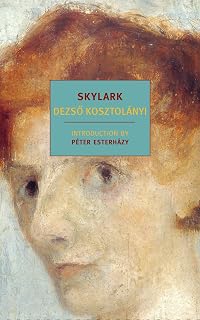
Skylark
by Dezső Kosztolányi
On This Page
Description
It is 1900, give or take a few years. The Vajkays--call them Mother and Father--live in Sárszeg, a dead-end burg in the provincial heart of the Austro-Hungarian Empire. Father retired some years ago to devote his days to genealogical research and quaint questions of heraldry. Mother keeps house. Both are utterly enthralled with their daughter, Skylark. Unintelligent, unimaginative, unattractive, and unmarried, Skylark cooks and sews for her parents and anchors the unremitting tedium of show more their lives.Now Skylark is going away, for one week only, it's true, but a week that yawns endlessly for her parents. What will they do? Before they know it, they are eating at restaurants, reconnecting with old friends, attending the theater. And this is just a prelude to Father's night out at the Panther Club, about which the less said the better. Drunk, in the light of dawn Father surprises himself and Mother with his true, buried, unspeakable feelings about Skylark.
Then, Skylark is back. Is there a world beyond the daily grind and life's creeping disappointments? Kosztolányi's crystalline prose, perfect comic timing, and profound human sympathy conjure up a tantalizing beauty that lies on the far side of the irredeemably ordinary. To that extent, Skylark is nothing less than a magical book.
. show less
Tags
Recommendations


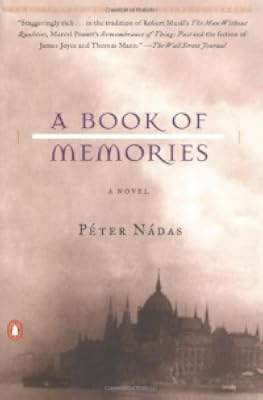

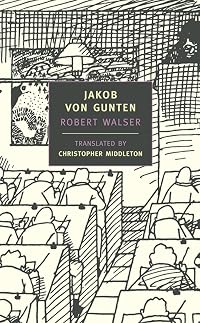
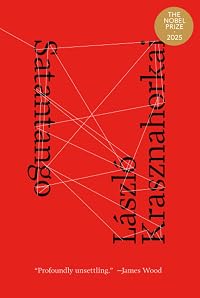
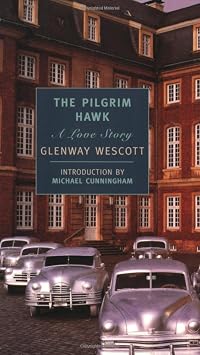




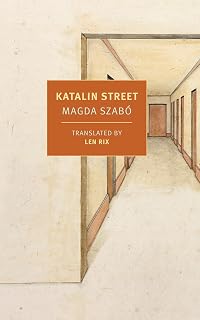
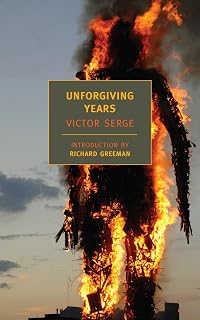
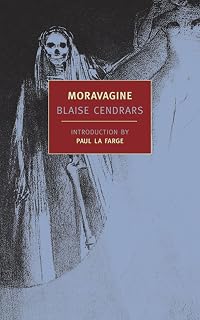
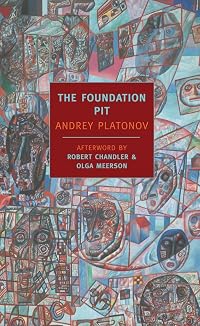






Member Recommendations
Member Reviews
This compact, subtly playful novel by Hungarian critic and poet Dezső Kosztolányi (1885-1936) chronicles the uneventful lives of the Vajkay family, who reside in a parochial outpost called Sárszeg, somewhere within the borders of the Austro-Hungarian Empire. We meet Akos Vajkay and his wife (the narrator usually refers to them as Mother and Father) as the 19th Century is winding down. It’s September 1, and they are packing because their daughter, nicknamed Skylark (we never learn her real name), is leaving for a week to visit her aunt and uncle in Tarkö, on the Hungarian plain. Akos is retired and spends his days researching heraldry and lineages. His wife keeps house. But it seems the presiding force within the Vajkay home is show more Skylark, who, at thirty-five, unattached with no prospects, well versed in household chores, is both a hopeless burden and a constant focus of doting attention for her parents. Once Skylark has left them standing on the station platform, “waving their little handkerchiefs” as her train recedes from view, the parents are bereft. Skylark too, on board the train, unaccustomed to being on her own without distractions, succumbs to the loneliness and despair that constantly plagues her. But it turns out all is not lost. In their daughter’s absence, Akos and his wife are free to do as they please. They dine out at the best restaurant in town. They attend the theatre. Akos reconnects with a jolly crowd of revelers called the Panthers, with whom he used to socialize but withdrew from after marrying and becoming a father. His wife also enjoys the week emancipated from the daughter’s sobering presence, neglecting the housework, eating chocolate, and playing the piano, which we are told she hasn’t touched in many years. Akos had renounced alcohol and gambling but, encouraged by his friends to throw off the shackles of sobriety, he again takes up the bottle and the cards, and in the small hours of Friday morning returns home uproariously drunk with his winnings overflowing his pockets. It is then, while in the throes of inebriation, that Akos voices to his wife the grim truth of which they are painfully aware but have avoided facing: that their daughter is irredeemably ugly and will never find a husband. For Skylark too, after a good cry on the train, the week is pleasing. Every day is full. In a letter sent while on holiday she regales her parents with a litany of the activities she and her relatives have got up to. Then the week is over. Skylark returns home. Her parents are genuinely ecstatic and relieved to have her back where she belongs, safe in the nest. Life for the Vajkay family returns to normal. It is perhaps a cloistered, unremarkable life, buttoned-down and filled with familiar ritual, in some respects disappointing, but comfortable. The ironies here are subtle, the humour subdued. Kosztolányi never mocks his characters, who take their amusements where they can find them. He simply lets them be. In Skylark, Kosztolányi is sketching a way of life that is neither tragic nor triumphant and in so doing has written a moving and memorable novel. show less
“You wouldn't like it, it tastes like coconut” is what I always tell my diabetic father whenever I indulge in a sugary dessert in his presence. We both know that's not true. However, I know he doesn't want me to give up something I enjoy because he can't enjoy it, too.
The Vajkays don't live like that. For years, Mother and Father Vajkays have denied themselves things they enjoy out of sensitivity for their daughter, Skylark, a spinster of uncertain age. They live with the fiction that they don't enjoy those activities, and they speak disparagingly of those who do. When Skylark goes away for a week's visit with relatives in the country, her parents tentatively rediscover the delights of things they'd given up for years, and they show more confront some unspoken truths. The ordered lives they lead with Skylark stand out against those of other inhabitants of the town who indulge their passions with abandon.
Nothing of great consequence happens in this short novel. The action is mostly internal. Even the minor characters are interesting. While on the surface this is a lighthearted novel and there are several humorous scenes, the underlying mood is one of melancholy, disappointment, and resignation, with a tinge of apathy. The main weakness of the book is that the author leans a little too much toward “telling” rather than “showing”.
My edition tells me that two of the author's other works are available in English translation. I've now added two more TBRs to my mushrooming list. Recommended warmly, especially to readers of literature in translation. show less
The Vajkays don't live like that. For years, Mother and Father Vajkays have denied themselves things they enjoy out of sensitivity for their daughter, Skylark, a spinster of uncertain age. They live with the fiction that they don't enjoy those activities, and they speak disparagingly of those who do. When Skylark goes away for a week's visit with relatives in the country, her parents tentatively rediscover the delights of things they'd given up for years, and they show more confront some unspoken truths. The ordered lives they lead with Skylark stand out against those of other inhabitants of the town who indulge their passions with abandon.
Nothing of great consequence happens in this short novel. The action is mostly internal. Even the minor characters are interesting. While on the surface this is a lighthearted novel and there are several humorous scenes, the underlying mood is one of melancholy, disappointment, and resignation, with a tinge of apathy. The main weakness of the book is that the author leans a little too much toward “telling” rather than “showing”.
My edition tells me that two of the author's other works are available in English translation. I've now added two more TBRs to my mushrooming list. Recommended warmly, especially to readers of literature in translation. show less
We'll be traveling to Hungary soon and this book is one of the few available in translation here by a popular Hungarian writer of the early 20th century, Dezső Kosztolányi.
So first I'll say that the writing was very enjoyable, that I came to really like characters that I thought at the beginning would bore me to tears the whole book, and that the book can be incredibly funny at times. But, by God, this book was depressing to me. At the end I wanted to scream "Affect change! All of your lives could be so much better! So much more!" Silly American that I am.
So there is a small family. An "ugly" daughter--a spinster at 35, and her two adoring parents. She maintains the house and their lives. The parents adore her. She is to go on a show more short trip to the country. They are all devastated. What in the world will they do for the whole week? The answer turns out to be, have a freakin life.So they get dragged back into their social connections and personal interests and have a delightful week. She spends a week in the country not getting the husband and family that she so desperately wants or enjoying the company of her extended family, and then she comes back. They go back to being shut-ins with bland food instead of awesome goulash and palinka parties.
According to the introduction, Kosztolányi found it pretty much impossible to write about anything but the fact that we are dying. The examples of personal suffering are poignant, no one in the book is NOT suffering the daughter's fate as all of their hearts break along with hers. But myself, free from the 20th-century Magyar's baggage and saddled with my own American millennial mindset was so angry at them for not doing something to make things better. Don't get me wrong, I didn't want or expect her to get a makeover or marriage prospects. (I would have been way more angry at the end.) I just want them to do something to make their lives better instead of suffering so much, but I guess, realistically or fatalistically, that's generally not how life is.
PS - We are all dying. Thanks, Kosztolányi. show less
So first I'll say that the writing was very enjoyable, that I came to really like characters that I thought at the beginning would bore me to tears the whole book, and that the book can be incredibly funny at times. But, by God, this book was depressing to me. At the end I wanted to scream "Affect change! All of your lives could be so much better! So much more!" Silly American that I am.
So there is a small family. An "ugly" daughter--a spinster at 35, and her two adoring parents. She maintains the house and their lives. The parents adore her. She is to go on a show more short trip to the country. They are all devastated. What in the world will they do for the whole week? The answer turns out to be, have a freakin life.
According to the introduction, Kosztolányi found it pretty much impossible to write about anything but the fact that we are dying. The examples of personal suffering are poignant, no one in the book is NOT suffering the daughter's fate as all of their hearts break along with hers. But myself, free from the 20th-century Magyar's baggage and saddled with my own American millennial mindset was so angry at them for not doing something to make things better. Don't get me wrong, I didn't want or expect her to get a makeover or marriage prospects. (I would have been way more angry at the end.) I just want them to do something to make their lives better instead of suffering so much, but I guess, realistically or fatalistically, that's generally not how life is.
PS - We are all dying. Thanks, Kosztolányi. show less
Skylark, unmarried, 35, and still living with her parents, goes to visit relatives for a week. In her absence, her parents indulge in lost pleasures that they had abandoned. On the final night, however, her father has a sudden insight about Skylark that he shares with his wife. The final chapters--well, I don't want to give anything away. Great book.
Most of the book is wonderfully sensual--food, theatre, cards, drinking, all against the backdrop of small town Hungarian life in 1899.
Most of the book is wonderfully sensual--food, theatre, cards, drinking, all against the backdrop of small town Hungarian life in 1899.
I found this novel, by turns, charming, satiric, and a little bit horrifying in its depiction of an extremely provincial town in Hungary at the end of the 19th century, in the waning years of the Austro-Hungarian empire, focusing on an aging couple and what they do when their ugly and somewhat stupid 35-ish daughter, Skylark, goes to stay with relatives "in the country" for a week. Kosztolányi has a telling eye for the descriptive detail and for the hypocrisy of many of the residents of the town, and the turnaround of the parents cleaning up the evidence of what they did while their child was away is quite funny. But it is a sad book too, and I can't help but find a little bit of a political edge in it as well.
I used to visit regularly the Hungarian Electronic Library, a state-sponsored repository of classical literature. At least I think of it as such as I used to peruse its collection of Hungarian writers and poets, but I am aware that the archive contains other sections as well, such as pertaining to sciences or foreign literature translated to Hungarian. As I had plenty of books to read in more traditional format, i.e. on paper, I haven’t visited the site recently. When my mother reminded me of it a few weeks ago I went back and was happy to notice a hundreds of audio books available for download, including dozens of novels from Hungarian masters. These were all produced and shared by the Hungarian Federation of the Blind and Partially show more Sighted I quickly grabbed a dozen of them and loaded on my MP3 player.
Yesterday, when I was traveling long distance, I managed to finish the first of these, a novel by Dezso Kosztolanyi. I remembered that I liked his poems as a kid and his short stories in high school, but don’t recall reading any of his novels. The story of Pacsirta (Skylark) is simple: a 35 year old spinster goes for a week of vacation to the relatives on the countryside. She lives in a small town, Sarszeg, which is a stylized version of Szabadka. She looks ugly and had no suitors, thus she lived her whole life with her aging parents. They accommodated their lives to hers, making the family’s days reserved, anti-social and boring, without anything interesting ever happening to any of them. During her week out though, her father gets revitalized, goes to the bar with his old buddies, drinks and play cards till dawn. He even takes his wife to the theater and talks about their daughter’s condition, both a first in a very long time. Upon the daughter’s return they all fall back to their old routine.
I utterly enjoyed listening to this slow pace novel, while flying half way around the world. This contrast of speed was just one of many distinct ones. While I was listening to the exquisite description of many aspects of the family’s surrounding I caught myself comparing this to today’s action oriented novels. Descriptive passages written today have such a different flavor now then they had 80 years ago. (Pacsirta was written in 1923/24.) Here it was the essence of the novel, while the plot seemed to take a backseat in driving the story. Most of the more modern books I read recently were action oriented and the only reason the writers bothered with describing anything or anybody, so the reader could build up some sort of image of the heroes of the stories. But the focus is always what’s happening, who is doing what and why. In Pacsirta though the milieu of the family, the atmosphere of the smalltown, the ambiance of the salon provided the spine of the book. To be able to provide this kind of description one hss to be a keen observer, which Kosztolanyi must have been
Another contrast I kept wondering about is the change in capitalism and consumerism. I live in a small village and rarely visit big cities nowadays. Yesterday as I went through three major airports and two major cities (San Francisco, Frankfurt, Budapest) I must have seen tens of thousands of people. They all looked different, they all had their set of clothing and personal belonging. This reminded me that the consumer experience had been commodified. For the 21st century person buying a new piece of clothing, food, object… anything is a non-event. Back in the era of the book, set in 1899, purchasing an object or service was an experience. The exchange between the seller and the buyer was more meaningful for both; the book describes four or five of these events in detail. The push in capitalism for companies to sell more and keep growing removed the personal nature of the interaction. The extreme form of this is e-commerce, a sphere where more and more of our purchasing is happening without any personal interaction. The exchanges in the book were not always pleasant for both parties, but they provided fodder to think about later.
A third contrast manifested itself in the protagonist family’s connection with modernity. They lived such an isolated life that everything outside its small boundaries confused them. Not just modern aesthetics (e.g. Art Deco) or changing politics (e.g. the paper they read for decades changed its orientation) confused them, but also the encounter that other kind of lifestyles exist beyond their own.
I had to agree with everything what the short literary analysis at the end of the book said about the book. Including:
This thought provoking book really wet my appetite for reading more of Kosztolanyi and his era. My only wish was that the reader would have used better judgment where to have pauses in the text. I offer her a clue: at the punctuation marks ant not at the end of lines or pages. On the other hand her voice was smooth, her giving life to the voices of various characters was superb. show less
Yesterday, when I was traveling long distance, I managed to finish the first of these, a novel by Dezso Kosztolanyi. I remembered that I liked his poems as a kid and his short stories in high school, but don’t recall reading any of his novels. The story of Pacsirta (Skylark) is simple: a 35 year old spinster goes for a week of vacation to the relatives on the countryside. She lives in a small town, Sarszeg, which is a stylized version of Szabadka. She looks ugly and had no suitors, thus she lived her whole life with her aging parents. They accommodated their lives to hers, making the family’s days reserved, anti-social and boring, without anything interesting ever happening to any of them. During her week out though, her father gets revitalized, goes to the bar with his old buddies, drinks and play cards till dawn. He even takes his wife to the theater and talks about their daughter’s condition, both a first in a very long time. Upon the daughter’s return they all fall back to their old routine.
I utterly enjoyed listening to this slow pace novel, while flying half way around the world. This contrast of speed was just one of many distinct ones. While I was listening to the exquisite description of many aspects of the family’s surrounding I caught myself comparing this to today’s action oriented novels. Descriptive passages written today have such a different flavor now then they had 80 years ago. (Pacsirta was written in 1923/24.) Here it was the essence of the novel, while the plot seemed to take a backseat in driving the story. Most of the more modern books I read recently were action oriented and the only reason the writers bothered with describing anything or anybody, so the reader could build up some sort of image of the heroes of the stories. But the focus is always what’s happening, who is doing what and why. In Pacsirta though the milieu of the family, the atmosphere of the smalltown, the ambiance of the salon provided the spine of the book. To be able to provide this kind of description one hss to be a keen observer, which Kosztolanyi must have been
Another contrast I kept wondering about is the change in capitalism and consumerism. I live in a small village and rarely visit big cities nowadays. Yesterday as I went through three major airports and two major cities (San Francisco, Frankfurt, Budapest) I must have seen tens of thousands of people. They all looked different, they all had their set of clothing and personal belonging. This reminded me that the consumer experience had been commodified. For the 21st century person buying a new piece of clothing, food, object… anything is a non-event. Back in the era of the book, set in 1899, purchasing an object or service was an experience. The exchange between the seller and the buyer was more meaningful for both; the book describes four or five of these events in detail. The push in capitalism for companies to sell more and keep growing removed the personal nature of the interaction. The extreme form of this is e-commerce, a sphere where more and more of our purchasing is happening without any personal interaction. The exchanges in the book were not always pleasant for both parties, but they provided fodder to think about later.
A third contrast manifested itself in the protagonist family’s connection with modernity. They lived such an isolated life that everything outside its small boundaries confused them. Not just modern aesthetics (e.g. Art Deco) or changing politics (e.g. the paper they read for decades changed its orientation) confused them, but also the encounter that other kind of lifestyles exist beyond their own.
I had to agree with everything what the short literary analysis at the end of the book said about the book. Including:
- The daughter was ugly not just form the outside, but ugly, dumb in the inside too, as shown by the letter she wrote back home.
- Everything in the book was ugly, not just the spinster: the city, the salon, the friends, the diva, the paper, the news. Kosztolanyi showed the essence of ugliness.
- Szechenyi, who founded the first salons in Hungary with the idea to increase the level of social life, education, charity and national identity would have been sad to see that the small town nobles basically used the facility to drink and gamble.
- Pacsirta and her parents lived in mutual slavery to each other. The daughter supported her parents all her life, while the parents hold back pursuing their own interests to provide the kind of uneventful life they imagined their daughter wished for. This was the saddest part of the story for me.
This thought provoking book really wet my appetite for reading more of Kosztolanyi and his era. My only wish was that the reader would have used better judgment where to have pauses in the text. I offer her a clue: at the punctuation marks ant not at the end of lines or pages. On the other hand her voice was smooth, her giving life to the voices of various characters was superb. show less
Skylark is a woman in her mid-30's, an "old maid", living with her mother and father. They've fallen into such a groove that they have become pathetically dependent on each other. Skylark is also butt ugly, which has given her family much shame in not being able to marry her off. They still save up for her dowry, but try not to harbor any hope for her marrying off, as they have been disappointed many times before.
In the beginning of the book, Skylark leaves for a week to go visit a relative. We do not see any more of her until the last chapter, when she returns. However, her presence is felt in her absence: we see just how this family is tied together, and how easily it falls apart; mother and father seem not to live but to be carried show more along by their re-enforced beliefs and daily patterns.
For a while, Skylark almost seems like the parent here, and mother and father are like the kids who are cautiously experimenting with 1. eating out 2. going to the theater 3. talking with their friends who they have not talked to since they have isolated themselves in their own self sufficient home 4. partying and drinking 5. playing the piano 6. getting drunk 7. gambling
Of course, even while having fun, they deny that it is fun or good. These are people who, when faced with a problem, try to look the other way. Out of sight, out of mind. They will not talk about any of their problems directly. But you really feel for them, they are so pathetic, and so sad, but wanting happiness desperately.
The rest of the town is not any better. They cavort and get drunk and gamble every Thursday night and don't retire until Friday night. You could see why the family withdrew to themselves after awhile. The writing is simple and elegant, and didn't feel heavy. I loved the chapter titles, especially the last one: "XIII: in which, on the eighth of September 1899, the novel is concluded, without coming to an end" and it's true. Things will probably go on as they always have. show less
In the beginning of the book, Skylark leaves for a week to go visit a relative. We do not see any more of her until the last chapter, when she returns. However, her presence is felt in her absence: we see just how this family is tied together, and how easily it falls apart; mother and father seem not to live but to be carried show more along by their re-enforced beliefs and daily patterns.
For a while, Skylark almost seems like the parent here, and mother and father are like the kids who are cautiously experimenting with 1. eating out 2. going to the theater 3. talking with their friends who they have not talked to since they have isolated themselves in their own self sufficient home 4. partying and drinking 5. playing the piano 6. getting drunk 7. gambling
Of course, even while having fun, they deny that it is fun or good. These are people who, when faced with a problem, try to look the other way. Out of sight, out of mind. They will not talk about any of their problems directly. But you really feel for them, they are so pathetic, and so sad, but wanting happiness desperately.
The rest of the town is not any better. They cavort and get drunk and gamble every Thursday night and don't retire until Friday night. You could see why the family withdrew to themselves after awhile. The writing is simple and elegant, and didn't feel heavy. I loved the chapter titles, especially the last one: "XIII: in which, on the eighth of September 1899, the novel is concluded, without coming to an end" and it's true. Things will probably go on as they always have. show less
Members
- Recently Added By
Lists

Books Read in 2014
2,344 works; 89 members

Undiscovered Classics to Read
70 works; 15 members

Books Read in 2021
5,361 works; 114 members

Franklit
95 works; 1 member
Author Information

128+ Works 1,697 Members
Some Editions
Awards and Honors
Notable Lists
Series
Belongs to Publisher Series
Common Knowledge
- Canonical title
- Skylark
- Original title
- Pacsirta
- Original publication date
- 1923
- People/Characters
- Skylark Vakjays
- First words
- De divan in de eetkamer was bezaaid met stukjes koord in de nationale kleuren, eindjes paktouw en snippers papier.
The dining-room sofa was strewn with strands of red, white and green cord, clippings of packing twine, ... (show all)shreds of wrapping paper and the scattered, crumpled pages of the local daily, the same fat letters at the top of each page: Sarszeg Gazette, 1899. - Last words
- (Click to show. Warning: May contain spoilers.)'Ja, ons vogeltje is weer naar haar nestje teruggevlogen,' vulde de vader aan.
'Our little bird', added Father, 'has finally flown home.' - Publisher's editor*
- Vangennep
*Some information comes from Common Knowledge in other languages. Click "Edit" for more information.
Classifications
- Genres
- General Fiction, Fiction and Literature
- DDC/MDS
- 894.51133 — Literature & rhetoric Literatures of other languages Literatures of Altaic, Uralic, Hyperborean, Dravidian languages; literatures of miscellaneous languages of south Asia Finno-Ugric languages Ugric languages Hungarian Hungarian fiction 1900–2000
- LCC
- PH3281 .K85 .P313 — Language and Literature Uralic languages. Basque language Uralic. Basque Hungarian
- BISAC
Statistics
- Members
- 677
- Popularity
- 42,495
- Reviews
- 24
- Rating
- (3.93)
- Languages
- 11 — Dutch, English, French, German, Hungarian, Italian, Polish, Portuguese, Romanian, Spanish, Swedish
- Media
- Paper, Ebook
- ISBNs
- 33
- ASINs
- 3