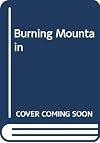
The Burning Mountain: A Novel of the Invasion of Japan
by Alfred Coppel
On This Page
Description
Based on actual war plans of both nations, a wartime thriller about the American invasion of Japan which goes ahead when bad weather postpones the testing of a secret atomic device - but the Japanese have anticipated every move. From the author of THE EIGHTH DAY and WARS AND WINTERS.Tags
Recommendations





















Member Recommendations


Member Reviews
This is a rather fascinating novel, as well as an exciting one. Suppose that the Manhattan Project had failed, or that the atomic tests at Trinity in July 1945, near Los Alamos, New Mexico, had been disrupted or delayed. That is the beginning scenario in this book.
First off, if someone argues that the worst horror of war was the atomic bombing of Japan in 1945, this book provides an argument that there was a good chance that worse horrors would await if instead the United States invaded Japan to end the war. The scale of death would be monumental. The destruction of Japan massive, much moreso than from the atomic blasts. It would have been better, of course, if neither scenario was necessary. This book, a novel of an imagined past about show more the invasion based on the detailed war plans of both Japan and the United States is really intriguing, especially for a history buff. The novel began a little dry and academic, but then improved considerably when it took on events from a personal level. By making the stories personal, for soldiers of both sides, I was drawn into the story. Almost every character we come to know and care for is dead by the end.
The novel contains a series of small stories, almost vignettes, most with recurring characters whose lives intertwine. There are stories of the Japanese soldiers, others with the Americans. Together they march through time illuminating the larger story of the whole invasion. Time and again I found myself empathisizing with the soldiers, regardless of which side of the war they were on. The stories are very well told. The realism of the characters lends a sense of authority to this imagined tale. What both sides hold is a fear of the enemy, the unknown and the terrors of war. There can be an odd beauty, a seduction to war, and this novel captures it. One is humbled by the firepower unleashed against Japan before and during the invasion.
There is no single main character. One of the important characters, Harry Seaver, has a special focus. He is an American who was born and raised in Japan. He has been killing Japanese soldiers through the war, but now he must attack and kill on the homeland. And he faces battle in the area he grew up, fearing he would face friends.
Overall I found this an excellent, sobering novel. I was saddened. The ending was a heartbreak. One of my favorite reads this year. show less
First off, if someone argues that the worst horror of war was the atomic bombing of Japan in 1945, this book provides an argument that there was a good chance that worse horrors would await if instead the United States invaded Japan to end the war. The scale of death would be monumental. The destruction of Japan massive, much moreso than from the atomic blasts. It would have been better, of course, if neither scenario was necessary. This book, a novel of an imagined past about show more the invasion based on the detailed war plans of both Japan and the United States is really intriguing, especially for a history buff. The novel began a little dry and academic, but then improved considerably when it took on events from a personal level. By making the stories personal, for soldiers of both sides, I was drawn into the story. Almost every character we come to know and care for is dead by the end.
The novel contains a series of small stories, almost vignettes, most with recurring characters whose lives intertwine. There are stories of the Japanese soldiers, others with the Americans. Together they march through time illuminating the larger story of the whole invasion. Time and again I found myself empathisizing with the soldiers, regardless of which side of the war they were on. The stories are very well told. The realism of the characters lends a sense of authority to this imagined tale. What both sides hold is a fear of the enemy, the unknown and the terrors of war. There can be an odd beauty, a seduction to war, and this novel captures it. One is humbled by the firepower unleashed against Japan before and during the invasion.
There is no single main character. One of the important characters, Harry Seaver, has a special focus. He is an American who was born and raised in Japan. He has been killing Japanese soldiers through the war, but now he must attack and kill on the homeland. And he faces battle in the area he grew up, fearing he would face friends.
Overall I found this an excellent, sobering novel. I was saddened. The ending was a heartbreak. One of my favorite reads this year. show less
One of the ways that alternate history novels can be classified is by dividing them into two categories. The first consists of alternate history novels that are descriptions of major events told through the actions of the characters, historical or fictional. Most works of alternate history (such as those by Robert Conroy, Peter Tsouras, and the increasing majority of Harry Turtledove's novels) fit into this first category, in which the events are the focus and the characters themselves are primarily used to tell the story. The other, far less common group of alternate history novels are those in which the focus is on the characters rather than the events, with the authors of those works using the altered setting primarily as a different show more stage in which their characters develop in response to circumstances other than those dictated by history.
Alfred Coppel's novel is one of that minority of alternate history novels in the second category. In it, he uses the disruption of the Trinity test by a storm as a premise for the launching of the Allied invasion of Japan that was in real life rendered unnecessary by the Japanese surrender that the atomic bombs provoked. Coppel skips over Operation Olympic — the invasion of the island of Kyushu in November 1945 — to start with the much larger Operation Coronet, the invasion of the main Japanese island of Honshu, in March 1946. It is within this dramatic backdrop that his narrative unfolds, with American and Japanese characters facing the prospect of death in a titanic final clash between the two sides.
As both a longtime author and a fighter pilot during World War II, Coppel captures effectively the elements of combat within his narrative. But it is with his character development that his novel truly shines. He focuses on about a dozen main characters, using their particular experiences over a series of chapters to describe what the horrors of such an invasion may have been like. Even with his secondary characters, the space he takes to explain their background (an effort that never feels awkwardly shoehorned into the novel) pays off by imparting a real importance and poignancy to even their most mundane activities. All of them share in the stress of battle, and though his three main characters (an American Ranger who grew up in Japan, his Nisei subordinate, and their Japanese opponent who happens to be the childhood friend of the first character) seem a little too conveniently situated, overall they help convey the tragedy and insanity of the war they experience. It all makes for an alternate history novel that is far superior to most of the alternate history works turned out today, the overwhelming majority of which would be much better if they followed Coppel's example and concentrated on the people rather than the events, no matter how exciting those events may be. show less
Alfred Coppel's novel is one of that minority of alternate history novels in the second category. In it, he uses the disruption of the Trinity test by a storm as a premise for the launching of the Allied invasion of Japan that was in real life rendered unnecessary by the Japanese surrender that the atomic bombs provoked. Coppel skips over Operation Olympic — the invasion of the island of Kyushu in November 1945 — to start with the much larger Operation Coronet, the invasion of the main Japanese island of Honshu, in March 1946. It is within this dramatic backdrop that his narrative unfolds, with American and Japanese characters facing the prospect of death in a titanic final clash between the two sides.
As both a longtime author and a fighter pilot during World War II, Coppel captures effectively the elements of combat within his narrative. But it is with his character development that his novel truly shines. He focuses on about a dozen main characters, using their particular experiences over a series of chapters to describe what the horrors of such an invasion may have been like. Even with his secondary characters, the space he takes to explain their background (an effort that never feels awkwardly shoehorned into the novel) pays off by imparting a real importance and poignancy to even their most mundane activities. All of them share in the stress of battle, and though his three main characters (an American Ranger who grew up in Japan, his Nisei subordinate, and their Japanese opponent who happens to be the childhood friend of the first character) seem a little too conveniently situated, overall they help convey the tragedy and insanity of the war they experience. It all makes for an alternate history novel that is far superior to most of the alternate history works turned out today, the overwhelming majority of which would be much better if they followed Coppel's example and concentrated on the people rather than the events, no matter how exciting those events may be. show less
THE BURNING MOUNTAIN works as a slow moving, yet electrifying account of a projection of what would have happened in the invasion of Japan
if Hiroshima and Nagasaki had not been bombed.
It implies that Truman's final decision to drop the bombs tied into his chances for re-election.
If he did not authorize the bombing and Douglas McArthur defeated weakened Japan, as of course he would,
then Harry Truman would lose.
The book offers many perspectives and insights into both Japanese and American main characters.
What is missing is the perspective of the children, the women, and the elderly people who faced incineration or, rarely, recovery.
What is also missing is what might have happened if the United States had done nothing, had not invaded or show more bombed Japan to end the war. show less
if Hiroshima and Nagasaki had not been bombed.
It implies that Truman's final decision to drop the bombs tied into his chances for re-election.
If he did not authorize the bombing and Douglas McArthur defeated weakened Japan, as of course he would,
then Harry Truman would lose.
The book offers many perspectives and insights into both Japanese and American main characters.
What is missing is the perspective of the children, the women, and the elderly people who faced incineration or, rarely, recovery.
What is also missing is what might have happened if the United States had done nothing, had not invaded or show more bombed Japan to end the war. show less
Ratings
Members
- Recently Added By
Lists

Best Alternate History
111 works; 60 members
Author Information

76+ Works 1,260 Members
Common Knowledge
- People/Characters
- Masao Nakano; Lt. Harry Seaver; 2nd. Lt. Jim Tanaka; Cpl. Saigo Noguchi; 2nd. Lt. Lloyd Hansen; Lt. Commander Masao Kunamoto (show all 8); Kantaro Maeda; Katsuko Maeda
- Important places
- Honshu, Japan
- Important events
- Invasion of Japan (1945)
- Dedication
- To the survivors of C-Flight, Class 43-A, ACFTD, Ontario, California Summer 1942 - wherever they may be
- First words
- The storm rides the jet stream, spinning ice veils and black cloud across the continent.
- Last words
- (Click to show. Warning: May contain spoilers.)We charge you, Our loyal subjects, faithfully to carry out Our Will. The 25th day of the third month of the 21st year of Showa
- Blurbers
- Stephenson, Sir Willam; Beach, Edward L.; Forbes, Colin; Jakes, John; West, Jessamyn
Classifications
Statistics
- Members
- 105
- Popularity
- 309,550
- Reviews
- 3
- Rating
- (3.88)
- Languages
- English, French, German
- Media
- Paper
- ISBNs
- 7
- ASINs
- 4