A Firing Offense
by David Ignatius
On This Page
Description
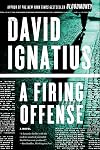
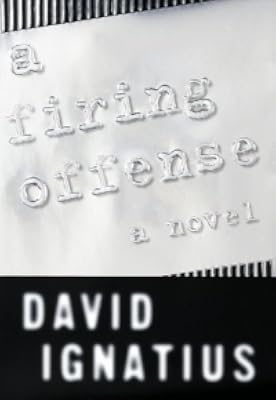
When a member of the newsroom crosses the professional line in a search for the truth, the results turn out to be hazardous to his career, and his life. In the tradition of John le Carre, critically acclaimed novelist and award-winning journalist David Ignatius creates this searingly realistic account of espionage in the workplace and one man's struggle to do the right thing. Foreign correspondent Eric Truell gains international recognition with his exclusive story after he breaks into a show more French restaurant held by terrorists. Tempting him with more scoops, a maverick intelligence agent offers sensitive information involving a shady trade network with foreign powers. But as Eric follows up the leads, he is no longer sure of his role. Is he an investigative reporter, or a pawn for the CIA? David Ignatius packs this best-selling thriller with finely-drawn characters, authentic settings, and a plot that tightens around every corner. Narrator Richard Ferrone keeps you glued to your cassette player as Eric hovers on the brink of committing the ultimate breach of newsroom ethics. show lessTags
Recommendations









Member Reviews
The cover of David Ignatius' "A Firing Offense" carries the following promotional blurb from former Washington Post editor Ben Bradlee: "A dynamite thriller with the coolest, smartest journalist that fiction ever produced." Bradlee's known some smart journalists in his day, including Bob Woodward and Carl Bernstein. I'm sure that there are some journalists who have outwitted French and American intelligence (and been outwitted by the CIA as well). But most journalism is not the stuff of thrillers. It's covering local, state, and federal agencies; covering community events and business and interest activities; and, all to often, rewriting news releases.
But Ignatius knows journalism at the highest level, and through his reporting knows show more the ins and outs of the intelligence community. And because he knows both so well, he addresses with conviction the ethical concerns of a journalist who must reconcile his obligation to his profession and his concern his country. Foreign correspondent Eric Truell hits the big time when, as a Paris-based correspondent for a major American newspaper, he unravels corruption within the French government while reporting on a hostage situation. In his zeal to get to the bottom of the scandal, Truell makes a Faustian bargain with the CIA - receiving information vital to his story, and agreeing to gather information for the CIA on a biological weapons program in China. That agreement to help the CIA is the "firing offense" of the title.
Truell is an interesting - if modestly fanciful - character. But the star of the book is legendary reporter Arthur Bowman, a veteran correspondent who has surreptitiously already committed his firing offense. Brash, egotistical, insecure, womanizing, epicurean, Bowman draws Truell into a maelstrom of deception, eventually offering Truell his path to salvation.
Ignatius is a very good writer, and a master of suspense. This is a most enjoyable book. show less
But Ignatius knows journalism at the highest level, and through his reporting knows show more the ins and outs of the intelligence community. And because he knows both so well, he addresses with conviction the ethical concerns of a journalist who must reconcile his obligation to his profession and his concern his country. Foreign correspondent Eric Truell hits the big time when, as a Paris-based correspondent for a major American newspaper, he unravels corruption within the French government while reporting on a hostage situation. In his zeal to get to the bottom of the scandal, Truell makes a Faustian bargain with the CIA - receiving information vital to his story, and agreeing to gather information for the CIA on a biological weapons program in China. That agreement to help the CIA is the "firing offense" of the title.
Truell is an interesting - if modestly fanciful - character. But the star of the book is legendary reporter Arthur Bowman, a veteran correspondent who has surreptitiously already committed his firing offense. Brash, egotistical, insecure, womanizing, epicurean, Bowman draws Truell into a maelstrom of deception, eventually offering Truell his path to salvation.
Ignatius is a very good writer, and a master of suspense. This is a most enjoyable book. show less
In the US in the 1990s, a professional journalist working other jobs, especially those with government connections, was grounds for dismissal. Interaction between journalists and the entities they are covering is the major thread of A FIRING OFFENSE. In this book, it has gone so far that a respected journalist became a henchman for a foreign government, planting stories beneficial to that country into the newspaper.
There are three primary threads in this story: Corruption of governments and of journalists by foreign governments, competition between France and the US to secure a major telecommunications contract with China, and the diminishment of print newspapers.
David Ignatius’s excellent book, A FIRING OFFENSE, was published in show more 1997. It opens in 1996 and Eric Truell is based in Paris as the correspondent for The New York Mirror, a highly-rated national newspaper. He is currently in Washington DC to attend and speak at the funeral of the paper’s top foreign correspondent.
The scene quickly changes to 1994 Paris where Truell is trying to find a story. He laments: “Boredom is ordinarily the fuel of journalism; it is the dry powder that, under the right circumstances, ignites into the flame of curiosity that connects a reporter with his story. We need that burst of energy, because despite what people think, journalism is often quite dull… But too much boredom can spark too much heat – creating a passion to connect with the story to that is consuming, unbounded, uncontrollable.”
He doesn’t have long to wait. He is contacted by a scientist who has discovered a way to regenerate brain cells. Soon thereafter, he hears about an on-going hostage situation in one of Paris’s finest restaurants and decides that he wants to be there to get a good story. Needless to say, the French authorities are not cooperative but he is able to speak to some of the people inside. Later he is contacted by Rupert Cohen, a very strange man who works in a US Intelligence agency but is disgusted with the work and claims the department is falling apart.
The next day he learns that the entire hostage incident was staged by a group of African politicians and middlemen who thought they were being shortchanged and wanted more money. It was a way for the government to pay money to have the people go away while picking up some of it for themselves and others involved in the plot. The African network was operated by a clever old gentleman, one of France's most senior politicians. What he gathered from Africa was the black fund from which people could draw when they need cash.
French bribery of Chinese officials developing new weapons to get the contract was the great truth of the 1990s: The world is run by organized criminals… [foreigners] slipped governments into the hands of private organizations in New York, private currency traders have more power over the dollar than the Federal Reserve, the Russian Mafia has more power than the Army. Mexican druglords have more power than the president. In Japan, the politicians are just a front; the real powers held by corporations and the mob.
Truell gets sucked into this world as he tries to research his stories and some of his sources try to recruit him.
Like many print newspapers, The New York Mirror is facing major financial problems. Partly because of the internet, fewer people were reading it and advertising revenue had decreased dramatically. Staff members were being let go, advertisers influenced what was printed and special sections were devoted to them. Many of the papers that survived turned to electronic versions either entirely or as supplements. That opened the way for unscrupulous reporters to manipulate the stock market.
Interesting observation:
We're all shaped and misshaped by the experiences of our childhoods. Mine was happy enough and uncomplicated, which was itself a kind of burden – the burden of lightness. People with emotional scars know they have to be wary; they learn to ration their passions; they know what will hurt them. Nothing in my childhood taught me those lessons.
This book was written during the Clinton administration. In it, Ignatius presents a discussion about the role of the First Lady in lobbying for social legislation. The politically-connected men kept interrupting one another to talk about the political costs and benefits for the president. The First Lady, trying to be part of the group, doesn’t fit the traditional pattern:
You guys don't get it, this is the baseball game. The First Lady doesn't think that way. She doesn't worry about her husband's reelection, any more that you cares whether her husband think she looks cute. This is a woman with larger ambitions. She wants to be great that's why she's causing everyone problems.
This attitude and situation were very prominent in the 2016 election. While it describes Hillary Clinton, probably the most qualified candidate in decades, it still hindered her campaign. On the other side, her lack of experience and questionable actions did not stop Ivanka Trump from being involved in high level talks.
A FIRING OFFENSE discusses whether or not to report about the mental health of a presidential candidate during the primary season. He had experienced a nervous breakdown previously and was taking a strong anti-depressant. Around that time the book was written, a vice-presidential candidate facing a similar situation was dropped from the ticket when the story hit the media. The media ignored Ronald Reagan’s Alzheimer’s as well as the sexual exploits of several Presidents and Congressional representatives. Today, many voters and elected officials don’t really care about such things.
The question Bazy had put to me was not really a choice. My ambitions laid a different direction from what he proposed. If I see more clearly what lay ahead, I made a different choice, but I don't think so. Even the most grievous center, facing excommunication, doesn't wish for the certainty of damnation.
Former columnists for many years have been helpful to the CIA especially for recovery operations. The wisest course would be for them to meet privately with the Director of CIA and the President and demand that the rules be changed so that a journalist would never again be subject to the intolerable risks and temptations that destroyed Eric Truell.
Arthur took money from French intelligence. Probably add up to millions of dollars over the years.… He worked for gangsters who leaned on him to cook stories which you ran.
A FIRING OFFENSE is very well-written and organized. It raises many issues that are still pertinent. I found an incongruity: At one point Truell said that “on the seat next to me was a stack of scientific papers my new aide had gathered, summarizing, the latest developments in neurobiology. 48 hours before, I had known absolutely nothing about these subjects.” Two paragraphs later we learn “my father is a professor of medicine at the University of California at Davis.” It’s hard to believe Truell didn’t know quite a bit about medicine while he was growing up. show less
There are three primary threads in this story: Corruption of governments and of journalists by foreign governments, competition between France and the US to secure a major telecommunications contract with China, and the diminishment of print newspapers.
David Ignatius’s excellent book, A FIRING OFFENSE, was published in show more 1997. It opens in 1996 and Eric Truell is based in Paris as the correspondent for The New York Mirror, a highly-rated national newspaper. He is currently in Washington DC to attend and speak at the funeral of the paper’s top foreign correspondent.
The scene quickly changes to 1994 Paris where Truell is trying to find a story. He laments: “Boredom is ordinarily the fuel of journalism; it is the dry powder that, under the right circumstances, ignites into the flame of curiosity that connects a reporter with his story. We need that burst of energy, because despite what people think, journalism is often quite dull… But too much boredom can spark too much heat – creating a passion to connect with the story to that is consuming, unbounded, uncontrollable.”
He doesn’t have long to wait. He is contacted by a scientist who has discovered a way to regenerate brain cells. Soon thereafter, he hears about an on-going hostage situation in one of Paris’s finest restaurants and decides that he wants to be there to get a good story. Needless to say, the French authorities are not cooperative but he is able to speak to some of the people inside. Later he is contacted by Rupert Cohen, a very strange man who works in a US Intelligence agency but is disgusted with the work and claims the department is falling apart.
The next day he learns that the entire hostage incident was staged by a group of African politicians and middlemen who thought they were being shortchanged and wanted more money. It was a way for the government to pay money to have the people go away while picking up some of it for themselves and others involved in the plot. The African network was operated by a clever old gentleman, one of France's most senior politicians. What he gathered from Africa was the black fund from which people could draw when they need cash.
French bribery of Chinese officials developing new weapons to get the contract was the great truth of the 1990s: The world is run by organized criminals… [foreigners] slipped governments into the hands of private organizations in New York, private currency traders have more power over the dollar than the Federal Reserve, the Russian Mafia has more power than the Army. Mexican druglords have more power than the president. In Japan, the politicians are just a front; the real powers held by corporations and the mob.
Truell gets sucked into this world as he tries to research his stories and some of his sources try to recruit him.
Like many print newspapers, The New York Mirror is facing major financial problems. Partly because of the internet, fewer people were reading it and advertising revenue had decreased dramatically. Staff members were being let go, advertisers influenced what was printed and special sections were devoted to them. Many of the papers that survived turned to electronic versions either entirely or as supplements. That opened the way for unscrupulous reporters to manipulate the stock market.
Interesting observation:
We're all shaped and misshaped by the experiences of our childhoods. Mine was happy enough and uncomplicated, which was itself a kind of burden – the burden of lightness. People with emotional scars know they have to be wary; they learn to ration their passions; they know what will hurt them. Nothing in my childhood taught me those lessons.
This book was written during the Clinton administration. In it, Ignatius presents a discussion about the role of the First Lady in lobbying for social legislation. The politically-connected men kept interrupting one another to talk about the political costs and benefits for the president. The First Lady, trying to be part of the group, doesn’t fit the traditional pattern:
You guys don't get it, this is the baseball game. The First Lady doesn't think that way. She doesn't worry about her husband's reelection, any more that you cares whether her husband think she looks cute. This is a woman with larger ambitions. She wants to be great that's why she's causing everyone problems.
This attitude and situation were very prominent in the 2016 election. While it describes Hillary Clinton, probably the most qualified candidate in decades, it still hindered her campaign. On the other side, her lack of experience and questionable actions did not stop Ivanka Trump from being involved in high level talks.
A FIRING OFFENSE discusses whether or not to report about the mental health of a presidential candidate during the primary season. He had experienced a nervous breakdown previously and was taking a strong anti-depressant. Around that time the book was written, a vice-presidential candidate facing a similar situation was dropped from the ticket when the story hit the media. The media ignored Ronald Reagan’s Alzheimer’s as well as the sexual exploits of several Presidents and Congressional representatives. Today, many voters and elected officials don’t really care about such things.
The question Bazy had put to me was not really a choice. My ambitions laid a different direction from what he proposed. If I see more clearly what lay ahead, I made a different choice, but I don't think so. Even the most grievous center, facing excommunication, doesn't wish for the certainty of damnation.
Former columnists for many years have been helpful to the CIA especially for recovery operations. The wisest course would be for them to meet privately with the Director of CIA and the President and demand that the rules be changed so that a journalist would never again be subject to the intolerable risks and temptations that destroyed Eric Truell.
Arthur took money from French intelligence. Probably add up to millions of dollars over the years.… He worked for gangsters who leaned on him to cook stories which you ran.
A FIRING OFFENSE is very well-written and organized. It raises many issues that are still pertinent. I found an incongruity: At one point Truell said that “on the seat next to me was a stack of scientific papers my new aide had gathered, summarizing, the latest developments in neurobiology. 48 hours before, I had known absolutely nothing about these subjects.” Two paragraphs later we learn “my father is a professor of medicine at the University of California at Davis.” It’s hard to believe Truell didn’t know quite a bit about medicine while he was growing up. show less
As far as thrillers go, it was OK. The real bad-guys were revealed right away and the thriller was to watch Eric uncover them, accuse them and get away without getting killed. One reporter does die because he is no longer useful to the mafia-like organization that has used him over the years to get their point of view accepted as legit. France is not usually a country targeted by thriller writers so it was different in that aspect.
Truell does live but he compromises himself and is out of a job. Instead of writing that he was fired because he worked for the CIA (unofficially and for no pay) they write that he plagiarized some work from French reporters while he was stationed there. He ends up splitting with his on again/off again show more girlfriend and going back to a small newspaper close to the town where he grew up. The bad guys who ripped off the US in the deal for a Chinese telecommunications contract and who killed the other reporter, are ruined by their own power collapsing in on them.
One thing that bugged me though is that on the one hand, Eric does the CIA’s bidding which is pretty dangerous and on the other hand he’s a very conservative, non-risk-taker kind of guy. I don’t know if it was because deep down he really thought that reporters were just fringe people not really involved with the world’s events, or that he was too cowardly to refuse the CIA. Basically a pretty staid guy who suddenly takes on a secret operation in China? Seems unlikely. show less
Truell does live but he compromises himself and is out of a job. Instead of writing that he was fired because he worked for the CIA (unofficially and for no pay) they write that he plagiarized some work from French reporters while he was stationed there. He ends up splitting with his on again/off again show more girlfriend and going back to a small newspaper close to the town where he grew up. The bad guys who ripped off the US in the deal for a Chinese telecommunications contract and who killed the other reporter, are ruined by their own power collapsing in on them.
One thing that bugged me though is that on the one hand, Eric does the CIA’s bidding which is pretty dangerous and on the other hand he’s a very conservative, non-risk-taker kind of guy. I don’t know if it was because deep down he really thought that reporters were just fringe people not really involved with the world’s events, or that he was too cowardly to refuse the CIA. Basically a pretty staid guy who suddenly takes on a secret operation in China? Seems unlikely. show less
Basically a trashy thriller; reasonably well written with nothing very wrong. The main character, a journalist who works closely with the CIA, is drawn very well. The plot is also quite reasonable, e.g., that the US government would automatically interpret an average biology lab in China as a WMD production facility. However, the other characters are less interesting.
Ratings
Members
- Recently Added By
Lists

Stephen King's 'On Writing' reading list
95 works; 4 members
Author Information

19 Works 3,213 Members
David Ignatius was born in Cambridge, Massachusetts on May 26, 1950. He received a B.A. from Harvard University in 1963 and a diploma in economics from Kings College, Cambridge, England, in 1975. He has worked as a reporter for the Wall Street Journal, the New York Times Magazine, and the Washington Post, where he is an associate editor. In 1985, show more he received the Edward Weintal Prize for diplomatic reporting from the Institute for the Study of Diplomacy. He is the author of several novels including Agents of Innocence, Siro, The Bank of Fear, A Firing Offense, Body of Lies, The Increment, and The Director. (Bowker Author Biography) show less
Some Editions
Common Knowledge
- Canonical title
- A Firing Offense
- Original publication date
- 1997-04-18
- People/Characters
- Eric Truell; Arthur Bowman; Tom Rubino; Rupert Cohen; Michel Bézy; Annie Baron (show all 9); Philip Sellinger; Edwin Weiss; George Dirk
- Important places
- Washington, D.C., USA; Paris, France
- Epigraph
- Reporters should not ordinarily engage in outside activities and jobs. That is especially true of connections with government, which compromise the newspaper's fundamental mission of independence and objectivity. Any delibera... (show all)te violation of this policy will be regarded as a firing offense.
--THE NEW YORK MIRROR HANDBOOK ON STYLE - Dedication
- For my parents, Paul and Nancy Ignatius
- First words
- Prologue
A FUNERAL
MAY 1996
Arthur Bowman's funeral was a Washington event, as finely choreographed as Bowman could have wished. - Last words
- (Click to show. Warning: May contain spoilers.)The rest was the ordinary part, the news.
- Original language
- English
Classifications
Statistics
- Members
- 264
- Popularity
- 122,156
- Reviews
- 4
- Rating
- (3.58)
- Languages
- 5 — Dutch, English, French, German, Spanish
- Media
- Paper, Audiobook, Ebook
- ISBNs
- 22
- UPCs
- 1
- ASINs
- 3