
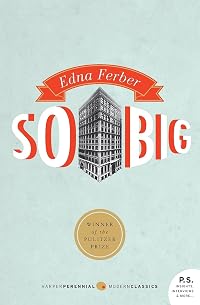
So Big
by Edna Ferber
On This Page
Description
The winner of the Pulitzer Prize in Fiction in 1925. After losing her father and her husband, Selina Peake is left to raise her only son on the farm that was left to her. Dirk Peake, a tenacious boy who grows up to be a successful bond salesman, must come to terms with his own regrets later in life after he decides not to pursue architecture, a passion that both he and his mother shared. This classic novel about family, immigration, and the role of art and culture in society asks an age-old show more question: Can money really buy happiness? show lessTags
Recommendations














Member Reviews
The title refers to a little boy named Dirk, and long known as "Sobig", after the ubiquitous game played with babies, but mostly this is the story of his mother, Selena Peake DeJong, whose life as a midwestern farmer's wife is not at all what she envisioned as a gay young thing. Selena had a rather bohemian upbringing with a gambling father who was always either flush or flat broke. Her outlook on life was persistently optimistic even when things were uncertain to the point of panic; her eye for beauty was keener than those that found it only in accepted presentations. While her unimaginative husband struggled to sustain a livelihood from their marginal farm, Selena envisioned improvements, innovations and expansions that would ease the show more future for their beloved son. Her positivity never wavered, even as "Sobig", failing to find a passion for any pursuit, settled into a successful but uninspiring career and an attachment to a married woman. I assume we are meant to see how a challenging life is more fulfilling than one in which all the seams are smoothed and gears well-oiled, but Dirk DeJong is so much less engaging than his mother that I nearly lost interest in the story when he became the center of it. Luckily, that did not happen until approximately the last third, and it's a relatively short novel. Definitely a worthwhile read, and deserving of its Pulitzer, but one that did not quite live up to its early promise, for me. show less
Edna Ferber isn't much read these days, or at least talked about, but her stories are at the heart of the new and expanding country. In this one, a gambler's daughter find herself married to a farmer, and then a widow who finds her purpose as she puts her ideas into effect to build the farm to support her and her son. What she becomes, what he becomes, and what the country, especially Chicago, becomes in the first part of the 20th century is full of characters striving for at least what they think they want. Commerce or art? Beauty or money? Must they be either/or, or can they be side by side? Terrific book.
Selina DeJong spent her childhood traveling the US with her father, who made his living as a gambler in the late 1800s. He instilled in her a sense of independence so strong that after his death Selina decided to make her way as an independent woman, finding work as a teacher in a Dutch farming community on the Illinois prairie. She boarded with a family, and despite being a fish out of water she gradually drew closer to the family and especially their oldest son, Roelf. Eventually Selina married a local man, Purvis DeJong and had a son, Dirk (known by his nickname, "Sobig," taken from a game Selina often played with him as a baby). Over the years Selina transformed from city girl to farm wife, and exerted strong influence over the show more development of both the farm and her son.
The pursuit of beauty is a prominent theme in this book:
"It's beauty!" Selina said then, almost passionately ... "Yes. All the worth-while things in life. All mixed up. Rooms in candle-light. Leisure. Colour. Travel. Books. Music. Pictures. People -- all kinds of people. Work that you love. And growth -- growth and watching people grow. Feeling very strongly about things and then developing that feeling to - to make something fine come of it." ... She threw out her hands in a futile gesture. "That's what I mean by beauty. I want Dirk to have it." (p. 146).
On arrival in High Prairie, Selina is struck by the beauty of cabbages and other produce, much to the amusement of the hard-working local farmers. She finds beauty in most aspects of her life, and works hard to instill in Dirk that same appreciation of, and wonder for, beauty. Most of the time Dirk respectfully tolerates her chatter, seeing it as old-fashioned but endearing. But it's clear to the reader that Dirk is on his own journey to discover beauty through education, work, and relationships.
So Big won the Pulitzer Prize in 1925 and it's easy to see why. On one level, Selina's story is a compelling portrait of farm life at the turn of the 20th century, and Selina is an unusually strong woman for that era. Then Ferber weaves in additional characters and subplots to create a beautiful tapestry. Add to that the search for beauty in its many forms, and So Big becomes infused with meaning not found in many books. Highly recommended. show less
The pursuit of beauty is a prominent theme in this book:
"It's beauty!" Selina said then, almost passionately ... "Yes. All the worth-while things in life. All mixed up. Rooms in candle-light. Leisure. Colour. Travel. Books. Music. Pictures. People -- all kinds of people. Work that you love. And growth -- growth and watching people grow. Feeling very strongly about things and then developing that feeling to - to make something fine come of it." ... She threw out her hands in a futile gesture. "That's what I mean by beauty. I want Dirk to have it." (p. 146).
On arrival in High Prairie, Selina is struck by the beauty of cabbages and other produce, much to the amusement of the hard-working local farmers. She finds beauty in most aspects of her life, and works hard to instill in Dirk that same appreciation of, and wonder for, beauty. Most of the time Dirk respectfully tolerates her chatter, seeing it as old-fashioned but endearing. But it's clear to the reader that Dirk is on his own journey to discover beauty through education, work, and relationships.
So Big won the Pulitzer Prize in 1925 and it's easy to see why. On one level, Selina's story is a compelling portrait of farm life at the turn of the 20th century, and Selina is an unusually strong woman for that era. Then Ferber weaves in additional characters and subplots to create a beautiful tapestry. Add to that the search for beauty in its many forms, and So Big becomes infused with meaning not found in many books. Highly recommended. show less
My decision to attempt to read all the Pulitzer Prize winners for fiction has netted me one wonderful, delightful, amazing discovery--this novel, So Big, by Edna Ferber. I cannot imagine I would have ever come upon it otherwise for two very sketchy reasons: one being the name which just has no compelling power for me, and the other being that I have seen the movie adaptation of Giant several times and absolutely hated it. That being my only encounter with Miss Ferber, I drew the absolutely untenable conclusion that I would not like her work.
Well, I did not like her work, I loved it. I find Edna Ferber kept making me think of her contemporary, Edith Wharton. They are nothing alike, in fact, since they have very different styles, come show more from completely disparate backgrounds, and write about two very different parts of the country; however, they are very alike in that they are a strong voice for women, they understand the classes they write about, and they cut to the quick the hypocrisy that they see all around them in the society they live in. Both of them seem to be saying, happiness can be had, but not if you are looking in the wrong place to ever find it.
Selina Peake DeJong is a character I am not likely to ever forget. She is a free-spirit but a hard worker. She is a person who expects a lot from life, but expects to get back only what she puts in. She is a person who experiences the beauty in everything that is simple and genuine and unique. There is no cookie-cutter that could produce a Selina. She is as individual as a piece of artwork, and a piece of artwork is what she is, in the end.
Very early in the novel we are introduced to Selina’s father, a gambler who lives sometimes at one end and sometimes at the other end of prosperity, giving her some advice about life:
“I want you to see all kinds,” he would say to her. “I want you to realize that this whole thing is just a grand adventure. A fine show. The trick is to play in it and look at it at the same time.”
“What whole thing?”
“Living. All mixed up. The more kinds of people you see, and the more things you do, and the more things that happen to you, the richer you are. Even if they’re not pleasant things. That’s living.”
The crux of this book is about exactly that. About living. About what it is to get into the muck of life and squeeze the marrow out of the bone. And it is about the things that make a life both worthwhile and valuable...and I believe Edna Ferber would have told you, with complete sincerity, that money would not rank highly on that list.
The novel is built on contrasts. The contrast between the working man and the toff. The contrast between the wealthy and the poor. The contrast between the artist and the financier. The contrast between Selina, who lives close to the earth, and her son, Dirk, who strives not to.
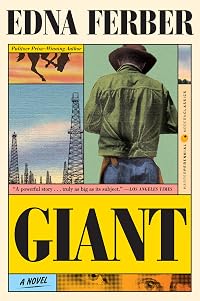
I loved all these fine characters, celebrated and wept with them. I think the Pulitzer Prize committee got this one right. This is a book that is relevant today more than ever, for when has there ever been such a rush to measure life by the dollar value you can attach to it? I am ashamed for having thought of Edna Ferber as irrelevant and I am rushing out to get her other books and see if she weaves this magic more than once. Hey, I might even read [b:Giant|149150|Giant|Edna Ferber|https://images.gr-assets.com/books/1348574463s/149150.jpg|143951] and find out that, aside from all that simpering and strutting that Liz Taylor and Rock Hudson and James Dean brought to the screen, there was a novel with a story and a lesson I can appreciate. show less
Well, I did not like her work, I loved it. I find Edna Ferber kept making me think of her contemporary, Edith Wharton. They are nothing alike, in fact, since they have very different styles, come show more from completely disparate backgrounds, and write about two very different parts of the country; however, they are very alike in that they are a strong voice for women, they understand the classes they write about, and they cut to the quick the hypocrisy that they see all around them in the society they live in. Both of them seem to be saying, happiness can be had, but not if you are looking in the wrong place to ever find it.
Selina Peake DeJong is a character I am not likely to ever forget. She is a free-spirit but a hard worker. She is a person who expects a lot from life, but expects to get back only what she puts in. She is a person who experiences the beauty in everything that is simple and genuine and unique. There is no cookie-cutter that could produce a Selina. She is as individual as a piece of artwork, and a piece of artwork is what she is, in the end.
Very early in the novel we are introduced to Selina’s father, a gambler who lives sometimes at one end and sometimes at the other end of prosperity, giving her some advice about life:
“I want you to see all kinds,” he would say to her. “I want you to realize that this whole thing is just a grand adventure. A fine show. The trick is to play in it and look at it at the same time.”
“What whole thing?”
“Living. All mixed up. The more kinds of people you see, and the more things you do, and the more things that happen to you, the richer you are. Even if they’re not pleasant things. That’s living.”
The crux of this book is about exactly that. About living. About what it is to get into the muck of life and squeeze the marrow out of the bone. And it is about the things that make a life both worthwhile and valuable...and I believe Edna Ferber would have told you, with complete sincerity, that money would not rank highly on that list.
The novel is built on contrasts. The contrast between the working man and the toff. The contrast between the wealthy and the poor. The contrast between the artist and the financier. The contrast between Selina, who lives close to the earth, and her son, Dirk, who strives not to.
I loved all these fine characters, celebrated and wept with them. I think the Pulitzer Prize committee got this one right. This is a book that is relevant today more than ever, for when has there ever been such a rush to measure life by the dollar value you can attach to it? I am ashamed for having thought of Edna Ferber as irrelevant and I am rushing out to get her other books and see if she weaves this magic more than once. Hey, I might even read [b:Giant|149150|Giant|Edna Ferber|https://images.gr-assets.com/books/1348574463s/149150.jpg|143951] and find out that, aside from all that simpering and strutting that Liz Taylor and Rock Hudson and James Dean brought to the screen, there was a novel with a story and a lesson I can appreciate. show less
Reading this was like taking a long, quiet walk where the going is sometimes slow, mostly beautiful and on the whole subtly satisfying. The story follows Selina, a resourceful woman with an eye for beauty whose life turns out much differently than she expected, and her son, who attains success at the expense of happiness. Their journeys are a reminder to look for and be open to wonder, even in the most ordinary places, and to engage in life for the sheer joy of it, rather than basing fulfillment on what other people deem important.
I had thought this book took place in the twenties when I grabbed it off my shelf--but really it's earlier, the late 1800s. Selina, the heroine, has a change in fortune when her father dies, and must leave the rich life for a job teaching in High Prairie (present day Roseland, outside Chicago and next to Pullman) teaching Dutch truck farmer's kids. The story follows her life for the next 30 years or so, as she optimistically perseveres in her new lot in life. Against a backdrop of booming Chicago, and with Selena navigating between her life with the farmers and the rich upper crust city dwellers, the book felt surprisingly current.
Reason read: reading the Pulitzer, 100 years since originally published. Jewish American Author from the heartland. This is a story that covers a lot but is just plain good story telling. The author described it as "material man, son of an earth grubbing idealistic mother". According to Wiki, this book is based on the life of a real earth grubbing immigrant from Holland; Antje Paarlberg. I enjoyed reading this story of Dutch immigrants. My little area here in Minnesota has a lot of Dutch and Dutch reformed so it was interesting to learn more. This is historical fiction and apparently Ferber may not have accurately represented Antje. We all just worry too much these days. Let it go and just enjoy the book. I would say, Antje was an show more inspiration to create her own character of Selina. show less
Members
- Recently Added By
Lists

Pulitzer Prize Winners for Fiction
102 works; 54 members

Classics you know you should have read but probably haven't
421 works; 408 members

1920s
141 works; 6 members

discontinued
10 works; 4 members

Books Featured on Readers' Review of the Diane Rehm Show
161 works; 8 members

Books Read in 2022
5,166 works; 114 members

Books Set in Illinois
19 works; 7 members

Schwob Nederland
207 works; 2 members

Books referenced in A Very Great Profession: The Woman's Novel 1914-39
199 works; 6 members

Publisher's Weekly Bestsellers Part I - 1895-1939
399 works; 8 members

20th-Century American Women Writers Reading List
15 works; 1 member

Books Read in 2025
4,091 works; 97 members

To Read
14 works; 1 member
Author Information

Edna Ferber was born in Kalamazoo, Michigan, Aug. 15, 1885. She spent her early career as a reporter. In 1910, Everybody's Magazine published her short story, The Homely Heroine, set in Appleton, Wisconsin. Ferber's novel, Dawn O'Hara, the story of a newspaperwoman in Milwaukee, followed in 1911. She gained national attention for her series of show more Emma McChesney stories, tales of a traveling underskirt saleswoman that were published in national magazines. A play based on the stories, Our Mrs. McChesney, was produced in 1915, starring Ethel Barrymore. With collaborator George S. Kaufman, Ferber wrote acclaimed plays Dinner at Eight and The Royal Family. Ferber won the Pulitzer Prize in 1925 for So Big, the story of a woman raising a child on a truck farm outside of Chicago. Her best known books include Show Boat, Cimarron, Giant and Ice Palace. Show Boat was made into a classic movie and Broadway musical; the film version of Cimarron, won the Academy Award for Best Picture in 1931. Ferber wrote two autobiographies, A Peculiar Treasure published in 1939 and A Kind of Magic in 1963. She died of cancer on April 16, 1968. (Bowker Author Biography) show less
Some Editions
Awards and Honors
Awards
Distinctions
Series
Belongs to Publisher Series
Work Relationships
Is contained in
Has the adaptation
Common Knowledge
- Canonical title*
- Het purperen land
- Original title
- So Big
- Original publication date
- 1924
- People/Characters
- Selina Peake DeJong; Dirk "Sobig" DeJong
- Important places
- South Holland, Illinois, USA; Chicago, Illinois, USA; Illinois, USA
- Important events
- 1890s; 1900s; 1910s; 1920s
- Related movies
- So Big (1953 | IMDb); So Big! (1932 | IMDb); So Big (1924 | IMDb)
- First words
- Until he was almost ten the name stuck to him.
- Last words
- (Click to show. Warning: May contain spoilers.)He was lying there half an hour later when he heard the telephone's shrill insistence and Saki's gentle deferential rap at the bedroom door.
- Original language*
- Engels
*Some information comes from Common Knowledge in other languages. Click "Edit" for more information.
Classifications
Statistics
- Members
- 1,184
- Popularity
- 21,065
- Reviews
- 48
- Rating
- (3.98)
- Languages
- 7 — Danish, Dutch, English, French, Hungarian, Italian, Spanish
- Media
- Paper, Audiobook, Ebook
- ISBNs
- 58
- UPCs
- 1
- ASINs
- 55