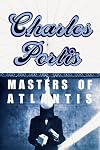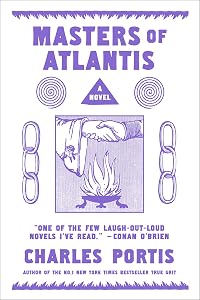
Masters of Atlantis
by Charles Portis
On This Page
Description
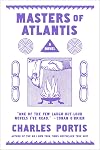
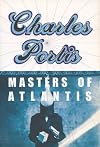
Lamar Jimmerson is the leader of the Gnomon Society, the international fraternal order dedicated to preserving the arcane wisdom of the lost city of Atlantis. Stationed in France in 1917, Jimmerson comes across a little book crammed with Atlantean puzzles, Egyptian riddles, and extended alchemical metaphors. It's the Codex Pappus - the sacred Gnomon text. Soon he is basking in the lore of lost Atlantis, convinced that his mission on earth is to administer to and extend the ranks of the noble show more brotherhood. show lessTags
Recommendations









































Member Recommendations
Member Reviews
While stationed in France during WWI Corporal Lamar Jimmerson finds himself inducted in the secret Gnomon Society and entrusted with a copy of the sacred Codex Pappus, a book containing “the secret wisdom of Atlantis.” He also gets a ceremonial cap called a Poma. And it only costs him his savings of $200, paid to a mysterious vagrant with various names and nationalities, who then disappears forever. Thus begins Jimmerson’s lifelong quest to spread Gnomonism throughout the world. Which he does for the rest of his life with varying degrees of success.
He returns to Indiana after the war, studies the Codex with its “various diagrams and geometric figures,” develops his own theories, publishes books about Gnomonism, opens a Gnomon show more temple, and expands the society both domestically and internationally. Jimmerson recruits new adherents, notably Sidney Hen, an energetic, eccentric Englishman who eventually creates his own breakaway Gnomon Society; and Austin Popper, a born con-man who drifts in and out of the society and Jimmerson’s life.
At the end, the three find themselves reconciled, older but not wiser, guests at the Texas trailer camp of Morehead Moaler, the founder of the last remaining branch, or Pillar as they’re called.
Master of Atlantis is a brilliant, wickedly funny book. Consider Austin Popper’s procedures and warning about the Dark Laws when he inducts a new member while off trying to extract gold from plants in Colorado: “These were nine arbitrary rules that Neophytes and Initiates were not allowed to know. Should they violate one, however, they would be cast out of the society. The induction ceremony lasted only an hour and concluded with Golescu’s running around the Taggert house seven times with his mouth open.” show less
He returns to Indiana after the war, studies the Codex with its “various diagrams and geometric figures,” develops his own theories, publishes books about Gnomonism, opens a Gnomon show more temple, and expands the society both domestically and internationally. Jimmerson recruits new adherents, notably Sidney Hen, an energetic, eccentric Englishman who eventually creates his own breakaway Gnomon Society; and Austin Popper, a born con-man who drifts in and out of the society and Jimmerson’s life.
At the end, the three find themselves reconciled, older but not wiser, guests at the Texas trailer camp of Morehead Moaler, the founder of the last remaining branch, or Pillar as they’re called.
Master of Atlantis is a brilliant, wickedly funny book. Consider Austin Popper’s procedures and warning about the Dark Laws when he inducts a new member while off trying to extract gold from plants in Colorado: “These were nine arbitrary rules that Neophytes and Initiates were not allowed to know. Should they violate one, however, they would be cast out of the society. The induction ceremony lasted only an hour and concluded with Golescu’s running around the Taggert house seven times with his mouth open.” show less
What makes an American novel? What makes a great novel? And what makes the Great American Novel? Masters of Atlantis isn't the Great American Novel, that elusive white whale of navel-gazing twentieth century writers, but it is great, and, to judge by the jacket copy on every single one of his books, extremely American. I agree with that sentiment, although I really can't say why. Obviously the fact that it's set in America makes it American in some way, but I think what those reviewers are trying to get at is that there's something about the way Portis presents the events in his book that a foreigner just couldn't replicate. Since plenty of non-natives from have written great books both set in and about the US, it's worth thinking about show more why Portis' works get grouped in with Mark Twain's and not Vladimir Nabokov's. I think it's mostly due to the brilliantly intimate way that Portis sketches his characters, who usually fall into two main archetypes: credulous yokels and self-confident hustlers.
Right from the very first page of this book, when WW1 soldier Lamar Jimmerson is convinced to pay $200 for the secret magisteria of the legendary Gnomon Society by a man who is variously called Nick from Turkey or Mike from Egypt or Jack from Syria or Robert from Malta, Portis sets up a great story with fascinating characters. The actual con that begins the story is over in a matter of pages, but the childlike faith with which Lamar pursues his dreams of being a Gnomon - whose Pythagorean rituals and lore, involving cones and spirals and triangles, are never described completely but alluded to constantly - sustains not only him but at one point thousands of others who flock to his banner. Early on he meets the Englishman Sydney Hen who convinces him to share in his secrets, and with the eventual arrival of diabolically inventive henchman Austin Popper the rest of the book unfolds in hilarious overlapping layers of bullshit, as the Society rises, splinters, and falls, and Popper strikes out on his own all over the map as a demented bibulous überfraud. This is on one level a classic satire of American society, which has always been made up of joiners and mystics and truth-seekers. There is no club or fraternal organization so ridiculous that it can't find a membership of willing dupes; partly this reflects our sheer size, and partly it also reflects the perennial tendency for such a materialistic society to find Higher Meaning in all sorts of things. I think there's a fairly clear continuum from the Great Awakenings through Sixties spiritualism and up to the Jesus Camps of the present day.
But what could have been a bitter polemic about American stupidity is a genial, affectionate comedy about lost souls, and though there's some scenes of decay and humiliation that darken the tone of the book, overall Portis knows that America needs its P. T. Barnums, and that a world without them would be much grayer. Popper's drunken wanderings comprise most of the action in the second part of the book, and if you don't laugh out loud when he tries to convince the War Department to use compressed air as a weapon, or when he tries to conjure gold up out of the earth with Golescu the Romanian's bagweed plants, or at any of the other scenes that rank right up there with Huck Finn's encounter with the Duke and the Dauphin, then you simply have no sense of humor whatsoever. Where Portis falls short of someone like Twain is that he doesn't really tackle serious issues like racism, but no book can be all things to all people so it wasn't a problem for me. I hope he stops not writing books, we could use more from him. show less
Right from the very first page of this book, when WW1 soldier Lamar Jimmerson is convinced to pay $200 for the secret magisteria of the legendary Gnomon Society by a man who is variously called Nick from Turkey or Mike from Egypt or Jack from Syria or Robert from Malta, Portis sets up a great story with fascinating characters. The actual con that begins the story is over in a matter of pages, but the childlike faith with which Lamar pursues his dreams of being a Gnomon - whose Pythagorean rituals and lore, involving cones and spirals and triangles, are never described completely but alluded to constantly - sustains not only him but at one point thousands of others who flock to his banner. Early on he meets the Englishman Sydney Hen who convinces him to share in his secrets, and with the eventual arrival of diabolically inventive henchman Austin Popper the rest of the book unfolds in hilarious overlapping layers of bullshit, as the Society rises, splinters, and falls, and Popper strikes out on his own all over the map as a demented bibulous überfraud. This is on one level a classic satire of American society, which has always been made up of joiners and mystics and truth-seekers. There is no club or fraternal organization so ridiculous that it can't find a membership of willing dupes; partly this reflects our sheer size, and partly it also reflects the perennial tendency for such a materialistic society to find Higher Meaning in all sorts of things. I think there's a fairly clear continuum from the Great Awakenings through Sixties spiritualism and up to the Jesus Camps of the present day.
But what could have been a bitter polemic about American stupidity is a genial, affectionate comedy about lost souls, and though there's some scenes of decay and humiliation that darken the tone of the book, overall Portis knows that America needs its P. T. Barnums, and that a world without them would be much grayer. Popper's drunken wanderings comprise most of the action in the second part of the book, and if you don't laugh out loud when he tries to convince the War Department to use compressed air as a weapon, or when he tries to conjure gold up out of the earth with Golescu the Romanian's bagweed plants, or at any of the other scenes that rank right up there with Huck Finn's encounter with the Duke and the Dauphin, then you simply have no sense of humor whatsoever. Where Portis falls short of someone like Twain is that he doesn't really tackle serious issues like racism, but no book can be all things to all people so it wasn't a problem for me. I hope he stops not writing books, we could use more from him. show less
I really wanted to like this. I love the idea: incidental discovery of an ancient rome of dubious authenticity, leading to an adventure among bumbling fools and a huckster or two.
Here's the problem: it isn't sardonic. It isn't insightful. It doesn't say anything new. There are funny parts (selling the federal government compressed air as a weapon) but there are also pathetic parts (women aren't people, in this book; they are window dressing at best, perhaps more like pretty servants as the natural order of things). It feels much more old fashioned than a novel written in the 80s. And it just isn't saying anything when it could! Perhaps that's the saddest part: it could have done it, and it just...didn't.
Here's the problem: it isn't sardonic. It isn't insightful. It doesn't say anything new. There are funny parts (selling the federal government compressed air as a weapon) but there are also pathetic parts (women aren't people, in this book; they are window dressing at best, perhaps more like pretty servants as the natural order of things). It feels much more old fashioned than a novel written in the 80s. And it just isn't saying anything when it could! Perhaps that's the saddest part: it could have done it, and it just...didn't.
Another very high 4 stars--it's hard for me to give 5s unless I have an emotional reaction, otherwise the book has to be absolutely perfect at what it sets out to do.
This is a Very Strange Book (which is a good thing--not remotely formulaic). It's the only Portis I've read, so not sure how it relates to his oeuvre, or if this is his normal style or not. It reads, to a large extent, as if one were reading a religious or mythological book (e.g. the Simarillion, the Ramayana, the Bible, etc.), rather than a novel--the plot sweeps along, there's not a lot of psychological introspection, and every so often the plot halts for the sake of a list, or a scene becomes excruciatingly minutely rendered, in huge contrast to the normal goings-on. I show more thought it was nifty, and suited the subject matter (the history of a weird made-up (or is it?) religion/belief-system and the people who discovered/invented it). In that sense, it's barely a novel--it reads more like the romances (in the old sense of the word) which preceded the invention of the novel in the 18th century.
I was also reminded a bit of The Hearing Trumpet or The Towers of Trebizond ... it's just a wonderfully off-kilter book, like its characters. Worth checking out--you'll know right away if you appreciate the style or if it will not be for you.
(Note: 5 stars = amazing, wonderful, 4 = very good book, 3 = decent read, 2 = disappointing, 1 = awful, just awful. I'm fairly good at picking for myself so end up with a lot of 4s). show less
This is a Very Strange Book (which is a good thing--not remotely formulaic). It's the only Portis I've read, so not sure how it relates to his oeuvre, or if this is his normal style or not. It reads, to a large extent, as if one were reading a religious or mythological book (e.g. the Simarillion, the Ramayana, the Bible, etc.), rather than a novel--the plot sweeps along, there's not a lot of psychological introspection, and every so often the plot halts for the sake of a list, or a scene becomes excruciatingly minutely rendered, in huge contrast to the normal goings-on. I show more thought it was nifty, and suited the subject matter (the history of a weird made-up (or is it?) religion/belief-system and the people who discovered/invented it). In that sense, it's barely a novel--it reads more like the romances (in the old sense of the word) which preceded the invention of the novel in the 18th century.
I was also reminded a bit of The Hearing Trumpet or The Towers of Trebizond ... it's just a wonderfully off-kilter book, like its characters. Worth checking out--you'll know right away if you appreciate the style or if it will not be for you.
(Note: 5 stars = amazing, wonderful, 4 = very good book, 3 = decent read, 2 = disappointing, 1 = awful, just awful. I'm fairly good at picking for myself so end up with a lot of 4s). show less
This is light fare. I read it in two days but a person could read it in a single sitting. The core plot device is some kind of Hermetic mystery text, but there is no exploration of its contents. We do hear about Fludd the Rosicrucian and Churchward's continent of Mu, so the general context of western esoteric lore is sketched out a bit.
What really stands out here is the writing. There is a consistent pacing and tone that shows a master of narrative at work.
I've spent a bit of time circulating in non-elite esoteric realms... this book actually rings quite true. It's all absurdly comical here, but the basic flavor is very real.
What really stands out here is the writing. There is a consistent pacing and tone that shows a master of narrative at work.
I've spent a bit of time circulating in non-elite esoteric realms... this book actually rings quite true. It's all absurdly comical here, but the basic flavor is very real.
I bought this book early this year based on a review that I can't find now. As I read I kept thinking "This book is old fashioned" and then I looked and I see that indeed it was written in 1985.
So what do I mean by "old fashioned?" Like so many books of the late 1970s and 1980s it is a kooky story told in a series of declarative sentences one after the other like a train. I wasn't so fond of the style then and don't like it at all now. Take a look at the sample chapter and then consider how well you will like an additional 300 pages just alike.
Here we have the tale of a dozen white WW2 veterans who are inducted into various levels of the Gnomon Society, a group who believes, sort of, that the world can be explained through geometry, show more secret handshakes and odd poses of the hands and feet. Women are completely excluded from Gnomic knowledge and there are no important females in the book. To me the book is not so much funny as silly, and not important to read. show less
So what do I mean by "old fashioned?" Like so many books of the late 1970s and 1980s it is a kooky story told in a series of declarative sentences one after the other like a train. I wasn't so fond of the style then and don't like it at all now. Take a look at the sample chapter and then consider how well you will like an additional 300 pages just alike.
Here we have the tale of a dozen white WW2 veterans who are inducted into various levels of the Gnomon Society, a group who believes, sort of, that the world can be explained through geometry, show more secret handshakes and odd poses of the hands and feet. Women are completely excluded from Gnomic knowledge and there are no important females in the book. To me the book is not so much funny as silly, and not important to read. show less
In his fourth novel, Charles Portis offers the compound biography of a fictional 20th-century initiatory order that arrived in the US following World War I and experienced ups and downs at the hands of its various aspirants and adepts. The author clearly intends the reader to be amused by the eccentric partisans of the Gnomon Society, yet his tone is largely sympathetic. I originally read this book at the recommendation of the head of one of the world's most venerable esoteric bodies, and Portis does indeed give a far more accurate picture of the ambitions and concerns of most of today's Rosicrucians and occult Freemasons than any wide-eyed Dan-Brownishness can provide. Shelve it between Foucault's Pendulum and the Stonecutters episode show more of The Simpsons. show less
Members
- Recently Added By
Published Reviews
ThingScore 92
It’s the perfect novel to explain QAnon, to explain Trump, to explain organized religion—hell, to explain America itself.
Though he intentionally avoids diving too deep into the minutiae of Gnomonism, Portis nails the reasons why cults, secret societies, and conspiracy theories grip certain members of society: namely, a desire for deeper truths and hidden meanings to explain a world that no show more longer makes sense. And, crucially, a dangerous abundance of free time. show less
Though he intentionally avoids diving too deep into the minutiae of Gnomonism, Portis nails the reasons why cults, secret societies, and conspiracy theories grip certain members of society: namely, a desire for deeper truths and hidden meanings to explain a world that no show more longer makes sense. And, crucially, a dangerous abundance of free time. show less
added by elenchus
From the outside looking in, America's personality dial is permanently set to 11 with citizens who are charming, maddening, innocent, foolish, xenophobic, gullible, optimistic, crafty, adventurous, bigoted, energetic, and ignorant, not forgetting all the go-getters, do-gooders and flim-flam men. This crazy quilt of emotions and characters is brilliantly portrayed in Masters, woven into a story show more that revolves around what might be the core of the American character: belief. show less
added by elenchus
No matter how extravagant the horseplay, it is never performed simply to show off. A purpose infuses the craziness, a sense that the author is after something bigger than jokes. He is giving us a picture of Main Street made silly, of Babbittry gone goofy. Yet for all its ridiculousness, there is a sweet, dopey integrity to Lamar Jimmerson's innocence.
Austin Popper, on the other hand, is the show more mythic American hustler who tries everything from selling used cars to being ''a drunken bum.''
Together they form quite a team, Popper and Mr. Jimmerson. They're Laurel and Hardy, Mutt and Jeff, Abbott and Costello, the dummkopf and the wise guy, and, through an alchemical transmutation worthy of Gnomonism itself, they represent respectively the active and contemplative ways of life in 20th-century America. show less
Austin Popper, on the other hand, is the show more mythic American hustler who tries everything from selling used cars to being ''a drunken bum.''
Together they form quite a team, Popper and Mr. Jimmerson. They're Laurel and Hardy, Mutt and Jeff, Abbott and Costello, the dummkopf and the wise guy, and, through an alchemical transmutation worthy of Gnomonism itself, they represent respectively the active and contemplative ways of life in 20th-century America. show less
added by elenchus
Lists

Books Read in 2020
4,379 works; 124 members

Books Read in 2024
4,623 works; 126 members
Author Information

15+ Works 8,022 Members
Charles Portis lives in Arkansas, where he was born (1933) and educated. Portis served as a reporter for the New York Herald-Tribune and was also its London bureau chief. His first novel, Norwood, was published in 1966. His other novels are True Grit, The Dog of the South, Masters of Atlantis, and Gringos. True Grit has been made into a movie two show more times, once in 1969 with John Wayne (who won his only academy award by playing the main character of Rooster Cogburn), and a second time in 2010 with Jeff Bridges as the main character. Mr. Bridges was nominated for the Rooster Cogburn role, but did not win. Charles Portis died on February 17, 2020 in Little Rock, Arkansas at age 86. He had been under hospice care for two years. (Bowker Author Biography) show less
Work Relationships
Common Knowledge
- Original publication date
- 1985
- People/Characters
- Lamar Jimmerson; Sydney Hen; Pletho Pappus; Austin Popper; Fanny Jimmerson; Pharris White (show all 16); Morehead Moaler; Cezar Golescu; Huggins; Epps; Bates; Mapes; Maceo; Whit Gluter; Adele Gluter; Maurice Babcock
- Important places
- Indiana, USA; Atlantis
- Last words
- (Click to show. Warning: May contain spoilers.)Ed, who no longer missed the Red Room, said, "This is the best party I've ever been to!"
- Blurbers
- Blount, Roy, Jr.
Classifications
Statistics
- Members
- 556
- Popularity
- 53,210
- Reviews
- 19
- Rating
- (3.66)
- Languages
- English, Italian
- Media
- Paper, Audiobook, Ebook
- ISBNs
- 17
- ASINs
- 7