On This Page
Description
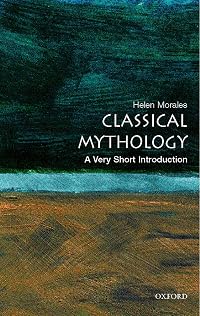
From Zeus to Europa, to Pan and Prometheus, the myths of ancient Greece and Rome continue to pervade the numerous facets of our existence. The author explores the rich history and varying interpretations of classical myth in both high art and popular culture as well as its ongoing influence in modern society.Tags
Recommendations













Member Reviews
Interesting but not what it says on the tin. A guide to the concept of mythology rather than a guide to classical mythology. If you are looking for a short introduction to the stories of classical mythology this is not the book.
Discusses the uses to which mythology was and is put, and how those uses are what turn stories into myths. I found it more useful and credible than many academic theories treating myth as though it were an organic category. The first five chapters are quite good. Scattered through them is discussion of the coalescence of what is now considered classical mythology, and the reciprocal development of scholarly interest in it. The historical consumption of myth (e.g., as allegory) receives far more attention than scholarly inquiries into the original functions of myths, many of which seem inductive rather than empirical. One chapter considers the importance of myth to psychoanalysis, and implicitly considers the possibility that Freud was show more just talking out of his backside (the fact that they acknowledge this as a possibility gives the entire argument that much more credibility). It left me thinking that, had he lived today, he'd be considered a quack. The last two chapters (politics of sex; hippies' use of myth) are muddled and weak. The first of them, I think, is so simply because of a paucity of VSI-appropriate research to summarize; the latter, I think, is so because pastiche is form without substance and there just isn't much to be said about it. show less
I enjoyed the investigation into how myth is still being interpreted. Exploring the ideas of how myth transcends the individual and is interpreted through the community as a civic activity is very interesting.
It is not a primer on the myths in the fashion of Edith Hamilton of Robert Graves, but a more nueanced look at how mythology is active in understanding the world around us.
It is not a primer on the myths in the fashion of Edith Hamilton of Robert Graves, but a more nueanced look at how mythology is active in understanding the world around us.
Definately have an open mind when reading this book. Quickly goes from Freud to the Great Mother Goddess, and some of the themes can be a bit left field to the unknowing reader. Morales is clearly knowledgeable about the classics, anyone who loves the Greco-Roman myths will learn and pick up cocktail party material. I can't agree with all her points, which seem a bit speculative at points, but she backs them up with copious evidence. Best approached as an insightful essay that is a primer to the "historiography" of myths.
Ratings
Members
- Recently Added By
Lists

Books About Non-Abrahamic Religions
98 works; 2 members
Author Information

7+ Works 689 Members
Helen Morales holds the Argyropoulos Chair in Hellenic Studies at the University of California, Santa Barbara. Morales is the author of Classical Mythology: A Very Short Introduction and Pilgrimage to Dollywood: A Country Music Road Trip Through Tennessee. She lives with her family in Santa Barbara.
Some Editions
Series

Common Knowledge
- Canonical title
- Classical Mythology: A Very Short Introduction
- Original title
- Classical Mythology: A Very Short Introduction
- Original publication date
- 2007
- First words
- In 2005 the Greek Ministry for Tourism published an advertisement that urged: LIVE YOUR MYTH IN GREECE.
- Last words
- (Click to show. Warning: May contain spoilers.)I hope at least that we (whoever we are) can 'live our myths' (wherever we live them) more pleasurably and knowingly with A Very Short Introduction to Classical Mythology.
- Original language
- English
Classifications
- Genres
- Nonfiction, Religion & Spirituality, History
- DDC/MDS
- 292.13 — Religion Other religions Greek & Roman Mythology Religious mythology, general classes of religion, interreligious relations and attitudes, social theology Mythology and mythological foundations
- LCC
- BL723 .M68 — Philosophy, Psychology and Religion Religions. Mythology. Rationalism Religions. Mythology. Rationalism History and principles of religions European. Occidental Classical (Etruscan, Greek, Roman)
- BISAC
Statistics
- Members
- 401
- Popularity
- 77,585
- Reviews
- 4
- Rating
- (3.32)
- Languages
- English, French
- Media
- Paper, Audiobook, Ebook
- ISBNs
- 10
- UPCs
- 1
- ASINs
- 3