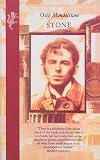
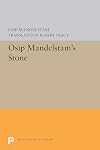
Stone
by Osip Mandelstam
On This Page
Description
CONTENTS Acknowledgments. A Note on the Text. List of Abbreviations. Introduction. Mandelstam: The Poet as Builder. STONE. Notes.Originally published in 1981.The Princeton Legacy Library uses the latest print-on-demand technology to again make available previously out-of-print books from the distinguished backlist of Princeton University Press. These editions preserve the original texts of these important books while presenting them in durable paperback and hardcover editions. The goal of show more the Princeton Legacy Library is to vastly increase access to the rich scholarly heritage found in the thousands of books published by Princeton University Press since its founding in 1905. show lessTags
Recommendations





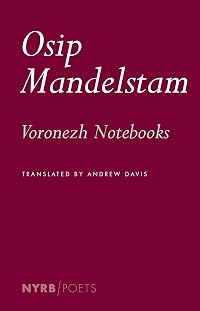

















Member Reviews
Pretty astonishing verse. Mandelstram took me by the shoulders and said with a shake, you must wake up and look around. I obeyed.
It is easy from a historical perspective for the reader to color the lyricism with an impending doom. I think that this approach enhances the project, with a measured risk.
Stone offers a treatment of history layered in allegory. His images remain pellucid, his emotions sincere.
It is easy from a historical perspective for the reader to color the lyricism with an impending doom. I think that this approach enhances the project, with a measured risk.
Stone offers a treatment of history layered in allegory. His images remain pellucid, his emotions sincere.
Камень was Mandelshtam's first book, and it appeared in four significantly different editions: 1913 (36 pp.), 1916 (92 pp.), 1923 (98 pp.), and as a section of his 1928 Стихотворение [Collected poems]. This scrupulously edited and annotated collection takes all of them into account.
Ratings
Members
- Recently Added By
Author Information

218+ Works 2,341 Members
Osip Mandelstam was born in Warsaw, Poland and grew up in St.Petersburg, Russia Mandelstam was taught by tutors and governesses at his home. He attended the prestigious Tenishev School from 1900 to 1907 and traveled then to Paris from 1907 to 1908 and Germany from 1908 to 1910, where he studied Old French literature at the University of show more Heidelberg. In 1911 till 1917, he studied philosophy at St. Petersburg University but did not graduate. Mandelstam was a member of the 'Poets Guild' from 1911 and had close personal ties with Anna Akhmatova and Nikolai Gumilev. His first poems appeared in 1910 in the journal Apollon. In 1918 he worked briefly for Anatoly Lunacharskii's Education Ministry in Moskow. In the 1920s Mandelstam supported himself by writing children's books and translating works by Upton Sinclair, Jules Romains, Charles de Coster and others. He did not compose poems from 1925 to 1930 but turned to prose. In 1930 he made a trip to Armenia to escape his influential enemies. Mandelstam's Journey to Armenia (1933) became his last major work published during his life time. Mandelstam was arrested the first time in 1934 for an epigram he had written on Joseph Stalin. In the transit camp, Mandelstam was already so weak that he couldn't stand. He died in the Gulag Archipelago in Vtoraia rechka, near Vladivostok, on December 27, 1938.His body was taken to a common grave. International fame came to Mandelstam in the 1970s, when his works were published in the West and in the Soviet Union. (Bowker Author Biography) show less
Some Editions
Series
Belongs to Publisher Series
Work Relationships
Is contained in
Common Knowledge
- Original publication date
- 1916
Classifications
- Genres
- Poetry, Fiction and Literature
- DDC/MDS
- 891.71 — Literature & rhetoric Literatures of other languages East Indo-European and Celtic literatures Russian and East Slavic languages Russian poetry
- LCC
- PG3476 .M355 .K313 — Language and Literature Slavic languages and literatures. Baltic languages. Albanian language Slavic. Baltic. Albanian Russian literature Individual authors and works 1917-1960
- BISAC
Statistics
- Members
- 87
- Popularity
- 364,616
- Reviews
- 2
- Rating
- (4.00)
- Languages
- 5 — English, French, German, Multiple languages, Russian
- Media
- Paper, Ebook
- ISBNs
- 10