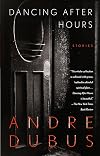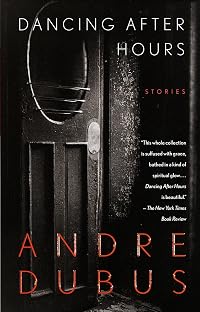
Dancing After Hours: Stories
by Andre Dubus
On This Page
Description
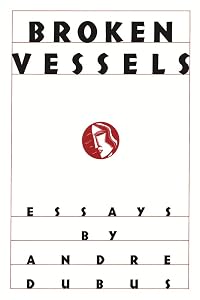
Fourteen stories whose protagonists wrestle with love, faith, and luck. In The Lover, a man in his fifties falls in love with a girl younger than his daughter, A Love Song is on the pain of divorce, and The Colonel's Wife is on the repercussions of a man's physical injury on a marriage. By the author of Broken Vessels.Tags
Recommendations





Member Reviews
cw: self-harm
Dancing After Hours is an incredibly well-written collection of short stories. The writing itself is so compelling and the characters all have rich interiors. Each story, many of which are intertwined, provides a glimpse at the reality of humanity and the motivations behind us all. I can't remember the last time I highlighted so many phrases in a book. And!!! I counted multiple instances of women-loving women, which was a nice touch for me. I'd highly recommend this book to anyone interested.
Dancing After Hours is an incredibly well-written collection of short stories. The writing itself is so compelling and the characters all have rich interiors. Each story, many of which are intertwined, provides a glimpse at the reality of humanity and the motivations behind us all. I can't remember the last time I highlighted so many phrases in a book. And!!! I counted multiple instances of women-loving women, which was a nice touch for me. I'd highly recommend this book to anyone interested.
There are fourteen stories here, about love, fidelity, desire and loss. Intertwined with these tales are four linked snapshots of a single couple, called Ted and LuAnn, as they meet, marry and deal with the struggles of marital life.
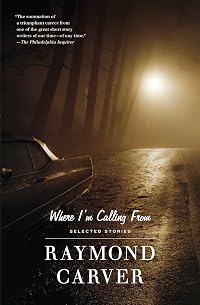
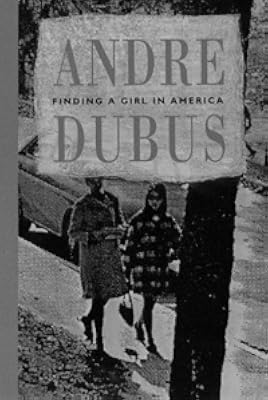
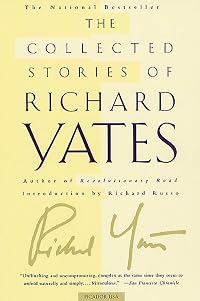
Dubus is a fine writer, evoking Raymond Carver and Richard Yates and completely understands this distinctive story form. His prose is strong and deft, if just a touch cold around the edges.
“The earth itself was leaving with her sad and pitying husband, was drawing away from her. Stars fell. That was a song, and music would never again be lovely; it was gone with the shattering stars and coldly dying moon, the trees of such mortal green; gone with life itself.”
Dubus is a fine writer, evoking Raymond Carver and Richard Yates and completely understands this distinctive story form. His prose is strong and deft, if just a touch cold around the edges.
“The earth itself was leaving with her sad and pitying husband, was drawing away from her. Stars fell. That was a song, and music would never again be lovely; it was gone with the shattering stars and coldly dying moon, the trees of such mortal green; gone with life itself.”
These stories are of course well-made. Andre Dubus was a master of the short story. However, I have a hard time loving them, being satisfied by them, or even admiring them very much. They're made very simply, and don't tend to move, exalt or act deeply upon the reader. I have a hard time liking or sympathizing with his characters, even (or especially) those he returns to in a series of time-lapsed stories. The themes are fairly consistent: sex, love, betrayal, redemption. Betrayal, perhaps, most of all.
Another note: Andre Dubus does not appear, from this volume, to have what Virginia Woolf, following Coleridge, would call the 'androgynous mind' of genius. There is often something off in his female characters, and there is a masculine show more skew to the world of his writing that grated insistently upon this female reader's nerves. This female reader loves many works by male writers, including some with almost no female characters. Something is amiss here.
However, as I said, the stories are well-written, and at least one ('Blessings') was so delightfully unexpected that it probably accounts, entire, for one of the three stars above. show less
Another note: Andre Dubus does not appear, from this volume, to have what Virginia Woolf, following Coleridge, would call the 'androgynous mind' of genius. There is often something off in his female characters, and there is a masculine show more skew to the world of his writing that grated insistently upon this female reader's nerves. This female reader loves many works by male writers, including some with almost no female characters. Something is amiss here.
However, as I said, the stories are well-written, and at least one ('Blessings') was so delightfully unexpected that it probably accounts, entire, for one of the three stars above. show less
Life's too short for morose love stories. Tossed it aside after the fifth such story in the collection. He writes well, just not about anything I care to read.
I was a huge Dubus fan in my 30s. He was a man, writing for men, without the macho bullshit.
Ratings
Members
- Recently Added By
Author Information

30+ Works 3,205 Members
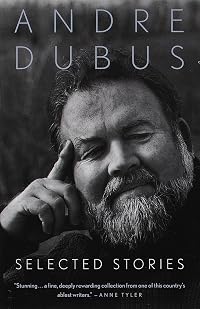
Andre Dubus was a short-story writer, essayist, and educator. Debus was a former Marine who taught college for 20 years while submitting his stories to small literary magazines. In the summer of 1986, he was hit by a car in Massachusetts, where he had stopped to help an accident victim. He spent the rest of his life confined to a wheelchair. Debus show more returned to writing after authors such as Kurt Vonnegut, John Irving, and John Updike held a benefit that helped defer his medical expenses. His 1997 collection of short stories, Dancing After Hours, was a finalist for the National Book Critics Circle Award and won the Rea Award. He received the PEN/Malamud Award, the Jean Stein Award from the American Academy of Arts and Letters, and fellowships from both the Guggenheim and MacArthur Foundations. Andre Dubus died on February 24, 1999. (Bowker Author Biography) show less
Awards and Honors
Awards
Series
Belongs to Publisher Series
Common Knowledge
- Original publication date
- 1996
Classifications
Statistics
- Members
- 556
- Popularity
- 53,624
- Reviews
- 6
- Rating
- (4.00)
- Languages
- English, German, Italian
- Media
- Paper, Ebook
- ISBNs
- 8
- ASINs
- 2