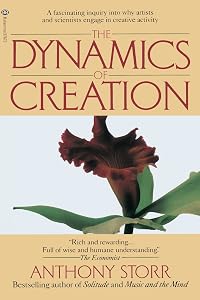
The Dynamics of Creation
by Anthony Storr
On This Page
Description
Freud suggested that artistic inspiration derived from sexual frustration and a need to escape reality by inventing phantasy. Others maintain that the artistic impulse is an attempt to comprehend and integrate the external world and the artist's inner self.Tags
Recommendations
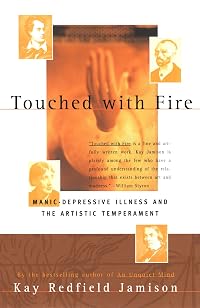













Member Reviews
What drive scientists and artists to create? Anthony Storr was a psychiatrist, so it's no wonder he is approaching the problem here from a psychodynamic perspective. As such, I personally found 'The Dynamics of Creation' quite a tough read, as I am quite unfamiliar with psychoanalysis and its share of jargon and abstract meanderings. Yet, insightful, it wasn't difficult to the point of being inaccessible and, considering its punchy conclusion, I was happy to have followed the author's reasoning. It may seem hard (even dull at times!) but the journey worth it. Here's indeed a ground breaking book which, published in 1972, shattered many misconceptions about creativity, and in so doing redefined our view of what it means to engage with show more art especially.
In fact, what used to set the author apart from his predecessors and colleagues in the field is that, he didn't reduce creativity as being solely wish-fulfilment and sublimation of primitive drives, and work of art the by-product and reflection only of neurosis of some sort (sexual in particular, since it's what Freud seemed to have been mostly concerned about). Not that he disagreed with such view; but, as with psychoanalysis as a whole, such approach had its limit that he clearly acknowledged.
Here was indeed the problem: because it tended to focus on creation as a result, psychoanalysis as applied in a purely Freudian tradition completely ignored it as a process. Hence, it couldn't explain fully what motivate the drive to create nor why, for that matter, creativity is such an important human endeavour.
Now, sure, he too uses psychiatry and focuses on schizoid and depressive temperaments to try and find some sort of explanation (is there a link between some mental illnesses and creativity?) since, among unusually highly creative people, many suffered from personality disorders of some sorts. But, what he actually does by taking the extreme examples of such creative and mentally ill personalities is to connect their reasons to create with the working psyche of everyone else. His claim indeed (again, ground breaking for his time) is that their work resonate within us all because, the psychodynamic forces that motivate them are also present within us all.
'Creativity is one mode adopted by gifted people of coming to terms with, or finding symbolic solutions for, the internal tensions and dissociations from which all human beings suffer in varying degree. The less gifted find other, less obviously creative, solutions (…)'
'(…) highly creative people are just extreme examples of a general human phenomenon.'
This may seem obvious now, but at the time it made for a new and staggering conclusion that is, creativity is adaptative. It is not a trait apart from other human behaviours those evolutionary purpose is more evident (whole chapters are dedicated to play). It also is, itself, a behaviour that serves an evolutionary purpose. Which one? That's where Anthony Storr concludes, with a brilliant discussion of Carl Jung's concept of 'individuation'.
Here's a tough and challenging read for those unfamiliar with the psychoanalytic intricacies. Yet, once surmounted the jargon and dull (and often dry) writing style of the author, unfolds an exciting view of creation. It took a psychiatrist having himself a deep appreciation for science and art (it shows in his portrait of various personalities) to extirpate creativity from the grip of those who just wanted to see it as solely 'neurotic'.
Ground breaking and significant. show less
In fact, what used to set the author apart from his predecessors and colleagues in the field is that, he didn't reduce creativity as being solely wish-fulfilment and sublimation of primitive drives, and work of art the by-product and reflection only of neurosis of some sort (sexual in particular, since it's what Freud seemed to have been mostly concerned about). Not that he disagreed with such view; but, as with psychoanalysis as a whole, such approach had its limit that he clearly acknowledged.
Here was indeed the problem: because it tended to focus on creation as a result, psychoanalysis as applied in a purely Freudian tradition completely ignored it as a process. Hence, it couldn't explain fully what motivate the drive to create nor why, for that matter, creativity is such an important human endeavour.
Now, sure, he too uses psychiatry and focuses on schizoid and depressive temperaments to try and find some sort of explanation (is there a link between some mental illnesses and creativity?) since, among unusually highly creative people, many suffered from personality disorders of some sorts. But, what he actually does by taking the extreme examples of such creative and mentally ill personalities is to connect their reasons to create with the working psyche of everyone else. His claim indeed (again, ground breaking for his time) is that their work resonate within us all because, the psychodynamic forces that motivate them are also present within us all.
'Creativity is one mode adopted by gifted people of coming to terms with, or finding symbolic solutions for, the internal tensions and dissociations from which all human beings suffer in varying degree. The less gifted find other, less obviously creative, solutions (…)'
'(…) highly creative people are just extreme examples of a general human phenomenon.'
This may seem obvious now, but at the time it made for a new and staggering conclusion that is, creativity is adaptative. It is not a trait apart from other human behaviours those evolutionary purpose is more evident (whole chapters are dedicated to play). It also is, itself, a behaviour that serves an evolutionary purpose. Which one? That's where Anthony Storr concludes, with a brilliant discussion of Carl Jung's concept of 'individuation'.
Here's a tough and challenging read for those unfamiliar with the psychoanalytic intricacies. Yet, once surmounted the jargon and dull (and often dry) writing style of the author, unfolds an exciting view of creation. It took a psychiatrist having himself a deep appreciation for science and art (it shows in his portrait of various personalities) to extirpate creativity from the grip of those who just wanted to see it as solely 'neurotic'.
Ground breaking and significant. show less
Freud suggested that artistic inspiration derived from sexual frustration and a need to escape reality by inventing phantasy. Others maintain that the artistic impulse is an attempt to comprehend and integrate the external world and the artist's inner self. This problem is the central quest of Dr Storr's book. He examines a wide range of artists and thinkers and his revision of Freud's conception of art as wish-fulfilment and sublimation shows this controversial theory to be only partially valid.
Ratings
Members
- Recently Added By
Author Information

22+ Works 4,242 Members
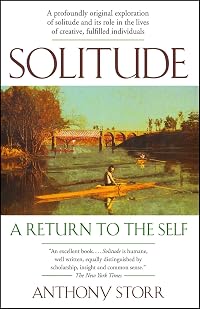
Charles Anthony Storr, May 18, 1920 - March 17, 2001 Charles Anthony Storr was born on May 18, 1920 in London to a Reverend of Westminster Abbey and his wife. The two were first cousins, which may have lead to his poor health and depression. At the age of eight, he attended public school at Winchester and was very unhappy. He graduated from show more Winchester College and proceeded to Christ's Church in Cambridge where he met C. P. Snow who encouraged him to be moral and compassionate. Storr continued his medical studies at Westminster Hospital from 1941 to 1944, and then became a house physician at various hospitals. He is best known for his books on Freud and Jung. After completing his education, Storr practiced psychotherapy privately, but combined his private practice with hospitals as a consultant. In 1974, he retired from private practice to teach post graduate doctors at Oxford where he received dining rights at Wadham College and became a fellow at Green College. After his first attempt at writing proved fruitful, Storr continued his career as a writer, producing 11 books in the next 26 years. Storr's books were very popular in the U. S. and following his literary fame, he became a frequent book reviewer and commentator on British television. He wrote on different themes, but his favorites were gurus, as evidenced in his book, "Feet of Clay, solitude as a helpful tool in recovery, "Solitude: A Return to Self", and the theories of Freud and Jung. Storr died on March 17 in Oxford after having a heart attack during a speech at Wadham College. He was 80 years old. show less
Common Knowledge
- Original publication date
- 1972
Classifications
Statistics
- Members
- 147
- Popularity
- 223,996
- Reviews
- 2
- Rating
- (4.00)
- Languages
- English
- Media
- Paper
- ISBNs
- 6
- ASINs
- 2