On This Page
Description
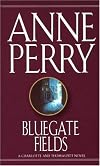
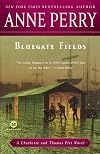
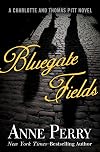
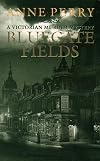
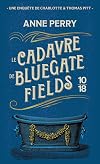
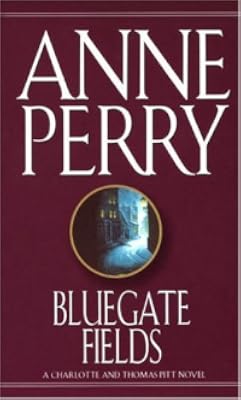
From a New York Times–bestselling author, Charlotte and Thomas Pitt must solve the case of a young gentleman's sordid murder—before an innocent man hangs.The naked body of an aristocratic youth turns up in the sewers beneath Bluegate Fields, one of London's most notorious slums. But Arthur Waybourne had been drowned in his bath, not in the Thames. More shocking still was that the boy had been sexually violated and infected with syphilis before he was murdered. Despite Inspector Thomas show more Pitt's efforts to fully investigate the crime, the family closes ranks, stonewalling Pitt, leaving him to wonder what they are hiding. All evidence points to Arthur's tutor, Jerome, as the murderer. The courts agree and Jerome is sentenced to hang. Pitt and his wife, Charlotte, don't believe the answer is so simple. But if not Jerome, then who molested and infected the boy?
To learn the truth, Charlotte uses her familiarity with the upper classes to draw aside the curtain of lies, while Pitt defies his superior and the boy's family to follow a trail that leads him into the foulest streets of London through a web of deceit involving male prostitution and pedophilia. In a race against time, Thomas and Charlotte must find the real killer to save Jerome from the hangman's noose.
. show less
Tags
Recommendations








Member Reviews
Something about Anne Perry's writing - or at least, the writing that I've read, which includes book 1-6 of this series plus about a billion of the William Monk series - appeals to me very much. I complain about it a lot in my head, mostly due to certain details or situations or descriptions that get repetitive (and somewhat annoying) when you're reading the entirety of a series, back to back to back. But she sets a scene so well that I would feel perfectly at home in any Victorian drawing room, should I stumble across one somewhere in the metaverse. When Charlotte Pitt is freezing after a long hansom ride and asks Gracie to build up the fire and bring some tea, I feel vicariously cozy. All this to say, I am still enjoying this series. show more
Of course there is a but. I find there generally is. In this case, the but is - Thomas Pitt is a terrible, horrible, very, very bad detective. Take this example. He has just interviewed the murdered boy's tutor, trying to gather as much information about the victim as he can. Immediately after, the boy's bereaved father asks him (regarding the tutor), "Good God! You don't really suspect him of--of--"
Spoiler alert: Pitt did not suspect the tutor of anything at all, at least, not at that time. And he says so. "Is there any reason why I should?" he asks.
"Of course not!" says the father, and now I am really paraphrasing. "Of course he had but the greatest references and etc etc but hmmm, I guess maybe I should give it some thought."
Minutes, literally minutes later, Pitt gets home and tells Charlotte, "It appears as if it was the tutor. It's all very sad and grubby..."
It is maddening. The man could wear a suit made of clues and still not find the guilty party. I hate him. I will continue reading about him with pleasure. show less
Of course there is a but. I find there generally is. In this case, the but is - Thomas Pitt is a terrible, horrible, very, very bad detective. Take this example. He has just interviewed the murdered boy's tutor, trying to gather as much information about the victim as he can. Immediately after, the boy's bereaved father asks him (regarding the tutor), "Good God! You don't really suspect him of--of--"
Spoiler alert: Pitt did not suspect the tutor of anything at all, at least, not at that time. And he says so. "Is there any reason why I should?" he asks.
"Of course not!" says the father, and now I am really paraphrasing. "Of course he had but the greatest references and etc etc but hmmm, I guess maybe I should give it some thought."
Minutes, literally minutes later, Pitt gets home and tells Charlotte, "It appears as if it was the tutor. It's all very sad and grubby..."
It is maddening. The man could wear a suit made of clues and still not find the guilty party. I hate him. I will continue reading about him with pleasure. show less
Another installment in the Charlotte and Thomas Pitt series and probably one of the edgier ones in terms of content - a teenaged male murder victim who had been "used homosexually" (and yes, that is the term which is repeatedly used in this Victorian era set tome). I think the author was hoping that the use of a "contemporary" theme occurring in the victorian era would carry the novel, but she was mistaken. The awkward way the subject is handled - particularly around the female characters - became tedious. Not a favorite.
The story begins with the discovery of the naked body of a teenage boy in a sewer in Bluegate Fields, a London slum. It is set in 1885 Victorian England, when Great Britain was at the height of its Empire. The case is assigned to Inspector Pitt who manages to identify the victim as the eldest son of a minor aristocrat. An autopsy reveals that the boy was strangled and had been homosexually violated. He was also suffering from syphilis, which was then incurable. The search for the killer is complicated by the boy's family's reluctance to co-operate with the police.
The boy's tutor is arrested and charged with murder, although Pitt has doubts about his guilt. A jury finds him guilty and he is sentenced to hang in three weeks. Despite his show more superior officer's opposition, Pitts sets about to find out whether the man is actually guilty or not and needs to do so before the hanging.
The accused tutor is an unsympathetic character, full of pride and with a "chip on his shoulder" against his place in the world. It makes it easy for him to be cast as the killer. Similarly the male members of the victim's family are unattractive people; Perry paints them as smug boors.
This is a sombre and dark murder mystery story set against cold and miserable London weather where it seems to always rain. The rigid social structure of Victorian English society plays a large role in the way Pitt needs to conduct his investigation; he is not an aristocrat and needs to take care not to offend "his betters". He is hampered by his boss who is a pompous bureaucrat and anxious to please the aristocracy. Pitt is kept on a tight rein.
The book is not light reading. The mystery story is used in a somewhat heavy-handed way to illustrate shortcomings of Victorian times . Perry's ability to capture the Victorian culture and lifestyle make it easier to take the pontificating. The aristocracy's ignorance of poverty and such social ills as child prostitution are particular targets in his book. It is however a good whodunit mystery, although preachy at times.
Recommended. show less
The boy's tutor is arrested and charged with murder, although Pitt has doubts about his guilt. A jury finds him guilty and he is sentenced to hang in three weeks. Despite his show more superior officer's opposition, Pitts sets about to find out whether the man is actually guilty or not and needs to do so before the hanging.
The accused tutor is an unsympathetic character, full of pride and with a "chip on his shoulder" against his place in the world. It makes it easy for him to be cast as the killer. Similarly the male members of the victim's family are unattractive people; Perry paints them as smug boors.
This is a sombre and dark murder mystery story set against cold and miserable London weather where it seems to always rain. The rigid social structure of Victorian English society plays a large role in the way Pitt needs to conduct his investigation; he is not an aristocrat and needs to take care not to offend "his betters". He is hampered by his boss who is a pompous bureaucrat and anxious to please the aristocracy. Pitt is kept on a tight rein.
The book is not light reading. The mystery story is used in a somewhat heavy-handed way to illustrate shortcomings of Victorian times . Perry's ability to capture the Victorian culture and lifestyle make it easier to take the pontificating. The aristocracy's ignorance of poverty and such social ills as child prostitution are particular targets in his book. It is however a good whodunit mystery, although preachy at times.
Recommended. show less
The darkest so far of the Pitt mystery series, Bluegate Fields is Anne Perry’s sixth mystery in the Thomas Pitt series, and named for one of the worst slums in nineteenth-century London.
The naked body of a sixteen year old boy is found in a channel of the sewers, drowned, defiled, and in the first stages of syphilis. Judging by his smooth skin and the contents of his stomach, he is from a moneyed family. Evidence suggests he was drowned elsewhere. When Pitt is called in to solve the crime, the victim’s family does not cooperate, but rather sabotages the inspector's initial attempts to investigate. Pitt’s wife, Charlotte, turns to her brother-in-law, and, later, to her sister, Emily and Great-Aunt Vespasia Cumming-Gould in order show more to help with the later stages of Thomas’s investigation, which, after twists and turns, and at the last minute discovers the perpetrator. In the process, Ms. Perry gives the reader a dark glimpse of Victorian society, its repressions, its stuffiness, its hypocrisy and the blindness at its heart.
The plot is dark, finely wrought, the characters richly drawn and from all classes, the historic detail, meticulously researched. Few readers will wince at the subject matter, but all Perry mystery lovers will find the book very difficult to put down. show less
The naked body of a sixteen year old boy is found in a channel of the sewers, drowned, defiled, and in the first stages of syphilis. Judging by his smooth skin and the contents of his stomach, he is from a moneyed family. Evidence suggests he was drowned elsewhere. When Pitt is called in to solve the crime, the victim’s family does not cooperate, but rather sabotages the inspector's initial attempts to investigate. Pitt’s wife, Charlotte, turns to her brother-in-law, and, later, to her sister, Emily and Great-Aunt Vespasia Cumming-Gould in order show more to help with the later stages of Thomas’s investigation, which, after twists and turns, and at the last minute discovers the perpetrator. In the process, Ms. Perry gives the reader a dark glimpse of Victorian society, its repressions, its stuffiness, its hypocrisy and the blindness at its heart.
The plot is dark, finely wrought, the characters richly drawn and from all classes, the historic detail, meticulously researched. Few readers will wince at the subject matter, but all Perry mystery lovers will find the book very difficult to put down. show less
8.5/10
This was different from the previous Charlotte & Thomas Pitt books in that a case actually went to trial and beyond. In addition, several unsavory aspects of Victorian life were explored. For once, Charlotte and her family were not put in danger, although Thomas did almost lose his job.
This was different from the previous Charlotte & Thomas Pitt books in that a case actually went to trial and beyond. In addition, several unsavory aspects of Victorian life were explored. For once, Charlotte and her family were not put in danger, although Thomas did almost lose his job.
What an excellent book by Anne Perry! A naked boy's body is found in the London sewers and Inspector Thomas Pitt is the one to investigate. Of course, he tells his young wife, Charlotte about the case and she becomes involved.
This book really tells about the differences in the English classes and Charlotte comes from the upper class but she loves Pitt, who is of the working class. But the lowest of the low, the child prostitutes are also involved in the case. Charlotte is shocked to learn of such things but she takes a stand with her sister and aunt, who try to help make other ladies aware of the terrible things that it seems is destiny for the poor children of the streets.
A man is tried for the murder of this boy, who comes from show more aristocracy, but Pitt is not satisfied that it is the murderer. Will an innocent man be hanged?
Something that I find is so interesting is that 100 years ago, homosexuality was against the law! Now it is almost praised. What has really happened to our society? Is this really progress, when we praise unnatural acts? show less
This book really tells about the differences in the English classes and Charlotte comes from the upper class but she loves Pitt, who is of the working class. But the lowest of the low, the child prostitutes are also involved in the case. Charlotte is shocked to learn of such things but she takes a stand with her sister and aunt, who try to help make other ladies aware of the terrible things that it seems is destiny for the poor children of the streets.
A man is tried for the murder of this boy, who comes from show more aristocracy, but Pitt is not satisfied that it is the murderer. Will an innocent man be hanged?
Something that I find is so interesting is that 100 years ago, homosexuality was against the law! Now it is almost praised. What has really happened to our society? Is this really progress, when we praise unnatural acts? show less
Another good one from Perry, though it seemed rather obvious who the "who" was early on. It is good to read (and I am assuming this is not purely fiction) that women were at the forefront of some of the social changes in the late 19th c. We know they have been ever since.
Members
- Recently Added By
Author Information

199+ Works 55,101 Members
Anne Perry was born Juliet Hume on October 28, 1938 in Blackheath, London. Sent to Christchurch, New Zealand to recover from a childhood case of severe pneumonia, she became very close friends with another girl, Pauline Parker. When Perry's family abandoned her, she had only Parker to turn to, and when the Parkers planned to move from New Zealand, show more Parker asked that Perry be allowed to join them. When Parker's mother disagreed, Perry and Parker bludgeoned her to death. Perry eventually served five and a half years in an adult prison for the crime. Once she was freed, she changed her name and moved to America, where she eventually became a writer. Her first Victorian novel, The Cater Street Hangman, was published in 1979. Although the truth of her past came out when the case of Mrs. Parker's murder was made into a movie (Heavenly Creatures), Perry is still a popular author and continues to write. She has written over 50 books and short story collections including the Thomas Pitt series, the William Monk series, and the Daniel Pitt series. Her story, Heroes, won the 2001 Edgar Award for Best Short Story. Her title's Blind Justice and The Angel Court Affair made The New York Times Best Seller List. (Bowker Author Biography) show less
Some Editions
Series

Belongs to Publisher Series
Common Knowledge
- Canonical title
- Bluegate Fields
- Original title
- Bluegate Fields
- Original publication date
- 1985-11-12
- People/Characters
- Thomas Pitt; Charlotte Pitt; Jemima Pitt; Daniel Pitt; Gracie Phipps Tellman; Harcourt Gillivray (show all 23); Sir Anstey Waybourne; Arthur Waybourne; Lady Waybourne; Dudley Athelstan; Titus Swynford; Mortimer Swynford; Esmond Vanderley; Godfrey Waybourne; Maurice Jerome; Albert Frobisher; Abigail Winters; Eugenie Jerome; Vespasia Cumming-Gould (Lady); Benita Waybourne; Callantha Swynford; Somerset Carlisle; Fanny Swynford
- Important places
- London, England, UK
- Important events
- Victorian Era (1837 | 1901)
- Dedication
- . . . dedicated to the members of the John Howard Society, who practice their founder's belief in the right to dignity of all people. A. P.
- First words
- Inspector Pitt shivered a little and stared unhappily while Sergeant Froggatt lifted the manhole cover and exposed the opening beneath.
- Last words
- (Click to show. Warning: May contain spoilers.)He would tell her - and see her smile, hold her tight and hard.
Classifications
Statistics
- Members
- 875
- Popularity
- 30,973
- Reviews
- 18
- Rating
- (3.68)
- Languages
- 5 — English, French, German, Italian, Spanish
- Media
- Paper, Audiobook, Ebook
- ISBNs
- 32
- UPCs
- 1
- ASINs
- 13